
How Long Does It Take to Potty Train a Puppy?
In this article
Potty training a puppy usually takes months of a consistent routine, not a weekend. You may see useful progress much sooner, but a few dry days do not mean your puppy can manage a whole day without your help.
The important distinction is between you preventing accidents and your puppy reliably choosing the right place. Both count as progress. Only the second tells you it may be time to loosen supervision.
How long does it take to potty train a puppy?
Plan for several months of support, with the timeline shaped by your puppy's age, previous experience and access to the potty area. The American Kennel Club's potty training guide notes that some puppies develop reliable habits quickly while others need several months, especially after inconsistent routines. That is a planning horizon, not a deadline your puppy has failed if accidents continue.
Claims of being trained in a few days often describe a successful introduction or a tightly managed routine. Those are useful starts. They do not prove a puppy will ask to go, cope with a different room or stay comfortable during a longer absence.
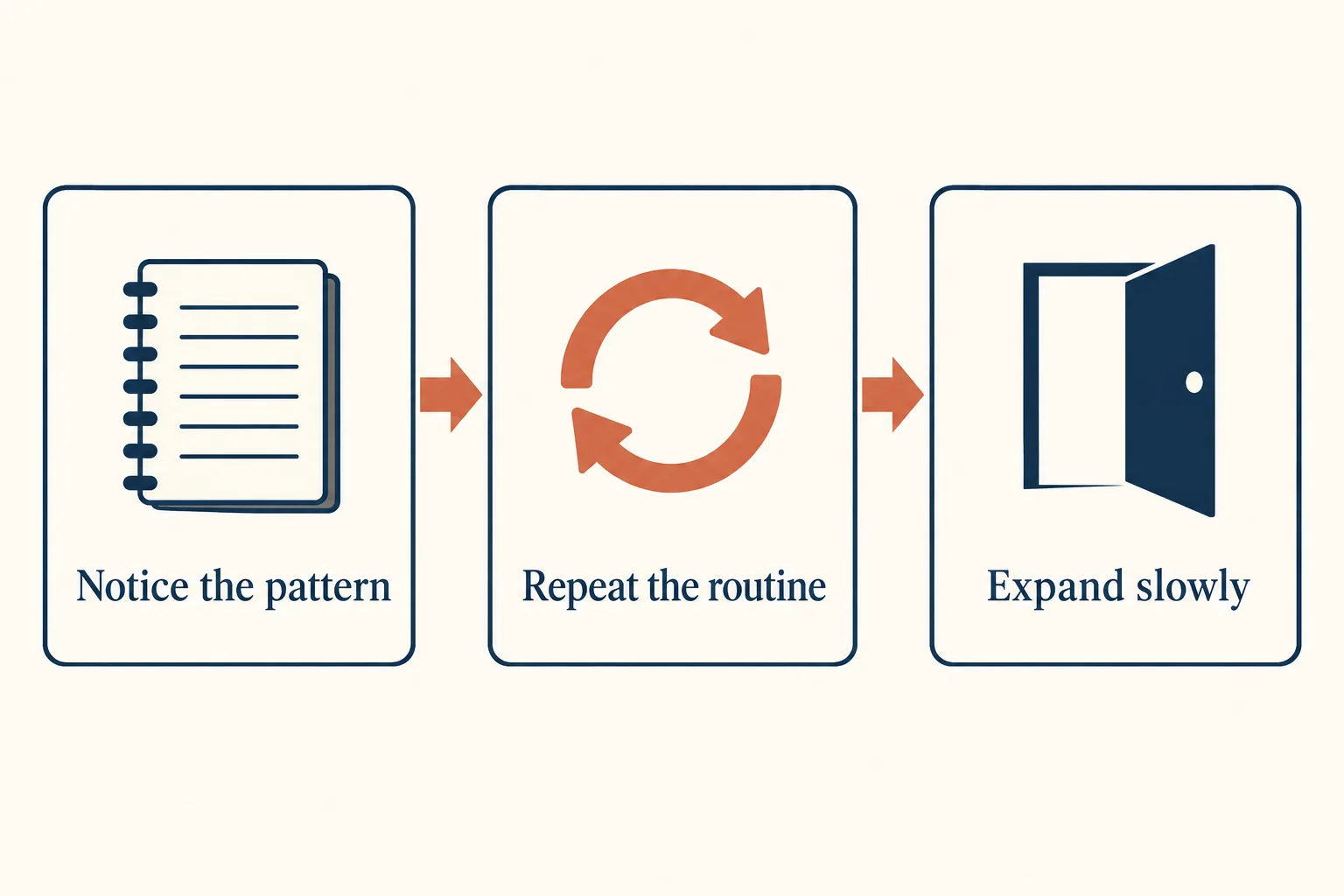
Rather than marking a finish date on the calendar, look for changes you can actually observe:
| What you notice | What it tells you | What it does not prove |
|---|---|---|
| More successful trips in the same spot | The routine is creating learning opportunities | Your puppy can wait longer |
| Fewer accidents with close supervision | Your timing is improving | Unsupervised room access is ready |
| Your puppy heads toward the door | A useful signal may be developing | You can ignore the signal until later |
| Success with another caregiver | The routine is becoming more consistent | Every new setting will be easy |
Keep helping during a good run. Removing all the help is not a fair test of whether the learning has stuck.
What counts as progress in the first weeks?
Early progress is a pattern you can repeat: getting outside promptly after waking, using the same potty area, and rewarding there. Count the successful opportunities as well as accidents, so one wet rug does not erase everything that went well.
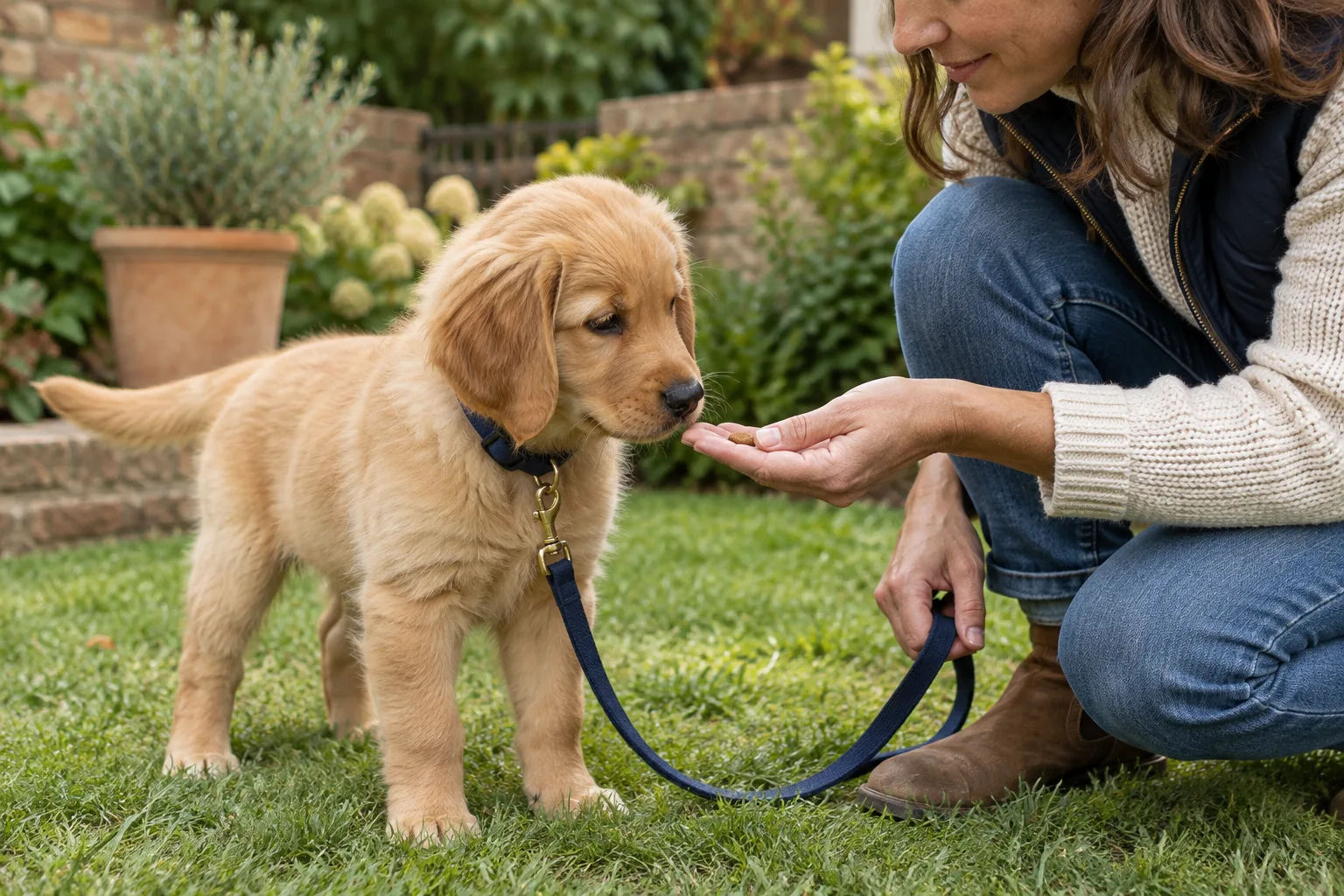
A puppy who toilets outside after each nap is learning even if an excited play session still ends in an accident. The next useful change is an earlier trip around play, not a tougher response to the accident.
For the practical mechanics, use our step-by-step potty training routine. This page is about judging the timeline, not replacing that routine with a countdown.
A dry night is a separate milestone
Sleep and active time are different situations. A puppy who stays dry while resting may still need frequent opportunities while awake, eating, drinking and playing. Do not turn a good night into a daytime holding-time target.
Take the puppy's cues seriously even when a clock says the next trip is later. The 10 week old puppy routine can help you plan the day around transitions rather than testing endurance.
When is a puppy fully potty trained?
There is no single accident-free streak that proves every puppy is finished. Look for a stable pattern in the setting where you live: your puppy uses the potty area, you recognize their signals, and ordinary changes in caregiver or activity do not repeatedly lead to accidents.
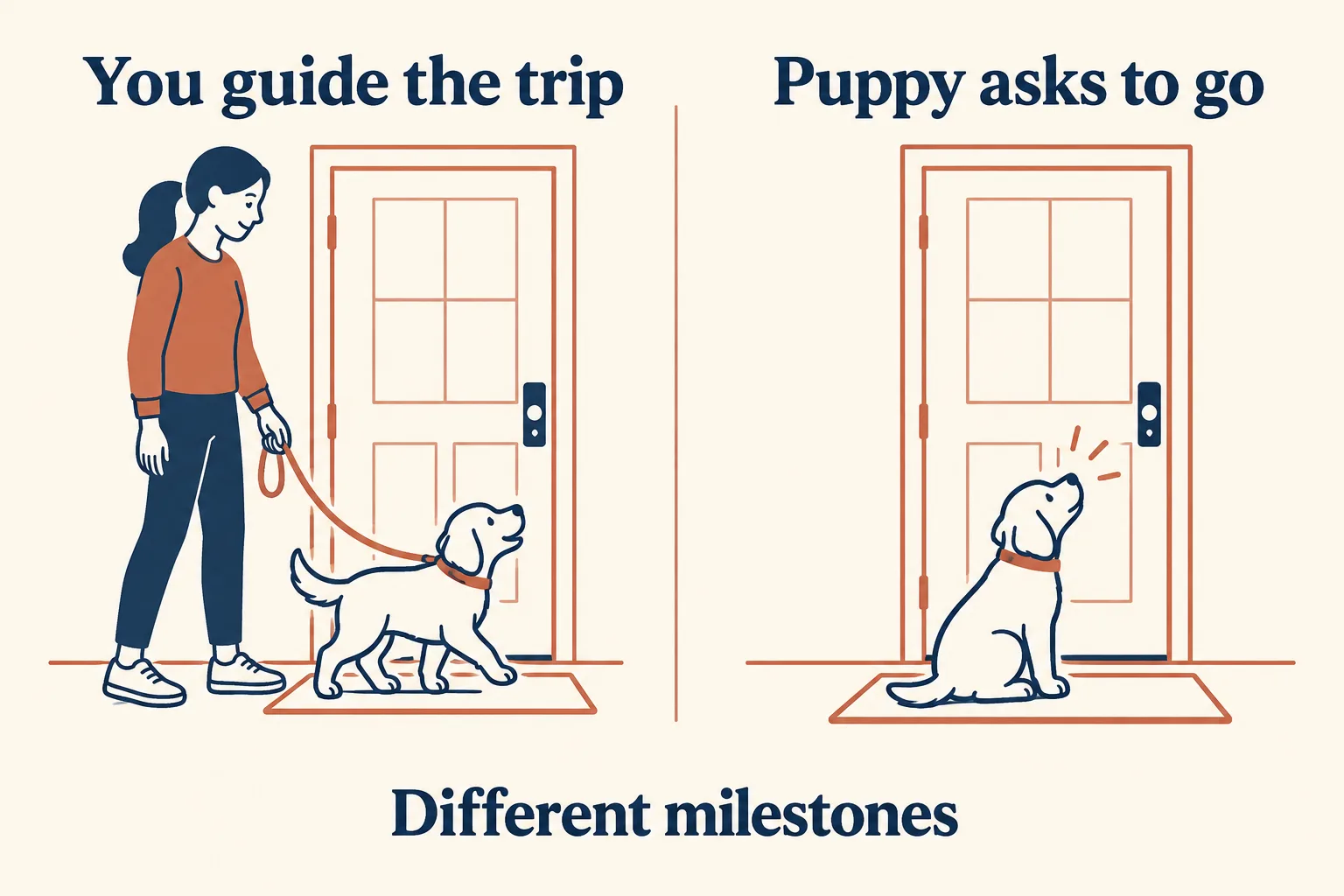
Think of reliability as something you expand in small pieces. A puppy can be reliable in the kitchen with you and still need help in the upstairs bedroom. A new room is a new situation, not evidence that the previous learning disappeared.
Add a little supervised access to one space after a successful trip. Keep the rest of the routine steady. If accidents return there, reduce that access and supervise more closely. Do not punish a puppy for needing the easier version again.
Why do some puppies take longer?
Access and consistency can slow progress even when a puppy is learning. A long elevator wait, conflicting caregiver routines or access to rooms nobody can watch adds opportunities for accidents. Fix the obstacle you can name rather than deciding your puppy is stubborn.
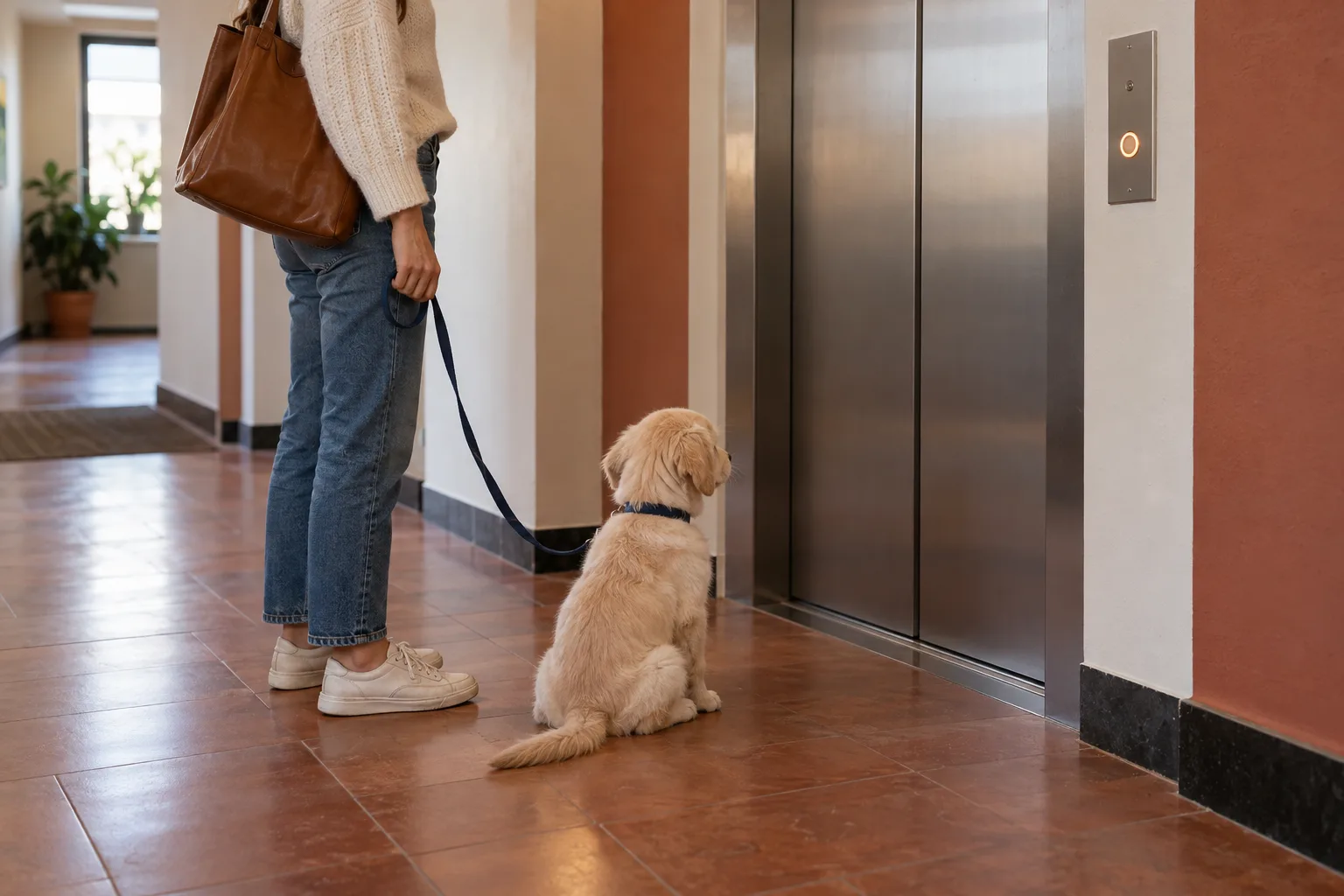
| Your situation | What can make progress look slow | A practical adjustment |
|---|---|---|
| Apartment with an elevator | The trip begins too late to reach the potty area | Prepare supplies and account for the full route |
| Several caregivers | One person thinks the puppy has already gone | Record the result, not just that a trip happened |
| Busy play periods | Excitement hides early signs | Offer a trip at the activity change |
| Larger home | Too many unwatched spaces | Use a smaller puppy-safe area near you |
| A newly arrived puppy | The location and routine are unfamiliar | Teach the new destination without assuming prior learning transfers |
If your home makes outdoor access difficult, ask a qualified reward-based trainer about a workable setup. Ask your vet which outdoor areas are appropriate for your puppy. A suitable arrangement is more useful than copying a house-with-a-yard schedule exactly.
How can you tell whether potty training has stalled?
Compare similar days, not your puppy with a friend's puppy. If accidents keep happening after the same event, the pattern gives you something to adjust. If progress suddenly reverses, or you notice other changes, contact your vet rather than assuming this is a training setback.
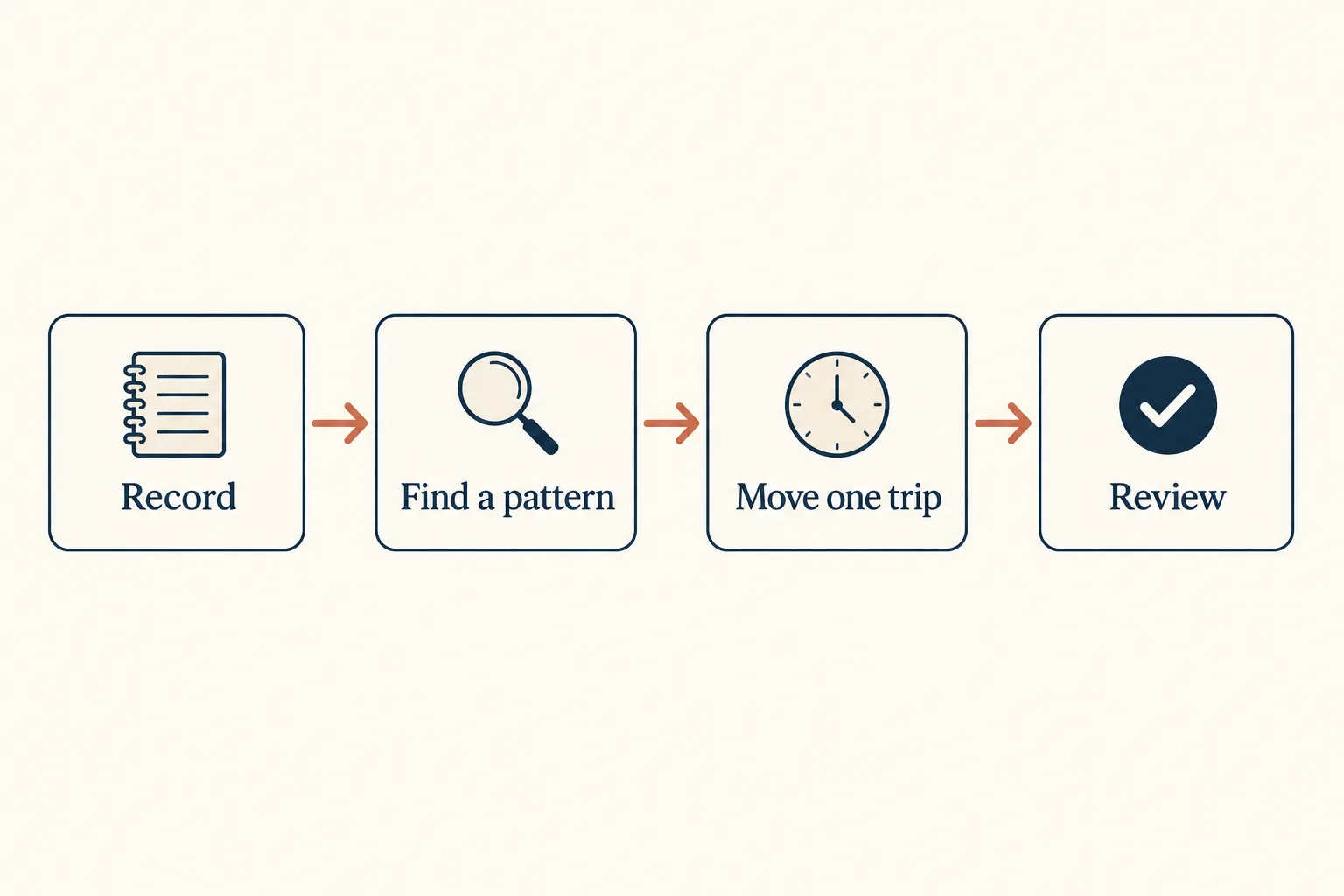
Review your puppy's potty progress
- Record what actually happened
Write the time, what happened just before, where your puppy toileted and who was supervising. An outdoor trip with no result matters too. A note such as "outside after nap, no pee" helps the next caregiver.
- Find one repeatable gap
Look for a recurring event, such as play ending or the elevator journey. You do not need a perfect spreadsheet. You need one observation that explains where tomorrow's extra help should go.
- Change one part of tomorrow
Move a trip earlier, improve the handoff or reduce access to an unwatched room. Keep rewarding successful trips at the potty area. Do not withhold water to manufacture a dry stretch.
- Review the pattern again
Check whether that particular gap improved. If you cannot find a workable pattern despite consistent support, take the log to a qualified reward-based trainer. For sudden regression or illness signs, contact your vet today instead.
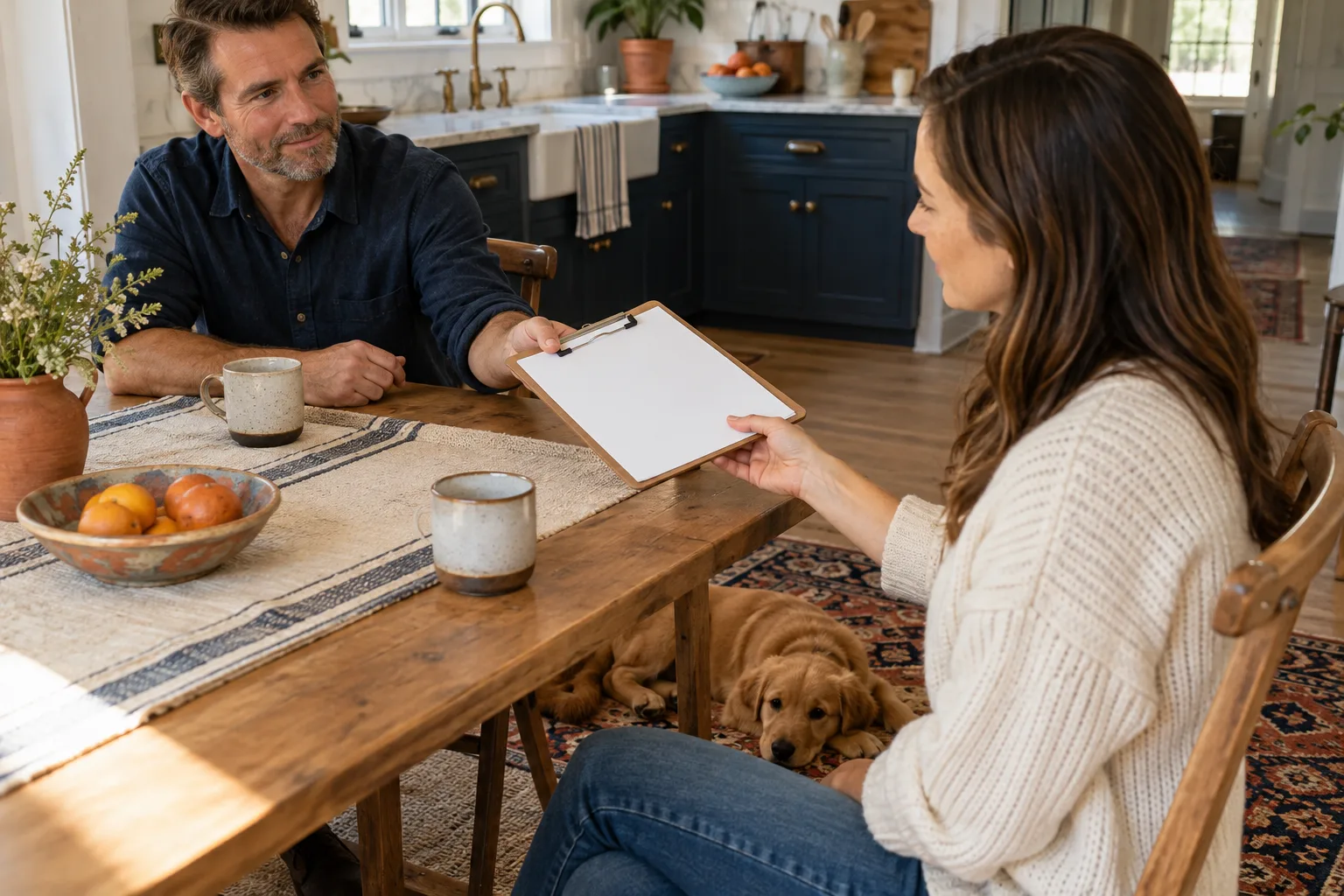
A paper log is enough to do this yourself. Its limitation is the daily work of comparing entries and adjusting the next day's reminders. Build a plan for your puppy when you want a starting routine, then use what actually happens to guide tomorrow's adjustments.
Mistakes that make the timeline harder to read
The most misleading mistake is changing three things after one good day. If you extend the interval, open more rooms and switch caregivers together, you cannot tell which change caused the next accident.
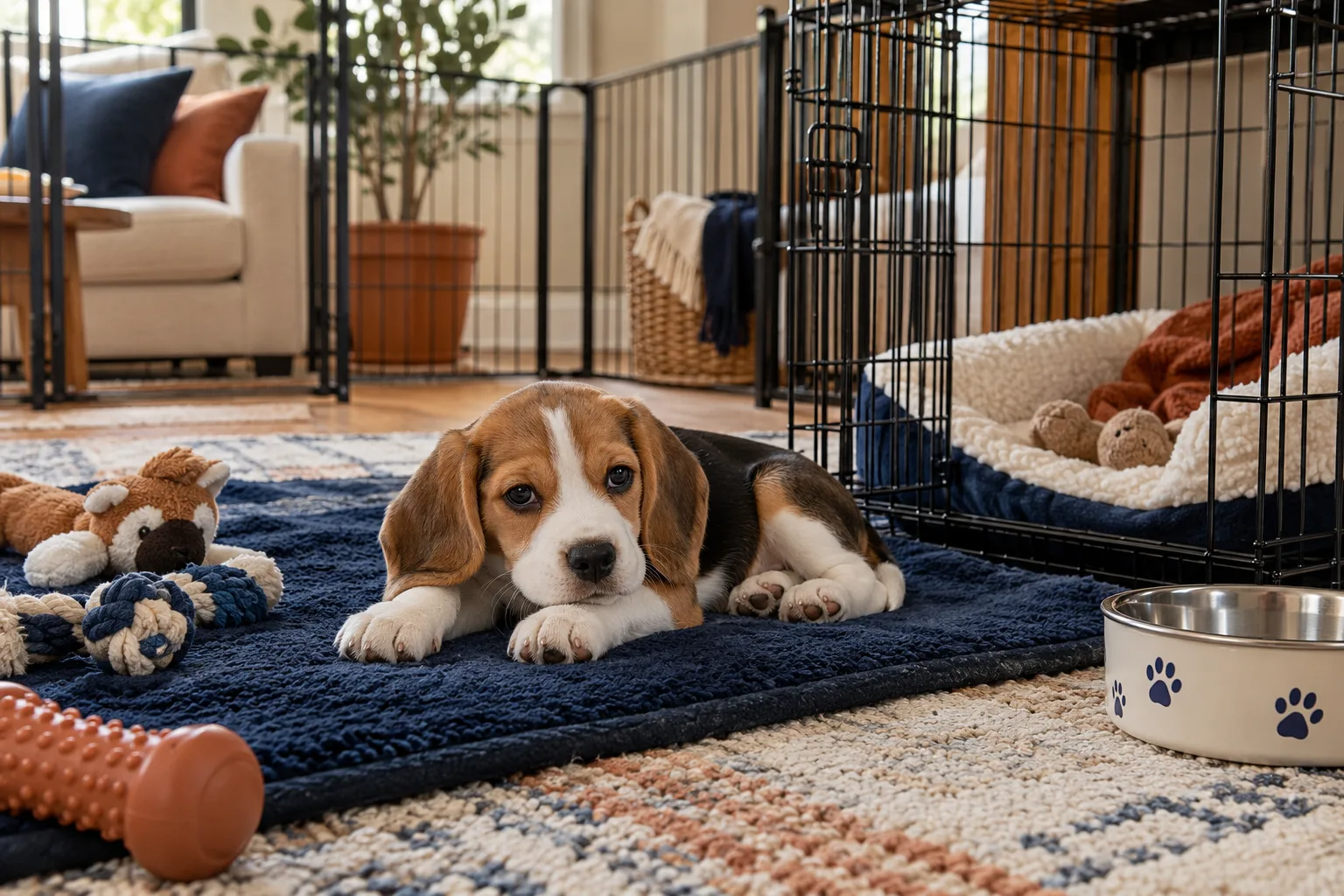
Keep support predictable. A comfortable crate introduction may help with rest, but a crate does not remove the need for timely trips or a caregiver during an absence your puppy cannot manage.
Do not scold, startle or rub a puppy's nose in an accident. Calm cleanup and better prevention give the next attempt a chance. Punishment can make a puppy worried about toileting near you, which makes the routine harder, not clearer.
And do not compare a carefully managed home day with a visit somewhere new. Write down the setting. Progress in one place deserves credit even while another place still needs close supervision.
When should you call the vet about accidents?
Call your vet today for blood, straining, vomiting, diarrhea, sudden regression or lethargy. A training article cannot rule out a health problem, and more practice is not a substitute for that conversation.
Keep your notes factual: when the change began and what you observed. Do not diagnose the cause or try a treatment from a training schedule.
Measure the next useful change, not a finish date
Expect months of support, and notice the smaller wins along the way. More successful trips, clearer handoffs and fewer repeated gaps tell you more than an arbitrary deadline.
Keep the routine that is working, expand one thing at a time, and get help when the pattern is not improving. For a 10 week old puppy, start here and adjust to your actual day.
Frequently asked questions
Offer trips after waking, meals and play, before bed, and whenever your puppy shows signs of needing to go. Add opportunities to match your puppy's observed pattern. A reminder is a backstop, not permission to ignore sniffing, circling or heading away from you.
A breed label cannot give you a reliable finish date for your individual puppy. Look first at their age, learning history, access to the potty area and the routine you can provide. A trainer can help assess those specific obstacles without ranking your puppy as difficult.
There is no single hardest month for every home. The early weeks can feel especially demanding because sleep, supervision and potty trips overlap. If the workload is becoming too much, arrange a caregiver handoff and simplify the routine; our puppy blues guide covers that overwhelmed feeling.
This name is used for timed training routines, but it is not a universal standard or a guarantee of success. Do not use a fixed timer to delay a needed trip or prolong confinement. The useful principles are close supervision, suitable potty opportunities and rewarding success where it happens.
Accidents can still happen while a puppy is learning, but age alone cannot tell you why they are happening. Review supervision, timing and room access without punishment. Contact your vet today for sudden regression or any of the red flags above rather than assuming it is simply normal for the age.
Allow a calm opportunity at the usual spot without turning it into play. If nothing happens, return to close supervision and offer another opportunity soon, sooner if your puppy signals. There is no need to force a result or leave a puppy waiting outside alone.
Get tomorrow's plan, adapted to how today went
A printed schedule can't see that she peed at 7:10 today; the Coach plan rewrites tomorrow from today's log. Start with the free schedule for your puppy.
Build my puppy's plan- Free starting schedule
- Reward-based practice
- Fits your puppy's day
Share article
About the author
More articles
Potty, crate and sleep · 14 min
How to House Train a Dog: Puppy or Adult, Step by Step
How to house train a dog of any age: one outdoor spot, a schedule, a reward the second they finish, and supervision in between. What changes for puppies, adult rescues and dogs who start having accidents again.
Potty, crate and sleep · 12 min
10 Week Old Puppy Schedule: Potty, Crate and Sleep Times
A full 10 week old puppy schedule, hour by hour: potty every 2 hours awake, two quiet night trips, three meals and planned naps, plus how 10 weeks compares with 9 and 12.
Potty, crate and sleep · 11 min
12 Week Old Puppy Schedule: Potty, Crate and Sleep Times
A full 12 week old (3 month old) puppy schedule: potty about every 2.5 hours awake, three meals, night trips at 1:30 and 5:00 am, naps and crate practice, compared with 10 and 14 weeks.
Potty, crate and sleep · 12 min
8 Week Old Puppy Schedule: Potty, Crate and Sleep Times
Your 8 week old puppy's first routine, by the hour: potty every 90 minutes awake, three quiet night trips, 20 minute crate practice, and how to keep it going when you are tired.
Potty, crate and sleep · 12 min
9 Week Old Puppy Schedule: Potty, Crate and Night Times
A full 9 week old puppy schedule: every potty trip, meal and nap by time of day, night alarms at 12:45, 3:30 and 6:15, and how week 9 compares with 8, 10 and 12 weeks.
Potty, crate and sleep · 12 min
How to Potty Train a Puppy: The Daily Routine That Works
How to potty train a puppy with set potty moments, rewards on the spot and a four-column accident log. Includes potty reminders by age and a full sample day.