
9 Week Old Puppy Schedule: Potty, Crate and Night Times
In this article
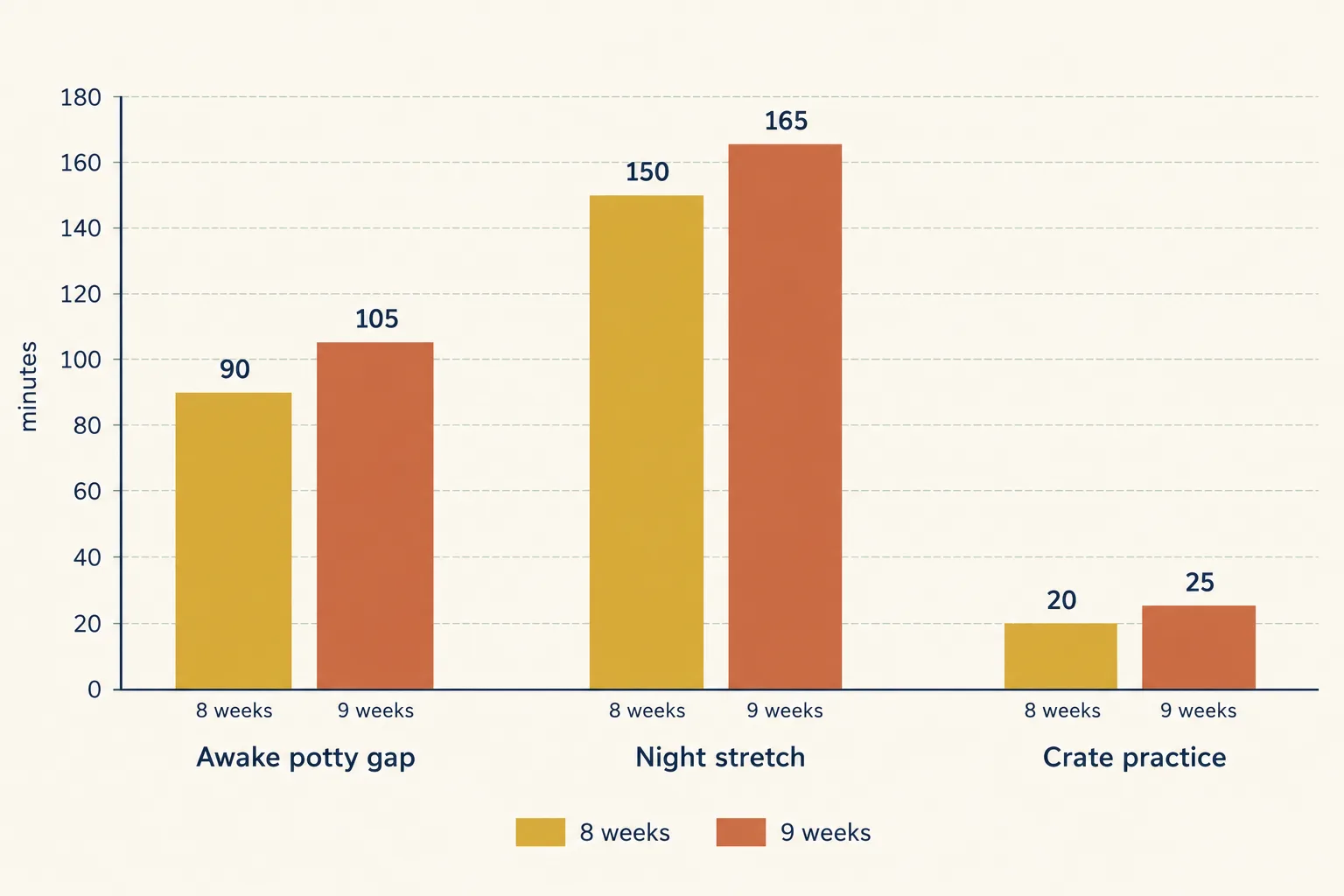
A 9 week old puppy needs a potty trip right after waking, about 20 minutes after each meal and after play, with roughly 105 minutes between trips while awake. Plan 18 to 20 hours of sleep and three quiet night trips at about 12:45 am, 3:30 am and 6:15 am, then keep what already worked last week.
By now you may hear your puppy waking before you see an open eye. Use that. This week is not about a new routine. It is about making the familiar transitions smoother: out, back in, and settled, without turning every moment into an event.
What does a 9 week old puppy schedule look like?
A 9 week old puppy schedule keeps the same daytime shape as week 8: wake, potty, food, potty, short play, potty, nap, four or five times a day. What moves is the night. Here is the full example day for a medium puppy in an apartment, with someone away 4 to 6 hours on a work day.
| Time | What happens |
|---|---|
| 6:30 am | Wake up, straight out for potty |
| 7:00 am | Breakfast, then a quiet moment |
| 7:20 am | Potty, 20 minutes after breakfast |
| 7:30 am | Reward-based training: 3 minutes |
| 7:50 am | A little play, then straight out for potty |
| 8:00 am | Crate nap: settle nearby, door open until comfortable |
| 10:00 am | Wake from nap, potty |
| 10:20 am | Gentle play, then potty before resting again |
| 10:30 am | Quiet rest or a crate nap |
| 12:00 pm | Midday wake-up, potty with you or a helper |
| 12:10 pm | Lunch |
| 12:30 pm | Potty, 20 minutes after lunch |
| 1:00 pm | A little play, then potty |
| 1:10 pm | Afternoon crate nap or quiet rest |
| 3:00 pm | Wake from nap, potty |
| 3:40 pm | Gentle play, then potty |
| 3:50 pm | Another quiet nap |
| 6:00 pm | Wake up, potty |
| 6:10 pm | Dinner |
| 6:30 pm | Potty, 20 minutes after dinner |
| 6:45 pm | Reward-based training: 3 minutes |
| 7:00 pm | Calm play, then potty |
| 7:10 pm | Evening rest near you |
| 9:00 pm | Wake up, potty, then a quiet cuddle |
| 10:00 pm | Last potty, then bedtime beside your bed |
| 12:45 am | Quiet night potty on a lead, back to bed, no play |
| 3:30 am | Quiet night potty on a lead, back to bed, no play |
| 6:15 am | Quiet night potty on a lead, back to bed, no play |
The 6:15 am trip sits close to the 6:30 am wake-up. If your puppy is awake at 6:15, just start the day there and slide the morning 15 minutes earlier. If breakfast is later in your house, move every line together.
9 weeks vs 8, 10 and 12 weeks
These are rules of thumb for a medium puppy, not targets. Toy breeds use reminders 15 minutes shorter. Your puppy's signals beat any number here.
| Age | Awake potty reminder | Longest night stretch | Night alarms | Meals per day | Training per session | Awake crate practice |
|---|---|---|---|---|---|---|
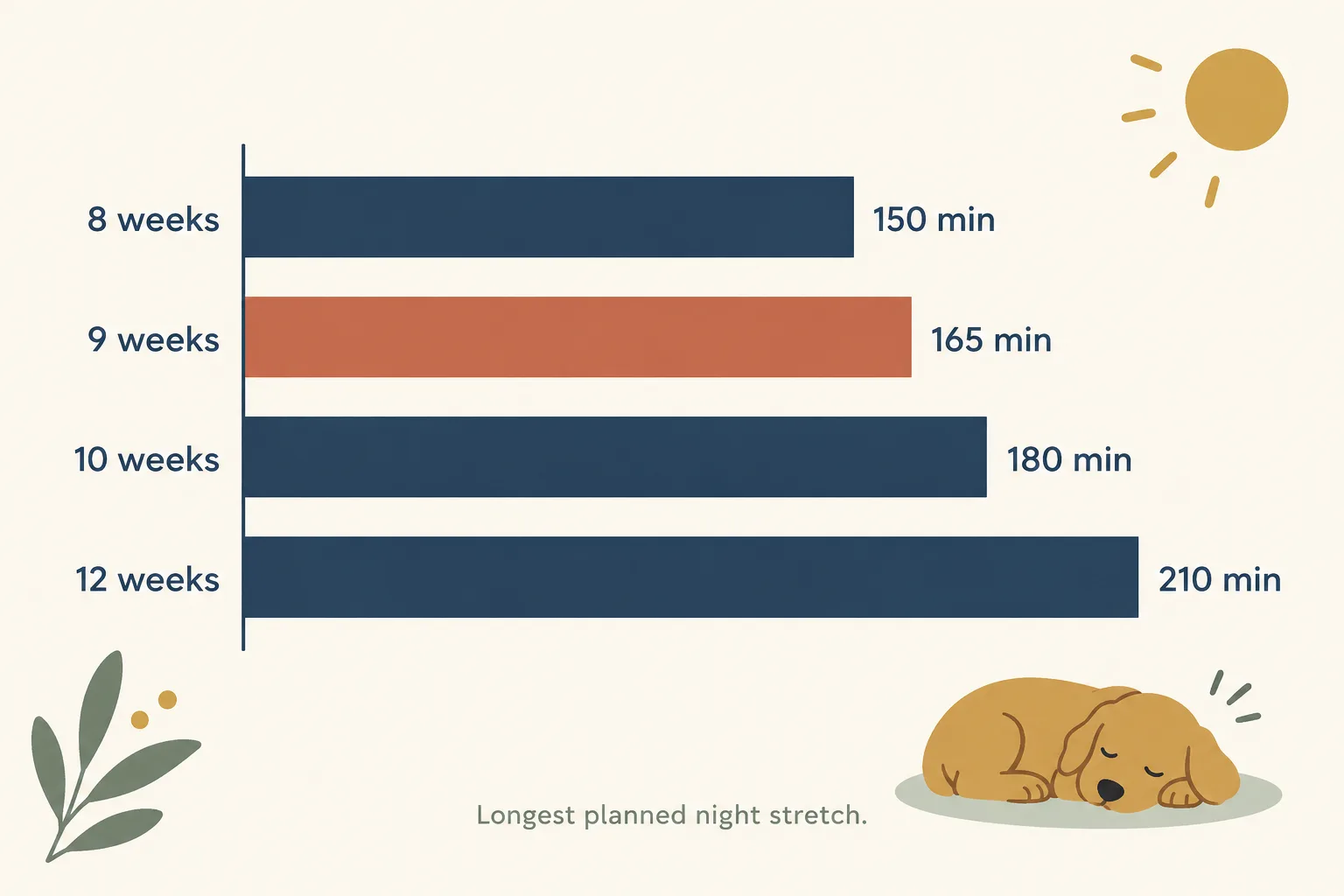
| 8 weeks | 90 minutes | 150 minutes | 12:30 am, 3:00 am, 5:30 am | 3 (4 for toy) | 3 minutes | 20 minutes |
| 9 weeks | 105 minutes | 165 minutes | 12:45 am, 3:30 am, 6:15 am | 3 (4 for toy) | 3 minutes | 25 minutes |
| 10 weeks | 120 minutes | 180 minutes | 1:00 am, 4:00 am | 3 (4 for toy) | 4 minutes | 30 minutes |
| 12 weeks | 150 minutes | 210 minutes | 1:30 am, 5:00 am | 3 | 5 minutes | 40 minutes |
Sleep stays at 18 to 20 hours a day across all four ages. Crate practice only counts while your puppy is relaxed.
Our planning rule: awake gap = 75 + 15 x (weeks - 7) minutes, night stretch = 135 + 15 x (weeks - 7) minutes, both capped at 240. Crate practice = 15 + 5 x (weeks - 7) minutes, capped at 60. Meal counts and the sleep range follow AKC feeding guidance. Confirm feeding with your vet.
A 9 week old puppy needs repetition you can manage
Here is the counterintuitive part. The extra 15 minutes this week matter far less than one smooth handover. Most week-9 accidents do not come from a gap that is too long. They come from two people each thinking the other one did the last trip.
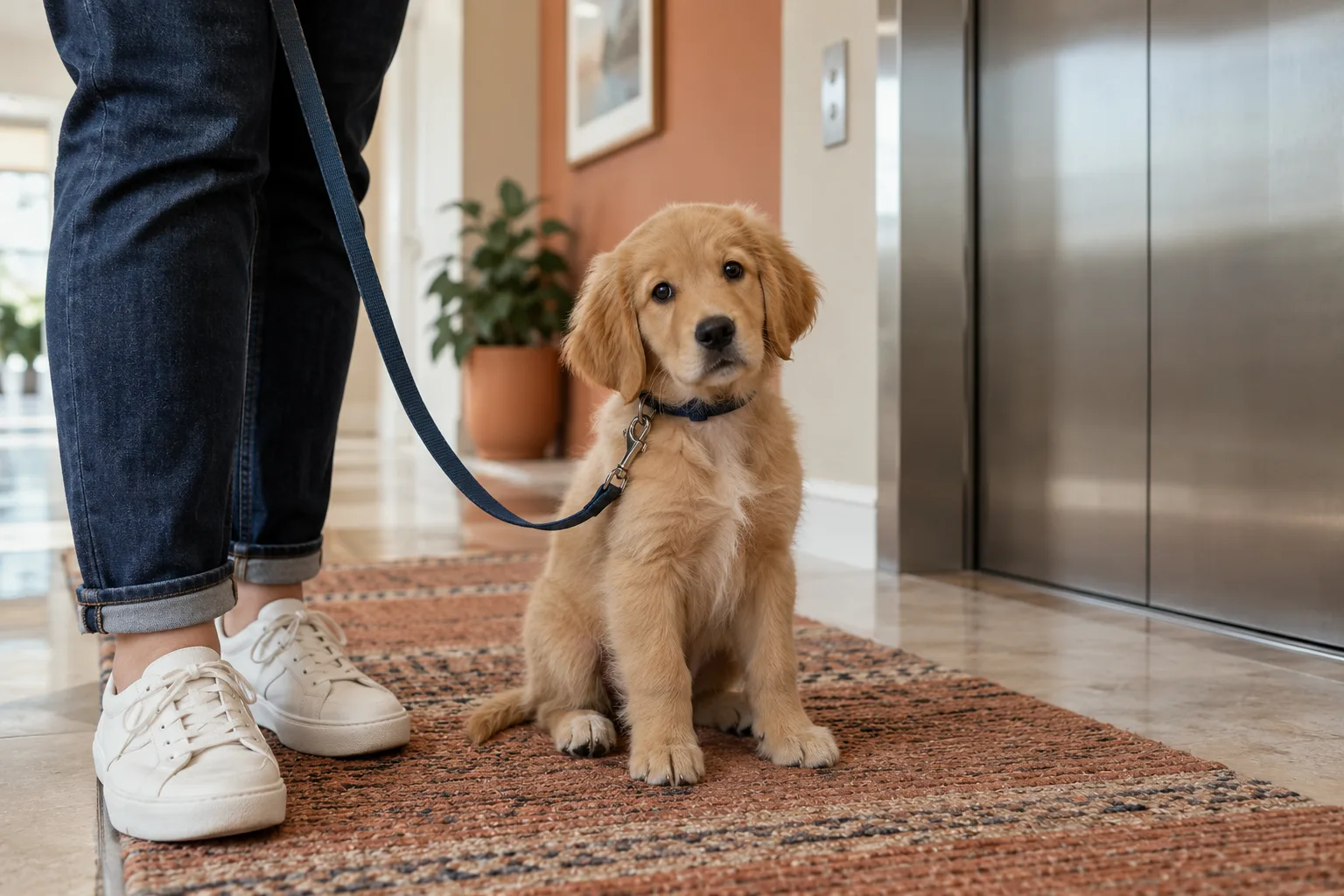
Pick one awkward moment to fix. Maybe the person feeding breakfast assumes someone else took the puppy out. Maybe the lead disappears between trips. Agree on one spot for supplies and a quick way to mark who did the last break. A note on the fridge is enough.
Compared with the 8 week old puppy schedule, only the night reminders and the gaps grow. That does not mean every puppy is ready for the later time. Keep an earlier reminder if it works better. Your notes count for more than the birthday on the calendar.
A 9 week old puppy schedule for fewer missed signals
Look at the moments just before an accident. Was your puppy waking, finishing a game, or wandering away from the group? Write the trigger next to the time. A clock alone hides the part of the routine you can actually change.
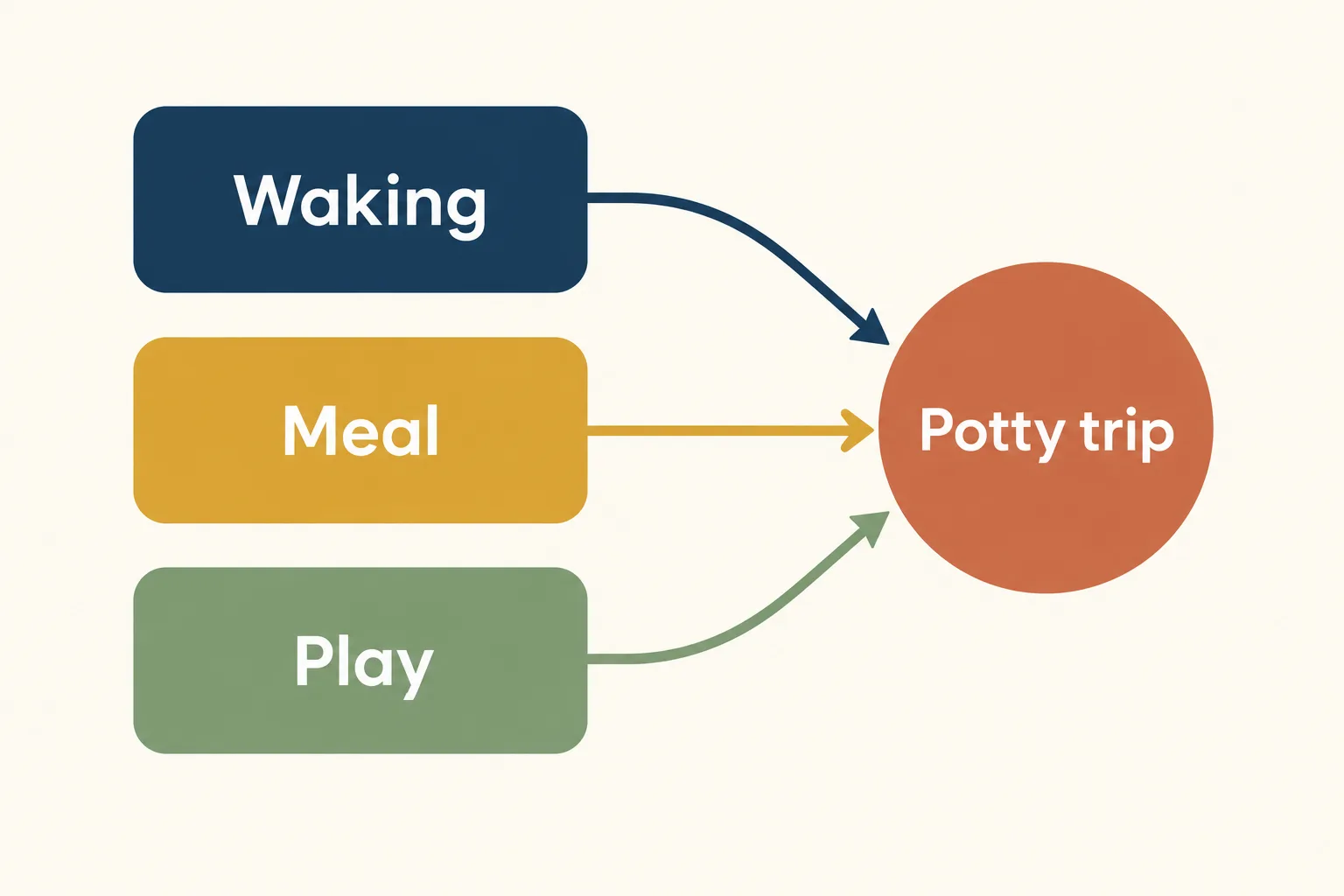
After an unsuccessful trip, keep your puppy with you in an easy-to-clean area and go again when they signal. Free access to a far room makes those signals hard to see. Reward outdoor success right away so your puppy connects the reward with what just happened.
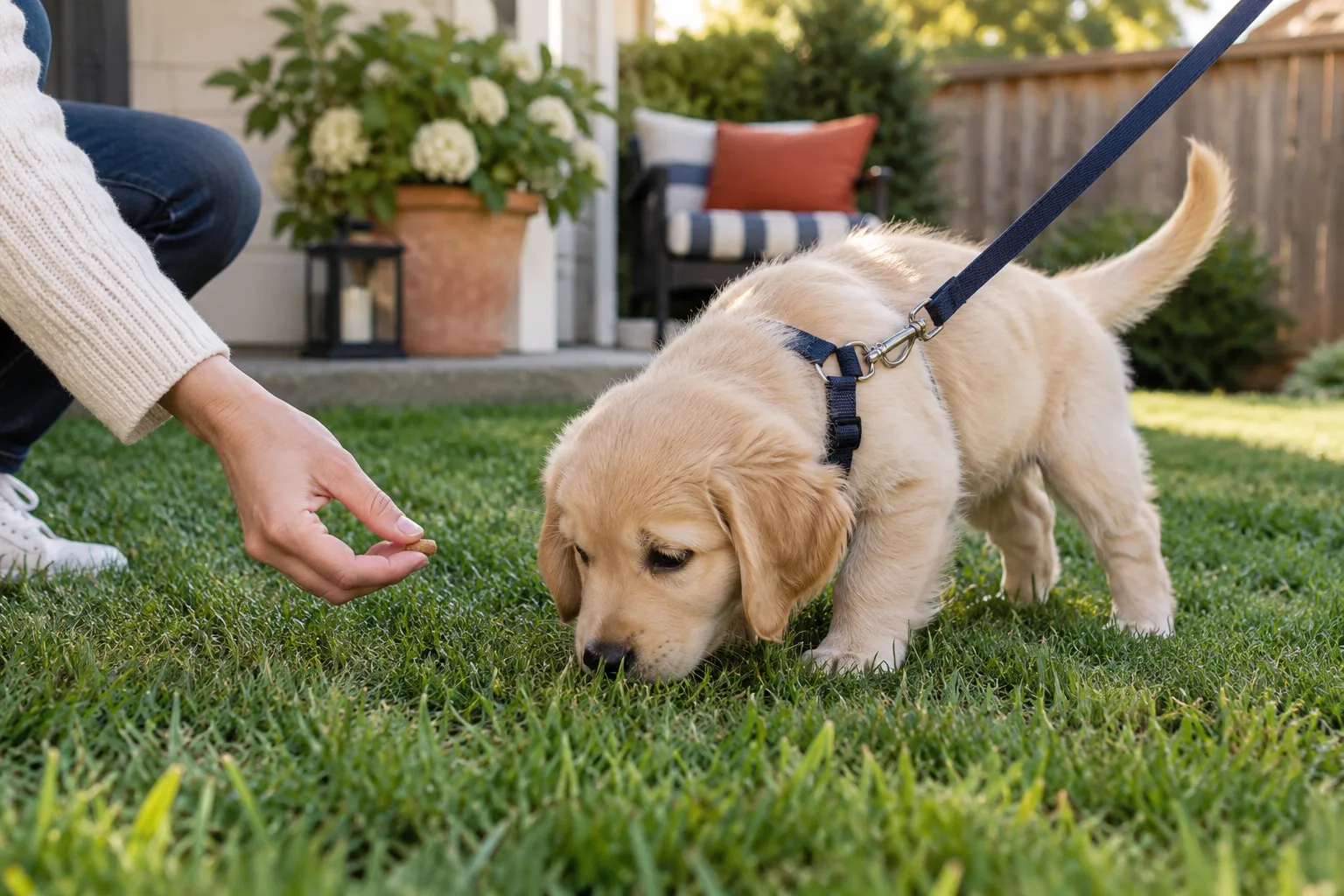
Say it once, calmly, as your puppy sniffs the spot. Reward the moment they finish, outside, not back at the door.
The AKC housetraining guidance stresses consistency and frequent trips. The intervals here are planning examples, not a test of bladder strength. A lively game or a short nap can mean an earlier break. Keep water available and never withhold it to stretch the gaps. For the basics, see how to potty train a puppy.
What to log, and what to change
| If accidents happen after | Likely trigger | Change tomorrow |
|---|---|---|
| Waking from a nap | Trip started too late | Go before you say anything else |
| Lunch | 20 minute trip missed | Put the lead by the bowl before serving |
| Play | Excitement | Pause play every few minutes for a trip |
| The elevator ride | Not enough time | Leave 5 minutes before the potty time |
| A handover | Nobody knew the last trip | Write the time of the last success |
If you are away 4 to 6 hours on a work day, plan a midday potty break with a sitter, neighbor or dog walker, or use a pen with a potty pad. A crate is not a substitute for a potty break.
Night waking and practicing a comfortable crate
A dry night feels like a breakthrough. Enjoy it without treating tomorrow as a test. Keep listening for movement and keep the route outside ready. If your puppy wakes before the alarm, go then.
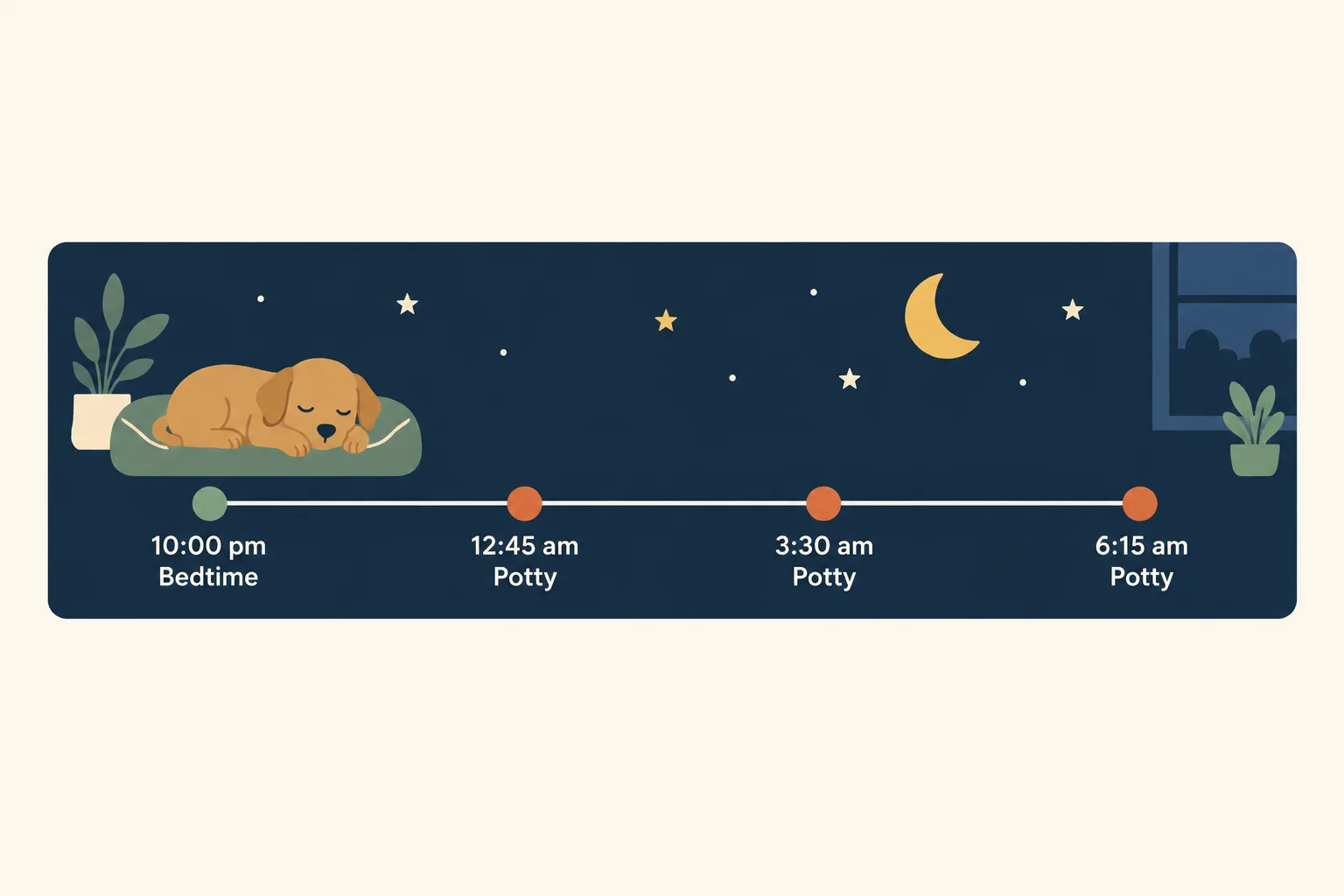
If nights suddenly change, call your vet rather than stretching or shrinking a timer. The AKC puppy sleep advice supports rest across the whole day, not just bedtime, so keep the naps in the sample.
During daylight, practice relaxed crate entries while you are there. Put a reward inside and let your puppy walk back out. Add a quiet pause only when they look relaxed. Sit nearby with a book. A resting place should not predict that company disappears.
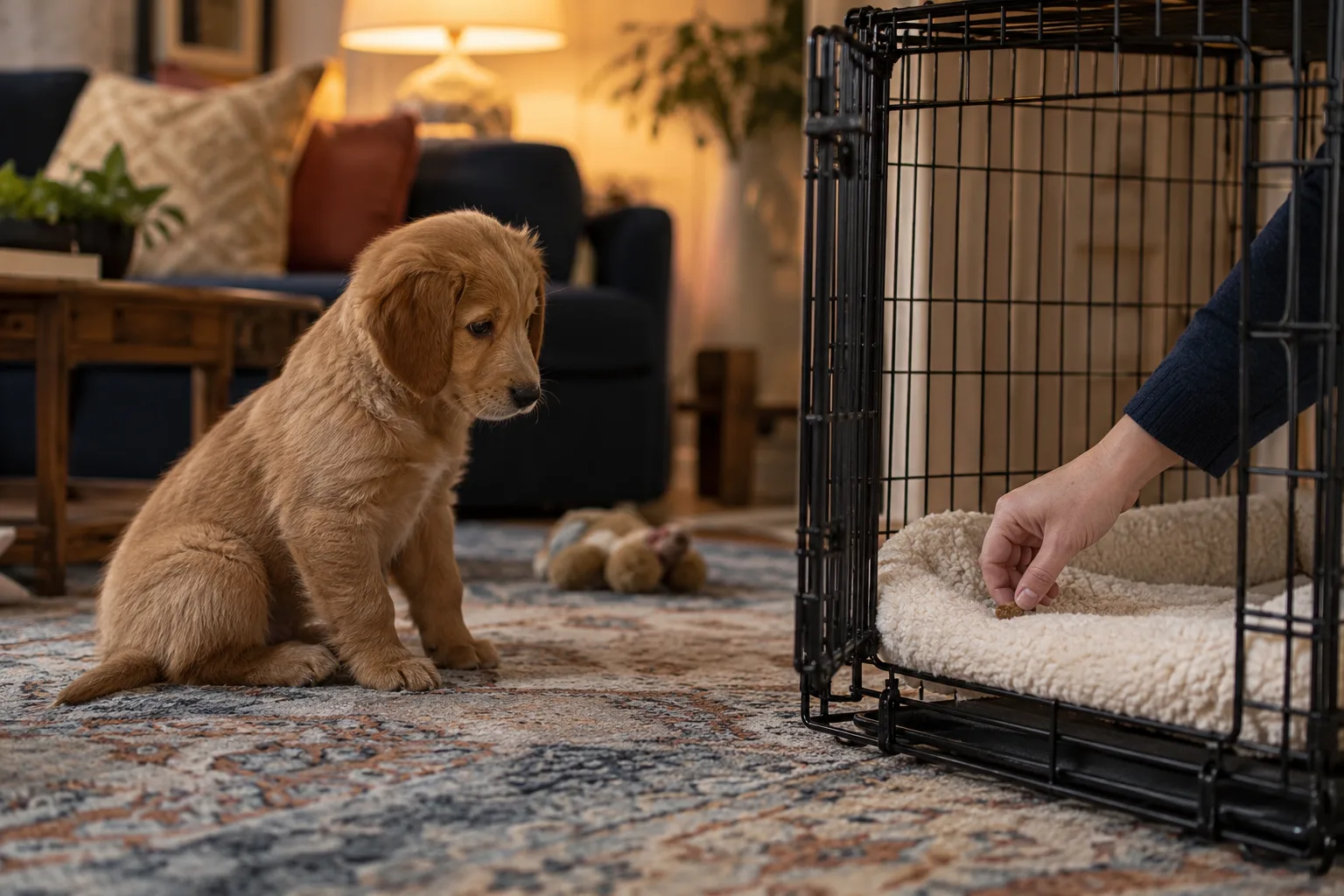
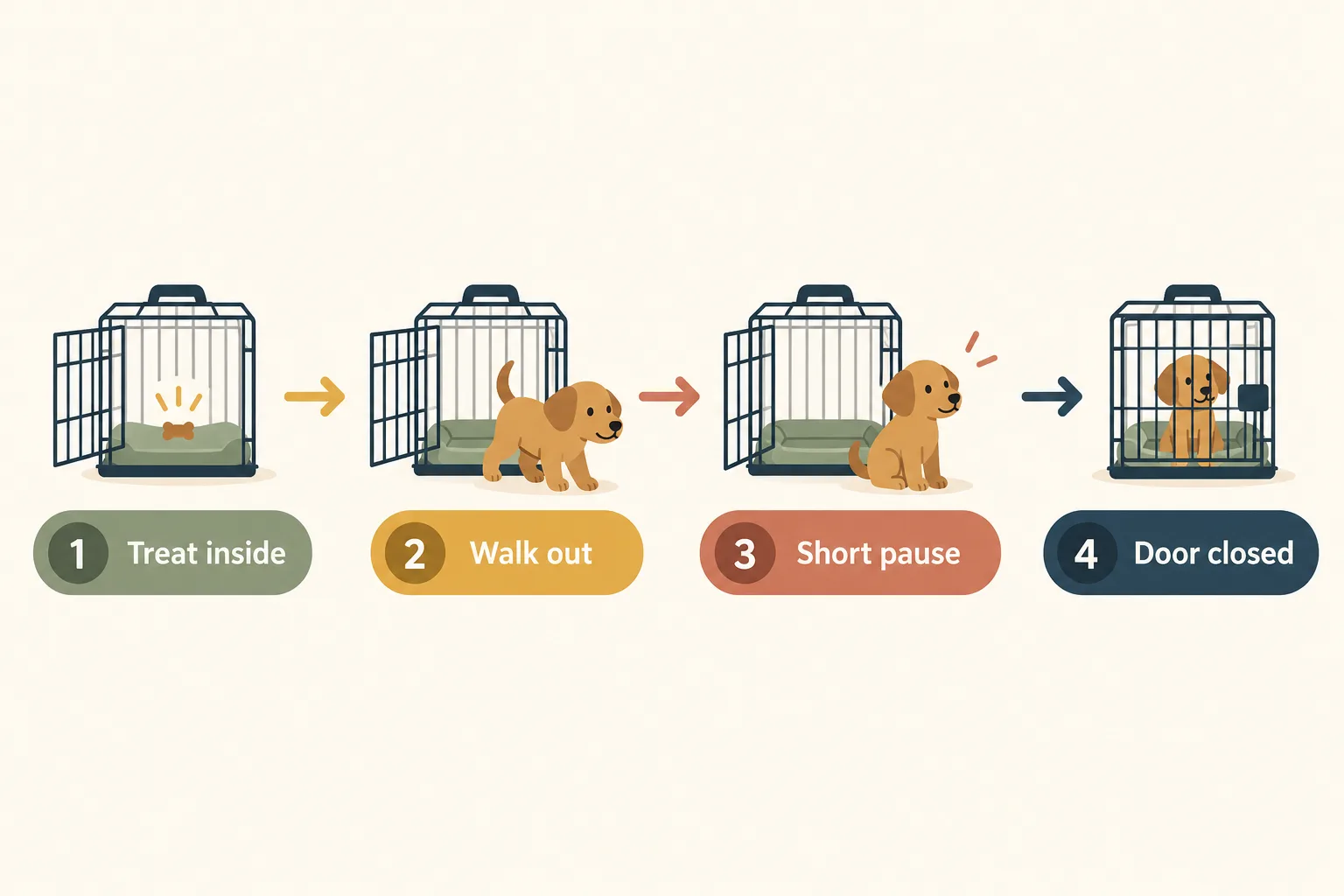
Our crate training guide and the crate size calculator help with the physical setup. Tonight, decide who answers the first waking and who covers the morning. A clear agreement is kinder than negotiating at the bedside.
How to run your 9 week old puppy's day
- Keep yesterday's useful anchors
Keep the wake-up, meal and bedtime times that already work. Compare them with the example and change only what is not working.
- Watch one repeated transition
Pick the gap between lunch and the next nap, or whichever one ends in accidents. Put the lead ready before you need it and reward an outdoor success.
- Log the trigger, not just the time
Write waking, meal or play next to each potty result. Patterns show up within two or three days.
- Leave a clear note
Record the last trip and anything unusual for the next person. Try one small change tomorrow instead of replacing the whole routine.
What to do between naps without adding pressure
You can have a useful afternoon without a long outing. Practice your puppy's name in a quiet room. Reward a glance toward you, then stop while it is still easy. That is a full training session at this age: about 3 minutes.
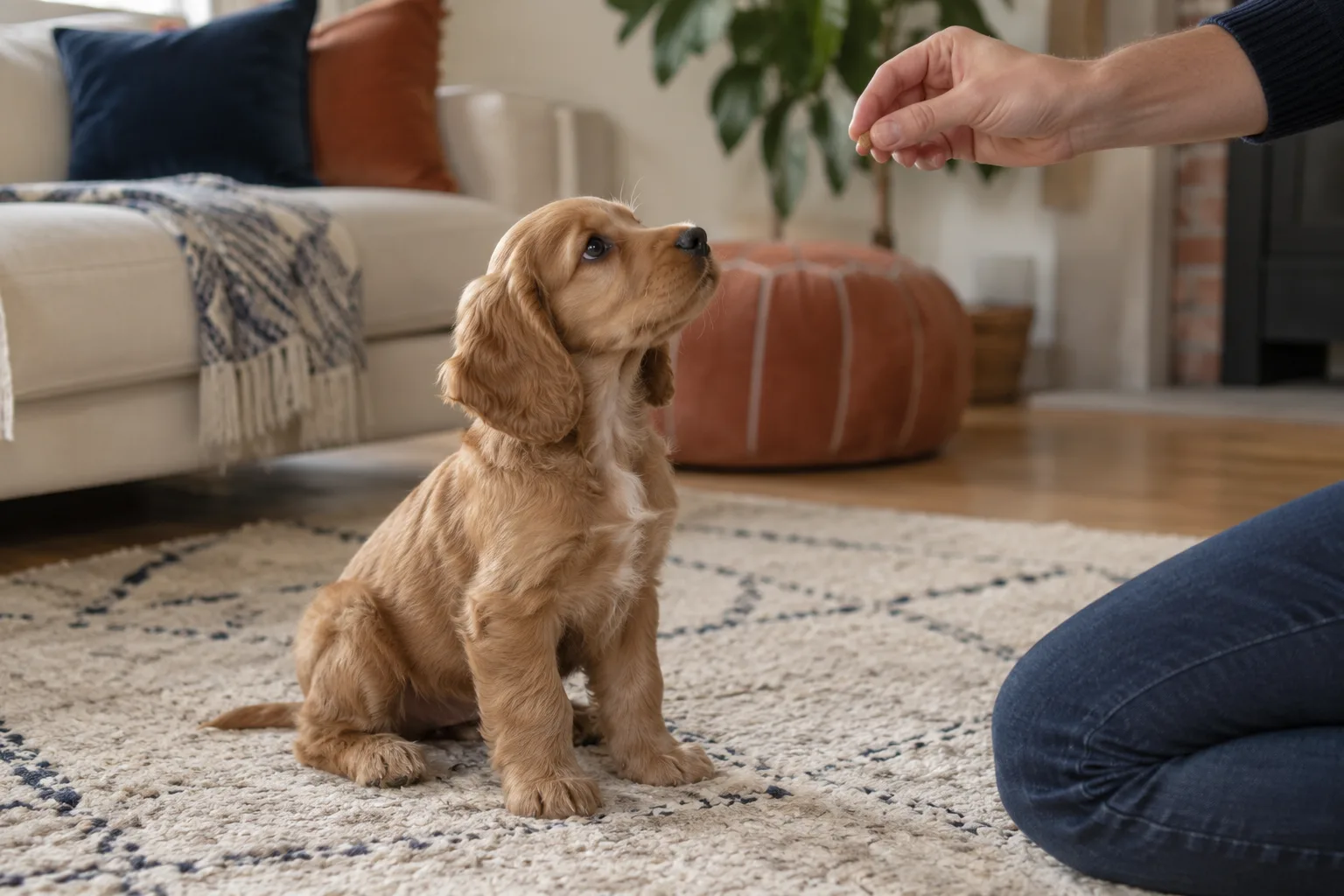
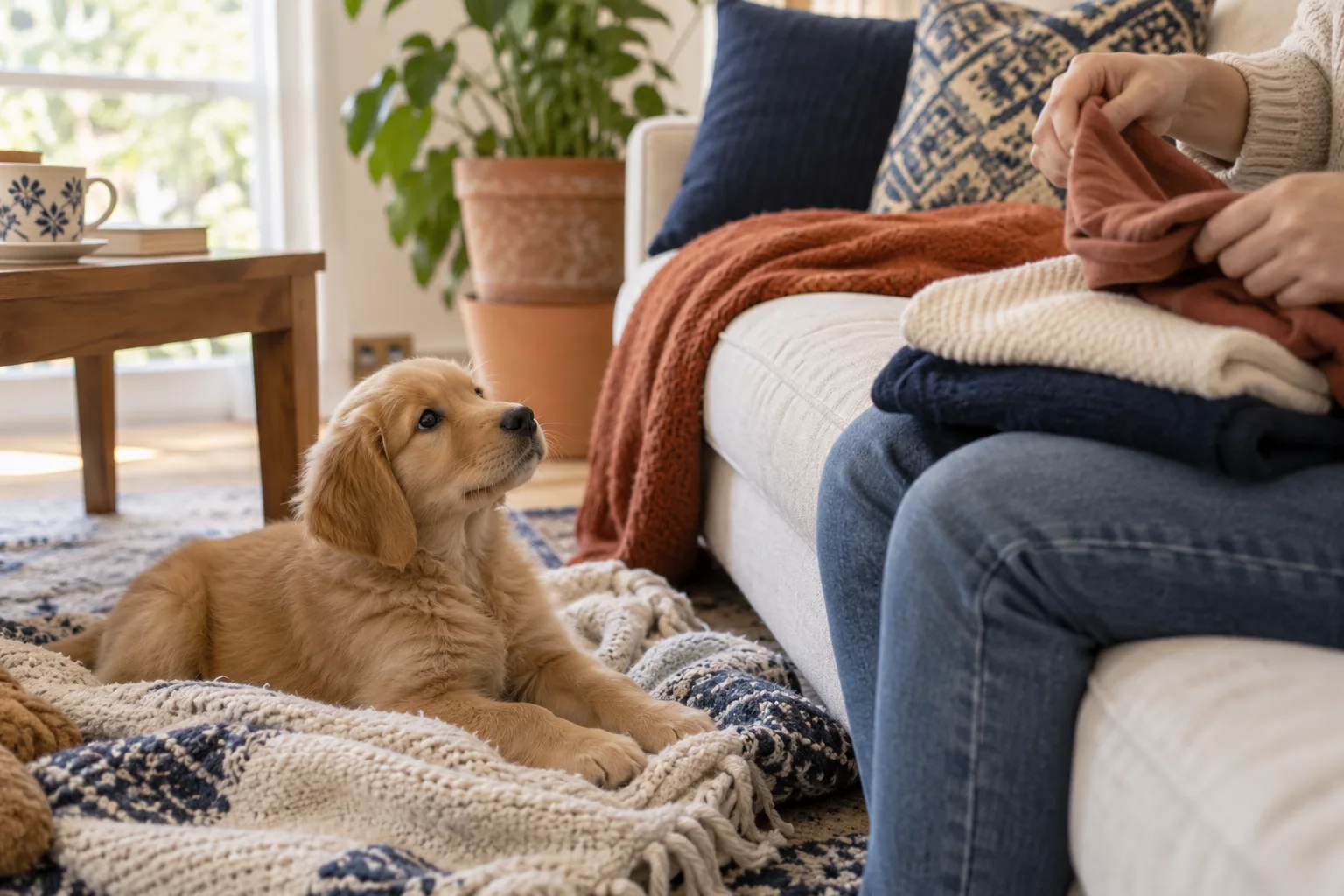
Let the rest be ordinary life: sniffing a safe object, watching you fold laundry, resting nearby. Learning does not need to fill every waking minute.
For new sights and sounds, work at a distance where your puppy stays comfortable, and let them move away. The AVSAB guidance on humane training and socialization beats any checklist that demands greetings. Ask your vet which places are safe before outings.
If your little landshark grabs clothing, stop moving the fabric so it turns boring. Put a toy within reach and play with that instead. If the nipping shows up near the end of an active block, your puppy needs a quieter transition or a nap, not more excitement. If the week feels heavy, read about the puppy blues and hand someone a shift.
Use the same routine with a different caregiver
Walk the next caregiver through the ordinary parts. Show where your puppy pauses before a potty trip and how you reward success. Agree on a short record: ate, rested, went outside, and the time of the last successful trip.
| Keep the pattern | Notice the trigger | Make retreat easy | Share the cue |
|---|---|---|---|
| Repeat the calm return from a trip that worked yesterday. | Write waking, food or play next to the time of each potty result. | A new experience should leave your puppy room to move away. | Agree on the words and rewards everyone uses during a shift. |
Keep cue words the same across people. Reward the behavior you want to see again instead of repeating instructions louder. After the handover, ask what was awkward. An empty treat bag or a stiff back door is a training task for the household too.
When to call the vet instead of changing the schedule
Blood in urine or stool, straining, vomiting, diarrhea, a sudden potty regression or lethargy: call your vet today. Any bite that breaks skin on a person, or aggression, needs a certified behavior professional. This is general, reward-based training guidance, not medical advice.
The short version
Keep last week's shape, stretch awake trips to about 105 minutes, and set night trips near 12:45 am, 3:30 am and 6:15 am. Log the trigger behind each accident and fix one transition at a time. Next up: the 10 week old puppy schedule.
The wall with a fixed schedule is that week 9 puppies change fast and unevenly. A dry night, then two accidents after lunch, and the printed times no longer fit. The plan takes how today went and shifts tomorrow around your puppy. Build a free plan for your 9 week old puppy in about a minute.
Get tomorrow's plan, adapted to how today went.
Frequently asked questions
Try a quiet name game, a supervised sniff around a safe space, or watching a household activity from a comfortable distance. Keep each session to about 3 minutes and stop while it is still easy. Leave room for potty breaks and plenty of rest.
Plan a trip at least every 105 minutes while awake, plus right after waking, about 20 minutes after meals and after play. That is a rule of thumb, not a target. Go sooner if your puppy sniffs, circles or leaves play.
There is no promise your puppy will sleep a full night yet. Our example plans a longest stretch of about 165 minutes, with trips near 12:45 am, 3:30 am and 6:15 am. Keep the route ready and respond to waking before the alarm.
There is no fixed deadline. Track triggers and successful trips, supervise between outings, and reward the right spot. Fix a troublesome transition before stretching intervals. A sudden regression belongs in a conversation with your vet.
Do not treat a table interval as permission for an absence. Think about your puppy's comfort, potty needs and experience with being alone. Arrange a caregiver when you cannot meet those needs, and practice short, comfortable separations separately.
Different access to outside, supervision, routines and individual needs make the same timetable work differently. Focus on the obstacle you can change: an earlier elevator trip, a clearer handover, or a reward ready by the door.
Get tomorrow's plan, adapted to how today went
A printed schedule can't see that she peed at 7:10 today; the Coach plan rewrites tomorrow from today's log. Start with the free schedule for your puppy.
Build my puppy's plan- Free starting schedule
- Reward-based practice
- Fits your puppy's day
Share article
About the author
More articles
Potty, crate and sleep · 10 min
How Long Does It Take to Potty Train a Puppy?
Potty training takes steady support, not a weekend deadline. Learn which milestones matter, why timelines vary and how to spot the next useful change.
Potty, crate and sleep · 14 min
How to House Train a Dog: Puppy or Adult, Step by Step
How to house train a dog of any age: one outdoor spot, a schedule, a reward the second they finish, and supervision in between. What changes for puppies, adult rescues and dogs who start having accidents again.
Potty, crate and sleep · 12 min
10 Week Old Puppy Schedule: Potty, Crate and Sleep Times
A full 10 week old puppy schedule, hour by hour: potty every 2 hours awake, two quiet night trips, three meals and planned naps, plus how 10 weeks compares with 9 and 12.
Potty, crate and sleep · 11 min
12 Week Old Puppy Schedule: Potty, Crate and Sleep Times
A full 12 week old (3 month old) puppy schedule: potty about every 2.5 hours awake, three meals, night trips at 1:30 and 5:00 am, naps and crate practice, compared with 10 and 14 weeks.
Potty, crate and sleep · 12 min
8 Week Old Puppy Schedule: Potty, Crate and Sleep Times
Your 8 week old puppy's first routine, by the hour: potty every 90 minutes awake, three quiet night trips, 20 minute crate practice, and how to keep it going when you are tired.
Potty, crate and sleep · 12 min
How to Potty Train a Puppy: The Daily Routine That Works
How to potty train a puppy with set potty moments, rewards on the spot and a four-column accident log. Includes potty reminders by age and a full sample day.