
12 Week Old Puppy Schedule: Potty, Crate and Sleep Times
In this article
A 12 week old puppy, about 3 months old, usually does well with a potty break about every 2.5 hours while awake, three meals a day, two quiet night trips and 18 to 20 hours of sleep. The schedule below lays that out hour by hour, from a 6:30 am wake-up to night trips around 1:30 am and 5:00 am.
At three months you may have a more familiar puppy and a less forgiving calendar. The puppy feels easier, so the routine starts to slip. The fix is not a harder puppy schedule. It is a routine another adult could follow from your notes.
A 12 week old puppy schedule for a full day
Here is a full day for a medium-size 12 week old puppy in an apartment, with someone away 4 to 6 hours. It is an example built from our planning rule, not a deadline. If your puppy wakes or signals early, the potty trip moves with them.
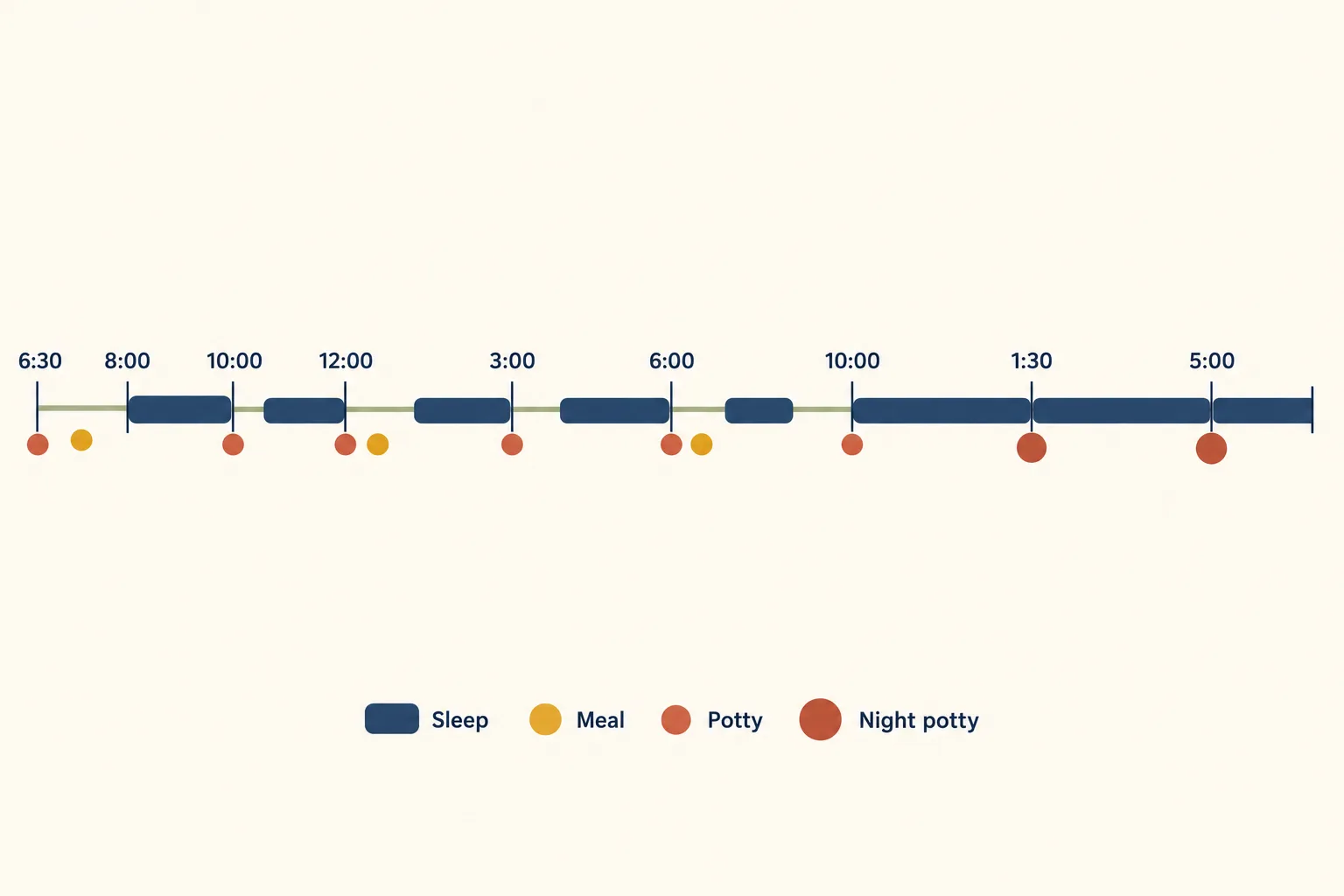
| Time | What happens |
|---|---|
| 6:30 am | Wake up, straight out for potty |
| 7:00 am | Breakfast, then a quiet moment |
| 7:20 am | Potty, 20 minutes after breakfast |
| 7:30 am | Reward-based training, 5 minutes |
| 7:50 am | A little play, then straight out for potty |
| 8:00 am | Crate nap: settle nearby, door open until comfortable |
| 10:00 am | Wake from nap, potty |
| 10:20 am | Gentle play, then potty before resting again |
| 10:30 am | Quiet rest or a crate nap |
| 12:00 pm | Midday wake-up, potty with you or a helper |
| 12:10 pm | Lunch |
| 12:30 pm | Potty, 20 minutes after lunch |
| 1:00 pm | A little play, then potty |
| 1:10 pm | Afternoon crate nap or quiet rest |
| 3:00 pm | Wake from nap, potty |
| 3:40 pm | Gentle play, then potty |
| 3:50 pm | Another quiet nap |
| 6:00 pm | Wake up, potty |
| 6:10 pm | Dinner |
| 6:30 pm | Potty, 20 minutes after dinner |
| 6:45 pm | Reward-based training, 5 minutes |
| 7:00 pm | Calm play, then potty |
| 7:10 pm | Evening rest near you |
| 9:00 pm | Wake up, potty, then a quiet cuddle |
| 10:00 pm | Last potty, then bedtime beside your bed |
| 1:30 am | Quiet night potty on a lead, back to bed with no play |
| 5:00 am | Quiet night potty on a lead, back to bed with no play |
In an apartment, leave about 5 minutes before each potty time for the elevator or stairs. A safe pen with a potty pad is a fair backup when you cannot get outside in time.
The day looks almost the same as at 10 weeks. That is the point. What changes at three months is the gap between trips and the length of practice, not the shape of the day.
12 weeks vs 10 and 14 weeks
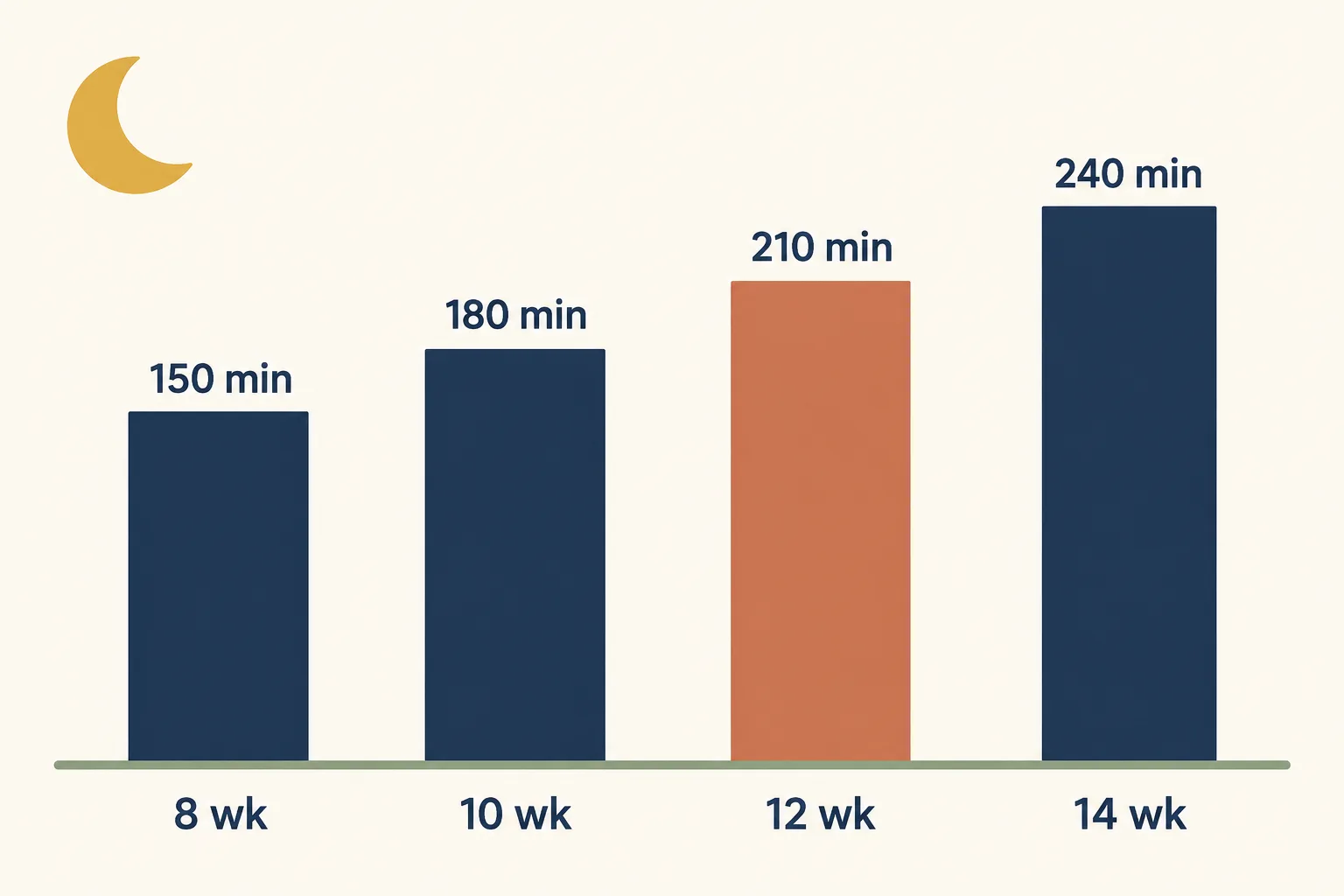
Each week the awake potty gap grows by 15 minutes and the longest night stretch grows by 15 minutes, until both reach 4 hours. At 12 weeks your puppy also drops to three meals for every size, including toy breeds.
| Age | Awake potty reminder | Longest night stretch | Night potty trips | Meals a day | Training per session | Awake crate practice |
|---|---|---|---|---|---|---|
| 10 weeks | 120 minutes | 180 minutes | 1:00, 4:00 am | 3 (4 for toy) | 4 minutes | 30 minutes |
| 11 weeks | 135 minutes | 195 minutes | 1:15, 4:30 am | 3 (4 for toy) | 4 minutes | 35 minutes |
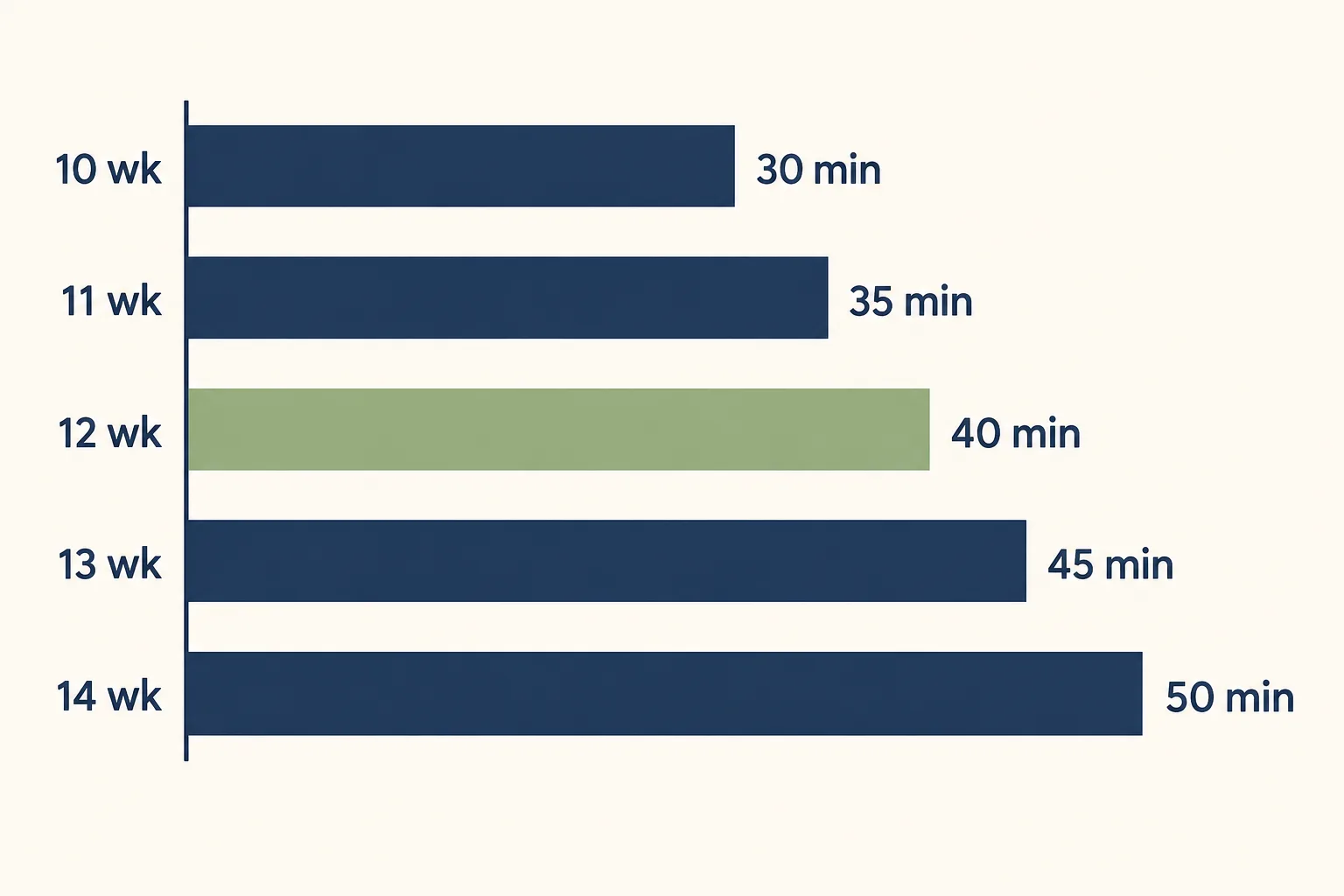
| 12 weeks | 150 minutes | 210 minutes | 1:30, 5:00 am | 3 | 5 minutes | 40 minutes |
| 13 weeks | 165 minutes | 225 minutes | 1:45, 5:30 am | 3 | 5 minutes | 45 minutes |
| 14 weeks | 180 minutes | 240 minutes | 2:00, 6:00 am | 3 | 5 minutes | 50 minutes |
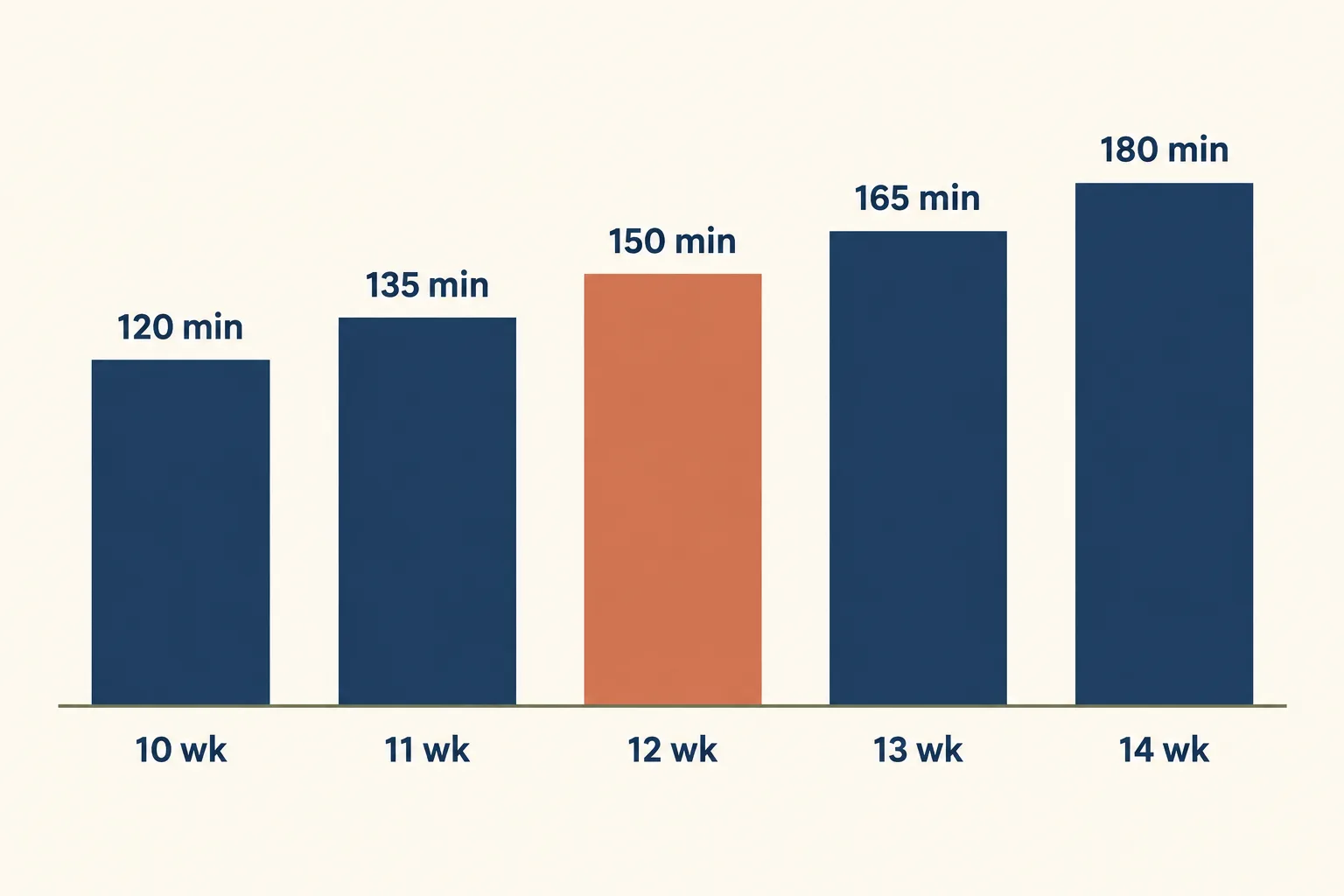
These are medium-size examples, and large puppies use the same reminders. For a toy breed, take 15 minutes off: about 135 minutes awake and 195 minutes at night at 12 weeks. Sleep stays at 18 to 20 hours a day, in line with the AKC guidance on puppy sleep.
The rule behind the numbers: awake reminder = 75 + 15 x (age in weeks - 7) minutes, night stretch = 135 + 15 x (age in weeks - 7) minutes, both capped at 240. It is a planning reminder, not evidence that a birthday grows a bigger bladder overnight. The 10 week old puppy schedule is a useful comparison if you are deciding which habits to keep.
A 3 month old puppy schedule around meals and potty
At 3 months, three meals a day give you the day's anchors: breakfast at 7:00 am, lunch at 12:10 pm and dinner at 6:10 pm, each followed by a potty trip about 20 minutes later. Confirm food, amounts and how often to feed with your vet.
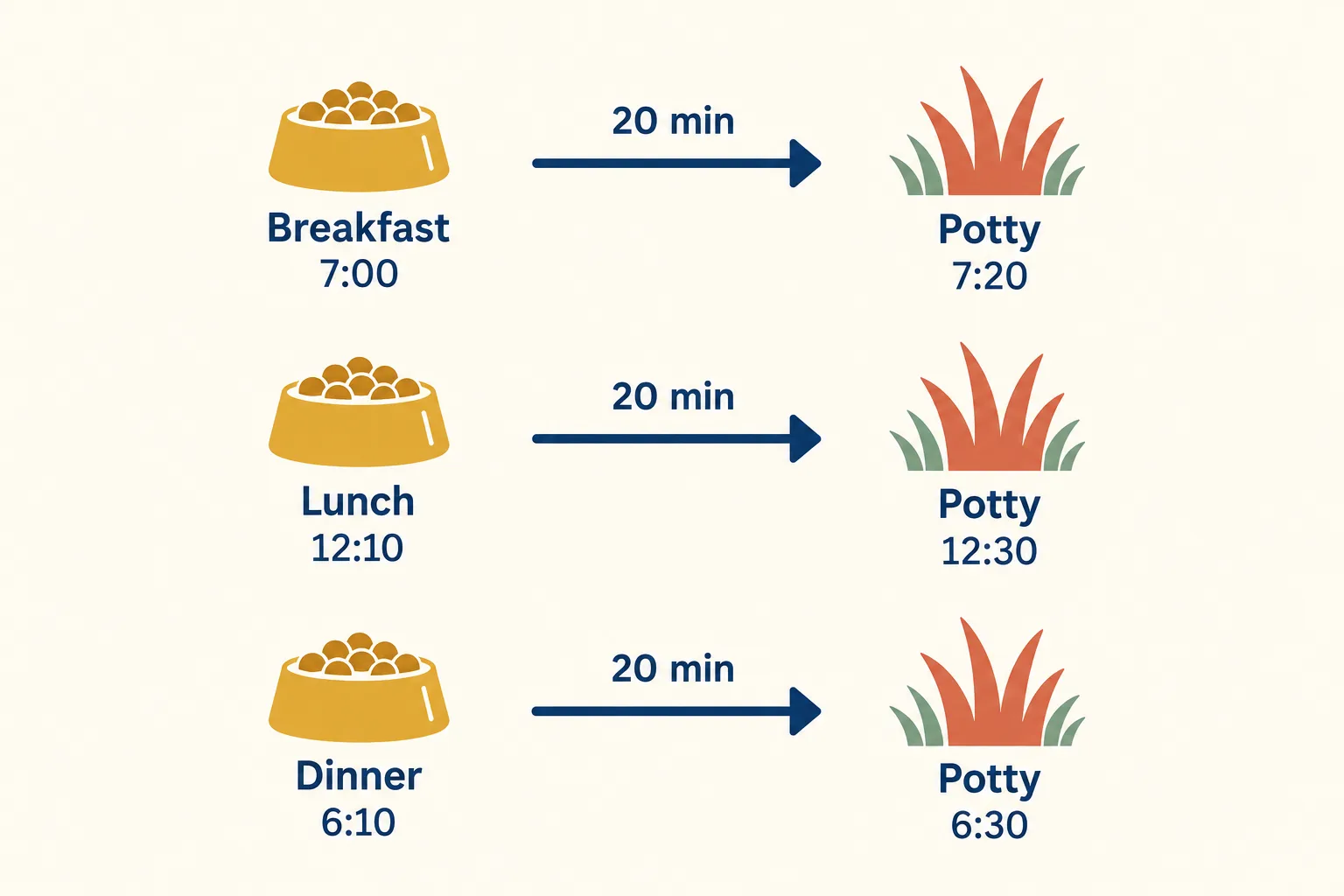
The AKC feeding guide explains how feeding changes as puppies grow. The clock here is just a worked routine. The 20 minute delay is a reminder for a busy caregiver, not a claim that every puppy needs exactly that gap. If your puppy is already circling by the door, go now.
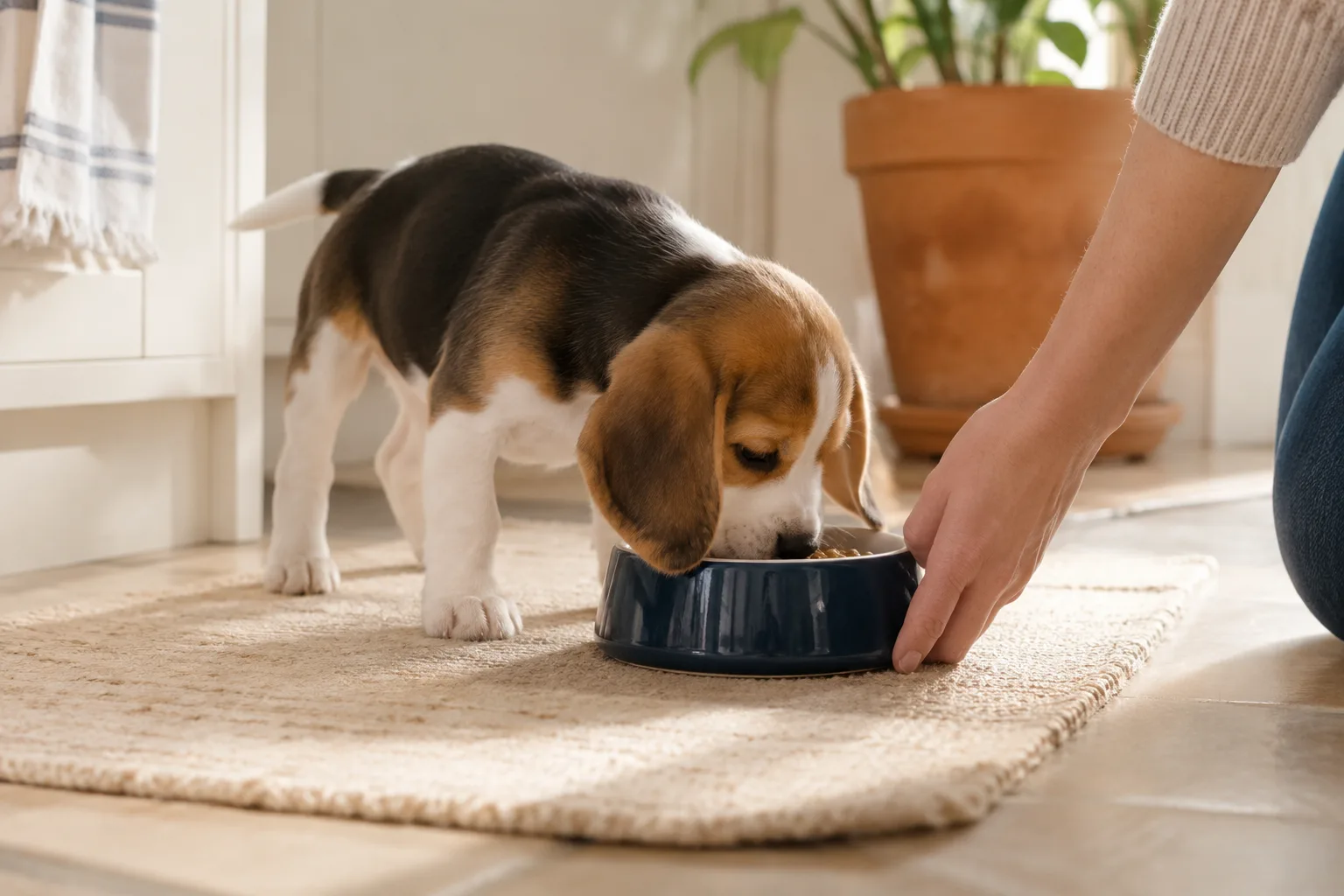
Keep rewarding success outside, in line with the AKC potty training guide. Log the trigger, the place and the result for each trip. Those three details make the next change specific, instead of deciding the puppy just needs to try harder. The guide to potty training a puppy has the full method.
Crate practice and sleep for a 12 week old puppy
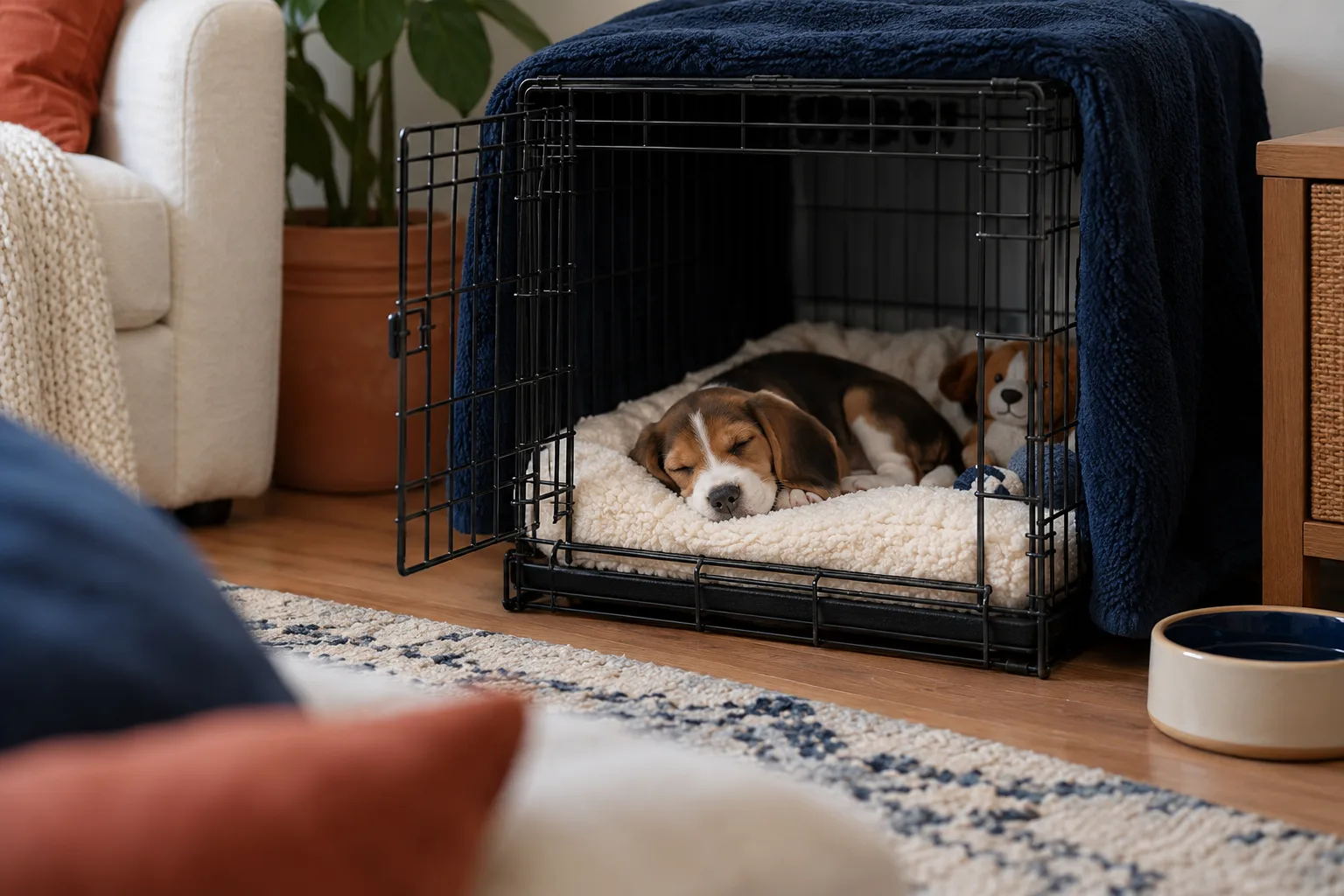
Resting comfortably in a crate and coping with you leaving are two different skills. Your puppy might nap happily near you and still find a departure hard. Practice departures in small steps while you are home and can respond, when basic needs are met and the house is quiet.
The example budget at 12 weeks is 40 minutes of awake crate practice, only while relaxed. That is a practice budget, not a workday holding allowance. If you need to be away longer, arrange care around the puppy's real breaks.
Keep daytime naps protected. If household traffic keeps interrupting them, move the resting spot or ask people to give it a wider berth. Do not cut naps to make the puppy match an adult bedtime: an overtired puppy settles worse at night, not better.
For equipment and introductions, see crate training a puppy and the crate size calculator. The 8 week old puppy night routine explains the calm return after a night break. Keep that sequence even as the alarms move later: lead on, potty spot, quiet praise, back to bed.
Teething, confidence and an easy win
Around three months many puppies are teething and mouthing more. Choose toys that put space between hands and teeth, pause when the puppy grabs skin, and offer a calmer alternative. If you are unsure about a chew or your puppy seems uncomfortable eating, ask your vet rather than solving it with a schedule.
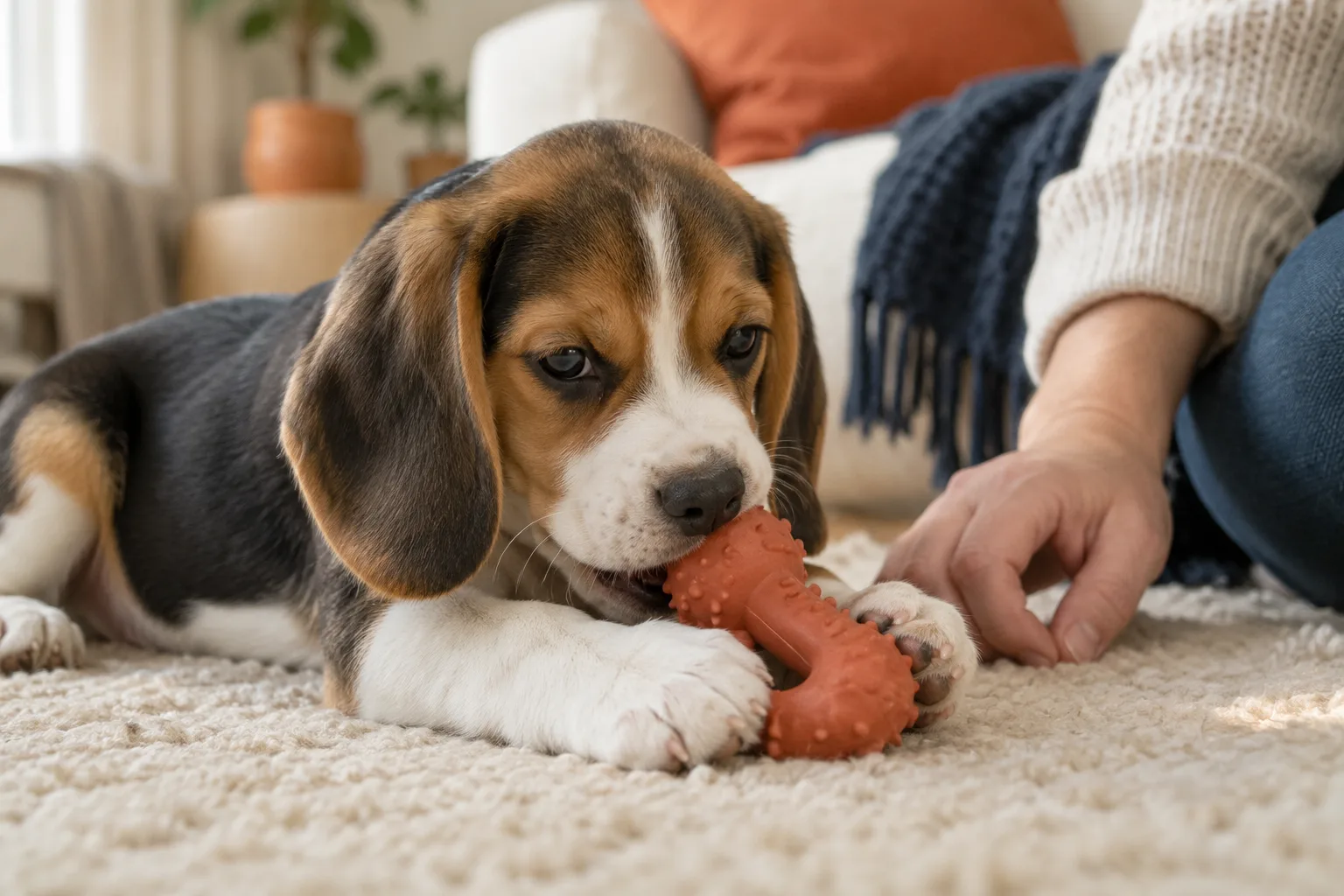
Make practice small enough that you can see success. Ask for attention in a quiet room, reward the glance, release. Then try the same thing near a mild distraction if the first version was easy. A busy street is a different task from your kitchen, even with the same word. The same goes for walking on a leash, which is why teaching a puppy to walk on a loose leash starts indoors. For session lengths by age and a treat ladder for harder places, see how to train a puppy in short sessions.
For social experiences, give your puppy room to watch without being handled by every passerby. Our guide to helping a puppy feel comfortable around new experiences shows how to choose distance, reward calm noticing and stop early. Agree with companions that moving away is allowed. The AVSAB position statements support rewarding the behavior you want. If biting on people is the main problem, how to stop puppy biting goes step by step.
Give growing freedom a clear boundary
When the kitchen stays clean, it is tempting to open every door at once. Instead, add one supervised room at a time. Spend time there together, watch for potty signals and keep the route outside open. A dry familiar room tells you nothing about a new rug or a closed door.
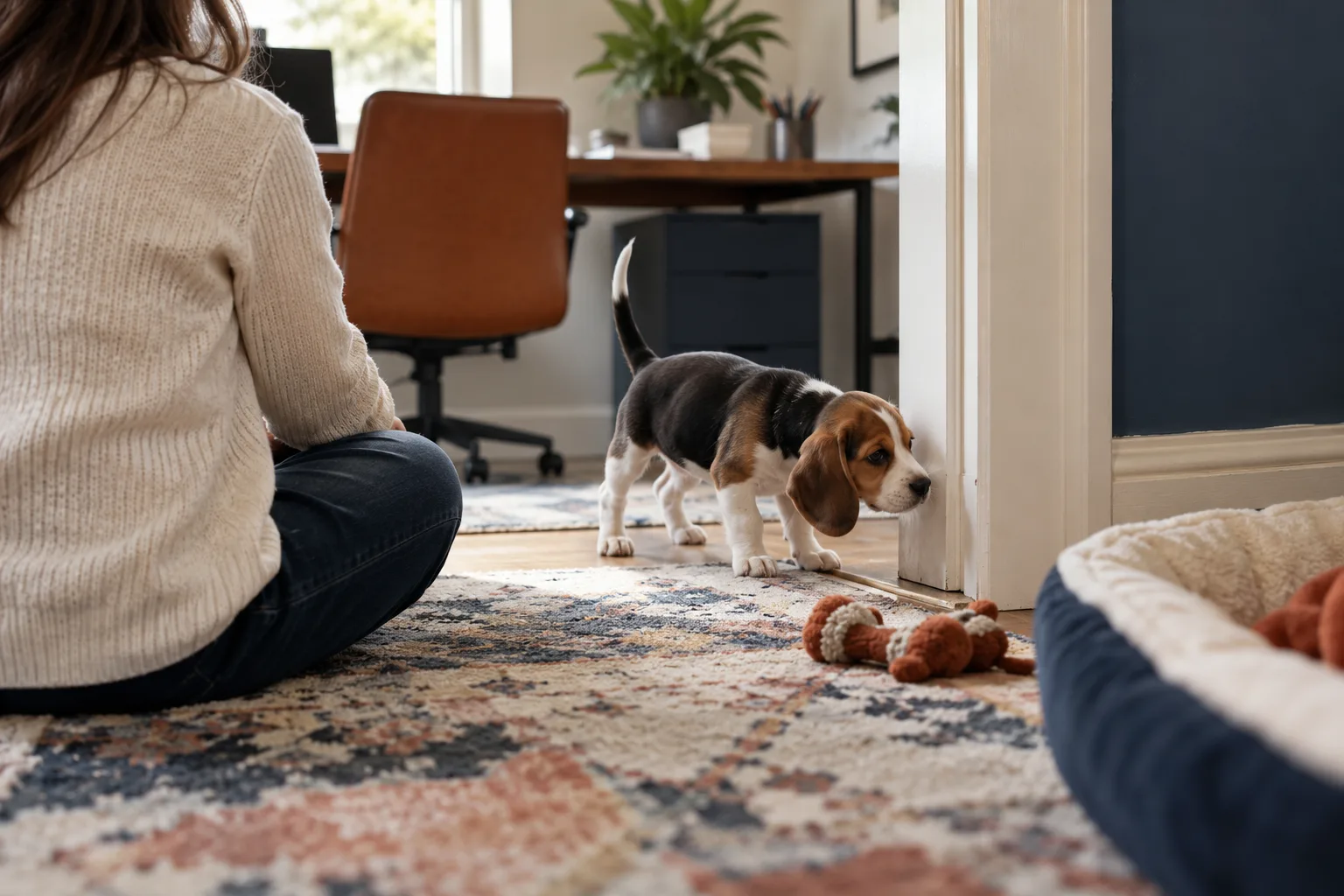
Prepare the room first: tuck cords away, put shoes up, check what is in reach, and keep a toy handy. Leave before the puppy gets tired or frustrated. Then write down the situation, not a verdict: was the room quiet, was someone else there, what helped the puppy settle. Those details let you repeat the good version.
Plan the handovers before the hours
At 12 weeks the routine usually breaks at handovers, not at the puppy. Decide which parts of tomorrow need a person present: potty trips, meals and supervised play still do. A printed timetable cannot cover a gap in care.
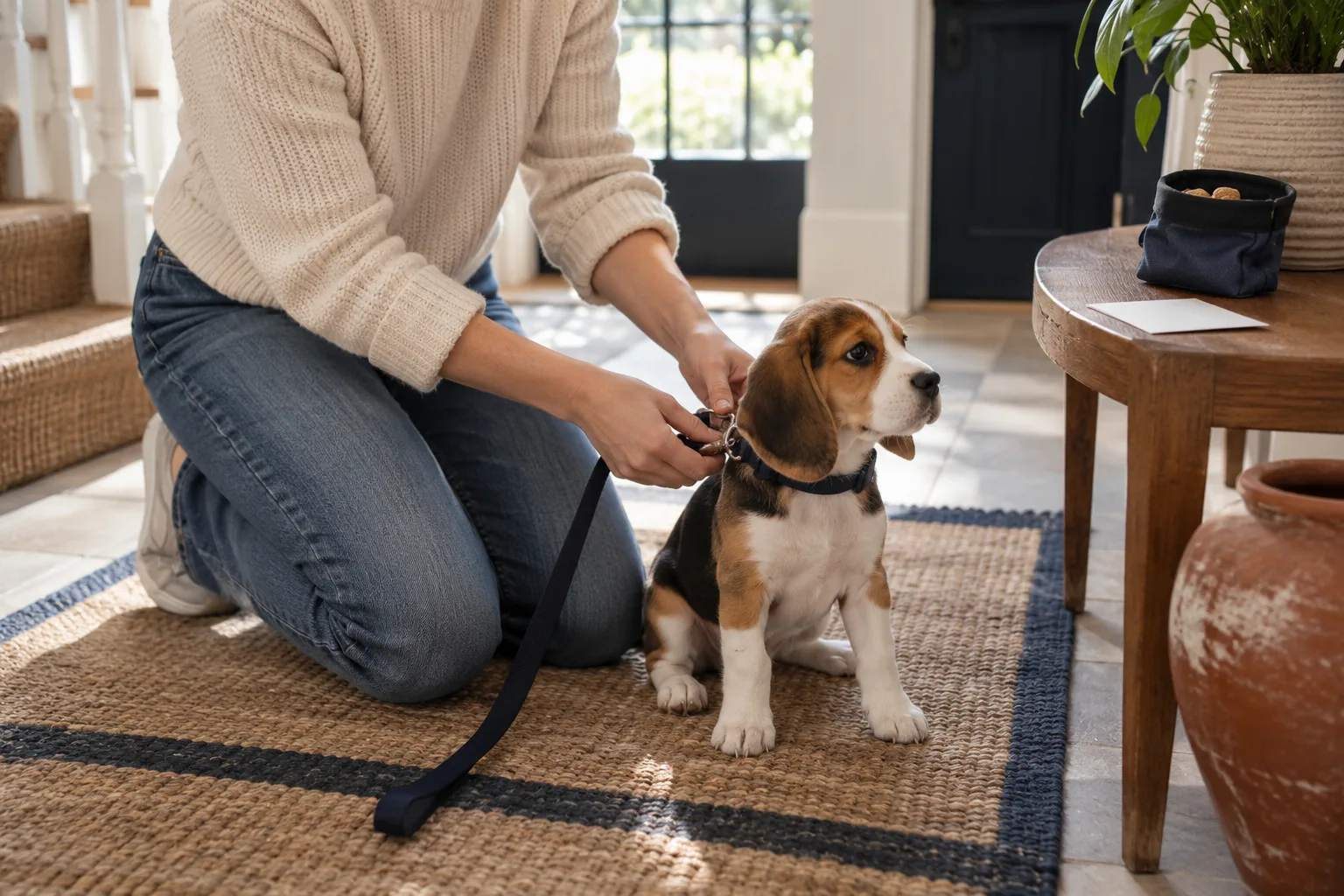
How to set up a 12 week old puppy schedule
- Plan the handovers
Walk through tomorrow before bed. Decide who handles the morning, who covers the midday break and where the puppy rests while the house is busy.
- Put supplies in one place
Keep leash, treats, bags and a short note by the door, so a helper can start without searching or waking the puppy for a greeting.
- Allow flexible transitions
Move the example around real waking and activity. The three-month label never means your puppy has to wait longer than feels comfortable.
- Review one new experience
Write down where practice was easy. Repeat that comfortable version before making the task harder or the outing longer.
Where a written schedule hits a wall
All of this works until the day stops matching the table. The 12:00 pm nap runs to 12:40, there is an accident in the hallway, and every time after that is off. Rewriting the plan by hand each night, and then explaining it to a helper, is the job that quietly stops happening.
A plan generator can carry that part. Tell it how today went and it reshuffles tomorrow's potty trips, naps and crate practice around it, with the same reward-based rules, in a format a helper can follow.
The short version
A 12 week old puppy, or 3 month old puppy, does well on a potty break about every 2.5 hours while awake, three meals with a trip 20 minutes after each, long planned naps, and two quiet night trips around 1:30 am and 5:00 am. Keep the shape of the day, plan the handovers, and add freedom one room at a time.
Start from the sample below, prefilled for 12 weeks, then build your own free schedule in about a minute. Get tomorrow's plan, adapted to how today went.
Frequently asked questions
Our example uses three meals a day at 12 weeks, following the general growth-stage advice in the AKC feeding guide. Confirm how often to feed, which food and how much with your vet for your puppy.
As a planning rule, offer a break about every 150 minutes while awake and plan a longest night stretch of about 210 minutes. Those are reminders, not limits to test. Go sooner after waking, eating, play or any signal.
The order of the day stays the same. The gaps grow: from 90 to 150 minutes while awake, from 150 to 210 minutes at night, and from three night trips to two. Keep earlier breaks if they suit your puppy better.
Give naps a quiet spot through the day, then a calm bedtime around 10:00 pm and responsive night care. The example night trips are about 1:30 am and 5:00 am. Respond sooner whenever your puppy wakes and needs you.
Watch how your puppy handles transitions, new rooms and mild distractions, and keep supervising even when things feel easier. A sudden change in energy, comfort or potty habits needs your vet, not a harder training exercise.
There is no single hardest week for every home. Look at the specific strain: missed sleep, unclear handovers or repeated accidents. Fix that part of the routine and arrange support rather than waiting for the calendar to fix it.
Keep care predictable, offer calm company and introduce the sleeping space gently. There is no deadline for settling. Ask your vet or a qualified reward-based professional if distress keeps going.
Get tomorrow's plan, adapted to how today went
A printed schedule can't see that she peed at 7:10 today; the Coach plan rewrites tomorrow from today's log. Start with the free schedule for your puppy.
Build my puppy's plan- Free starting schedule
- Reward-based practice
- Fits your puppy's day
Share article
About the author
More articles
Potty, crate and sleep · 10 min
How Long Does It Take to Potty Train a Puppy?
Potty training takes steady support, not a weekend deadline. Learn which milestones matter, why timelines vary and how to spot the next useful change.
Potty, crate and sleep · 14 min
How to House Train a Dog: Puppy or Adult, Step by Step
How to house train a dog of any age: one outdoor spot, a schedule, a reward the second they finish, and supervision in between. What changes for puppies, adult rescues and dogs who start having accidents again.
Potty, crate and sleep · 12 min
10 Week Old Puppy Schedule: Potty, Crate and Sleep Times
A full 10 week old puppy schedule, hour by hour: potty every 2 hours awake, two quiet night trips, three meals and planned naps, plus how 10 weeks compares with 9 and 12.
Potty, crate and sleep · 12 min
8 Week Old Puppy Schedule: Potty, Crate and Sleep Times
Your 8 week old puppy's first routine, by the hour: potty every 90 minutes awake, three quiet night trips, 20 minute crate practice, and how to keep it going when you are tired.
Potty, crate and sleep · 12 min
9 Week Old Puppy Schedule: Potty, Crate and Night Times
A full 9 week old puppy schedule: every potty trip, meal and nap by time of day, night alarms at 12:45, 3:30 and 6:15, and how week 9 compares with 8, 10 and 12 weeks.
Potty, crate and sleep · 12 min
How to Potty Train a Puppy: The Daily Routine That Works
How to potty train a puppy with set potty moments, rewards on the spot and a four-column accident log. Includes potty reminders by age and a full sample day.