
8 Week Old Puppy Schedule: Potty, Crate and Sleep Times
In this article
An 8 week old puppy needs a potty trip right after every wake-up, meal and play session, roughly every 90 minutes while awake, plus 18 to 20 hours of sleep and two or three quiet trips at night. The clock times below are a worked example: keep the order, then slide the whole day to fit your home.
You have a puppy, a bag of food, and a floor you keep checking. Start smaller than a perfect day. Pick a sleeping place, a potty spot, and a place for the lead before you need it. Your first routine is the route between those three places. Keep it easy enough to follow when you are tired.
What does an 8 week old puppy schedule look like?
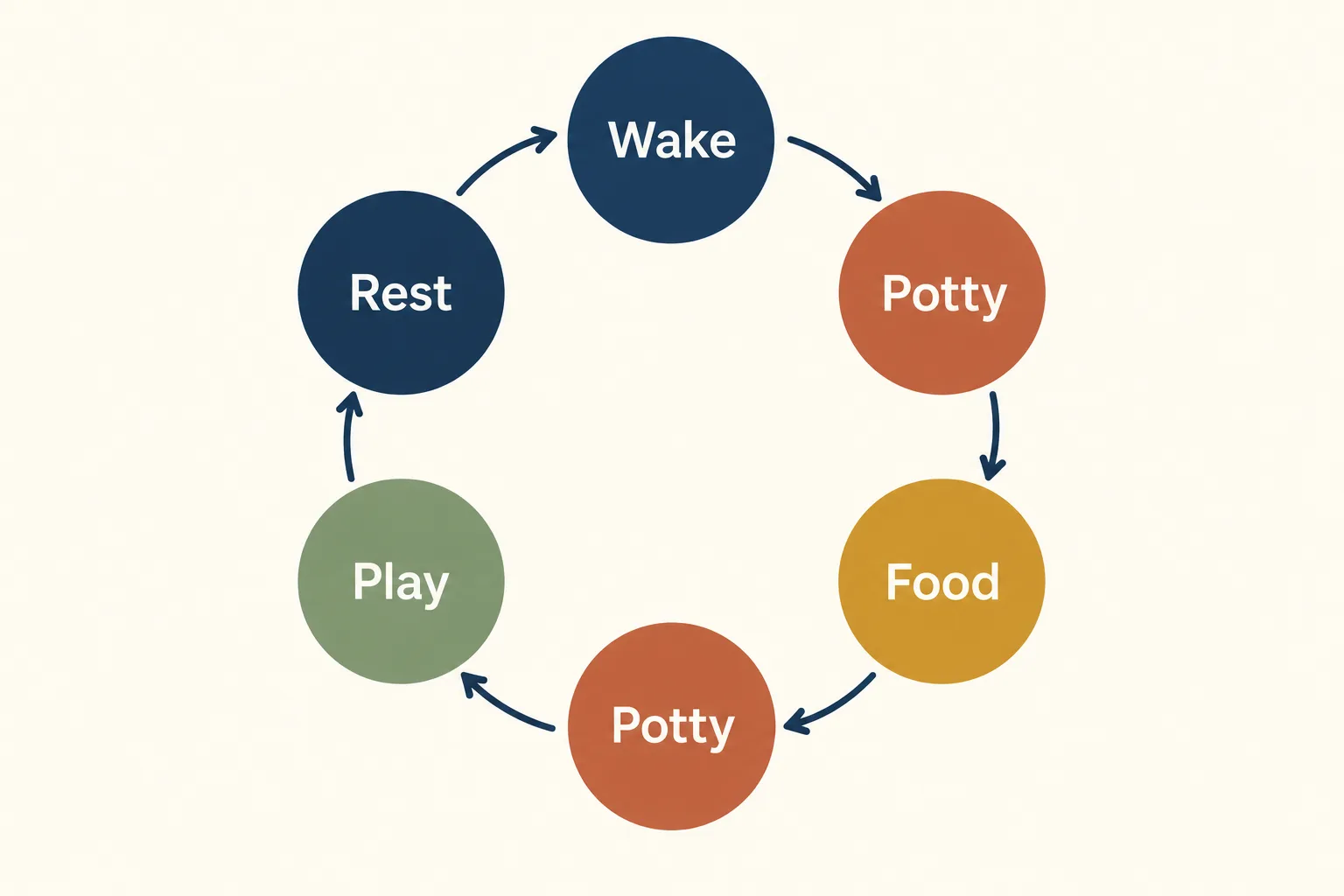
A workable 8 week old puppy schedule runs wake, potty, food, potty, short play, potty, nap, and repeats that loop four or five times a day. Night trips sit at about 12:30 am, 3:00 am and 5:30 am. Here is the full example day for a medium puppy in an apartment, with someone away 4 to 6 hours on a work day.
| Time | What happens |
|---|---|
| 6:30 am | Wake up, straight out for potty |
| 7:00 am | Breakfast, then a quiet moment |
| 7:20 am | Potty, 20 minutes after breakfast |
| 7:30 am | Reward-based training: 3 minutes |
| 7:50 am | A little play, then straight out for potty |
| 8:00 am | Crate nap: settle nearby, door open until comfortable |
| 10:00 am | Wake from nap, potty |
| 10:20 am | Gentle play, then potty before resting again |
| 10:30 am | Quiet rest or a crate nap |
| 12:00 pm | Midday wake-up, potty with you or a helper |
| 12:10 pm | Lunch |
| 12:30 pm | Potty, 20 minutes after lunch |
| 1:00 pm | A little play, then potty |
| 1:10 pm | Afternoon crate nap or quiet rest |
| 3:00 pm | Wake from nap, potty |
| 3:40 pm | Gentle play, then potty |
| 3:50 pm | Another quiet nap |
| 6:00 pm | Wake up, potty |
| 6:10 pm | Dinner |
| 6:30 pm | Potty, 20 minutes after dinner |
| 6:45 pm | Reward-based training: 3 minutes |
| 7:00 pm | Calm play, then potty |
| 7:10 pm | Evening rest near you |
| 9:00 pm | Wake up, potty, then a quiet cuddle |
| 10:00 pm | Last potty, then bedtime beside your bed |
| 12:30 am | Quiet night potty on a lead, back to bed, no play |
| 3:00 am | Quiet night potty on a lead, back to bed, no play |
| 5:30 am | Quiet night potty on a lead, back to bed, no play |
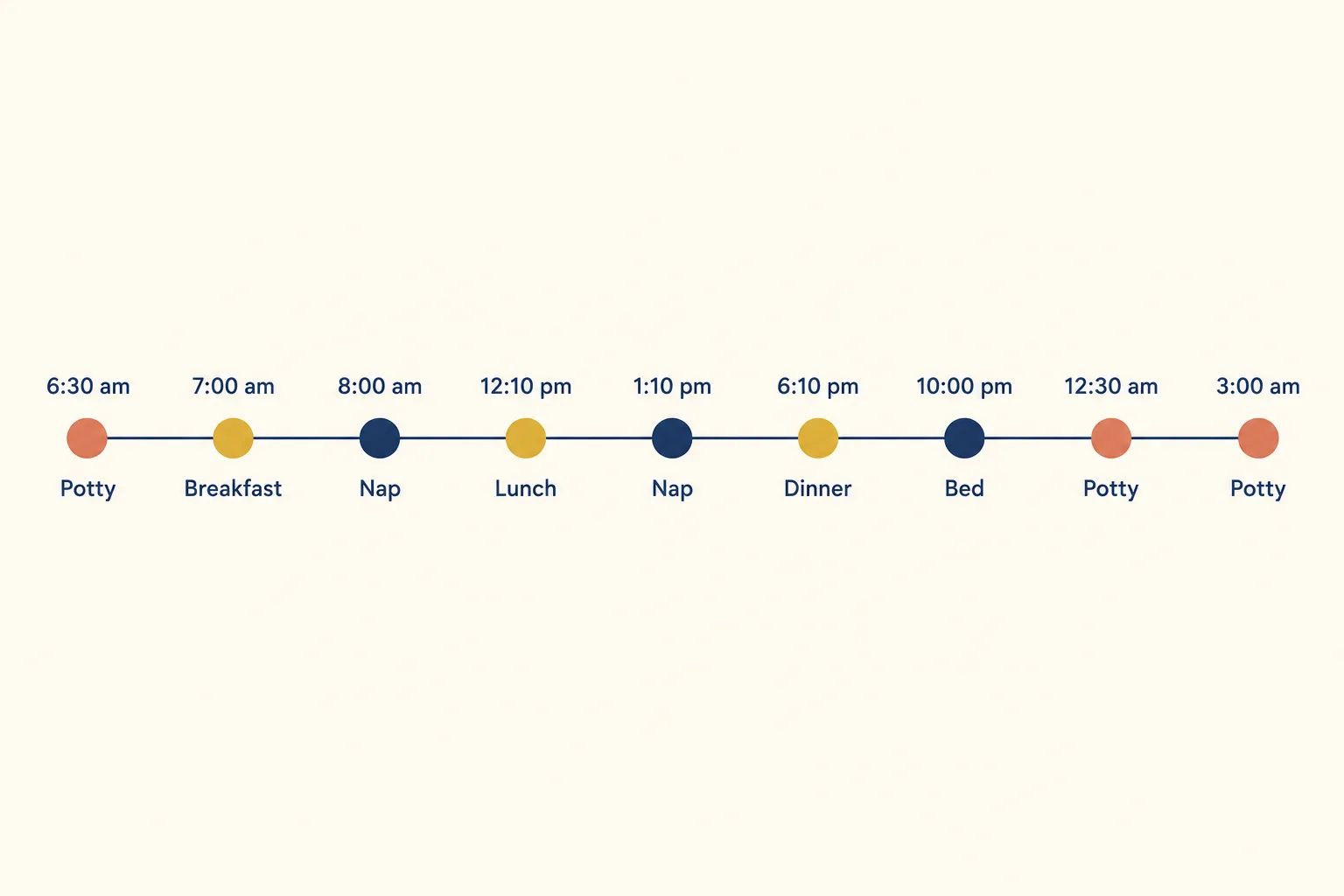
If breakfast happens at 8:00 in your house, move every line by 90 minutes. Do not chase single minutes. The order is the part that prevents accidents: wake, potty, food, another chance outside, gentle activity, rest.
This week at a glance
These are rules of thumb for a medium puppy, not targets. Toy breeds use reminders 15 minutes shorter. Respond sooner whenever your puppy signals.
| 8 weeks | Example |
|---|---|
| Awake potty reminder | 90 minutes |
| Longest planned night stretch | 150 minutes |
| Night alarms | 12:30 am, 3:00 am, 5:30 am |
| Meals per day | 3 (4 for toy breeds) |
| Sleep per day | 18 to 20 hours |
| Training per session | 3 minutes |
| Awake crate practice | 20 minutes, only while comfortable |
Our planning rule: awake gap = 75 + 15 x (weeks - 7) minutes, night stretch = 135 + 15 x (weeks - 7) minutes, both capped at 240. Crate practice = 15 + 5 x (weeks - 7) minutes, capped at 60, and only while your puppy is relaxed. Meal counts and the sleep range follow AKC feeding guidance and AKC sleep guidance. Confirm feeding with your vet.
Your first days with an 8 week old puppy
Let your puppy explore a small supervised area. Sit nearby while they sniff. Put away loose cables and anything you do not want chewed. A washable mat and an open crate make a clear resting corner.
You do not need to teach every cue before dinner. Notice what helps your puppy settle, then repeat that setup tomorrow. Success this week can mean finding the lead fast and catching a wake-up before an accident. Write that down.
Large-breed puppies use the same reminders as medium ones at this age. Size never overrides what your own puppy is telling you.
8 week old puppy potty training starts at the door
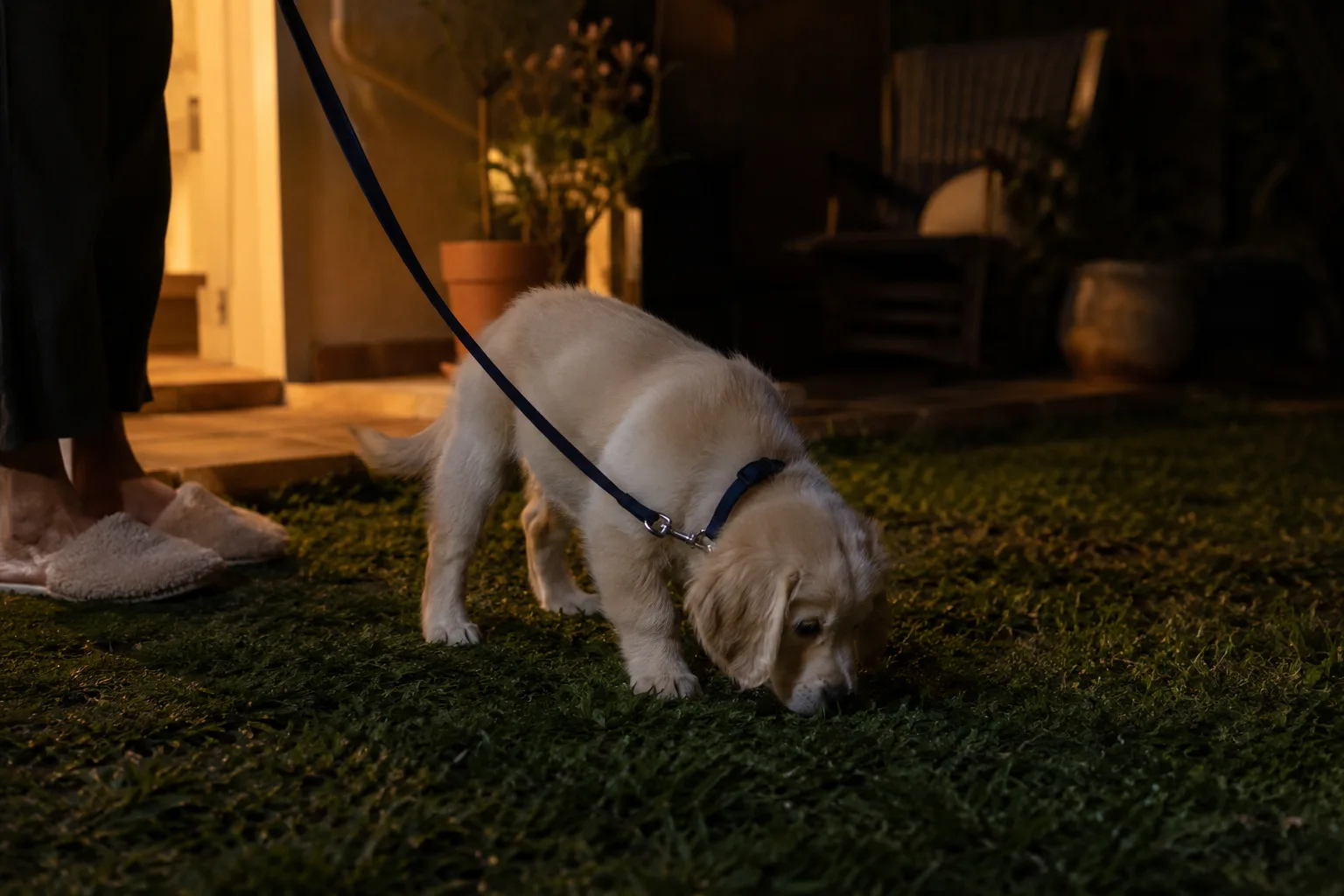
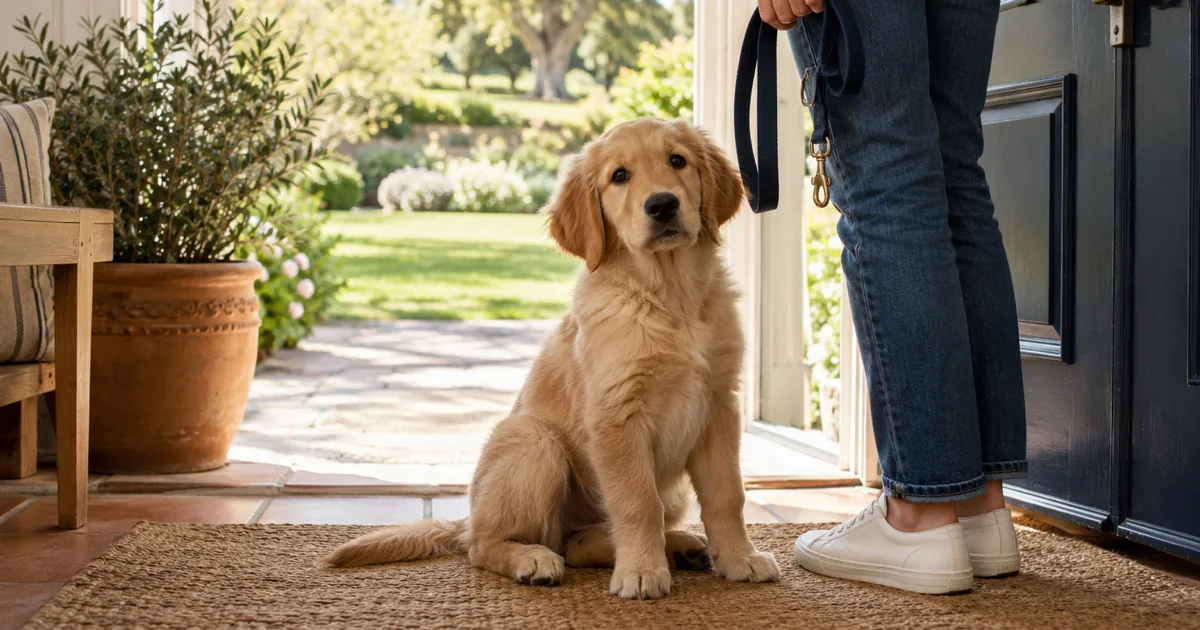
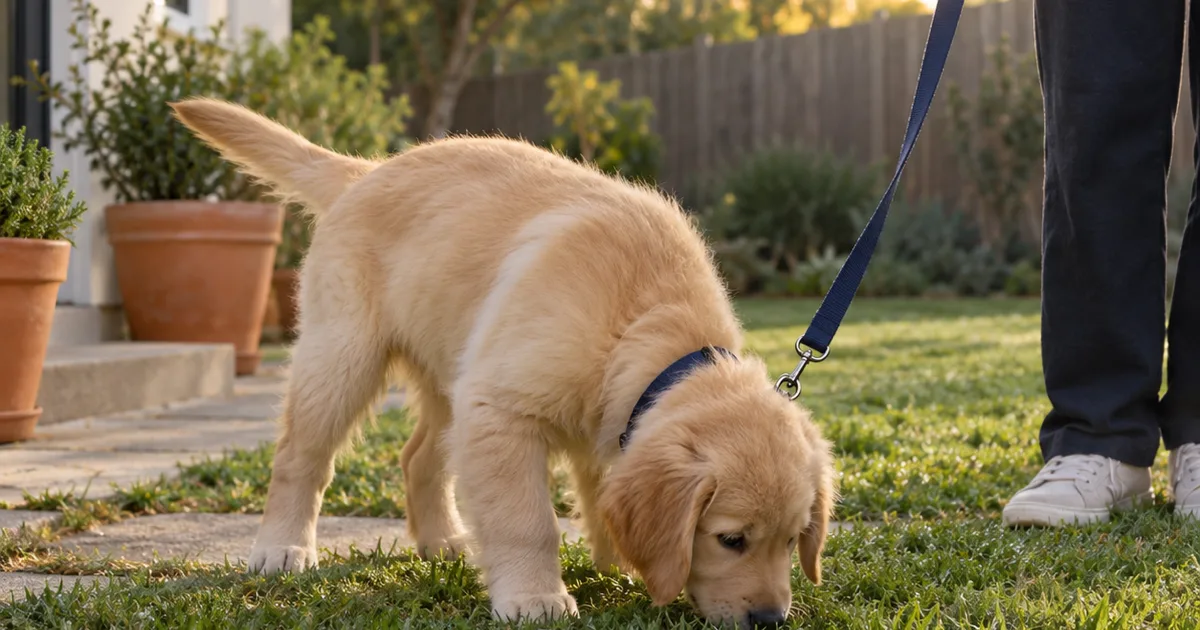
Here is the part most schedules skip. The 90 minute gap is not where accidents happen. They happen in the two minutes after your puppy wakes up, while you finish your coffee. Put shoes, lead and treats together by the door, and go the moment you see an open eye.
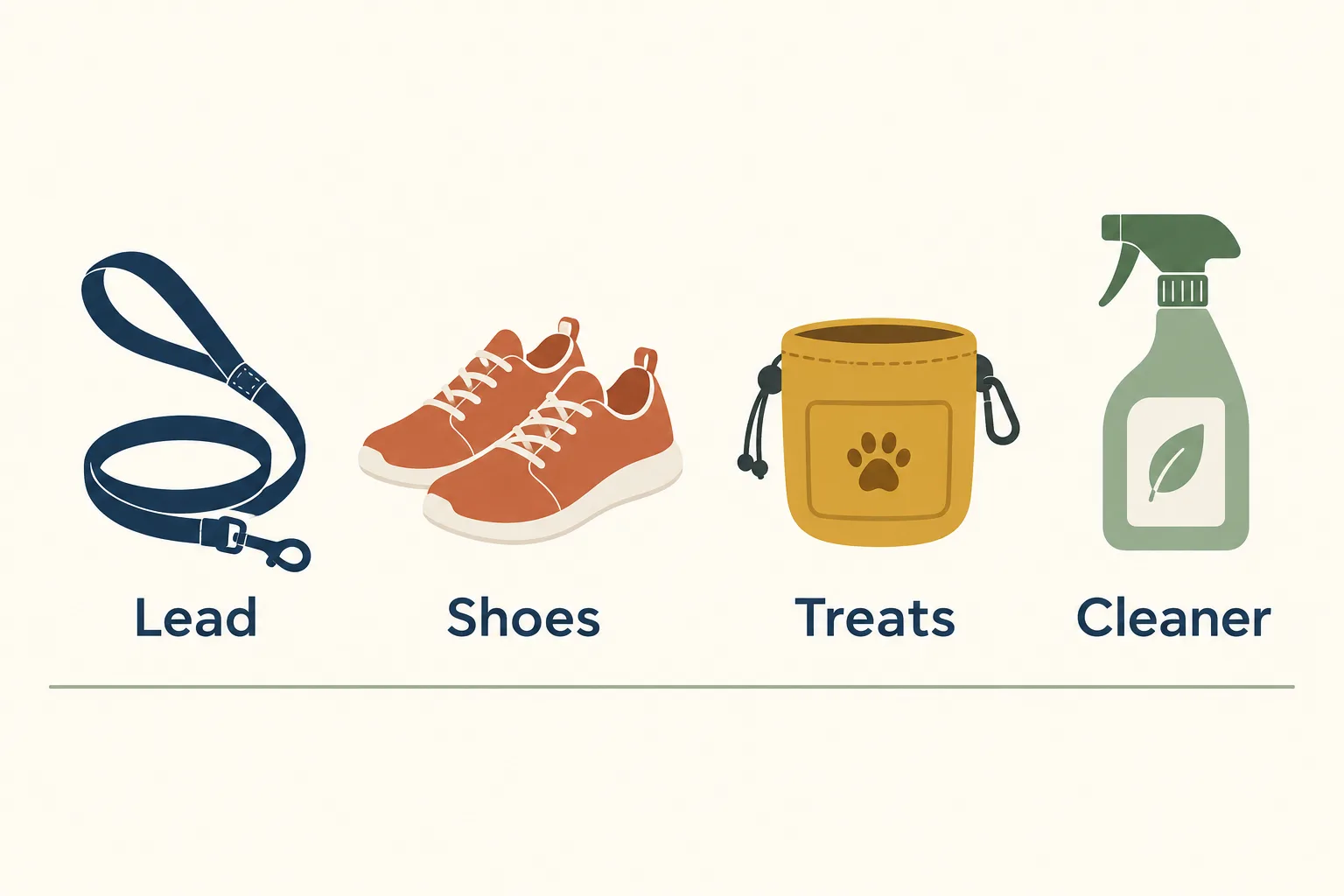
Stay with your puppy outside and reward the moment they finish. The AKC potty training guide backs frequent chances, supervision and rewards. An accident is information about the routine, not about your puppy.
Say it once, quietly, as your puppy starts sniffing the spot. Reward the second they finish.
If nothing happens outside, come back to a small supervised spot and try again soon. An empty trip is not proof your puppy can roam the whole apartment. Sniffing, circling, or suddenly leaving play mean another trip now, sooner than the sample clock says.
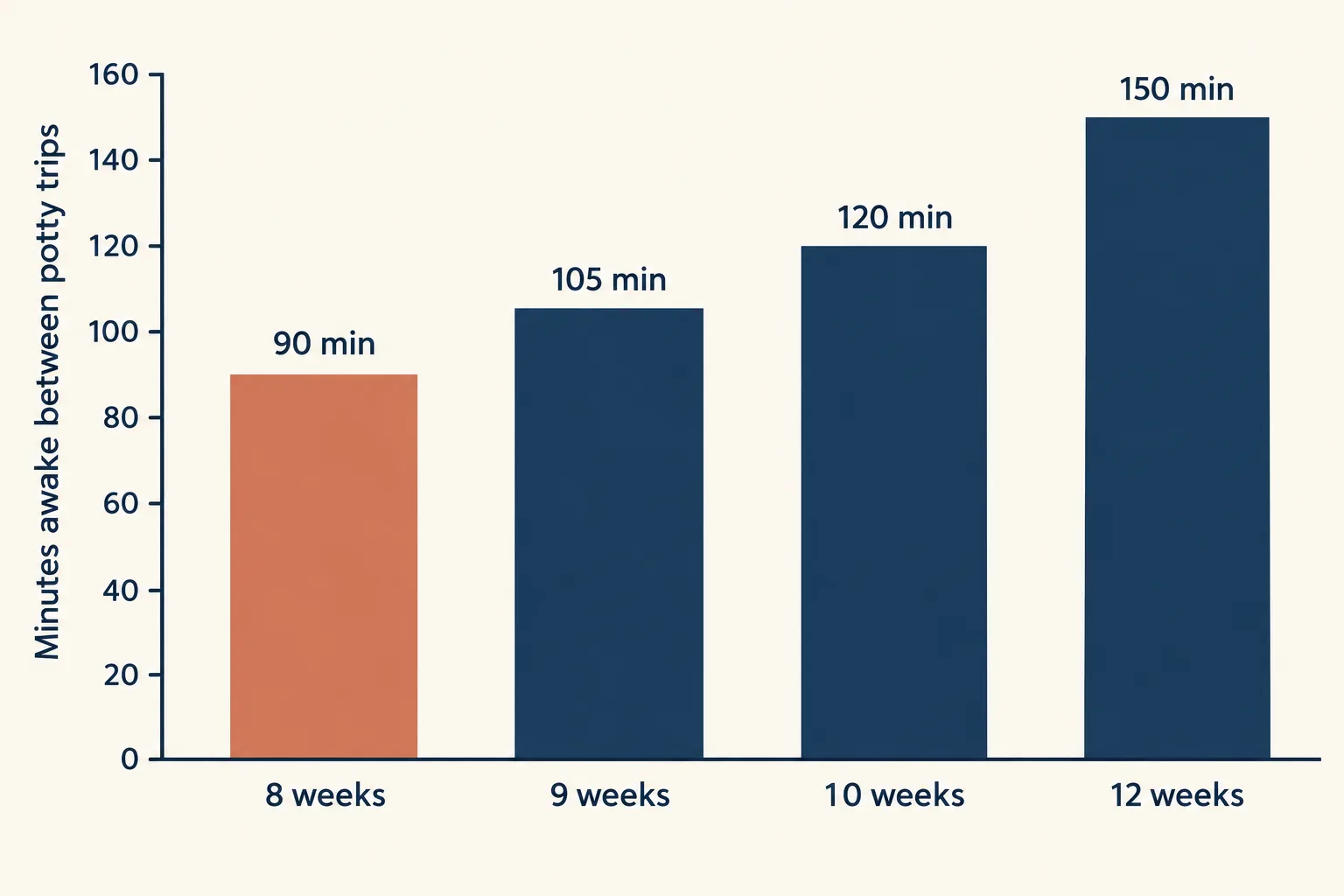
Keep a short note after each trip: wake-up, meal, play or accident. If accidents keep landing after breakfast, put the lead beside the bowl before you serve food. The 20 minute after-meal trip is a reminder to check, not a reason to ignore a puppy who needs to go earlier. Our potty training guide has the fuller routine.
What an 8 week old puppy can and cannot do yet
| Situation | What to expect at 8 weeks | What to do |
|---|---|---|
| Just woke up | Needs to go right away | Carry or walk straight to the spot |
| Just ate | Often goes within 20 minutes | Trip at about 20 minutes, sooner if sniffing |
| Mid play | Can stop suddenly to go | Pause play every few minutes for a trip |
| Night | Planned stretch of about 150 minutes | Quiet trip on a lead, back to bed |
| You are away 4 to 6 hours | Cannot wait that long | Midday helper or a pen with a potty pad |
Never withhold water to stretch the gaps. In an apartment, leave 5 minutes before the potty time to cover the elevator or stairs. A safe pen with a potty pad is fine when you cannot get outside in time.
Crate and night plans for a brand-new home
Set up the sleeping space close enough to hear movement. Leave the crate door open while you introduce it with food and quiet company. Your puppy can step in, step out and try again. Closing the door is a separate exercise for later, and you reopen it before the experience turns frightening.
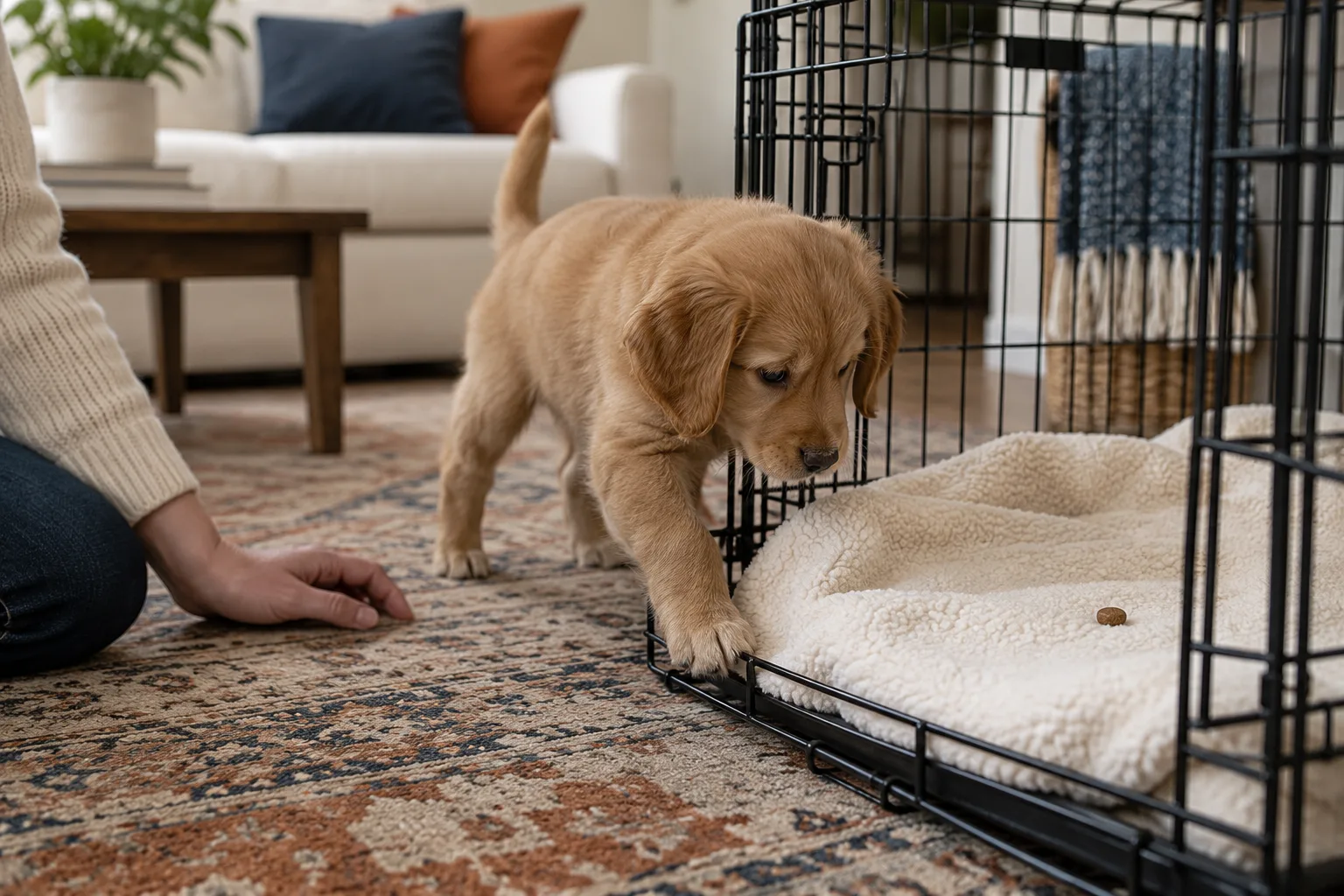
At bedtime, keep the lead ready and the route outside clear. The night alarms are conservative reminders from our planning rule, not promises about how long your puppy will sleep. If you hear stirring earlier, go then.
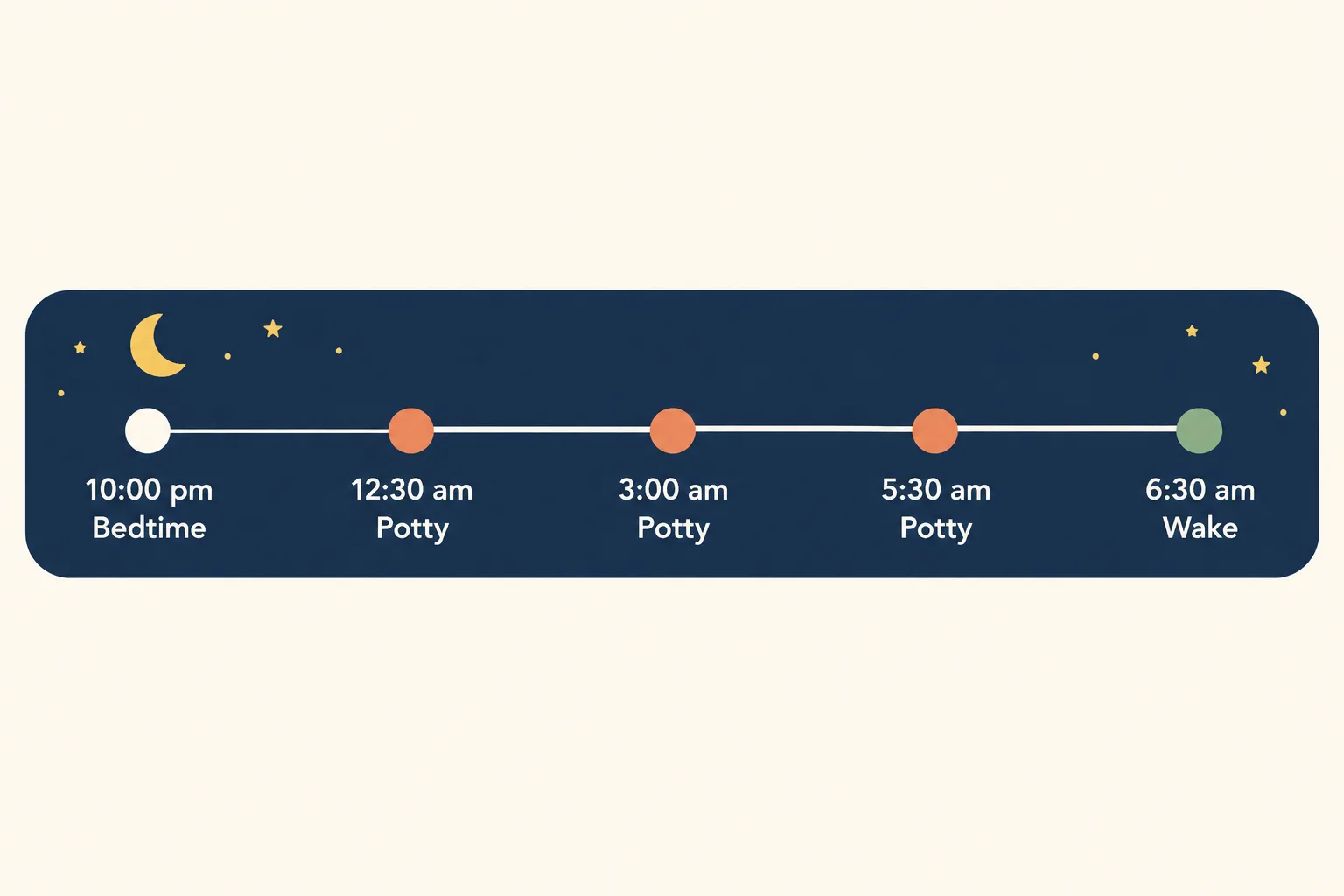
Take a quiet potty trip on the lead and go straight back to bed. No games, no bright lights. Protect daytime naps too: lower household noise near the sleeping spot. Keeping a tired puppy awake does not buy you a longer night.
Our crate training guide and the crate size calculator cover the setup. Keep today's crate practice separate from a long work shift. If you cannot cover the breaks your puppy needs, arrange a helper.
How to set up your 8 week old puppy's first day
- Set out the basics
Put the lead, shoes and rewards beside the door before your puppy wakes. Choose a resting corner you can supervise.
- Run the first-day example
Start at waking and follow the order through breakfast and rest. Shift the whole clock together if your morning starts later.
- Mark each potty trip
Write wake-up, meal, play or accident next to the time. Tomorrow, move the trip that came too late.
- Share the next shift
Tell the next caregiver when the puppy last ate, rested and went out. Keep it short enough to remember at night.
Small introductions, soft hands, and room to rest
Your puppy does not need to meet everyone who wants to say hello. Try a quiet introduction to something already in your home: a jacket on a chair, the sound of a cupboard, a person sitting still. Let your puppy choose whether to approach. If they back away, add distance and make the next try easier.
The AVSAB position statements support humane, reward-based training and thoughtful early socialization. Ask your vet which places suit your puppy's vaccination status. Watching the world from a safe spot counts. For a practical next step, use our gentle puppy socialization checklist to choose one easy introduction.
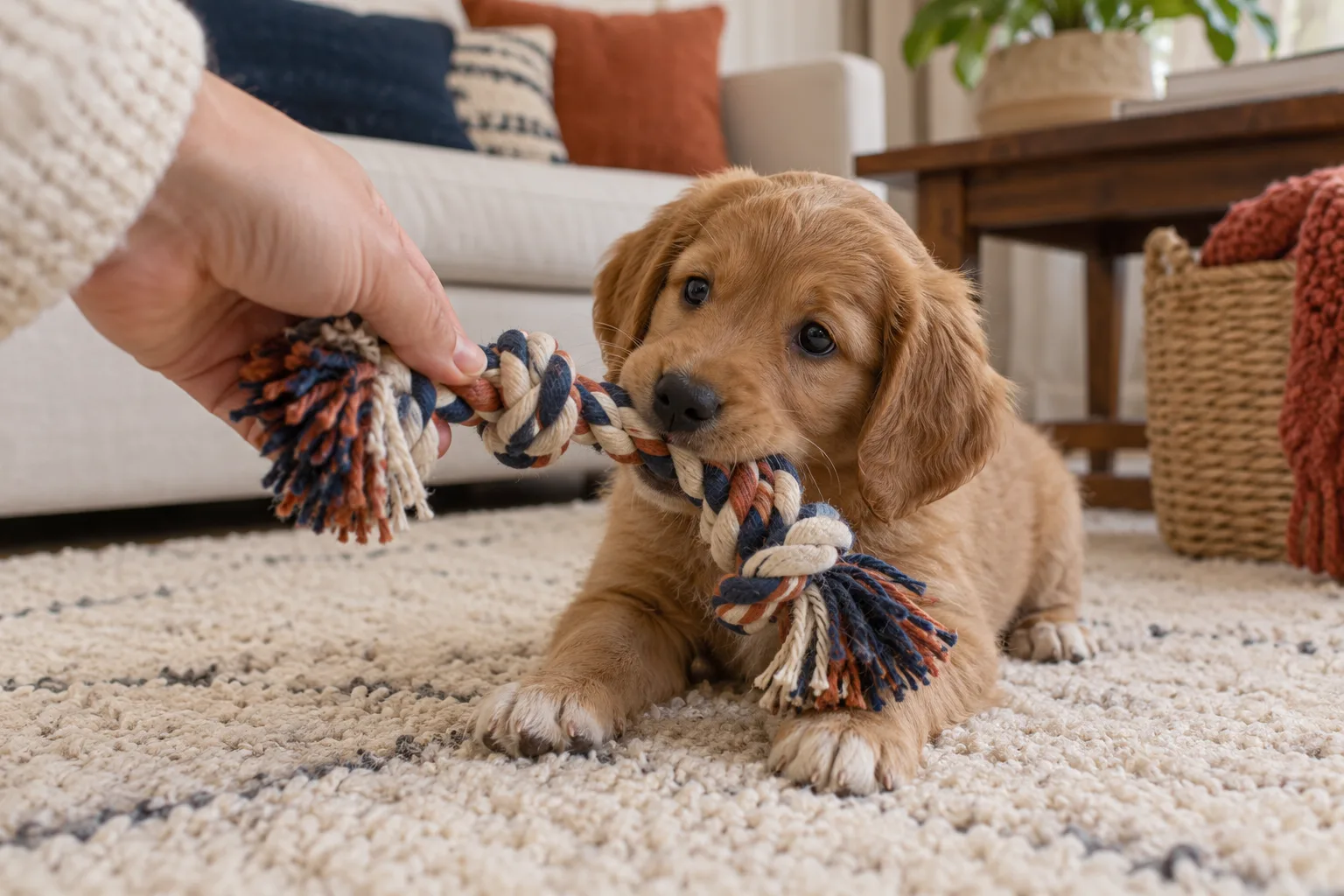
When teeth catch your sleeve, stop moving it. Offer a chew and keep hands out of the game. If play keeps turning frantic, switch to something quieter or a nap. Everyone at home should do the same thing. One person offering a chew while another wrestles with bare hands makes the routine harder to read.
Make the first handover easy for a tired person
Before someone else takes a turn, walk them through the potty route. Point out the treats, the cleaning supplies and where the puppy usually rests. Do this while things are calm, not mid-accident. A quick practice run shows you the missing lead or the awkward door.
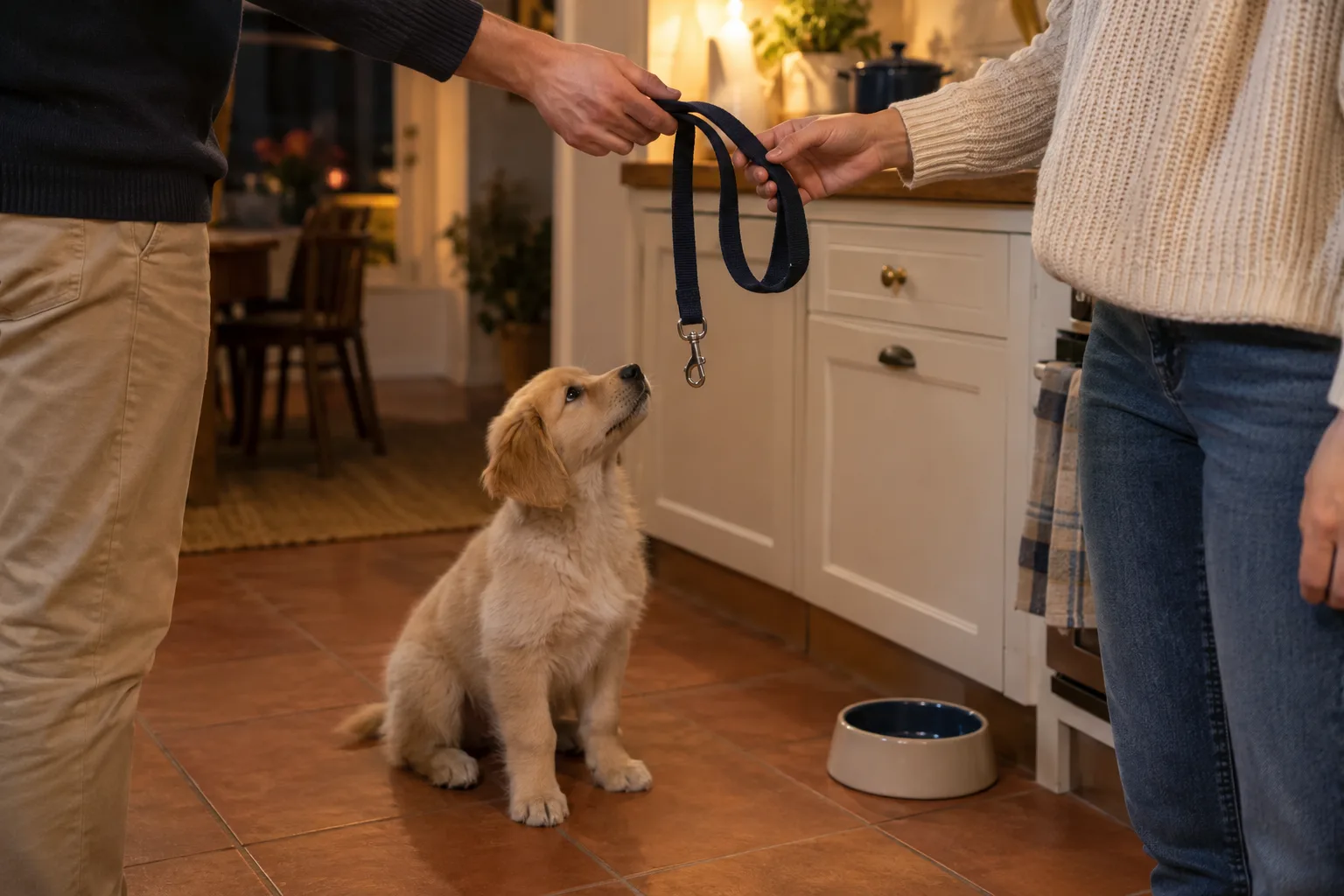
Keep instructions concrete. Not "watch the puppy" but "waking means straight to the potty spot." Say when the last meal was and whether the puppy has rested since. If you are alone, leave the same note for your future tired self. If the first week feels heavier than you expected, our post on the puppy blues is for you.
| Door ready | Small space | Quiet company | Simple handover |
|---|---|---|---|
| Shoes, lead and a reward live together so the first morning trip stays simple. | Start with a supervised area where you can see your puppy waking and moving. | Sit beside the resting corner while your puppy learns it feels comfortable. | Explain the next job before the tired person taking over has to guess. |
When to call the vet instead of changing the schedule
Some changes are not a schedule problem. Blood in urine or stool, straining, vomiting, diarrhea, a sudden potty regression or lethargy: call your vet today. Any bite that breaks skin on a person, or aggression, needs a certified behavior professional. This is general, reward-based training guidance, not medical advice.
The short version
Keep the order, not the minutes: wake, potty, food, potty, play, potty, rest. Go out the moment your puppy wakes, plan about 90 minutes between awake trips, and set three quiet night trips. Next week, compare with the 9 week old puppy schedule, and look ahead to the 10 week and 12 week examples.
The wall with a printed schedule is that your puppy does not read it. One late breakfast or a nap that runs long, and every time after it is wrong. That is what the plan is for: you tell it how today went, it moves tomorrow around your puppy. Build a free plan for your 8 week old puppy in about a minute.
Get tomorrow's plan, adapted to how today went.
Frequently asked questions
Potty trips after waking, meals and play; short supervised practice of about 3 minutes; and plenty of rest, 18 to 20 hours a day. Use the example above as a starting point, and take your puppy out before the printed time whenever they signal.
Plan a trip at least every 90 minutes while awake, plus right after waking, about 20 minutes after each meal and after play. That is a rule of thumb, not a target. Go sooner if your puppy sniffs, circles or leaves play.
A sudden change alongside lethargy, vomiting, diarrhea, blood, straining or potty regression needs a call to your vet today. Any bite that breaks skin on a person, or aggression, needs a certified behavior professional. Do not try to fix these signs by changing a timer.
Arrange care for potty, food, supervision and comfort first. Practice tiny, comfortable separations while you can respond. A schedule interval is not an alone-time allowance. If you must leave, have a helper cover what your puppy cannot manage alone.
Talk about the individual puppy and handover with the breeder, rescue and your vet. Ask about the current food, sleep and care routine so the move is less abrupt. This guide plans care for a puppy already home; it does not decide when a puppy should leave its mother.
You are learning a new routine while your sleep and normal tasks are interrupted. Simplify the day, share shifts where you can and set out supplies before you need them. One hard afternoon does not predict how every day will feel.
Get tomorrow's plan, adapted to how today went
A printed schedule can't see that she peed at 7:10 today; the Coach plan rewrites tomorrow from today's log. Start with the free schedule for your puppy.
Build my puppy's plan- Free starting schedule
- Reward-based practice
- Fits your puppy's day
Share article
About the author
More articles
Potty, crate and sleep · 10 min
How Long Does It Take to Potty Train a Puppy?
Potty training takes steady support, not a weekend deadline. Learn which milestones matter, why timelines vary and how to spot the next useful change.
Potty, crate and sleep · 14 min
How to House Train a Dog: Puppy or Adult, Step by Step
How to house train a dog of any age: one outdoor spot, a schedule, a reward the second they finish, and supervision in between. What changes for puppies, adult rescues and dogs who start having accidents again.
Potty, crate and sleep · 12 min
10 Week Old Puppy Schedule: Potty, Crate and Sleep Times
A full 10 week old puppy schedule, hour by hour: potty every 2 hours awake, two quiet night trips, three meals and planned naps, plus how 10 weeks compares with 9 and 12.
Potty, crate and sleep · 11 min
12 Week Old Puppy Schedule: Potty, Crate and Sleep Times
A full 12 week old (3 month old) puppy schedule: potty about every 2.5 hours awake, three meals, night trips at 1:30 and 5:00 am, naps and crate practice, compared with 10 and 14 weeks.
Potty, crate and sleep · 12 min
9 Week Old Puppy Schedule: Potty, Crate and Night Times
A full 9 week old puppy schedule: every potty trip, meal and nap by time of day, night alarms at 12:45, 3:30 and 6:15, and how week 9 compares with 8, 10 and 12 weeks.
Potty, crate and sleep · 12 min
How to Potty Train a Puppy: The Daily Routine That Works
How to potty train a puppy with set potty moments, rewards on the spot and a four-column accident log. Includes potty reminders by age and a full sample day.