
How to House Train a Dog: Puppy or Adult, Step by Step
In this article
To house train a dog, take them to one outdoor spot on a schedule, reward them the second they finish there, and supervise or confine them between trips so accidents cannot happen unseen. That same loop works for an 8 week old puppy and a 6 year old rescue. The only thing that changes is which part of it you lean on.
Here is the part most guides blur. A puppy has accidents because the bladder is small and the clock runs out. An adult dog usually has accidents because nobody ever showed them where the bathroom is, so the rug feels as right as the grass. Puppies need short gaps. Adults need watched access and a reward at the right spot. Get that one difference right and the rest is repetition.
How do you house train a dog?
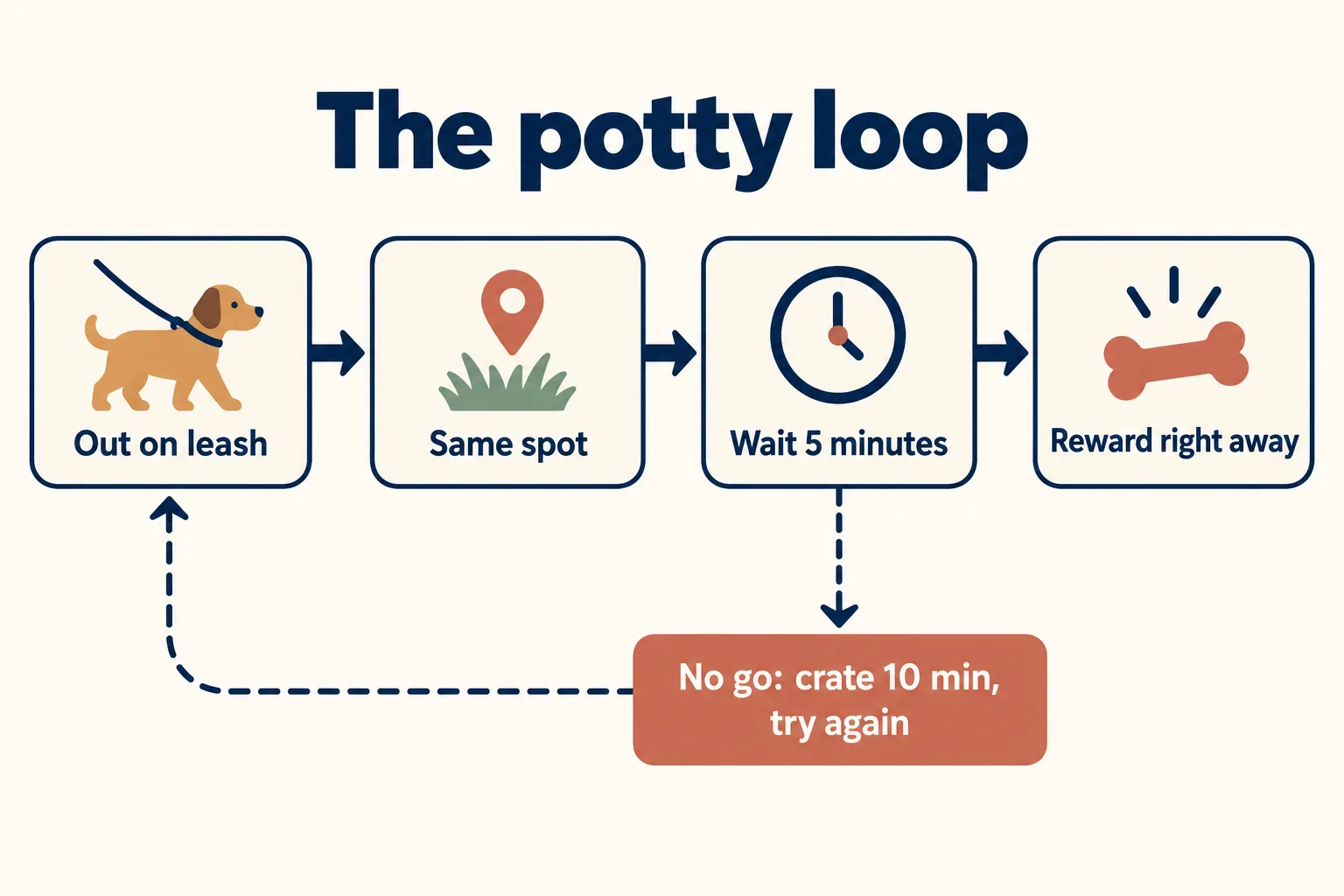
Pick one potty spot, take your dog there on a leash at predictable times, wait quietly, and reward within a couple of seconds of them finishing. Between trips, keep them where you can see them or in a crate or small pen. Clean any accident with an enzyme cleaner and do not punish it.
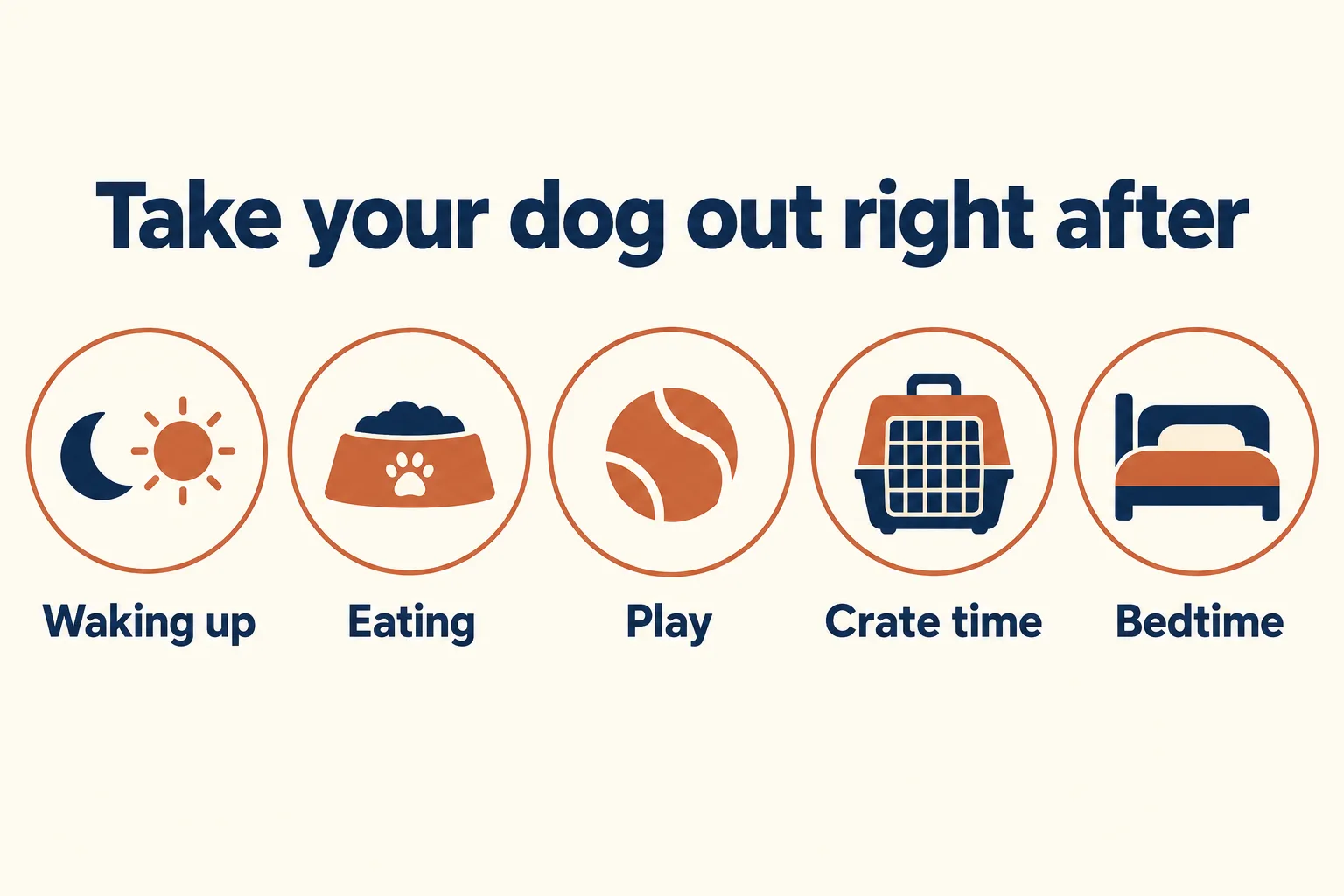
That is the whole method. What makes it work is timing. Dogs most often need to go right after a few predictable moments, so those are your first trips of the day, every day.
| Moment | Puppy under 6 months | Adult dog |
|---|---|---|
| Waking up (morning or nap) | Straight out, carry if needed | Straight out, within a few minutes |
| After a meal | About 15 to 20 minutes later | About 20 to 30 minutes later |
| After play or zoomies | Pause play and go out | Out after any long, exciting play |
| Out of the crate | Every single time | Every single time, first two weeks |
| Before bed | Last trip, quiet and boring | Last trip, quiet and boring |
These are starting points, not rules. Your dog's own signals beat any chart: sniffing the floor, circling, walking off to a corner, or stopping in the middle of play means go now.
Puppy or adult dog: what changes
Find your dog in the table, then read the section for that situation. The core loop stays the same. The gaps, the risks and the first thing to fix are different.
| Your situation | Main cause of accidents | First thing to fix |
|---|---|---|
| Puppy, 8 to 16 weeks | Small bladder, no warning yet | Short gaps and trips after every wake-up |
| Puppy, 4 to 6 months | Too much freedom too soon | Shrink the space again, then earn it back |
| Adult rescue, never house trained | Never learned indoors is wrong | Watched access, reward outside every time |
| Adult that was trained, now has accidents | Often medical or a change at home | Vet check first, then restart the loop |
| Toy breed or tiny dog | Accidents are small and easy to miss | Closer supervision, shorter gaps |
| Apartment or high-rise | Long trip to the spot | Leave earlier, carry small puppies to the door |
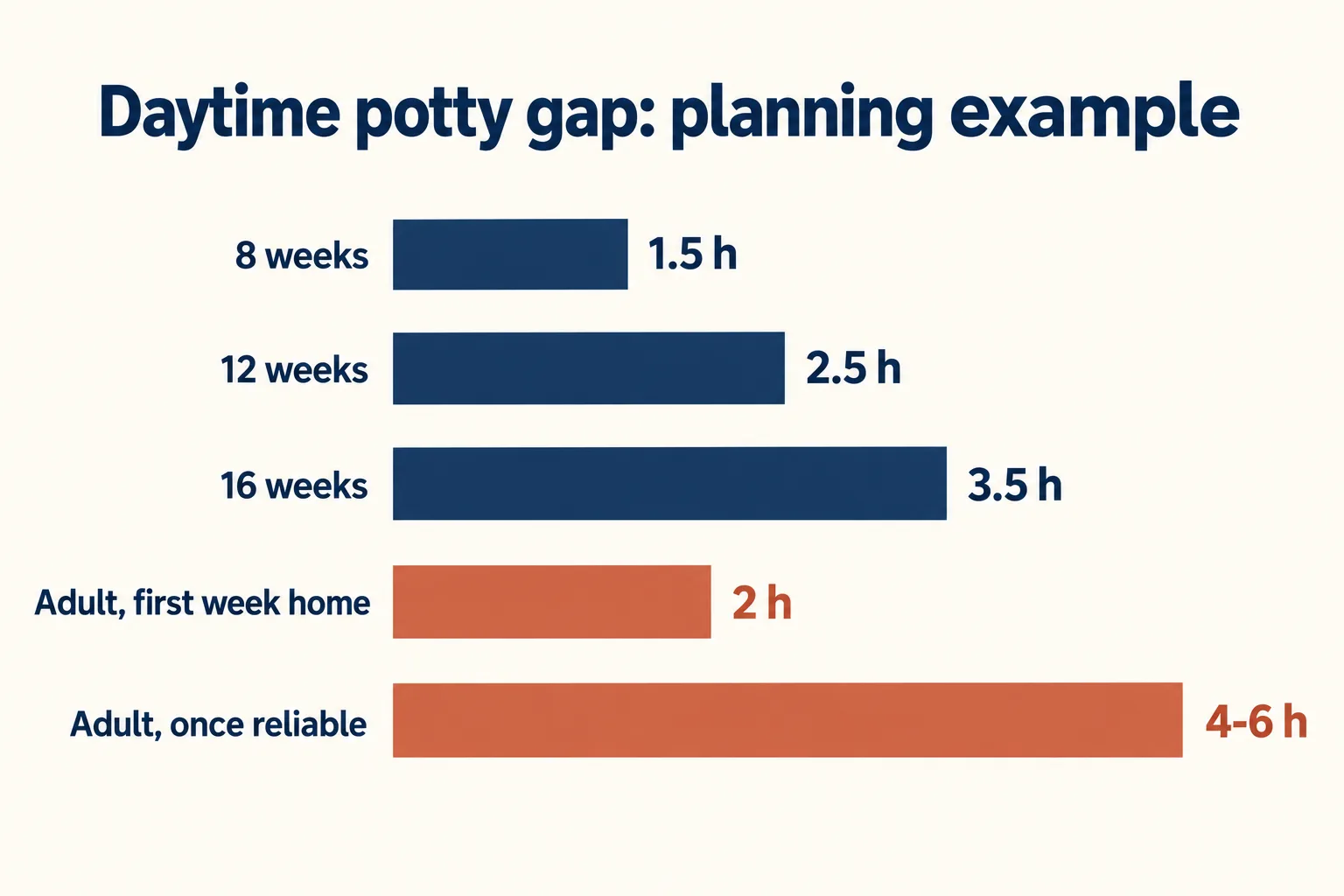
Notice the adult bar. A grown dog can physically hold it far longer than 2 hours. You still start there in the first week, because the goal is not to test the bladder. It is to make sure almost every pee in those early days happens outside, where you can reward it.
House training a puppy
With a young puppy, the clock is the whole game. Plan a trip roughly every 90 minutes while awake at 8 weeks, stretching a little each week, plus trips after waking, meals and play. Nights need quiet trips on a leash too. Our 8 week old puppy schedule lays out a full day hour by hour, and the 12 week old puppy schedule shows how the gaps grow.
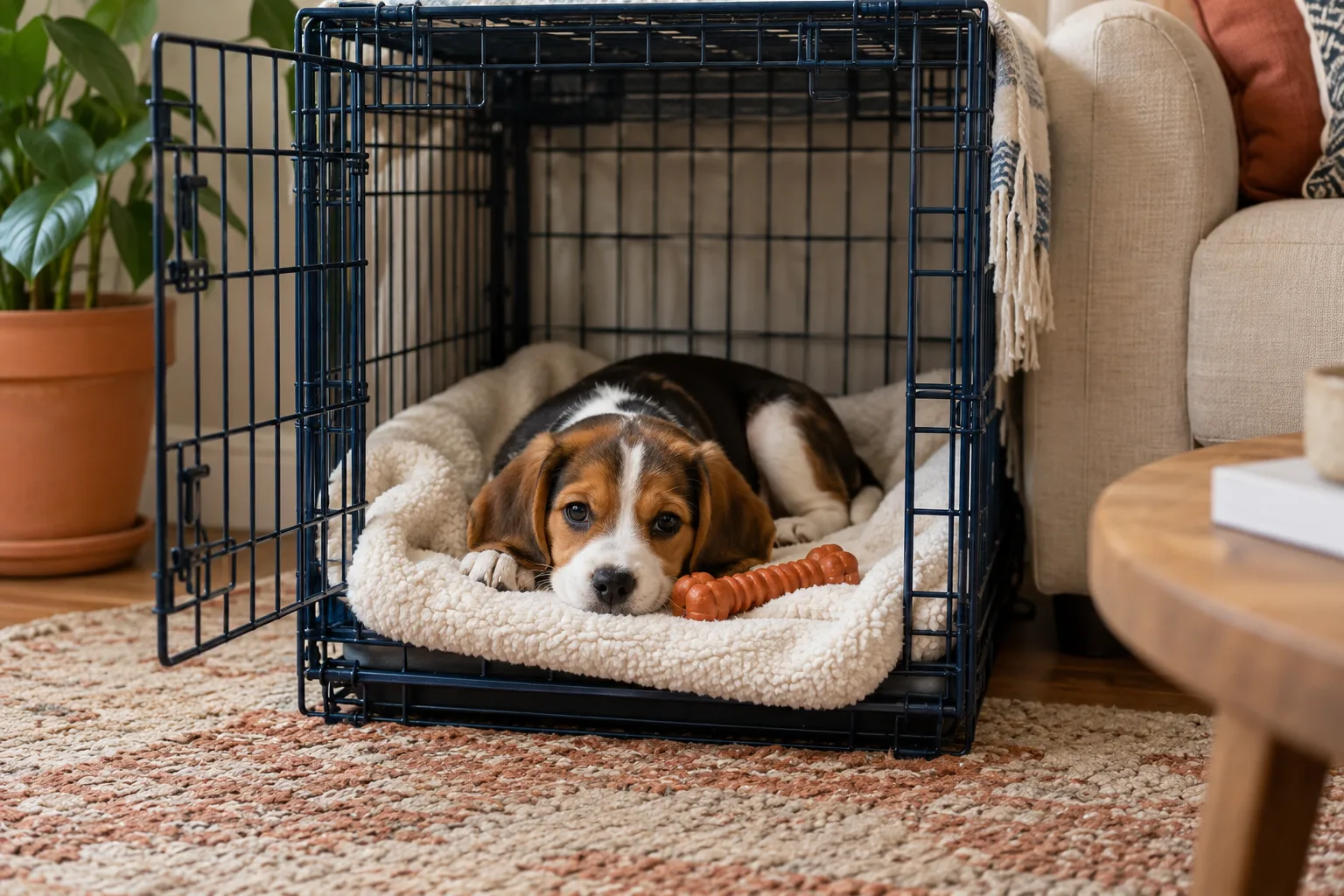
A puppy cannot warn you yet, so you watch for the signs and go first. Expect it to take months, not days. Many puppies are not fully reliable until somewhere around 4 to 6 months, and some take longer. The puppy version of this guide, how to potty train a puppy, goes deeper on pads, nights and regressions.
House training an adult or older dog
An adult dog can hold it for hours, so the work is different. They need to learn one fact: outside is the bathroom and inside is not. Many have only ever gone where they stood, in a kennel run, a shelter or a back yard with no one watching.
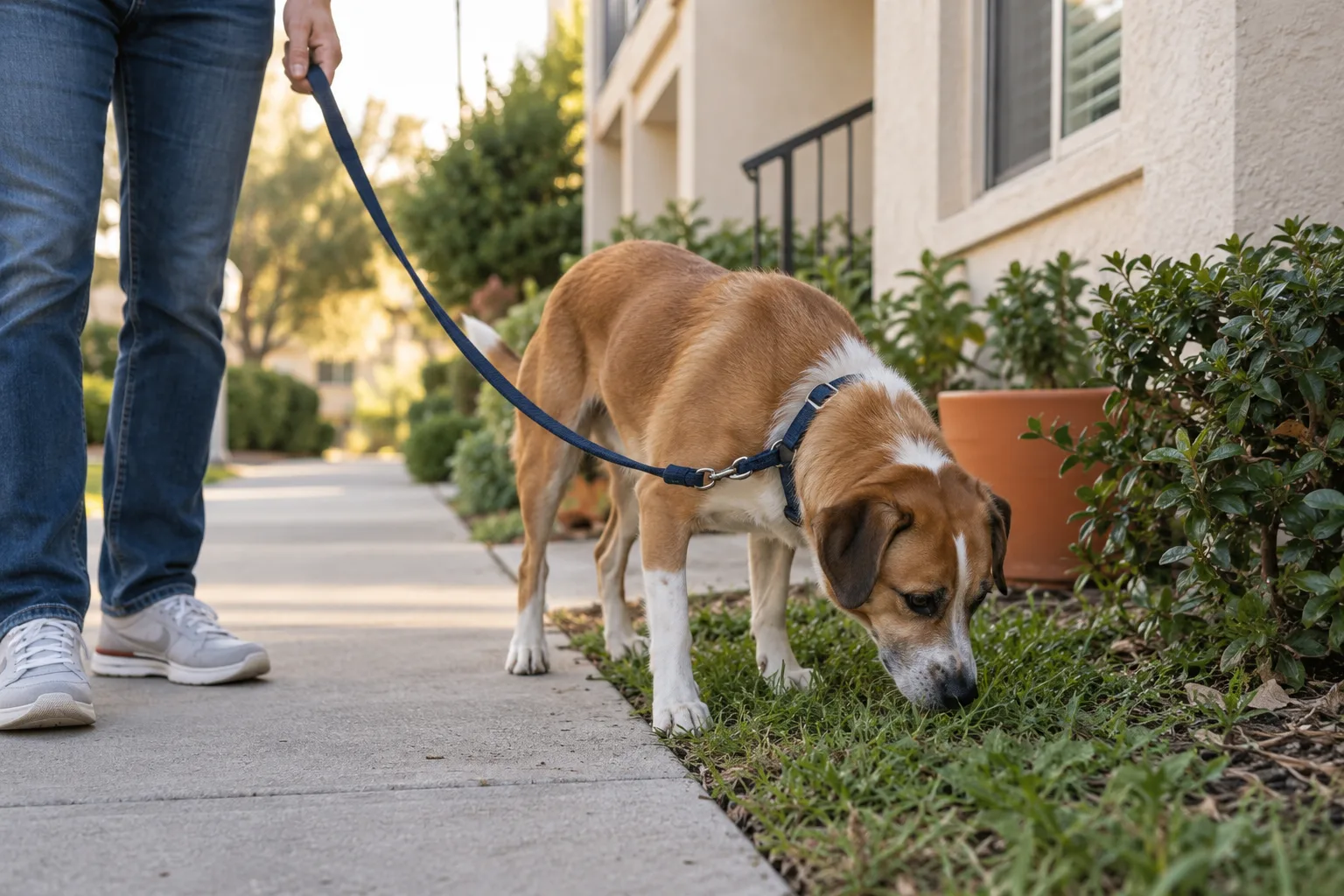
Treat the first week like puppy week. Go out every 2 hours while you are home, always on a leash, always to the same spot, and reward every success. Each clean day, stretch the gap a little. It is never too late to house train a dog. Older dogs learn this the same way young ones do, and many adults catch on within a few weeks of a steady routine.
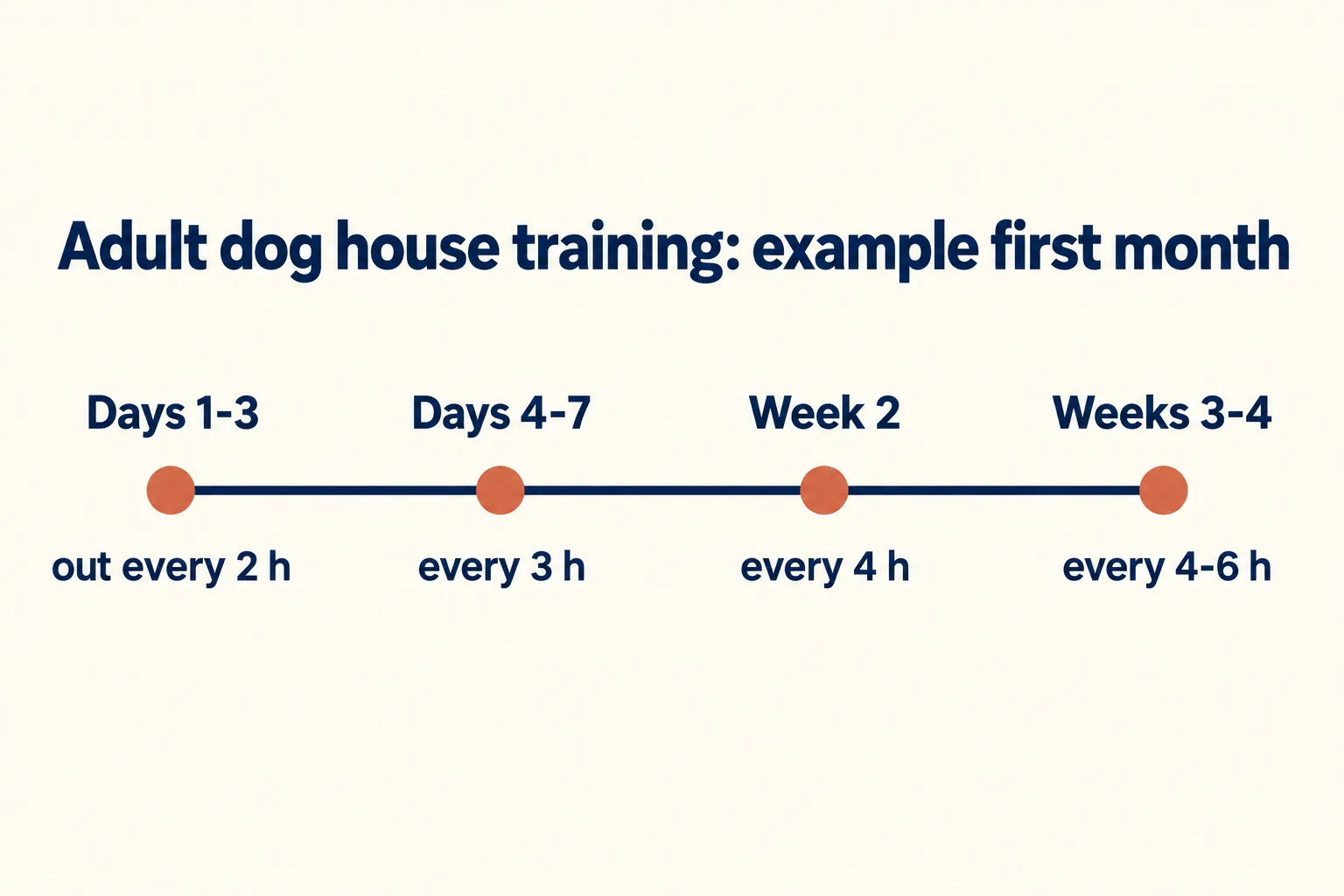
If an accident happens, go back one step on the timeline for a few days. A rescue also needs time to settle: many people use the 3-3-3 idea (about 3 days to decompress, 3 weeks to learn the routine, 3 months to feel at home) as a reminder not to judge week one.
A trained dog that started having accidents again
A dog who was reliable and suddenly is not is a different problem. Book a vet visit before you change anything, because urinary infections and other health issues often show up as accidents first. If the vet rules that out, look for a change at home: a move, a new baby or pet, a new schedule. Then run the loop from day one for two weeks.
The potty trip, done right
Most stalled house training is a trip problem, not a dog problem. Walk out on a leash to the same spot, stand still and be boring. Give it about 5 minutes. When your dog starts to go, say your cue once, quietly.
Reward the second they finish, not when you get back inside. A treat three seconds late rewards walking toward you, not peeing on the grass. Keep small treats in a pouch by the door so you are never empty-handed.
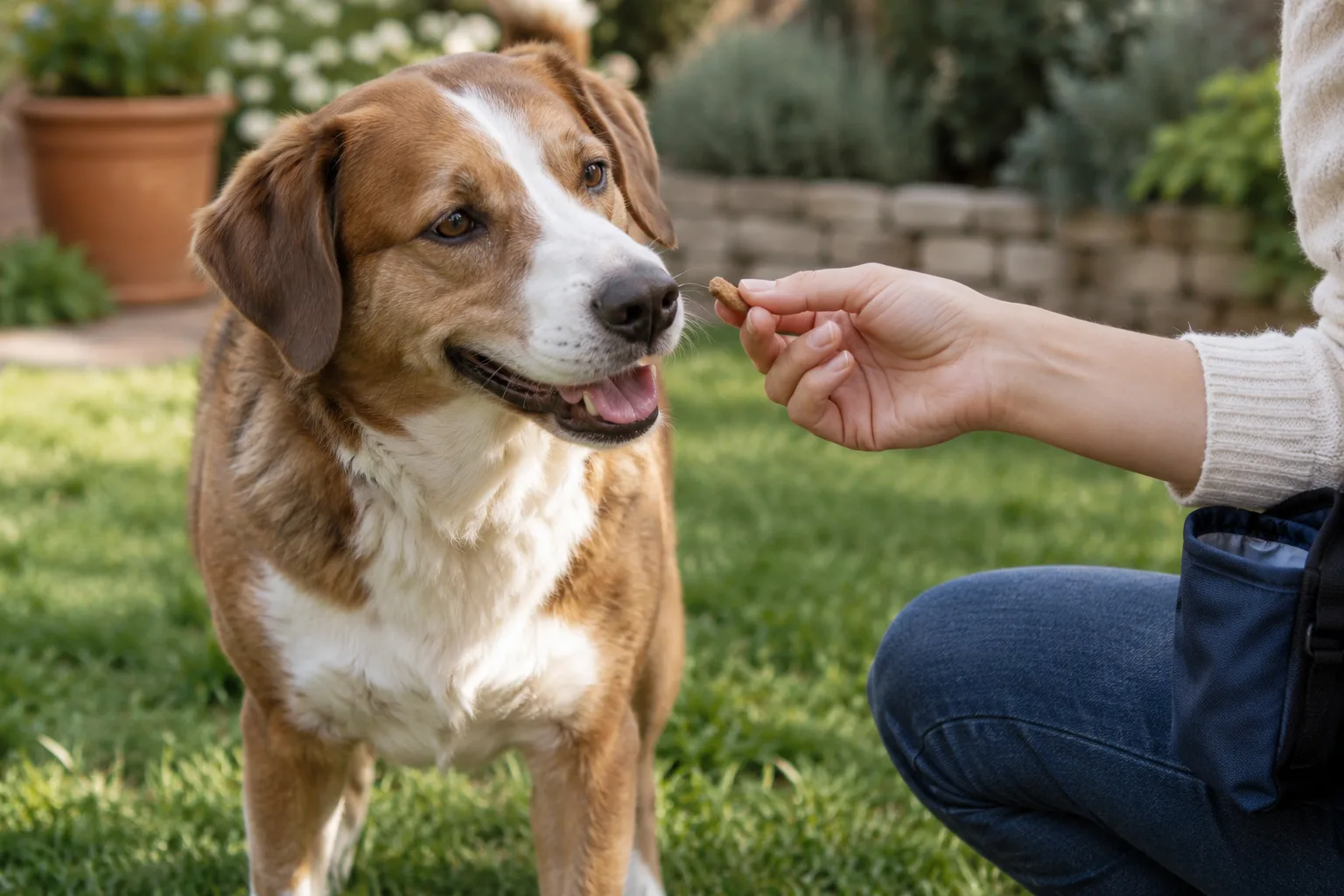
Then let the fun start. A short sniff walk or play after the pee teaches your dog that going quickly earns more outside time. Rushing straight back in teaches the opposite: the slower they go, the longer the walk lasts.
If nothing happens in 5 minutes, go back in and put them in the crate or on a leash beside you for 10 minutes, then try again. That is the dashed line in the loop diagram above. Some people call it the 10-10-10 rule. The point is the same: no unwatched freedom until they have gone outside. Once your dog has the routine, bell training gives them a way to ask to go out.
Supervision between trips
An accident you do not see is a lesson you cannot teach. Between trips, your dog should always be in one of three places:
- Right beside you. Eyes on them, or a leash tied to your chair or belt so they cannot wander off to a back room.
- In a crate or pen. Dogs avoid soiling where they rest, so a crate the right size helps them hold it for short stretches. Too big and they use one end as a bathroom. The crate size calculator gets this right, and our guide to crate training a puppy covers getting a dog to like it.
- In a small dog-proofed room. A kitchen with a baby gate works once your dog is mostly reliable.
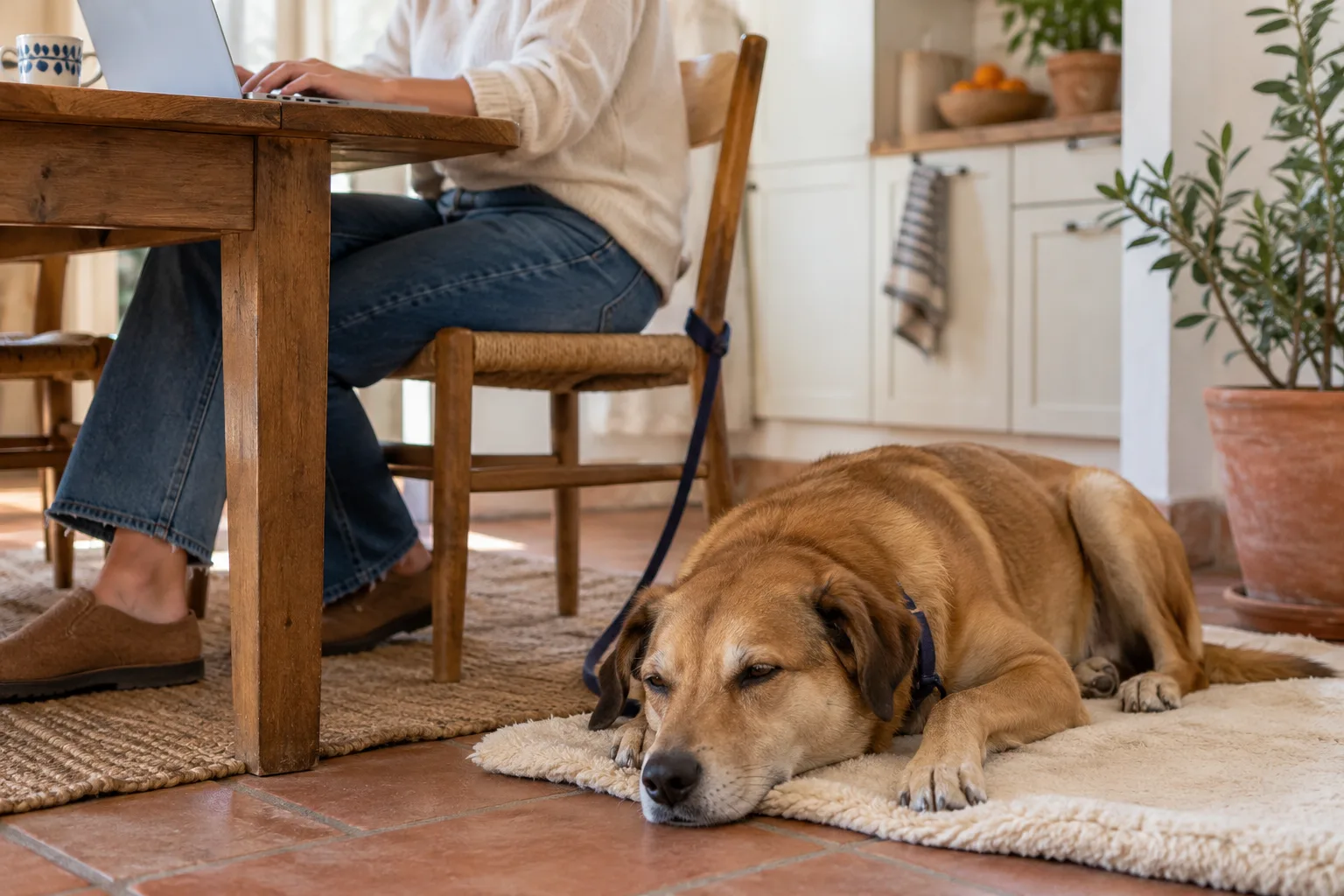
Freedom is earned room by room. Two clean weeks in the kitchen, then add the living room. A new room is a new place to your dog, and the bedroom carpet down the hall can feel nothing like the kitchen floor where they have learned not to go.
What to do when an accident happens
Catch it in the act and calmly interrupt: a cheerful "outside!" and a quick walk to the door, no shouting. If they finish outside, reward it. If you find it afterwards, just clean it up. Your dog cannot connect a scolding with a puddle from ten minutes ago. Punishment only teaches them to hide from you when they need to go, which is how dogs end up peeing behind the sofa. The Humane Society's housetraining guide says the same: never punish accidents.
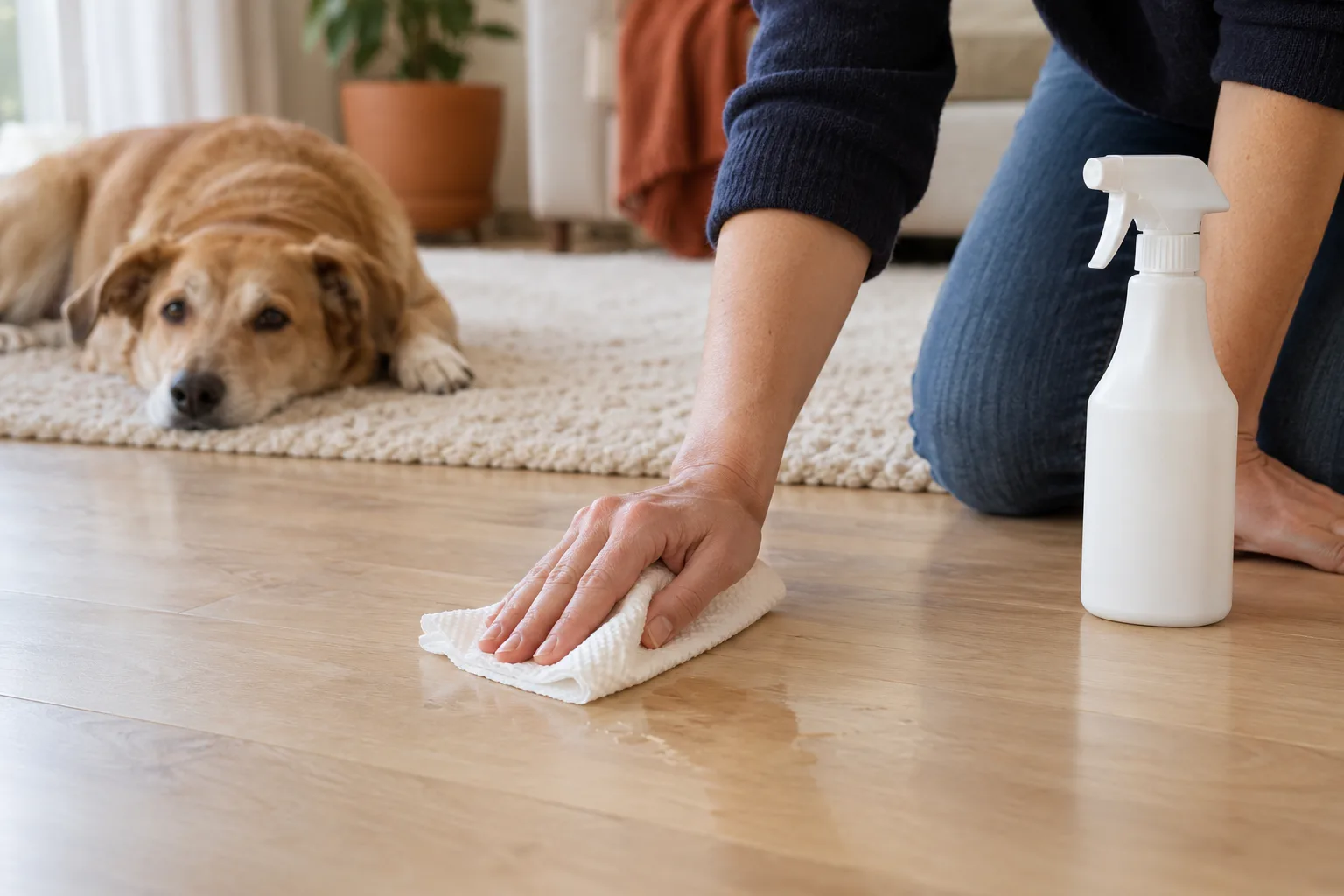
Clean with an enzyme cleaner made for pet urine. Ammonia-based cleaners smell like urine to a dog and can draw your dog back to the same spot. Then ask what came right before: a nap, a drink, a long gap? That is the trip you add tomorrow.
Mistakes that drag house training out
| Mistake | What it costs | Do this instead |
|---|---|---|
| Punishing accidents | Dog hides to pee, inside and out | Interrupt calmly, clean, reward outside |
| Free run of the house too early | Unseen accidents in far rooms | Earn space one room at a time |
| Treat after coming back inside | Rewards the walk to the door | Reward the second they finish |
| Going inside right after the pee | Dog learns to stall outside | Play or sniff walk after they go |
| Ammonia or plain soap cleaners | The smell draws your dog back | Enzyme cleaner on every spot |
| Cutting water to avoid accidents | Thirst, and it hides a real health issue | Keep water available, time the trips |
The one that matters most is freedom. Almost every "my dog was doing so well, then went backwards" story is a dog who got the run of the house a week too early.
How to house train a dog
- Choose one spot and one cue
Pick a patch of grass or a corner of the yard close to the door. Use the same spot and the same two quiet words every time.
- Set a schedule for your dog's age
Go out after waking, eating, play, crate time and before bed. Fill the gaps: about 90 minutes for an 8 week old puppy, about 2 hours for an adult in the first week.
- Go out on a leash and wait
Stand still for about 5 minutes. No play until your dog has gone.
- Reward the moment they finish
A small treat and calm praise within a couple of seconds, then a little sniffing or play as a bonus.
- Supervise or confine between trips
Keep your dog beside you, tethered, or in a crate or pen. If a trip ends with nothing, try again in 10 minutes.
- Clean accidents and adjust tomorrow
Use an enzyme cleaner, skip the scolding, and add a trip where the accident happened.
- Stretch the gaps slowly
After several clean days, add 30 to 60 minutes between trips and one room of freedom. After an accident, step back.
How long does it take to house train a dog?
It depends more on age than on breed. A young puppy needs months, because bladder control keeps developing, and many are not fully reliable until somewhere around 4 to 6 months or later. An adult dog with a steady routine often gets there within a few weeks.
What speeds it up is fewer unseen accidents. A day with zero mistakes and six rewards outside teaches more than a week of hoping. If you are not seeing progress after two to three weeks of steady routine, count your trips and your supervision first. If both are solid, talk to your vet.
The Ohio State Indoor Pet Initiative has a helpful page on why dogs soil indoors and when it is a health or stress issue rather than training.
When to call the vet instead of training harder
Some accidents are not a training problem. Blood in urine or stool, straining, peeing far more often than usual, vomiting, diarrhea, a sudden regression in a dog who was reliable, or lethargy: call your vet today. Any bite on a person, or aggression around handling or the door, needs a certified behavior professional. This is general, reward-based training guidance, not medical advice.
The short version
Same loop for every dog: one spot, a leash, a quiet wait, a reward the moment they finish, and supervision in between. Puppies need short gaps because their bladder is small. Adults need watched access because nobody taught them where to go. Stretch the gaps and the freedom only after clean days.
The wall with a written schedule is that real days do not follow it. A nap runs long, dinner is late, and every planned trip after it is wrong. That is what the plan is for: you tell it how today went, and it moves tomorrow around your dog. Build a free potty plan in about a minute.
Get tomorrow's plan, adapted to how today went.
Frequently asked questions
Prevent unseen accidents and reward every success outside. Take your dog out after waking, eating, play and crate time, wait on a leash at one spot, reward within seconds, and keep them supervised or crated between trips. Speed comes from consistency, not from shortcuts or punishment.
Puppies usually take months, and many are not reliable until around 4 to 6 months old or later. Adult dogs often learn within a few weeks of a steady routine. Setbacks after a move or a schedule change are normal; step back to more frequent trips for a few days.
It is never too late. Adult and senior dogs learn house training with the same loop as puppies, and they can hold it longer, which helps. If an older dog suddenly starts having accidents after years of being reliable, see your vet first, since health issues are a common cause.
Take away the chance to do it unseen and make outside pay. Supervise or confine between trips, go out on a schedule, reward the moment your dog finishes outside, and clean indoor spots with an enzyme cleaner so the smell does not draw them back. If accidents continue despite that, check with your vet.
It is a rough guide for a newly adopted dog: about 3 days to decompress, 3 weeks to learn your routine, and 3 months to feel fully at home. For house training it is a reminder to keep trips frequent and expectations low in the first weeks, and not to judge your rescue by day three.
Small and toy breeds often take longer, mostly because their accidents are small and easy to miss, and their bladders fill faster. No breed is untrainable. Closer supervision and shorter gaps make the difference, whatever the size of the dog.
Not in a way that helps house training. A dog cannot link a scolding to a puddle made minutes earlier, and harsh reactions teach them to hide when they need to go. Calmly interrupt accidents you catch, take them outside and reward success there instead.
Get tomorrow's plan, adapted to how today went
A printed schedule can't see that she peed at 7:10 today; the Coach plan rewrites tomorrow from today's log. Start with the free schedule for your puppy.
Build my puppy's plan- Free starting schedule
- Reward-based practice
- Fits your puppy's day
Share article
About the author
More articles
Potty, crate and sleep · 10 min
How Long Does It Take to Potty Train a Puppy?
Potty training takes steady support, not a weekend deadline. Learn which milestones matter, why timelines vary and how to spot the next useful change.
Potty, crate and sleep · 12 min
10 Week Old Puppy Schedule: Potty, Crate and Sleep Times
A full 10 week old puppy schedule, hour by hour: potty every 2 hours awake, two quiet night trips, three meals and planned naps, plus how 10 weeks compares with 9 and 12.
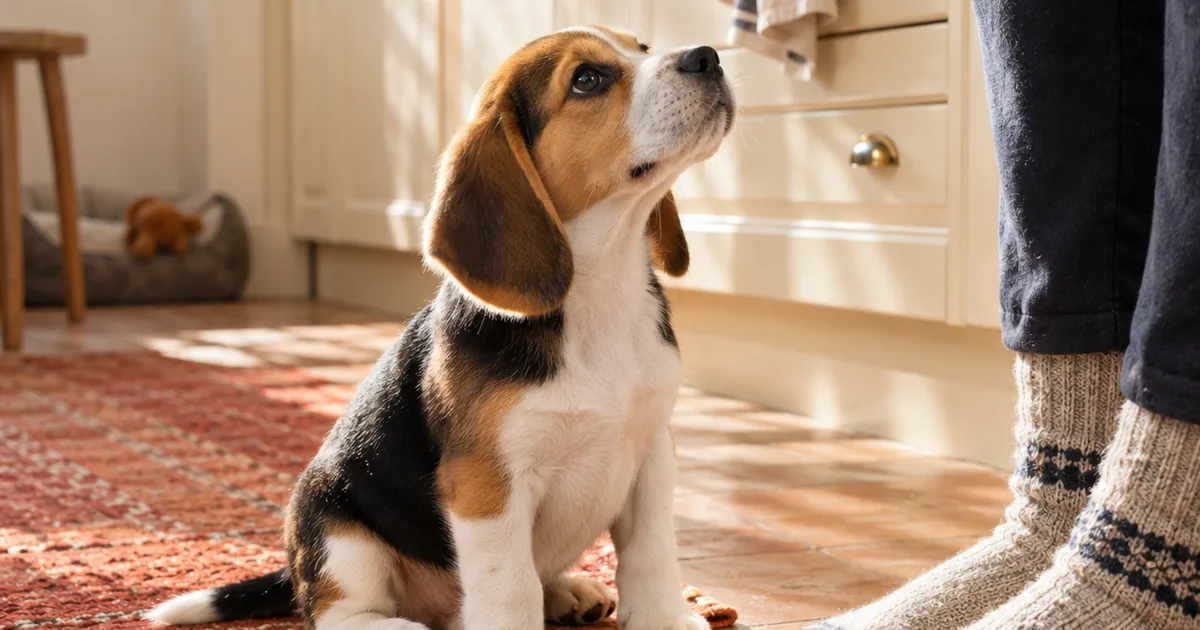
Potty, crate and sleep · 11 min
12 Week Old Puppy Schedule: Potty, Crate and Sleep Times
A full 12 week old (3 month old) puppy schedule: potty about every 2.5 hours awake, three meals, night trips at 1:30 and 5:00 am, naps and crate practice, compared with 10 and 14 weeks.
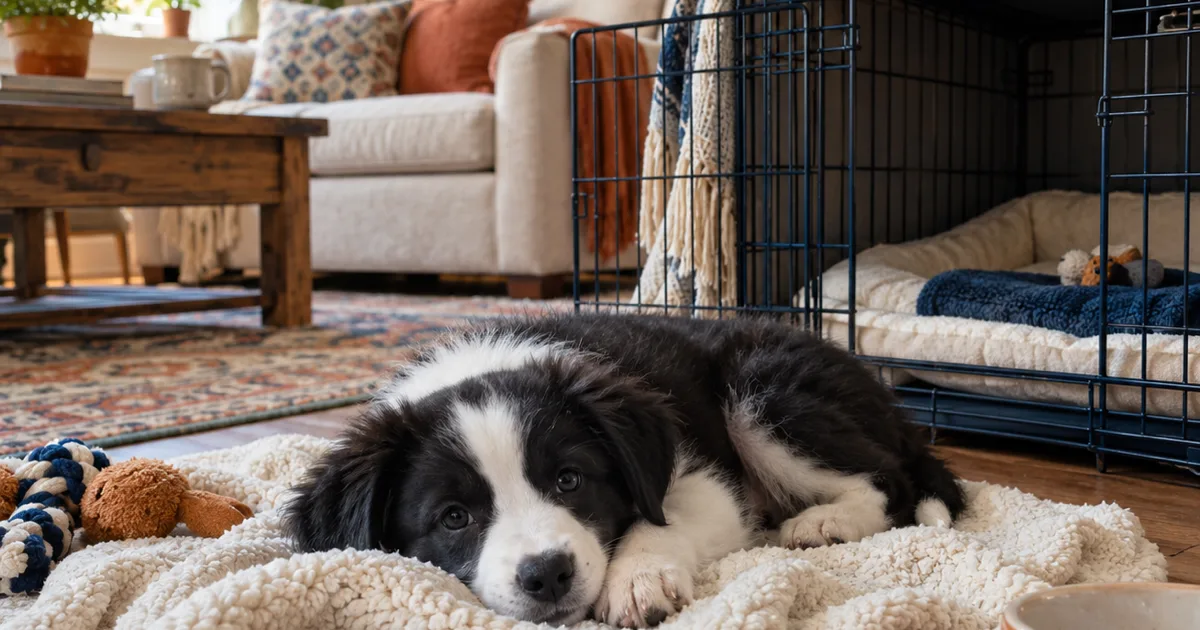
Potty, crate and sleep · 12 min
8 Week Old Puppy Schedule: Potty, Crate and Sleep Times
Your 8 week old puppy's first routine, by the hour: potty every 90 minutes awake, three quiet night trips, 20 minute crate practice, and how to keep it going when you are tired.
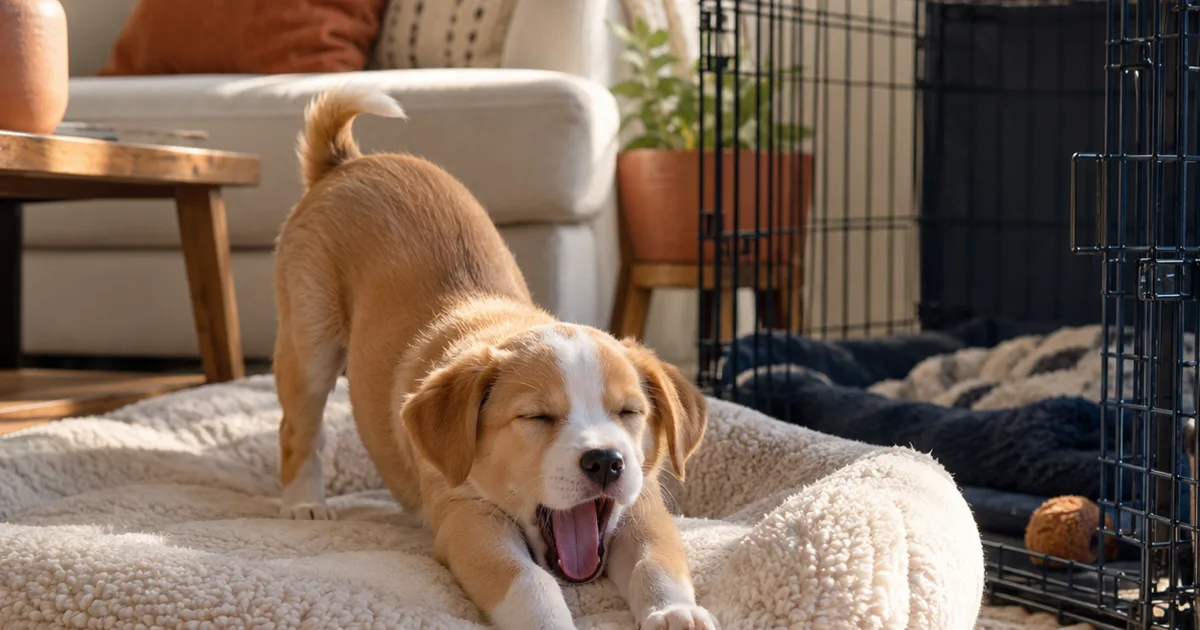
Potty, crate and sleep · 12 min
9 Week Old Puppy Schedule: Potty, Crate and Night Times
A full 9 week old puppy schedule: every potty trip, meal and nap by time of day, night alarms at 12:45, 3:30 and 6:15, and how week 9 compares with 8, 10 and 12 weeks.
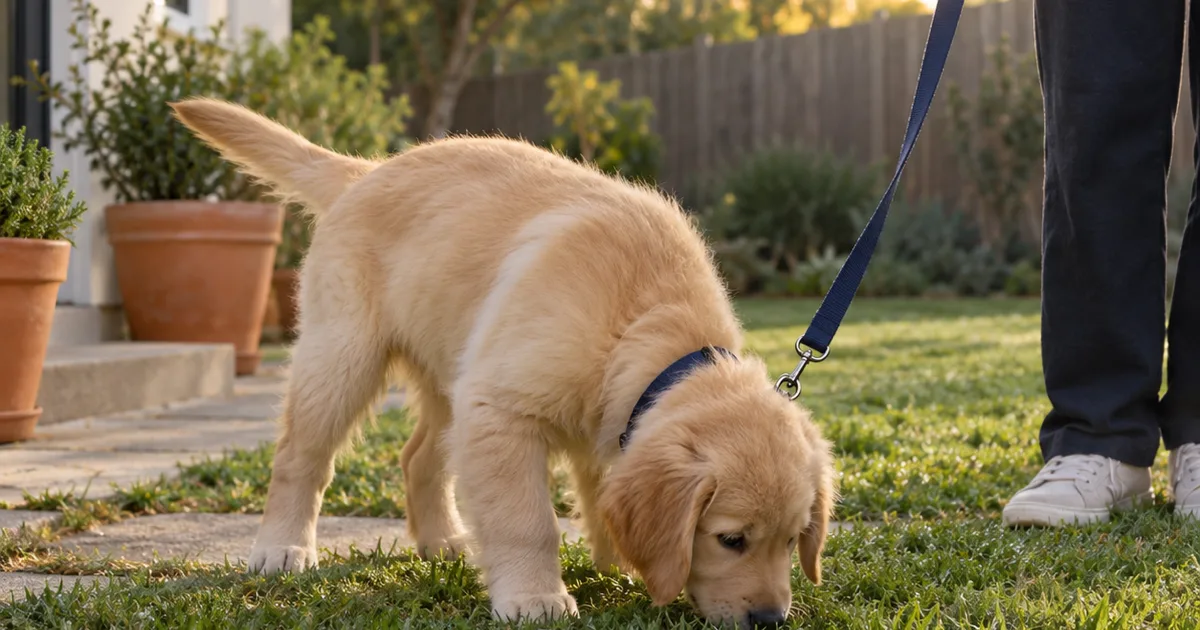
Potty, crate and sleep · 12 min
How to Potty Train a Puppy: The Daily Routine That Works
How to potty train a puppy with set potty moments, rewards on the spot and a four-column accident log. Includes potty reminders by age and a full sample day.