
10 Week Old Puppy Schedule: Potty, Crate and Sleep Times
In this article
A 10 week old puppy usually needs a potty break about every 2 hours while awake, one or two quiet trips at night, and 18 to 20 hours of sleep across the day and night. The schedule below turns those numbers into a full day you can copy tonight, starting with a 6:30 am wake-up and ending with a 10:00 pm last potty.
By now the puppy may look settled while your own routine still feels improvised. This week is about making the day easy to repeat when real life interrupts it. Keep the order of the day fixed and let the clock times flex.
A 10 week old puppy schedule you can copy
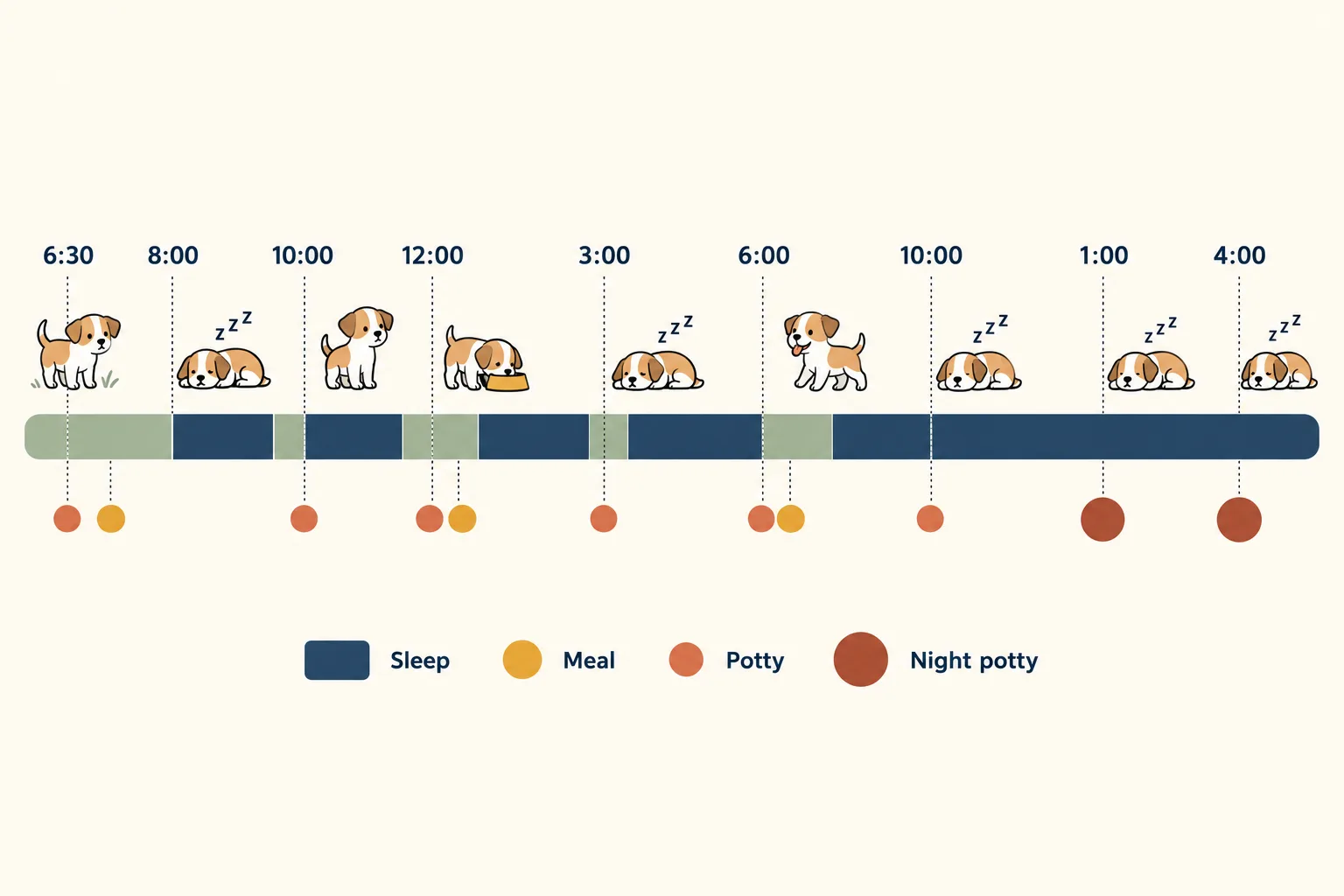
Here is a full day for a medium-size 10 week old puppy in an apartment, with someone away 4 to 6 hours. It is an example built from our planning rule, not a target your puppy has to hit. Wake-ups always come first: if your puppy wakes early, the potty trip moves with them.
| Time | What happens |
|---|---|
| 6:30 am | Wake up, straight out for potty |
| 7:00 am | Breakfast, then a quiet moment |
| 7:20 am | Potty, 20 minutes after breakfast |
| 7:30 am | Reward-based training, 4 minutes |
| 7:50 am | A little play, then straight out for potty |
| 8:00 am | Crate nap: settle nearby, door open until comfortable |
| 10:00 am | Wake from nap, potty |
| 10:20 am | Gentle play, then potty before resting again |
| 10:30 am | Quiet rest or a crate nap |
| 12:00 pm | Midday wake-up, potty with you or a helper |
| 12:10 pm | Lunch |
| 12:30 pm | Potty, 20 minutes after lunch |
| 1:00 pm | A little play, then potty |
| 1:10 pm | Afternoon crate nap or quiet rest |
| 3:00 pm | Wake from nap, potty |
| 3:40 pm | Gentle play, then potty |
| 3:50 pm | Another quiet nap |
| 6:00 pm | Wake up, potty |
| 6:10 pm | Dinner |
| 6:30 pm | Potty, 20 minutes after dinner |
| 6:45 pm | Reward-based training, 4 minutes |
| 7:00 pm | Calm play, then potty |
| 7:10 pm | Evening rest near you |
| 9:00 pm | Wake up, potty, then a quiet cuddle |
| 10:00 pm | Last potty, then bedtime beside your bed |
| 1:00 am | Quiet night potty on a lead, back to bed with no play |
| 4:00 am | Quiet night potty on a lead, back to bed with no play |
Three things make this day work. Naps are long and planned, so the puppy is never awake for more than about an hour and a half. Every meal has a potty trip 20 minutes later. And the evening winds down two hours before bed instead of ending with a wild game.
In an apartment, leave about 5 minutes before each potty time to cover the elevator or stairs. A safe pen with a potty pad is a fair backup for the moments you cannot get outside in time.
10 weeks vs 9 and 12 weeks: what actually changes
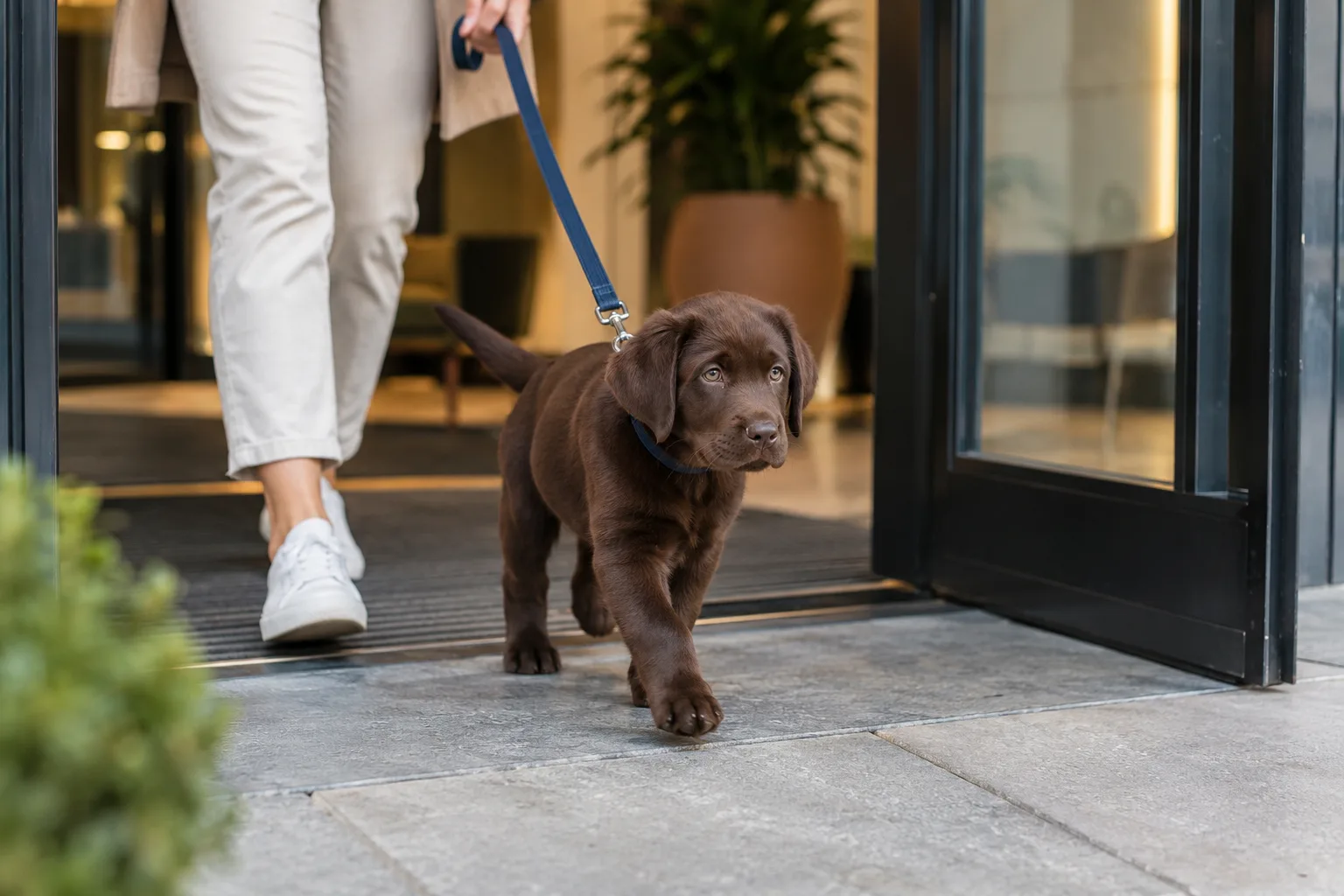
The numbers move a little each week, but the order of the day stays the same. The 9 week old puppy schedule focuses on the first repeatable transitions. At 10 weeks the awake potty gap stretches by 15 minutes, the night drops from three trips to two, and practice budgets grow slightly.
| Age | Awake potty reminder | Longest night stretch | Night potty trips | Meals a day | Training per session | Awake crate practice |
|---|---|---|---|---|---|---|
| 9 weeks | 105 minutes | 165 minutes | 12:45, 3:30, 6:15 am | 3 (4 for toy) | 3 minutes | 25 minutes |
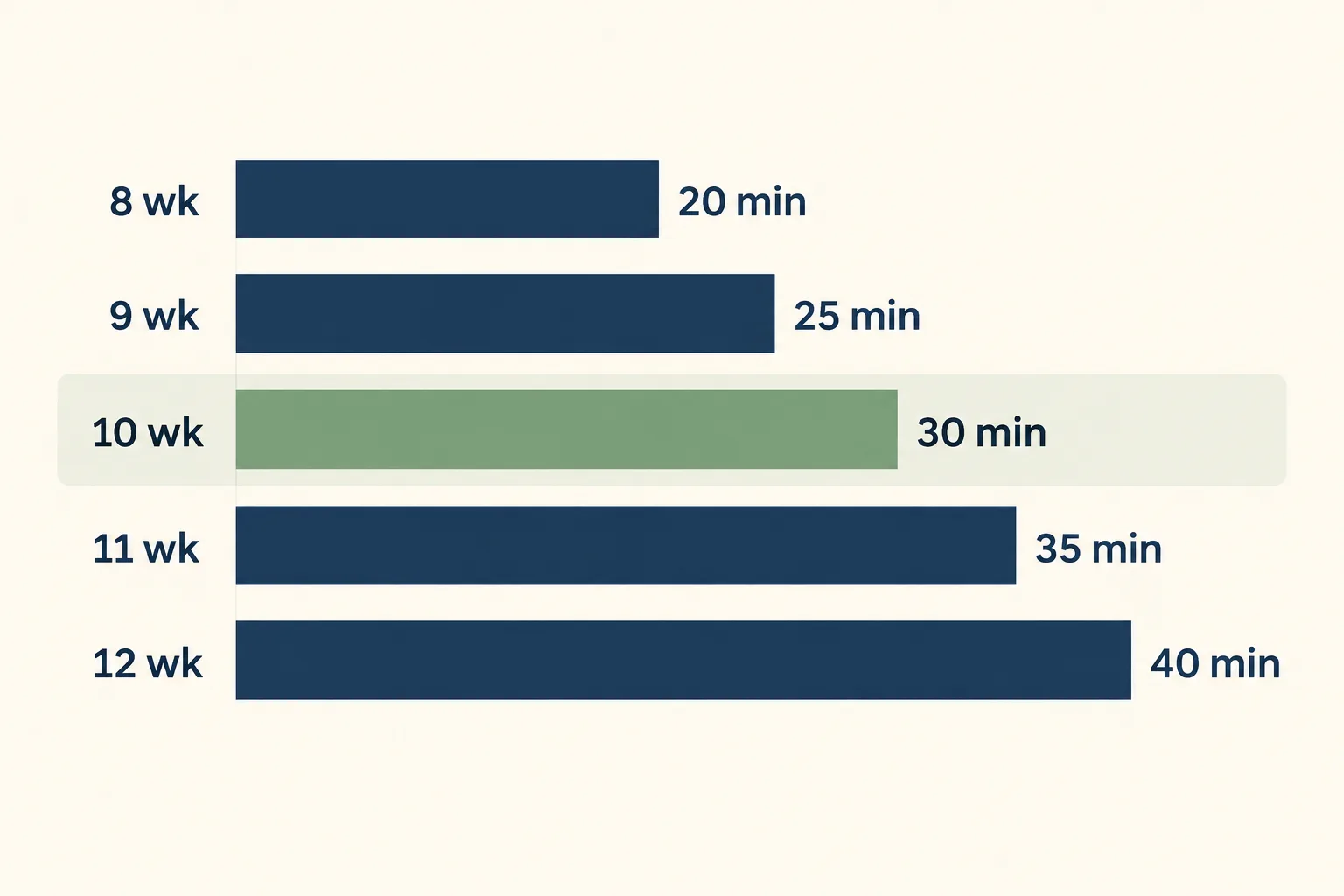
| 10 weeks | 120 minutes | 180 minutes | 1:00, 4:00 am | 3 (4 for toy) | 4 minutes | 30 minutes |
| 11 weeks | 135 minutes | 195 minutes | 1:15, 4:30 am | 3 (4 for toy) | 4 minutes | 35 minutes |
| 12 weeks | 150 minutes | 210 minutes | 1:30, 5:00 am | 3 | 5 minutes | 40 minutes |
These are medium-size examples. Large puppies use the same reminders. For a toy breed, take 15 minutes off each gap: about 105 minutes awake and 165 minutes at night at 10 weeks. Sleep stays at 18 to 20 hours a day across all of these ages, following the AKC guidance on puppy sleep.
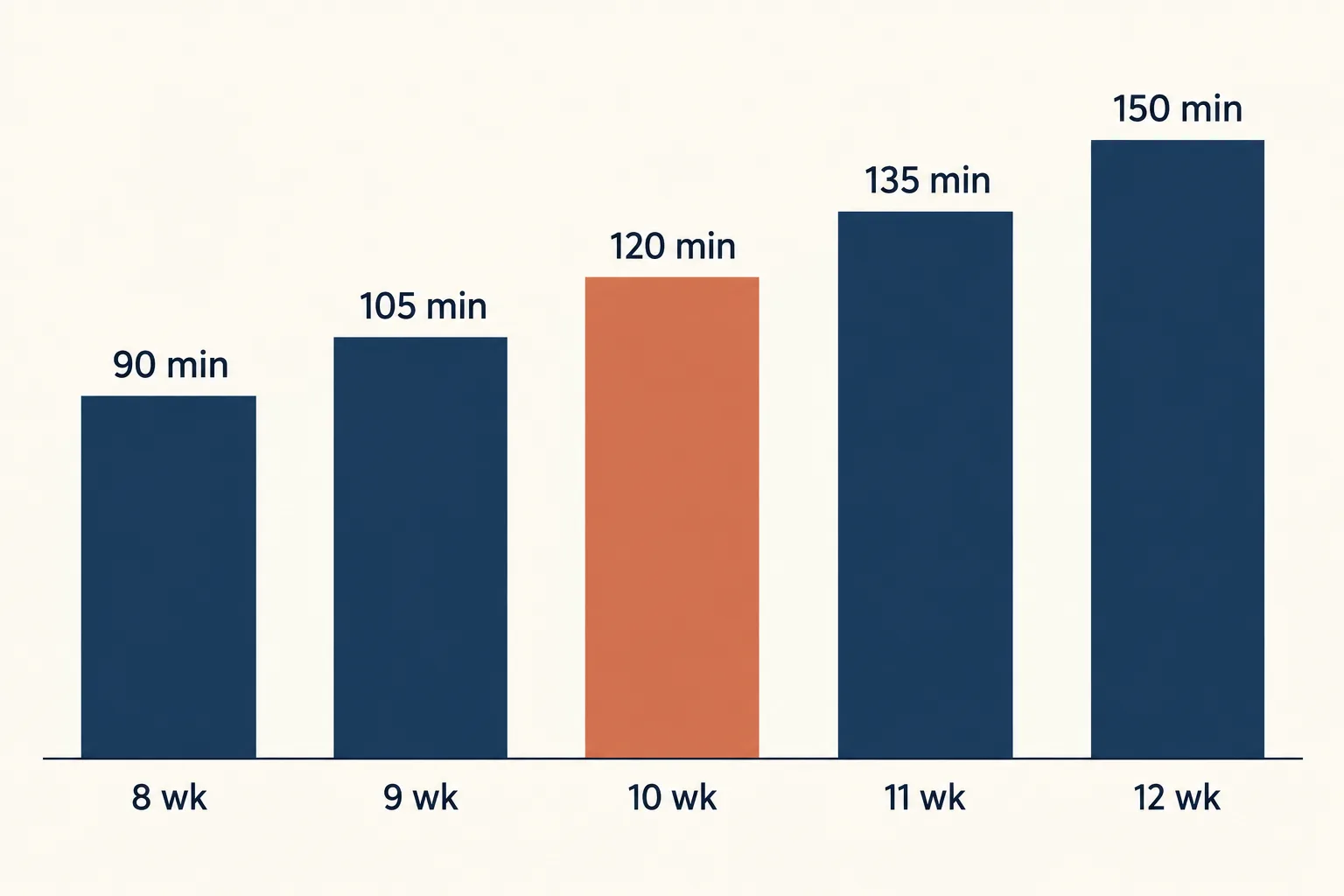
The rule behind the table is simple: awake reminder = 75 + 15 x (age in weeks - 7) minutes, night stretch = 135 + 15 x (age in weeks - 7) minutes, both capped at 240. It is a planning rule of thumb, not a promise that a birthday makes a bigger bladder. If your puppy signals sooner, go sooner.
Can a puppy be fully potty trained at 10 weeks?
No. A 10 week old puppy can have a run of dry days, but that is your routine working, not a finished skill. Keep the supervision and the frequent breaks that produced those dry days, and expect a new room or a changed workday to bring accidents back. Our guide to judging potty training progress explains which milestones matter before you loosen supervision.
Follow the AKC potty training advice: reward the behavior you want and manage the chances to get it wrong. If you find an old accident, clean it and look at the setup. You cannot teach the right spot by reacting to something that happened while you were in another room.
Record where accidents happen as well as when. A rug two rooms away is hard to supervise. A long elevator ride may mean you need to leave earlier. Solve the practical obstacle before deciding the puppy has forgotten everything. The puppy potty training guide covers the foundation in more detail.
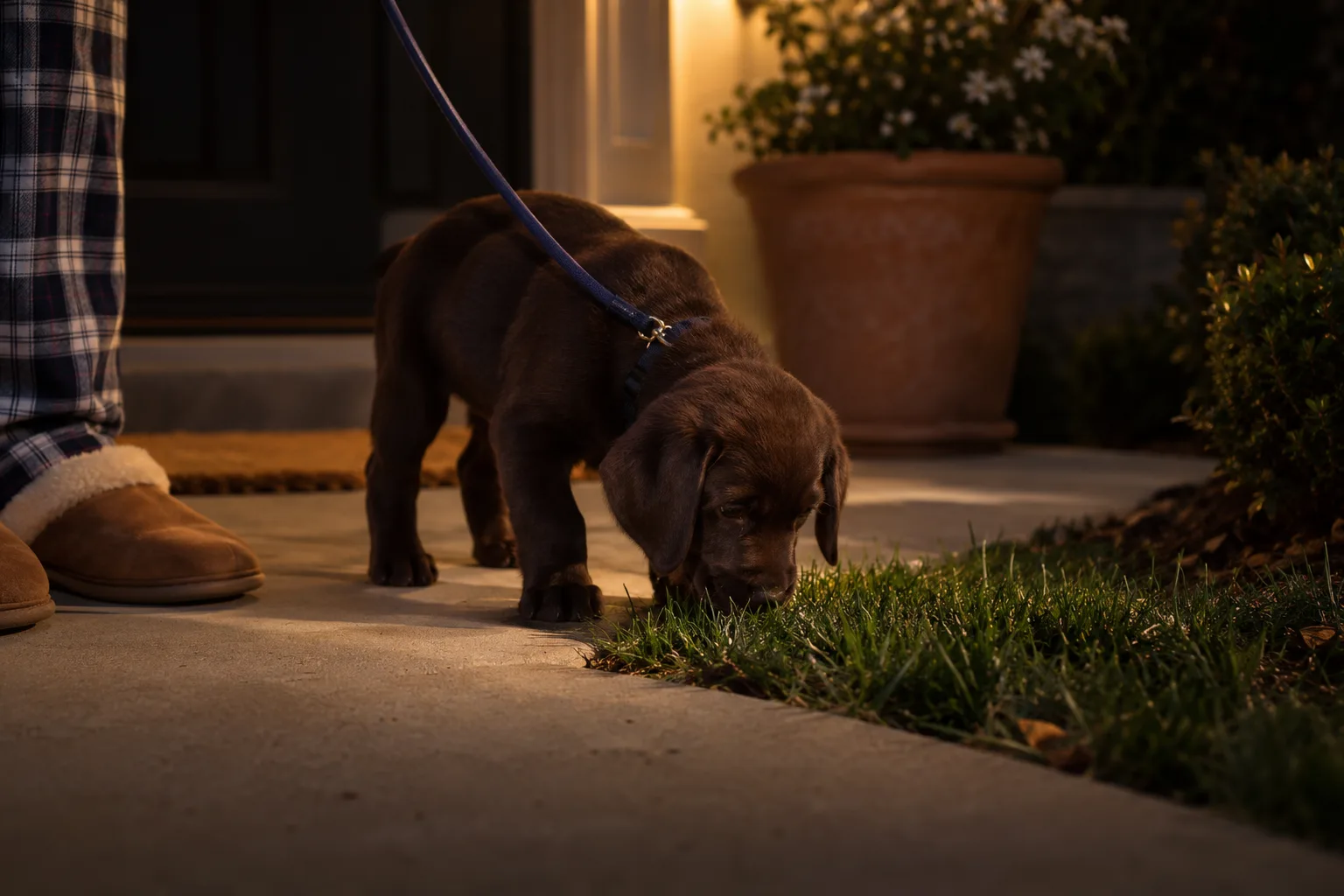
Keep the reward right by the door so you can give it the moment your puppy finishes in the right place. A short cue said once, as they start to sniff, gives you something to build on later:
The 12 week old puppy schedule is useful for planning ahead, but a later number is never permission to delay a break your puppy needs today.
Evenings and nights at 10 weeks
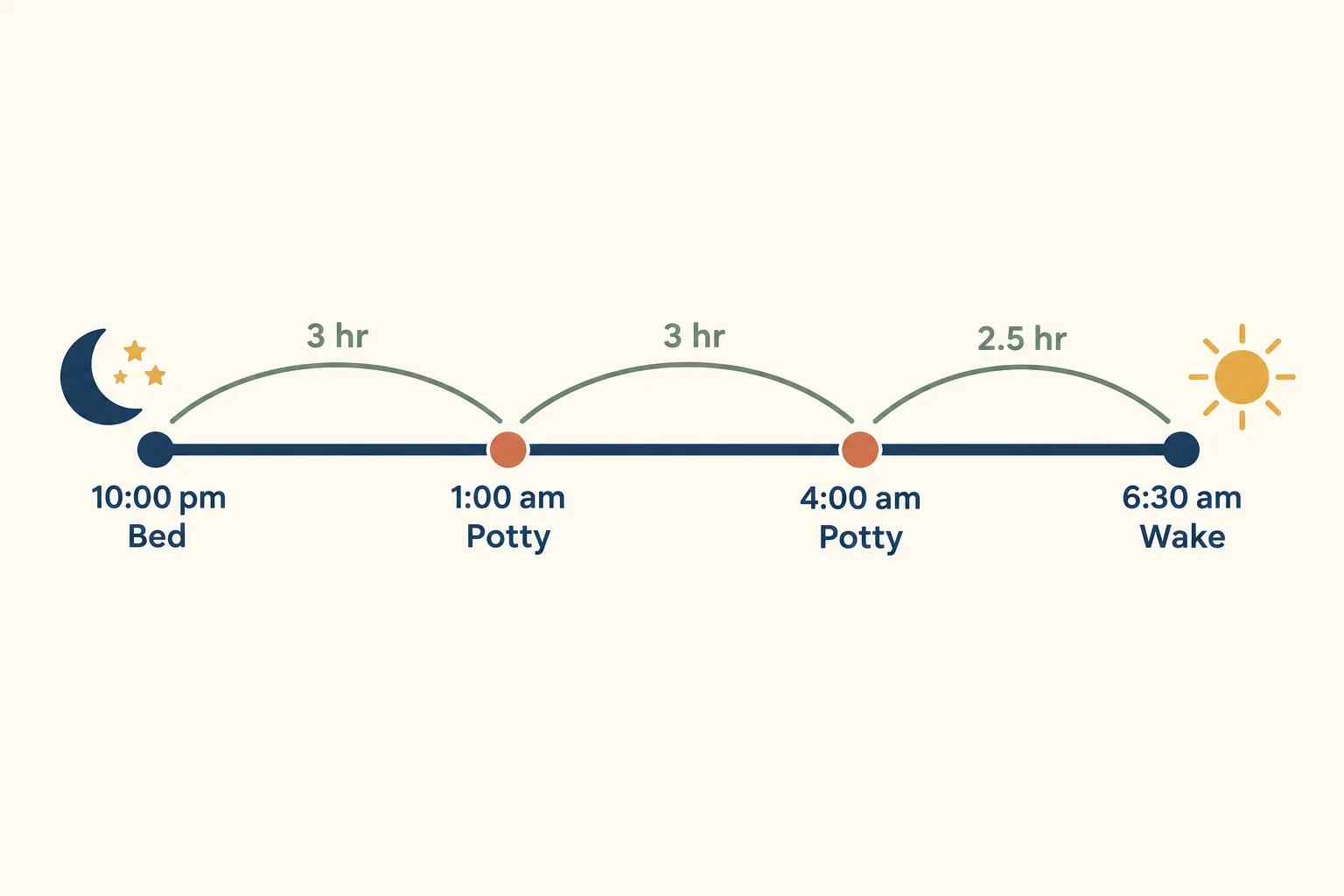
At 10 weeks, plan bedtime at 10:00 pm and two quiet trips at about 1:00 am and 4:00 am, then wake-up at 6:30 am. That is a 3 hour stretch, another 3 hour stretch, and a final 2.5 hours. If your puppy wakes and fusses before the alarm, take them out then.
Look hard at the hour before bed. If it holds visitors, a noisy game and a rushed cleanup, try a simpler ending. Put supplies away earlier. Offer a quiet chew, take the last potty trip, and settle near the sleeping space. Night trips are boring on purpose: lead on, potty spot, quiet praise, back to bed with no play.
A crate can be part of that setup if your puppy is comfortable there. Practice while you are home and awake, in short relaxed sessions. At 10 weeks the example budget is 30 minutes of awake crate practice, and only while your puppy stays relaxed. If they get distressed, respond and make the next practice easier. Crate training a puppy treats it as its own skill, and the crate size calculator helps you check the space.
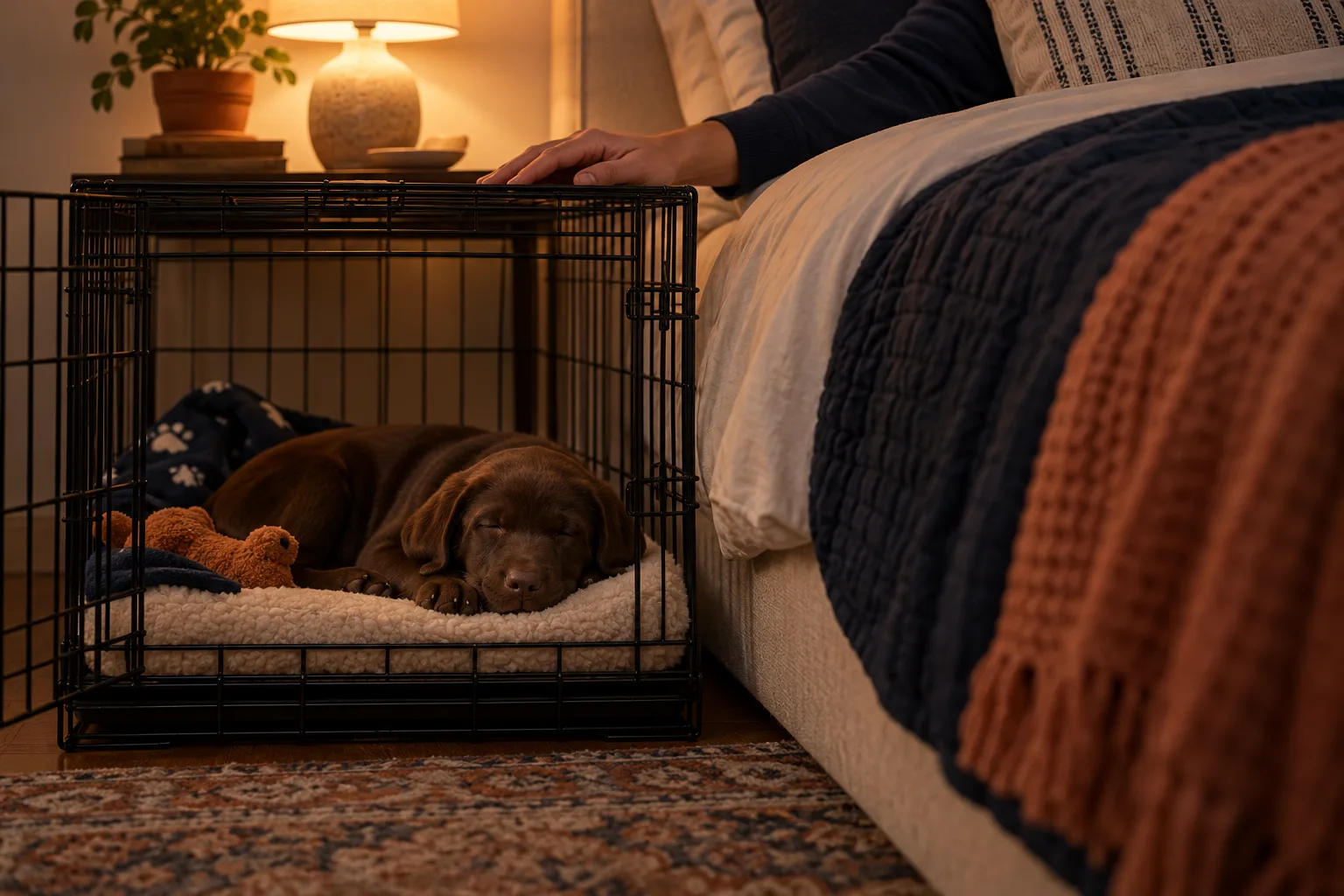
Protect the late afternoon nap so the evening does not start overtired. Tell the household not to wake the puppy for attention, and let waking lead straight to a potty break. If nights are where things fall apart, read what to do when your puppy cries in the crate at night.
Biting and a calmer afternoon
Most 10 week old biting happens at transitions: someone walks quickly through a doorway, a game gets too exciting, or the puppy has been awake too long. Have a toy ready before those moments and slow your own movement. Give the puppy one clear thing to bite instead of repeating a cue over the noise.
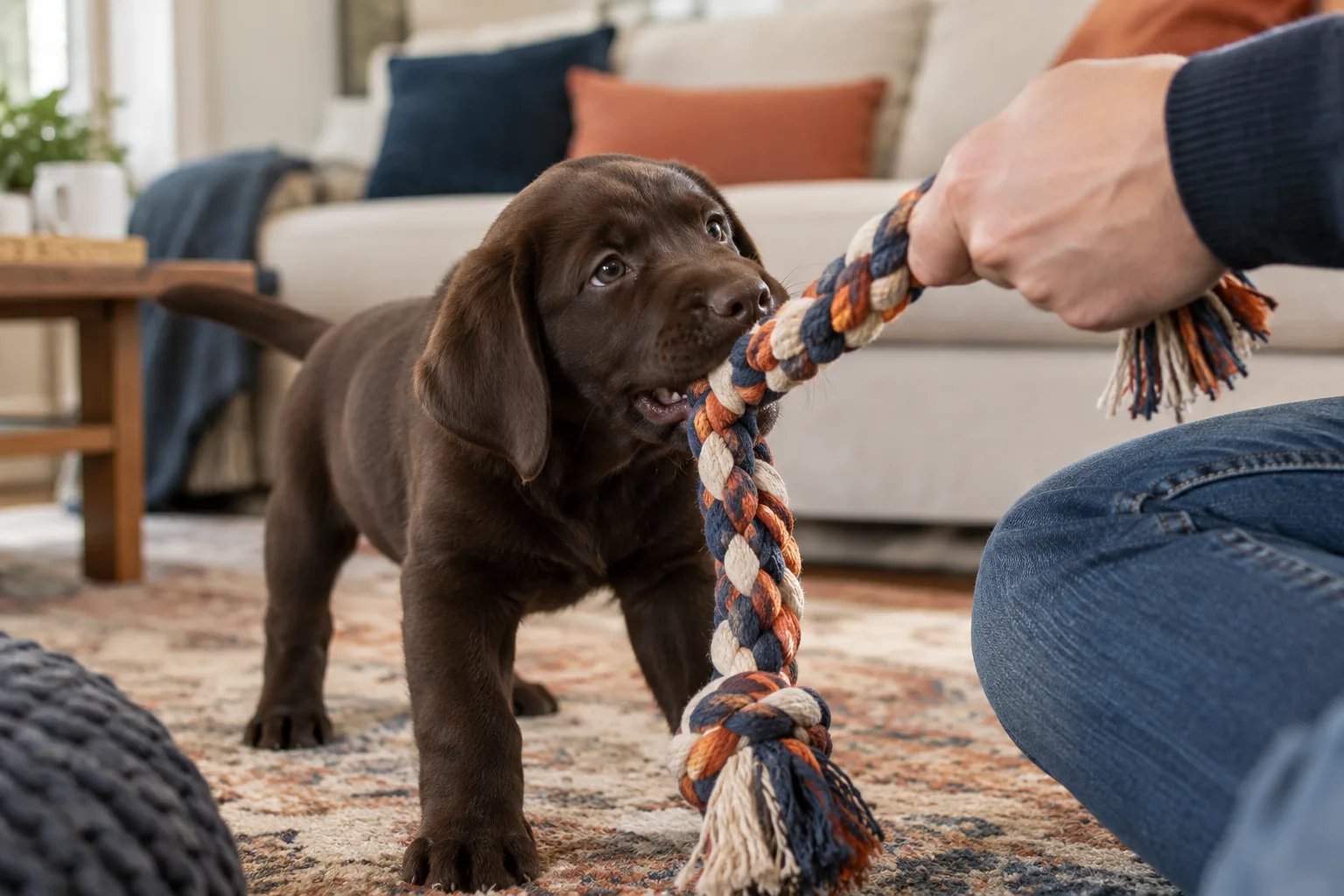
Reward gentle mouths. If teeth meet skin, pause the game and make space for something calmer, like a supervised chew. Not every mouthy moment needs a lesson. Often the useful change is less stimulation and an earlier nap. At this age, three short sessions a day beat one long one; our basic puppy training guide has the full list. How to stop puppy biting goes further.
For socialization, pick one quiet observation you can end easily: a person at a distance, a household sound at a comfortable level. The AVSAB position statements favor reward-based methods and considerate early experiences. Ask your vet which places are sensible given local health risks.
Keep a busy workday from swallowing the routine
The schedule falls apart where nobody can supervise or give a break, so plan those blocks first. Look at tomorrow's calendar tonight. A meeting that ends at noon does not mean you are free when the puppy wakes at 12:00.
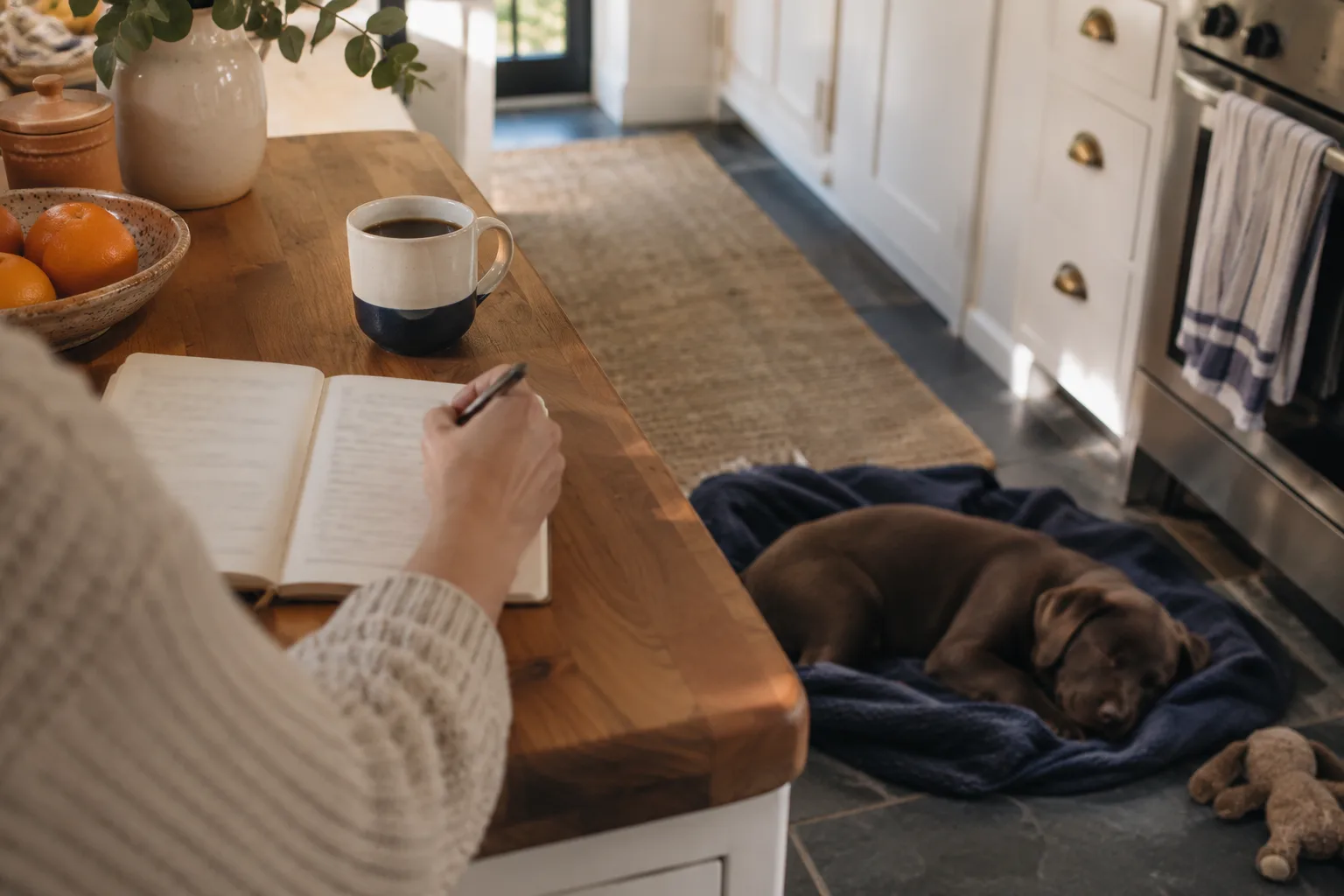
Give a helper a clear start: where the supplies are, when the last potty and meal happened, and how to come in without a noisy greeting. If the puppy is asleep, they can get organized nearby rather than starting a game. A crate is not a substitute for a potty break, so arrange enough breaks for the whole time you are away.
When your work ends, do not make the reunion the busiest part of the day. Offer the next break, settle into something calm and check your notes. If the arrangement keeps failing, change the care coverage before you change the puppy's timetable.
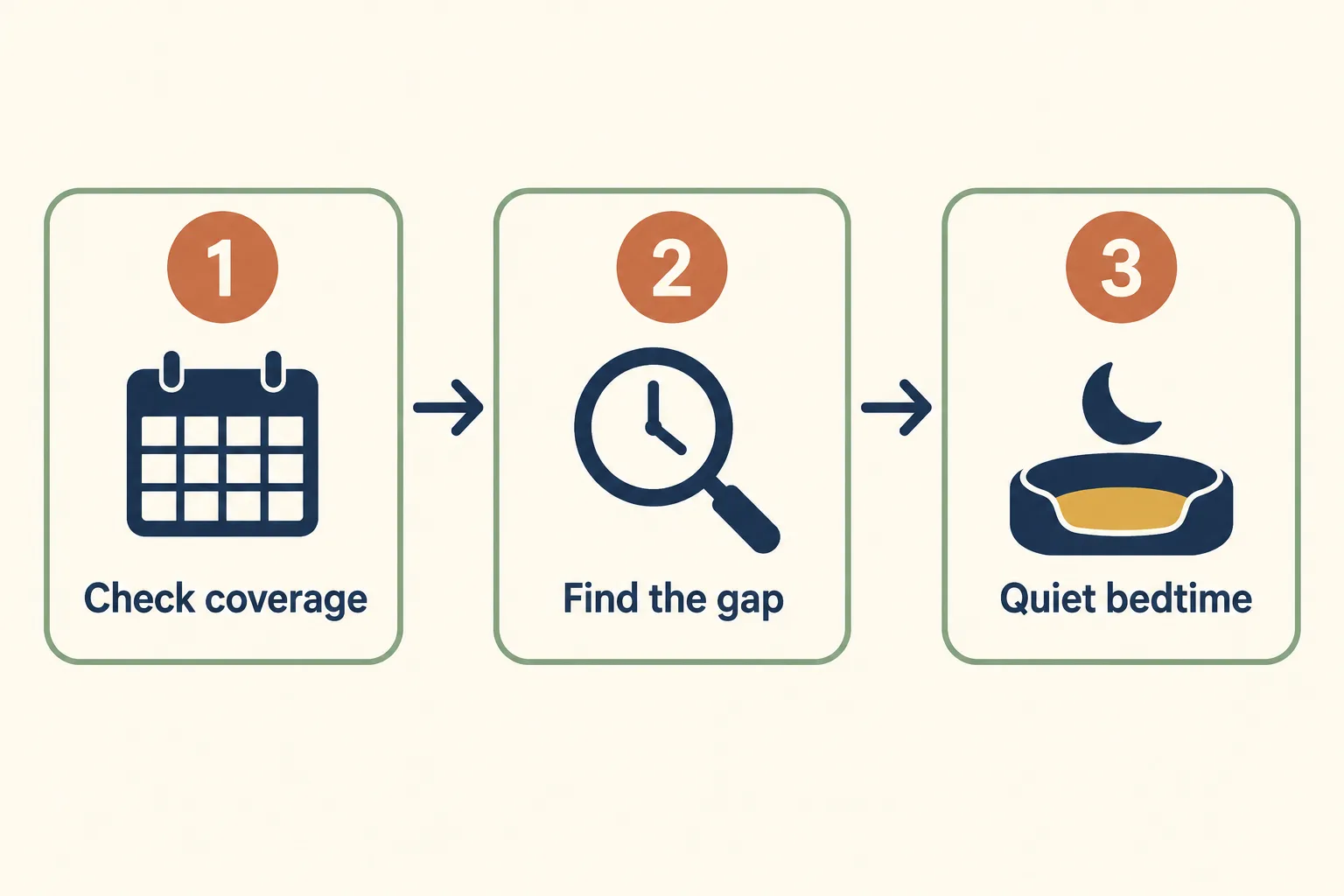
How to adjust a 10 week old puppy schedule
- Check tomorrow's coverage
Match the plan to your real workday. Arrange a sitter, neighbor or walker for any break you cannot give yourself.
- Find the awkward block
Read the day from morning to night against your notes. If mornings are smooth and late afternoons are messy, keep the morning and fix only the afternoon.
- Change one transition
Pick the moment you miss most often, such as the potty trip after the midday nap, and move it earlier. Leave everything that works alone for a few days.
- Prepare a quieter ending
Set out bedtime supplies before the house gets busy. Keep the last two hours calm and respond to waking before the alarm if your puppy needs you.
- Log two lines each night
Write where and when any accident happened and what went well. That log is what tells you whether tomorrow's change helped.
Where a written schedule hits a wall
Everything above works on paper. The wall is that your puppy does not read it. A nap runs long, a meeting moves, there is an accident at 2:40 pm, and the 3:00 pm potty trip in the table is now wrong. Rewriting the day by hand each night is exactly the job that gets dropped in week two.
That is the part a plan generator can do for you. Tell it what happened today, and it moves tomorrow's potty trips, naps and crate practice to fit, while keeping the same reward-based rules.
The short version
A 10 week old puppy does well on a potty break about every 2 hours while awake, two quiet night trips around 1:00 am and 4:00 am, three meals with a potty trip 20 minutes after each, and long planned naps. Keep the order of the day fixed and let the times move with your puppy.
Start with the sample below, prefilled for a 10 week old puppy, then build your own free schedule in about a minute. Get tomorrow's plan, adapted to how today went.
Frequently asked questions
No. Several dry days at 10 weeks show that your routine is working, not that supervision is finished. Keep offering frequent breaks and rewarding success, and expect new rooms, surfaces or a changed routine to need extra support.
As a planning rule, offer a potty break about every 120 minutes while awake, and always after waking, eating and play. Toy breeds may need about every 105 minutes. Go sooner whenever your puppy sniffs, circles or heads for the door.
Plan for a longest stretch of about 3 hours, with quiet potty trips around 1:00 am and 4:00 am between a 10:00 pm bedtime and a 6:30 am wake-up. If your puppy wakes earlier and fusses, take them out then.
Blood, straining, vomiting, diarrhea, sudden potty regression or lethargy need a vet call today. Any bite that breaks skin on a person, or aggression, needs a certified behavior professional. Those are outside what a daily schedule can address.
Not on its own. A breed label cannot tell you what your puppy will do today. Use the patterns you observe, easy access to the potty spot and consistent supervision to adjust the plan. Size changes the reminders a little, not trainability.
Look for behaviors that repeat in the place you practiced, such as turning toward you when you say their name. Note the setting and the reward. Do not judge from one distracted moment or compare your puppy with an online clip.
Keep the parts of the routine that work and pick one hard transition to improve. Prepare the next break before starting the task before it. Ask another adult to take a shift when you can so you get proper rest.
Get tomorrow's plan, adapted to how today went
A printed schedule can't see that she peed at 7:10 today; the Coach plan rewrites tomorrow from today's log. Start with the free schedule for your puppy.
Build my puppy's plan- Free starting schedule
- Reward-based practice
- Fits your puppy's day
Share article
About the author
More articles
Potty, crate and sleep · 10 min
How Long Does It Take to Potty Train a Puppy?
Potty training takes steady support, not a weekend deadline. Learn which milestones matter, why timelines vary and how to spot the next useful change.
Potty, crate and sleep · 14 min
How to House Train a Dog: Puppy or Adult, Step by Step
How to house train a dog of any age: one outdoor spot, a schedule, a reward the second they finish, and supervision in between. What changes for puppies, adult rescues and dogs who start having accidents again.
Potty, crate and sleep · 11 min
12 Week Old Puppy Schedule: Potty, Crate and Sleep Times
A full 12 week old (3 month old) puppy schedule: potty about every 2.5 hours awake, three meals, night trips at 1:30 and 5:00 am, naps and crate practice, compared with 10 and 14 weeks.
Potty, crate and sleep · 12 min
8 Week Old Puppy Schedule: Potty, Crate and Sleep Times
Your 8 week old puppy's first routine, by the hour: potty every 90 minutes awake, three quiet night trips, 20 minute crate practice, and how to keep it going when you are tired.
Potty, crate and sleep · 12 min
9 Week Old Puppy Schedule: Potty, Crate and Night Times
A full 9 week old puppy schedule: every potty trip, meal and nap by time of day, night alarms at 12:45, 3:30 and 6:15, and how week 9 compares with 8, 10 and 12 weeks.
Potty, crate and sleep · 12 min
How to Potty Train a Puppy: The Daily Routine That Works
How to potty train a puppy with set potty moments, rewards on the spot and a four-column accident log. Includes potty reminders by age and a full sample day.