
Crate Training a Puppy: Calm Steps and a Schedule by Age
In this article
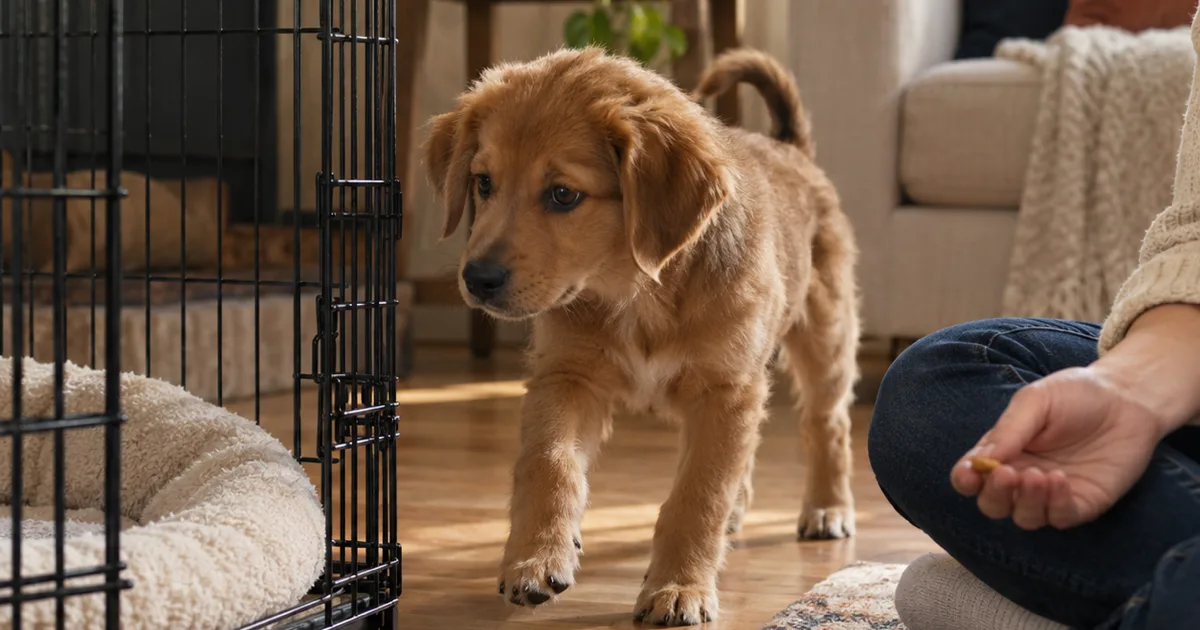
Crate training a puppy works best when the crate starts as a place your puppy chooses to walk into, with the door open, long before you ever close it. Start with seconds, not hours, and let the age table below set the upper limit for a calm daytime stretch, never the starting point.
Most crate trouble comes from asking for three new things at once: go in, stay in, and be alone. Split those apart and each one gets easy. This guide gives you the open-door first steps, a crate training schedule by age from 8 to 16 weeks, a straight answer on playpen vs crate, and what to do when practice falls apart.
Introduce the crate before you ask for a stay
Put the crate where you can sit nearby without blocking the doorway. Check that your puppy can stand, turn around and lie down comfortably. Clip the door open for the first practice so it cannot swing shut and startle them.
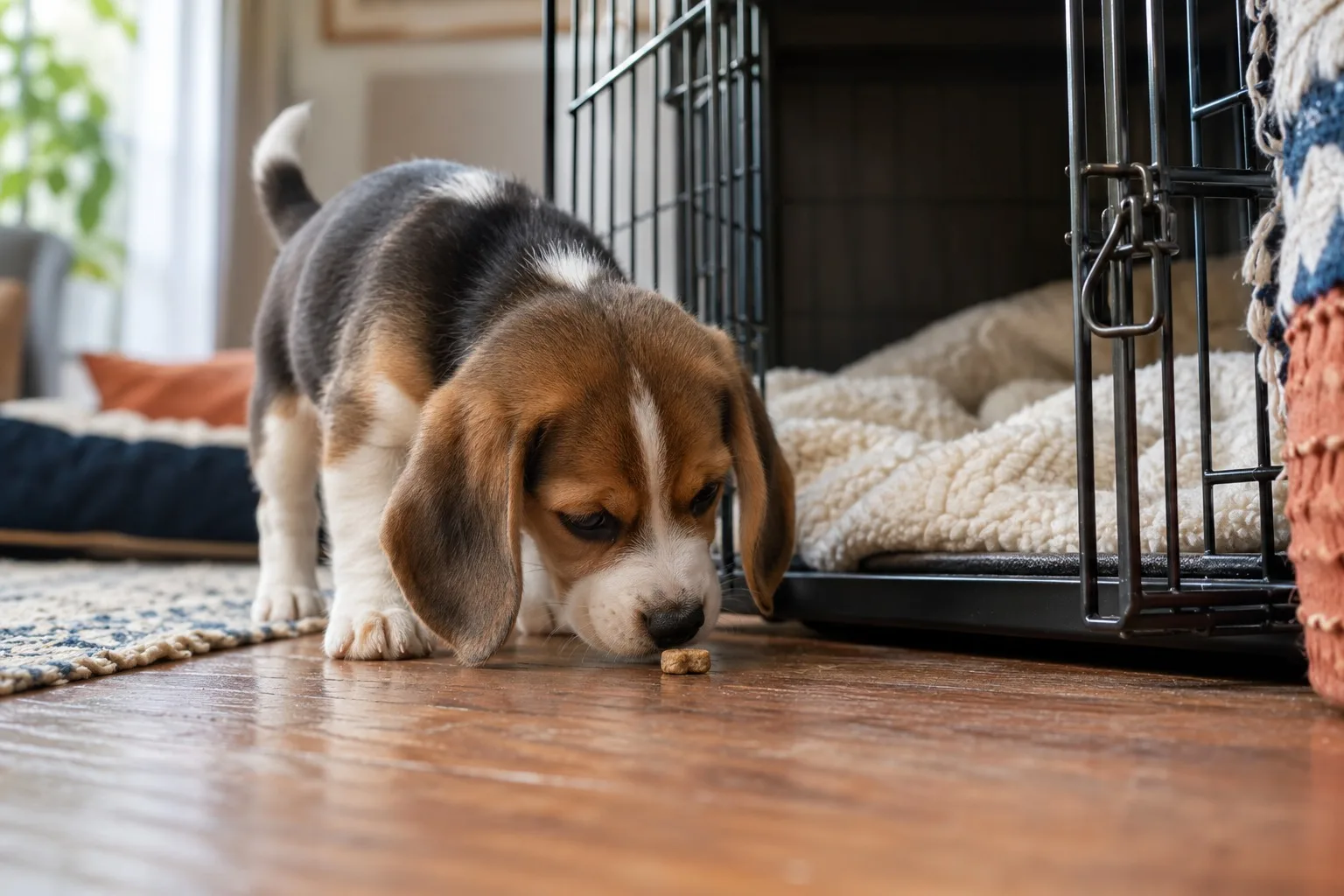
Place a treat near the entrance and let your puppy decide whether to come over. You are setting up a place worth exploring, not testing whether your puppy will stay. The AKC step-by-step crate training guide backs this kind of gradual, positive practice.
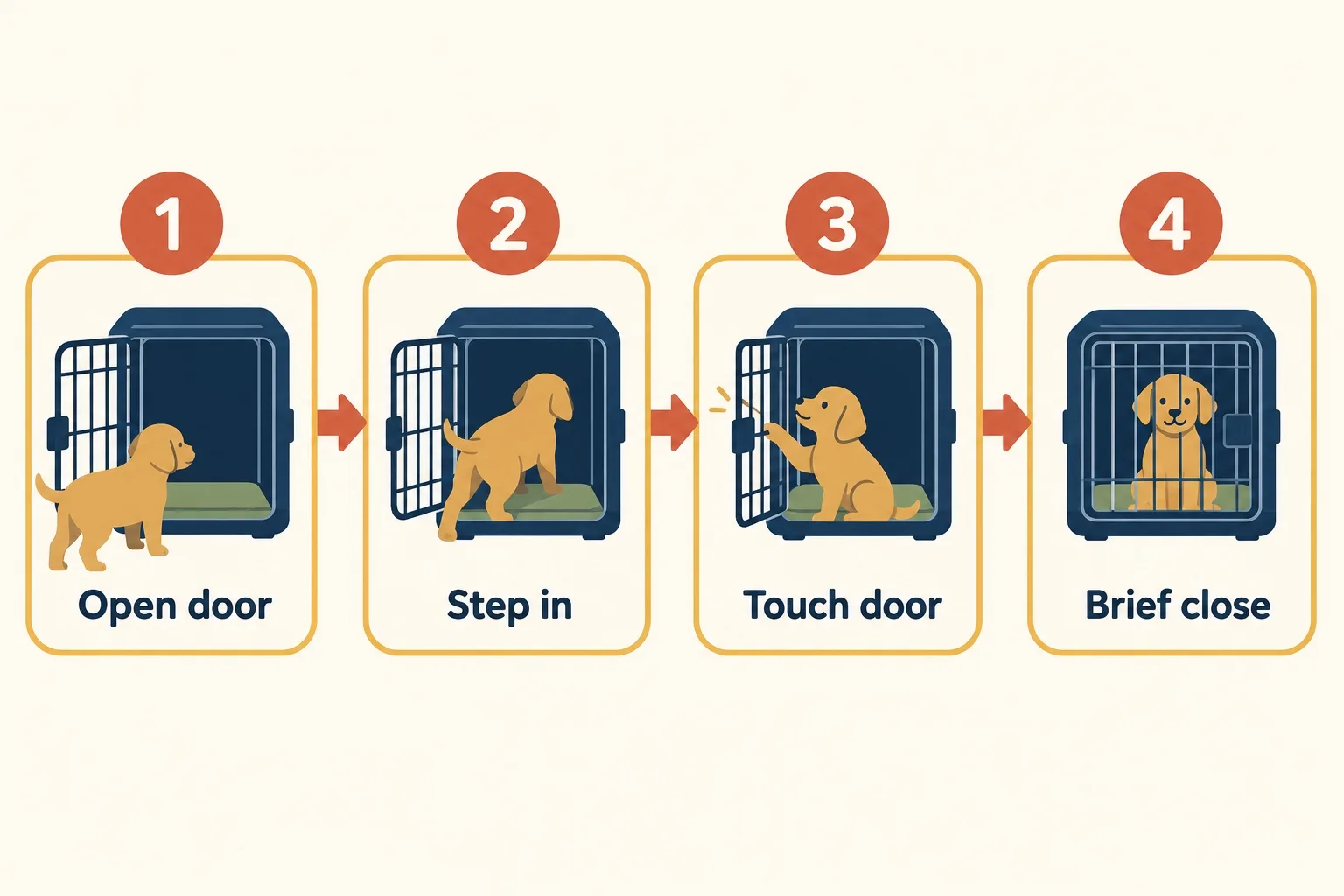
Try an easy sequence: approach, find the treat, step away. If your puppy walks in, calmly reward that choice. Never shut the door as a surprise. End while your puppy still wants more. A quiet look inside can be enough for the first attempt.
Write down the easiest step that worked. Tomorrow, start there instead of with the hardest thing you tried today. For a puppy who just came home, the 8 week old puppy routine puts potty and naps around this practice.
What to set up before the first session
| Item | Why it matters |
|---|---|
| Crate where you can sit beside it | Your presence is the safety signal at the start |
| Door clipped open | No surprise swing, no scare |
| Treats ready before you start | You reward the choice the moment it happens |
| Clear route to the potty door | A puppy who needs to go gets out fast |
| One safe chew | Something to do inside that you can supervise |
Check the crate size with the crate size calculator before you buy bedding. Room to stand and turn is the goal, not a big open space.
A puppy crate training schedule by age
Use this crate training schedule as a ceiling for comfortable daytime practice, then shorten it to what your puppy can actually manage. These minutes come from Puptoday's per-week planning rules. They are not a promise about bladder capacity, a minimum session length, or a reason to keep a worried puppy inside. First attempts with a moving door can last a few seconds.
| Age | Awake potty reminder | Awake crate practice | Sleep per day | Planned night stretch |
|---|---|---|---|---|
| 8 weeks | 90 minutes | 20 minutes, only while comfortable | 18 to 20 hours | 150 minutes |
| 9 weeks | 105 minutes | 25 minutes, only while comfortable | 18 to 20 hours | 165 minutes |
| 10 weeks | 120 minutes | 30 minutes, only while comfortable | 18 to 20 hours | 180 minutes |
| 11 weeks | 135 minutes | 35 minutes, only while comfortable | 18 to 20 hours | 195 minutes |
| 12 weeks | 150 minutes | 40 minutes, only while comfortable | 18 to 20 hours | 210 minutes |
| 13 weeks | 165 minutes | 45 minutes, only while comfortable | 18 to 20 hours | 225 minutes |
| 14 weeks | 180 minutes | 50 minutes, only while comfortable | 18 to 20 hours | 240 minutes |
| 15 weeks | 195 minutes | 55 minutes, only while comfortable | 18 to 20 hours | 240 minutes |
| 16 weeks | 210 minutes | 60 minutes, only while comfortable | 18 to 20 hours | 240 minutes |
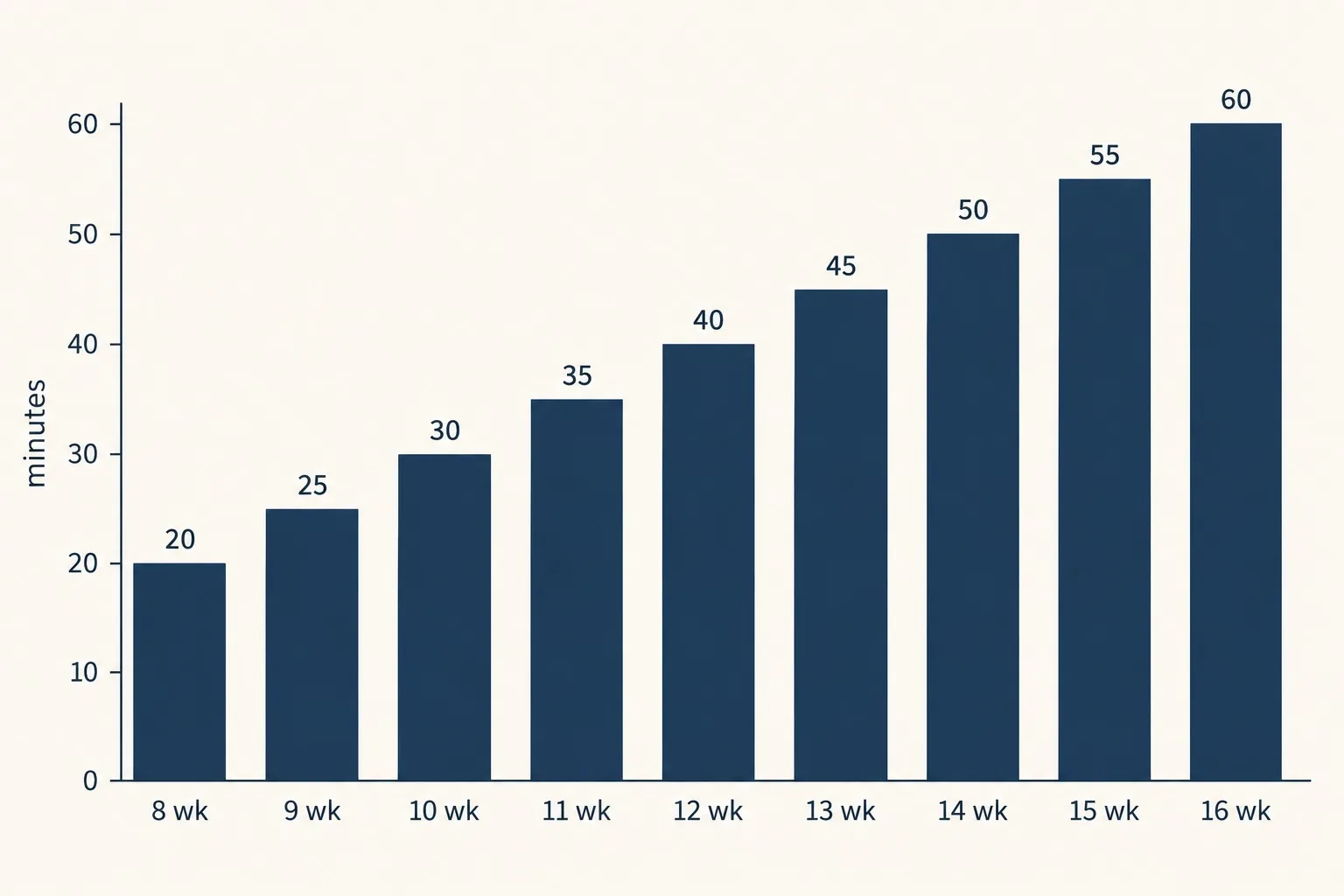
The pattern is simple: crate practice grows by 5 minutes a week and the awake potty reminder grows by 15. The potty number always wins. A puppy who needs to go outside needs a break, even if your timer has barely started.
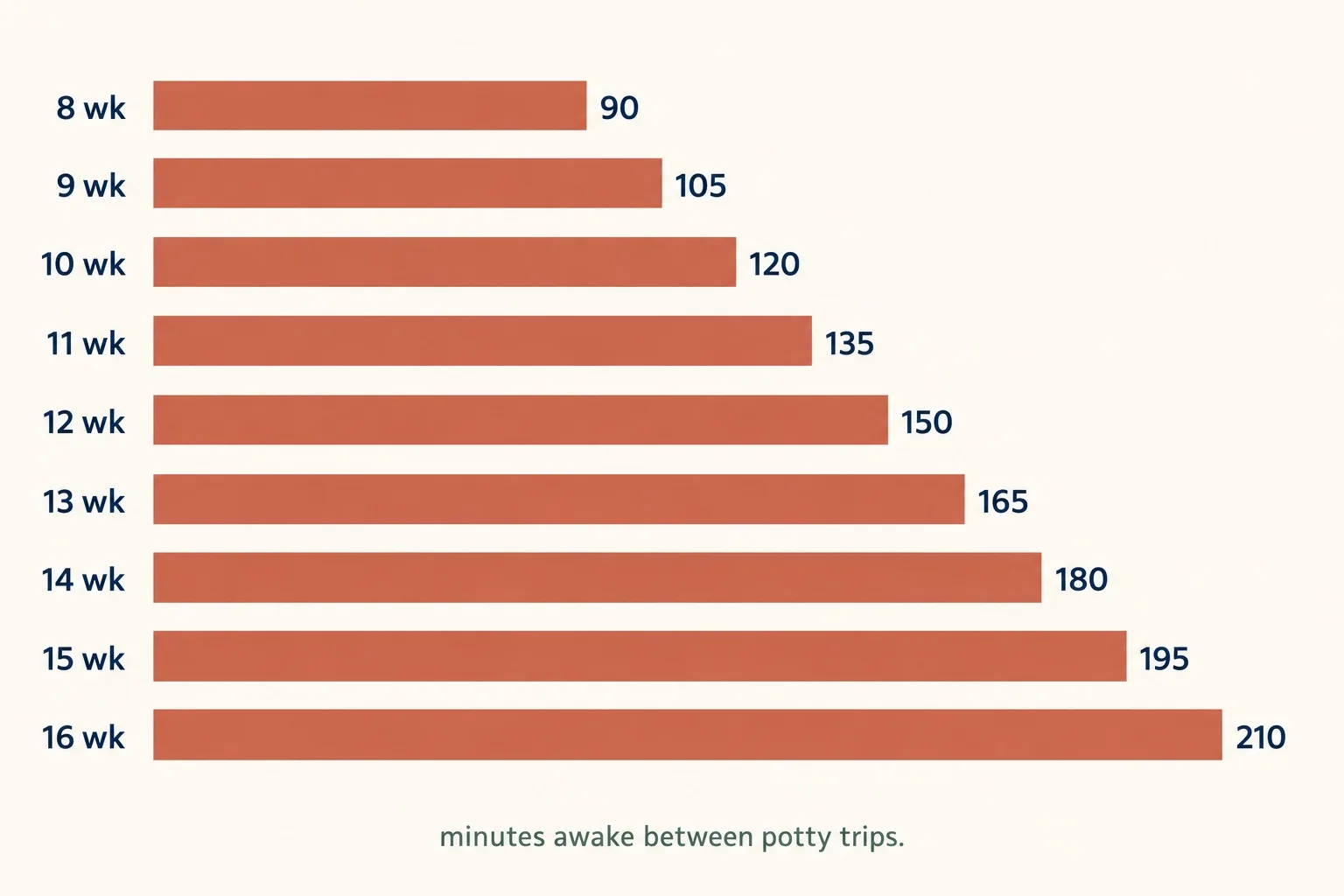
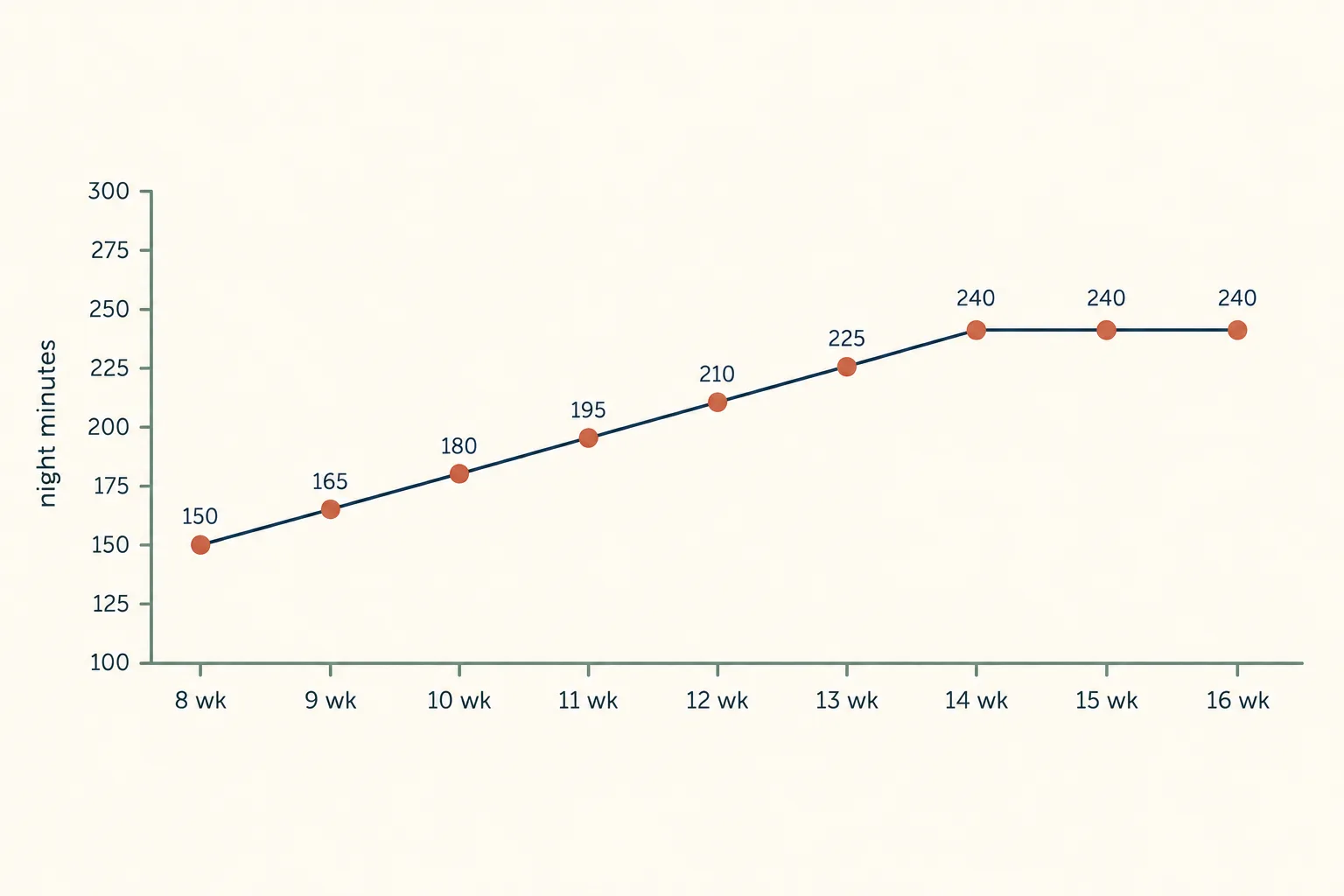
Nights stretch too, but they stop growing. The planned night stretch rises from 150 minutes at 8 weeks to 240 minutes at 14 weeks, then holds there through 16 weeks.
How to use the schedule in a real day
Pick an ordinary moment: potty trip, a little play, then a quiet chance to explore the crate. Note whether your puppy stayed relaxed while you touched the door. Next attempt, move the door a little and open it again. Change one thing at a time. Closing the door, standing up and walking out together makes it impossible to tell which part was too much.
Put this practice beside meals and naps, not in place of them. If accidents are the bigger problem right now, start with the potty training steps. For an adult or rescue dog, the house training guide for dogs of any age shows where a crate fits in the first month.
A good session does not mean your puppy can handle your whole workday. Plan a person to cover breaks during long absences.
Playpen vs crate: which one do you need?
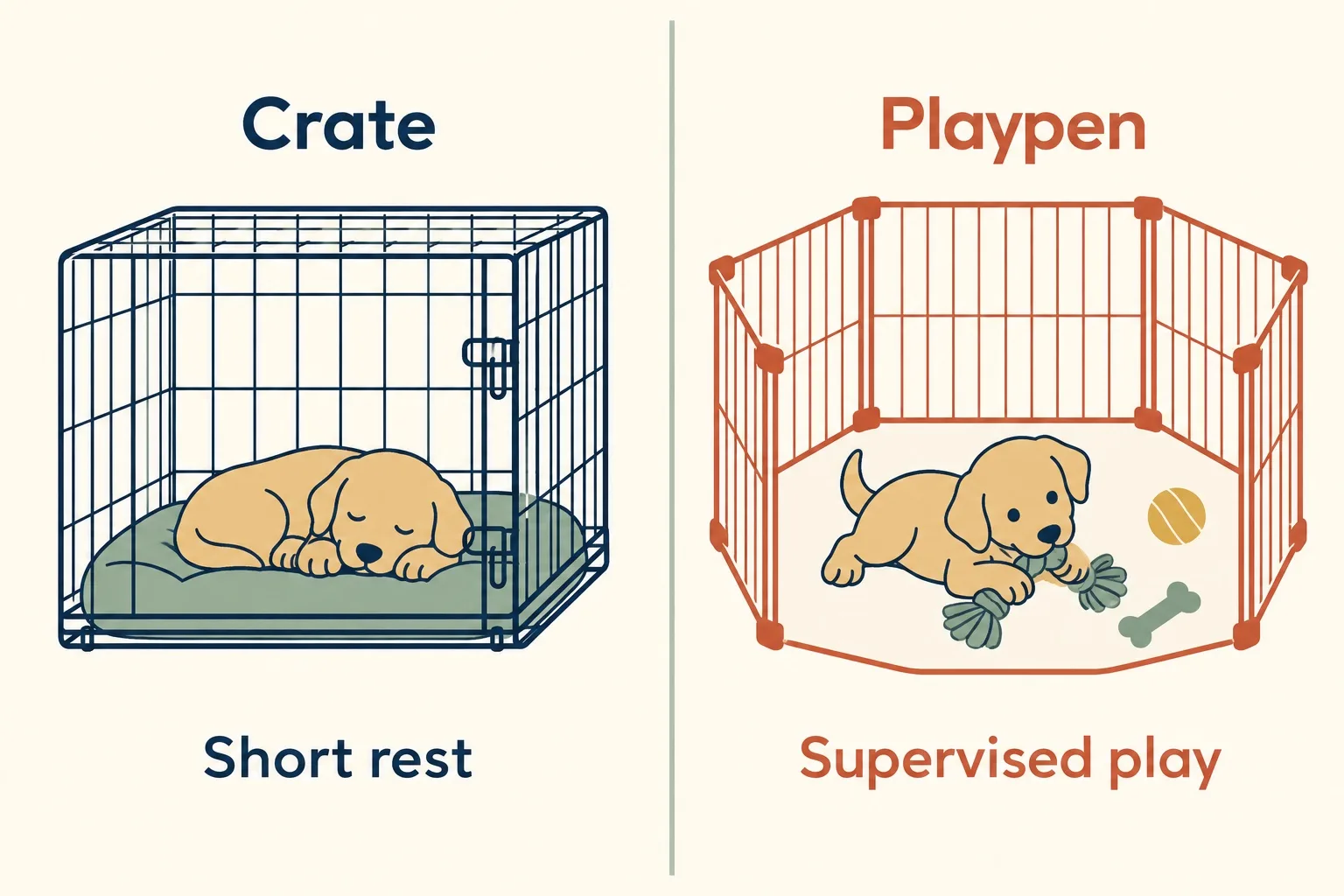
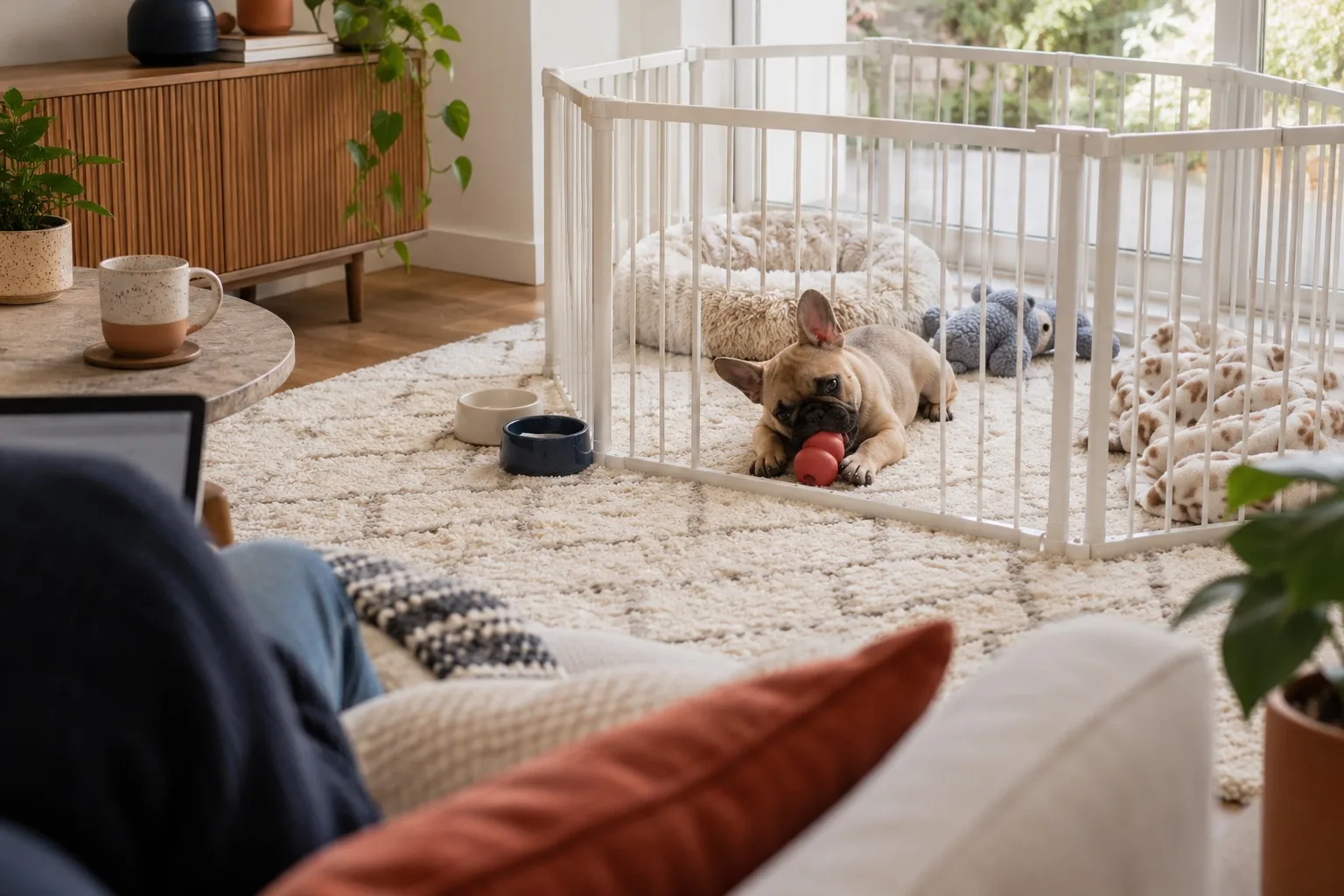
A crate is for short, calm rest. A playpen is for supervised awake time when you are nearby but not hands-on. Most homes with a young puppy end up using both, for different jobs.
| Question | Crate | Playpen |
|---|---|---|
| Main job | Short rest and naps | Supervised play and chewing |
| Size | Room to stand, turn and lie down | Room to move, play and chew |
| Teaches comfort in a small space | Yes, with gradual practice | No, that is a separate skill |
| Works for travel and vet visits later | Yes | Rarely |
| Replaces company and potty breaks | No | No |
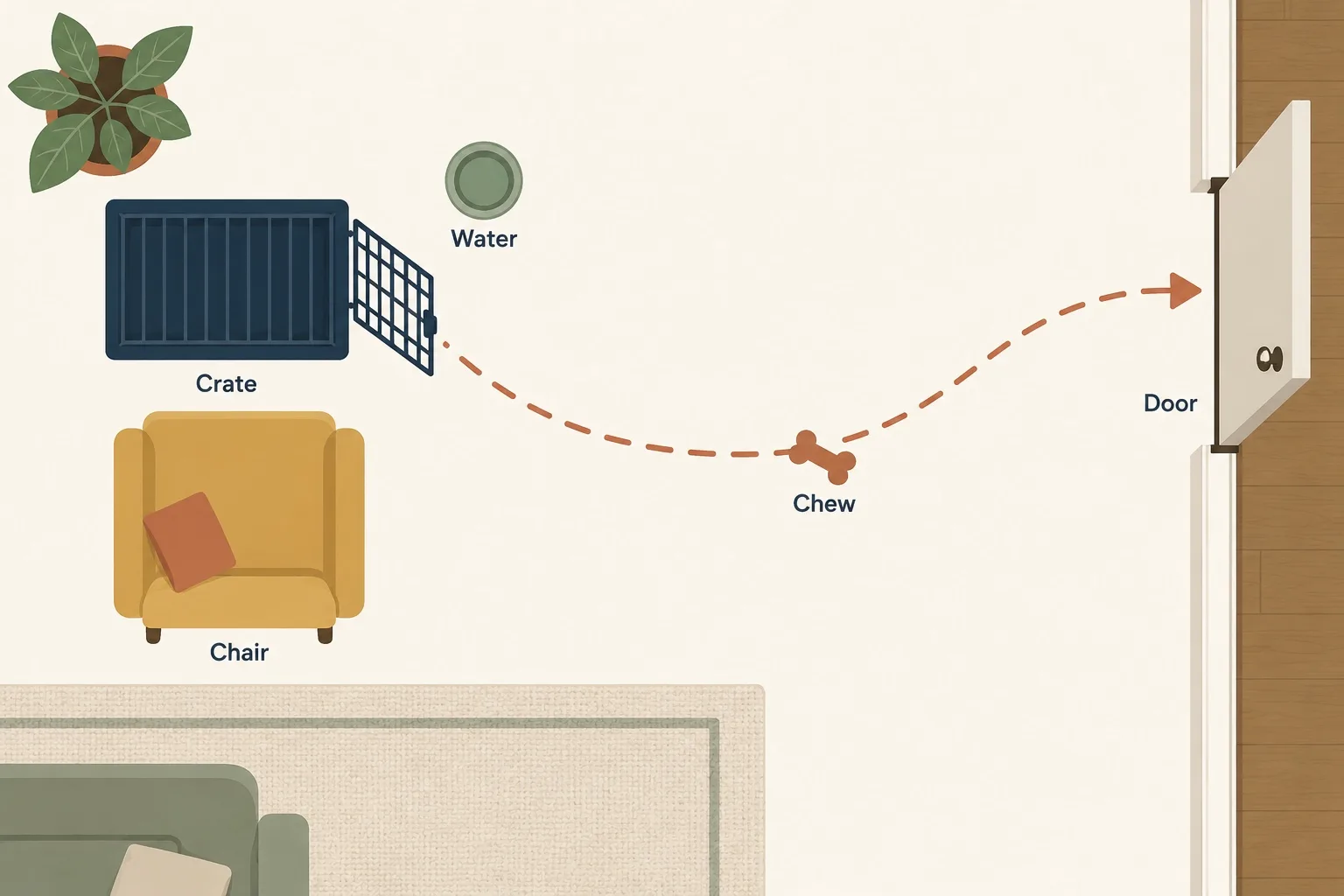
Sketch your room on paper first. Mark the rest area, water, the route to the door and where you will sit. Remove cords and anything your puppy can reach through the sides. Check barriers for climbing or trapping risks and follow the equipment instructions. Watch your puppy in the finished space before you rely on it.
Make the decision concrete: today, do you need a place for a supervised chew, a voluntary nap, or a short door practice? Pick one use and watch what your puppy does. A growing large breed needs regular fit checks too. See German shepherd puppy training for the large-size example.
What calms a puppy in a crate during the day?
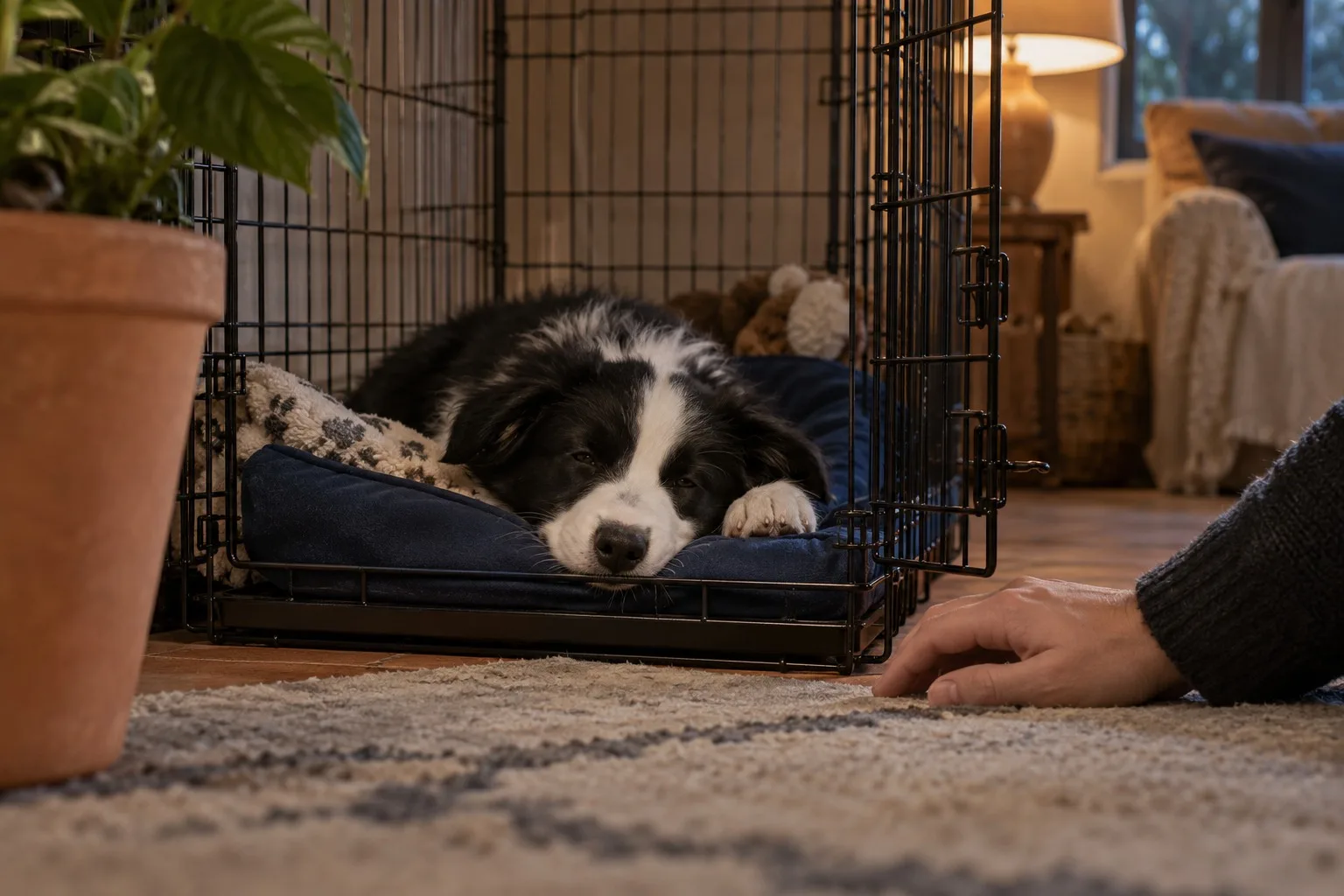
What calms a puppy in a crate is a need already met and a step small enough to be easy. Check potty, tiredness and what just happened in the room before you add more time. Then reward the calm choices you can see.
Note what happened just before the fussing instead of calling the puppy difficult. Did they just wake up? Did a game end suddenly? Is someone carrying food across the room? A potty trip, a quieter spot, or sitting beside the crate may be the next fix. If your puppy cannot relax, stop making it harder.
The AVSAB position statements support reward-based teaching. Here, that means rewarding what you see: walking to the bed, stepping inside, lying down by choice. Keep your voice quiet and your hands slow. When you open the door, let your puppy walk out normally. No big celebration needed.
A short, consistent cue helps your puppy know what comes next. Use the same word every time, from every person in the house.
Say it once, toss a treat inside, and reward the step in.
Sleep hours are not the same as closed-door crate hours. Use the puppy sleep schedule to protect naps across the day. If the problem happens after bedtime, the night crying guide has a separate night plan.
How to start crate training a puppy today
- Prepare an easy entrance
Offer a potty break, clip the crate door open and sit beside it. Place a treat where your puppy can reach it without being pushed or carried inside. Let your puppy leave whenever they want.
- Reward a voluntary choice
Mark a small success like looking into the crate or stepping onto the bed. Repeat that easy version before adding any door movement. Stop while things are going well.
- Add one change at a time
Work on door movement, time or your distance separately. Touch the door while you stay seated, then move it a little, then close it for a moment and open it again.
- Record the next small step
Write down what stayed comfortable and where it got hard. Arrange care for absences separately. Next time, start one step before the hard part.
Crate training mistakes that cost you a week
- Closing the door as a surprise when your puppy follows food inside. One scare can undo several good days.
- Treating the table minutes as a target to finish. They are a ceiling, not a test.
- Adding time and distance together. Change one before the other feels easy.
- Counting sleep hours as crate hours. A puppy who sleeps 18 to 20 hours a day still needs company, play and potty trips between naps.
- Punishing crying. It adds stress and slows learning. Make the step smaller instead.
When daytime crate practice needs a reset
Stop the session if your puppy keeps struggling to get out, will not take a treat they normally love, or gets more upset each minute. You do not need to wait for a timer. Meet their needs, give them a safe space with you nearby, and contact a qualified reward-based professional if it keeps happening. The AKC guide also recommends professional help when crate training causes serious distress.
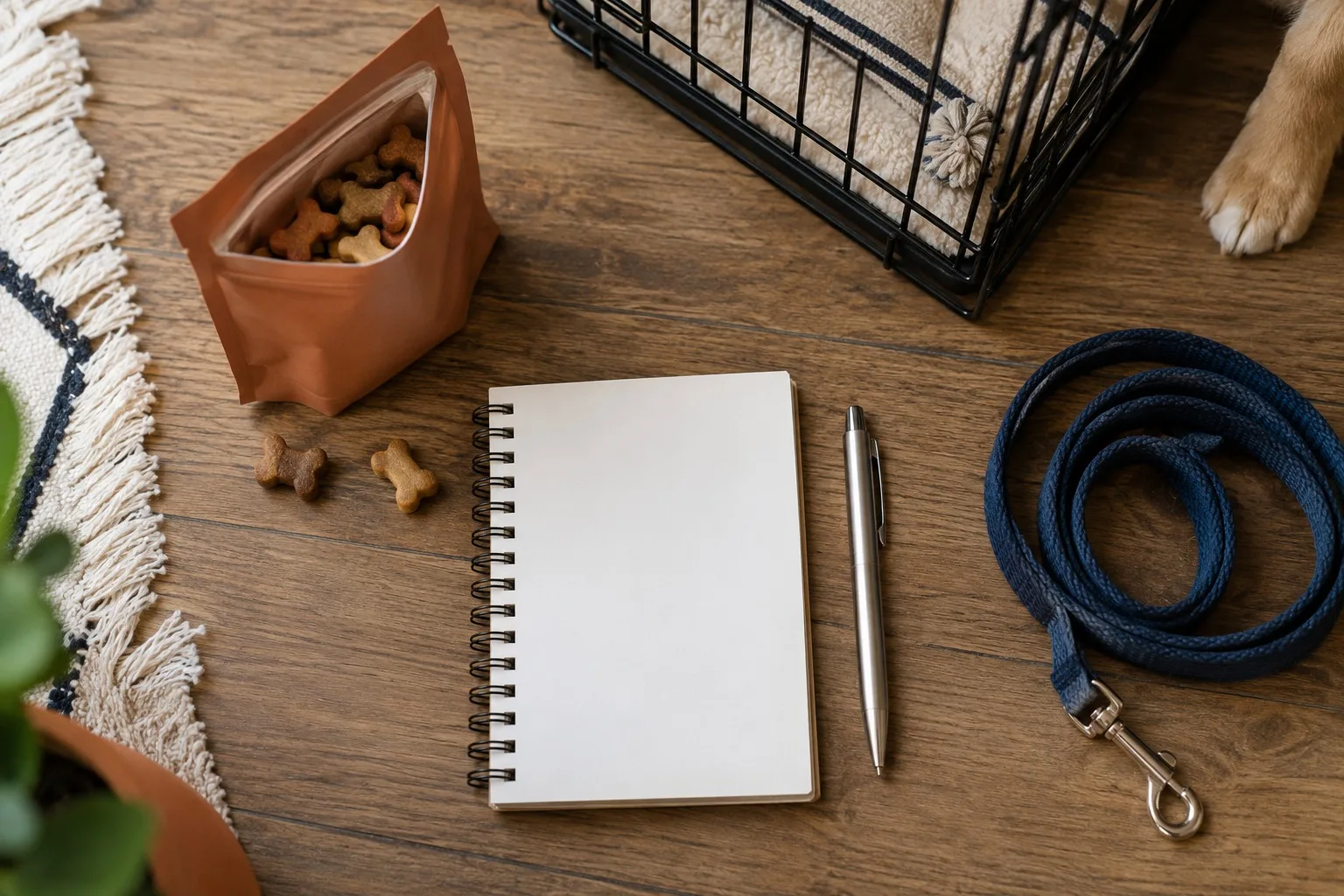
In your notes, describe events instead of verdicts like "stubborn". Write: the door moved, I stood up, the puppy started pacing. That gives you a smaller next step. Do not test a longer absence just to find the limit. Arrange help for the time you must be away while training catches up.
Keep the crate task narrow: walk in willingly, stay comfortable for a short planned moment, walk out calmly. Adjust the rest of the day as your puppy grows. If your own patience is running out, hand over to another adult. The puppy blues guide is there for the hard weeks.
If crate stress comes with health changes, check the list below.
The short version
Crate training a puppy is three separate skills: walking in, staying calm behind a closed door for a moment, and resting while you step away. Teach them one at a time with the door open first, use the age table as a ceiling, and let potty breaks interrupt any session.
The free method works. Where it gets hard is the day-to-day: knowing when the next potty trip is due, how long today's session should be after a rough night, and what to try tomorrow when today stalled. That is what the plan generator is for. Build a free schedule for your puppy's age and it puts crate practice, naps and potty trips on one page.
Get tomorrow's plan, adapted to how today went.
Frequently asked questions
Plan the day around care, play and rest rather than a quota of crate hours. The age table describes short daytime practice, not an all-day housing plan. Write down who handles potty trips, meals, play and company, and use a safe pen or puppy-proofed room when that fits better.
Start with seconds and an open door. As a ceiling, aim for no more than 20 minutes of calm daytime crate practice at 8 weeks, adding about 5 minutes a week up to 60 minutes at 16 weeks, and take your puppy out for a potty break at least every 90 minutes awake at 8 weeks. Shorten any session your puppy finds hard.
Check needs first and make the exercise easier. Stay nearby, offer a potty trip if needed, and stop adding time or distance. Do not keep a timer running while distress builds. Note what changed just before the crying so the next attempt starts one step earlier.
Yes, and you should. The first exercise is choosing to walk in while the door stays clipped open, then walking out again. Add door movement only after that looks easy. Entering and staying behind a closed door are two different skills.
Neither is better; they do different jobs. A crate is for short rest and builds comfort in a small space. A playpen gives supervised room to play and chew while you are nearby. Many owners use both, and a pen does not teach crate comfort on its own.
No. There is no required daily increase. A busy afternoon, a new room or a different caregiver can turn yesterday's easy session into a new task. Repeat the easy version when you need to, and ask a reward-based professional for help if you keep having to rescue sessions.
Get tomorrow's plan, adapted to how today went
A printed schedule can't see that she peed at 7:10 today; the Coach plan rewrites tomorrow from today's log. Start with the free schedule for your puppy.
Build my puppy's plan- Free starting schedule
- Reward-based practice
- Fits your puppy's day
Share article
About the author
More articles
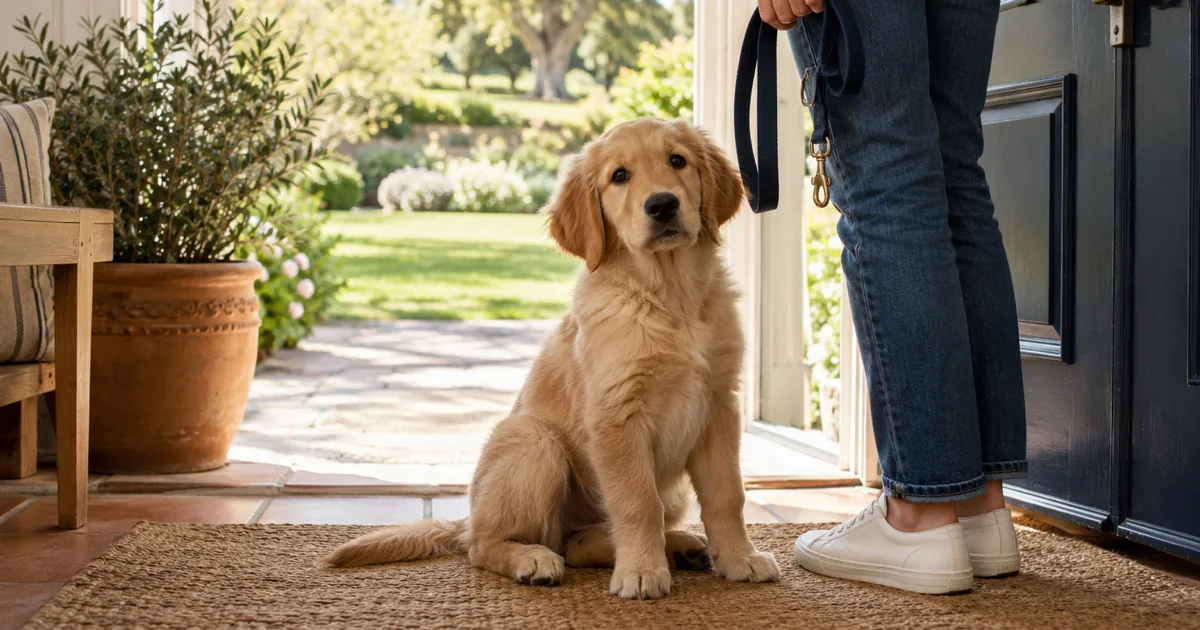
Potty, crate and sleep · 10 min
How Long Does It Take to Potty Train a Puppy?
Potty training takes steady support, not a weekend deadline. Learn which milestones matter, why timelines vary and how to spot the next useful change.
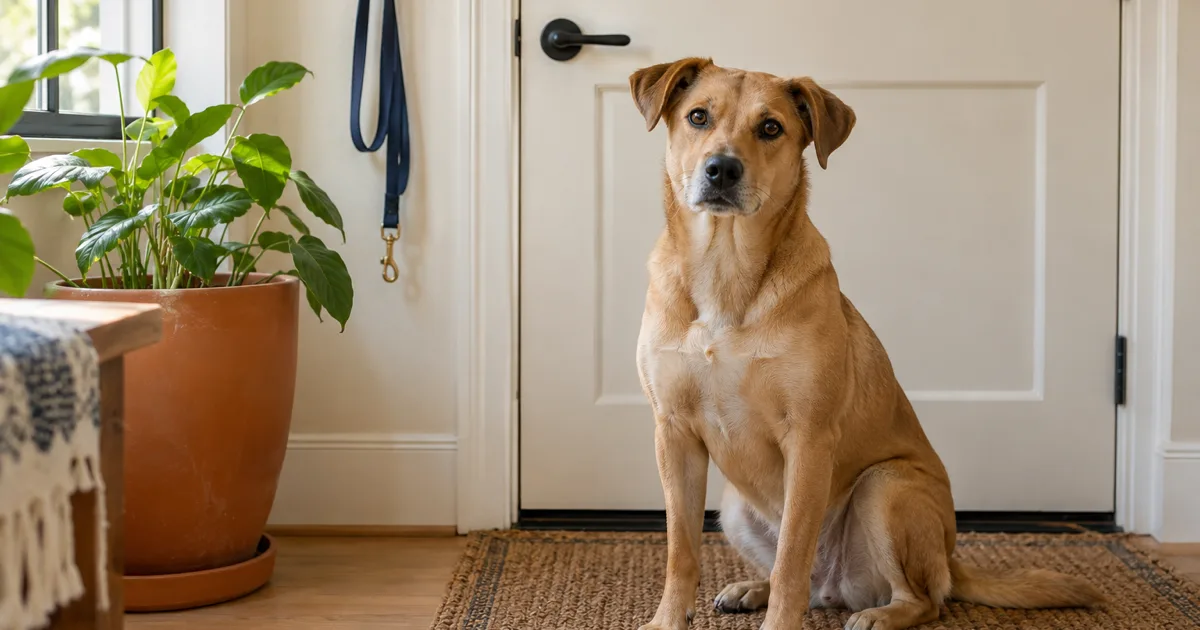
Potty, crate and sleep · 14 min
How to House Train a Dog: Puppy or Adult, Step by Step
How to house train a dog of any age: one outdoor spot, a schedule, a reward the second they finish, and supervision in between. What changes for puppies, adult rescues and dogs who start having accidents again.
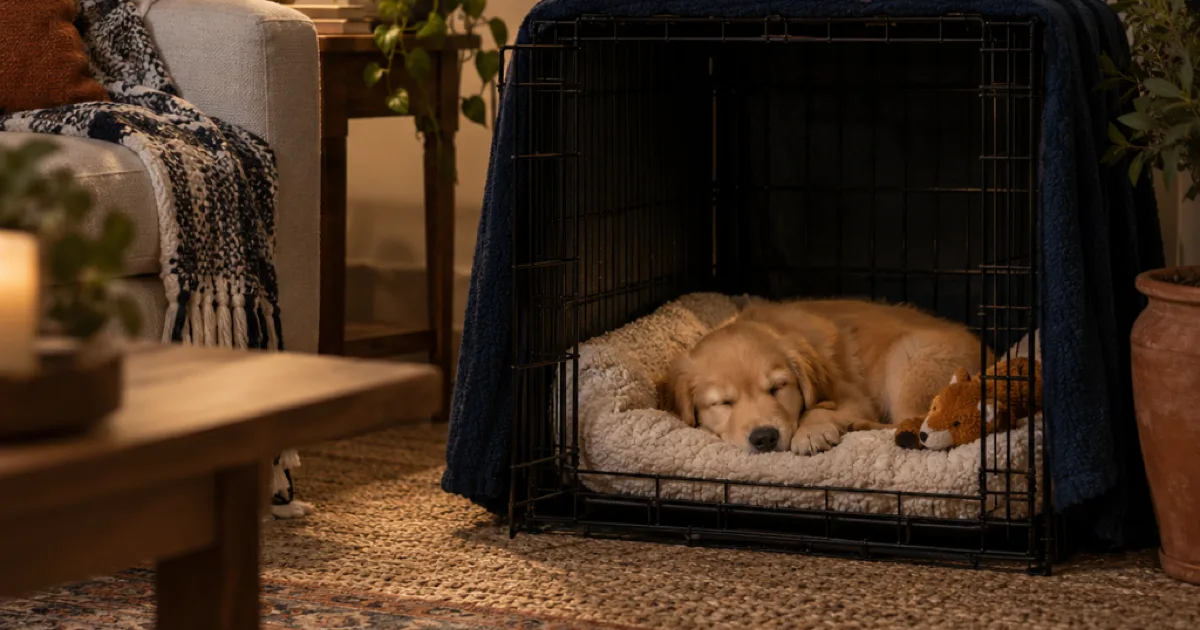
Potty, crate and sleep · 11 min
Puppy Sleep Schedule: Naps, Bedtime and Night Checks by Age
A puppy sleep schedule built around naps: how much a puppy should sleep, sleep and night stretches by age from 8 to 16 weeks, and a full 10 week sample day.
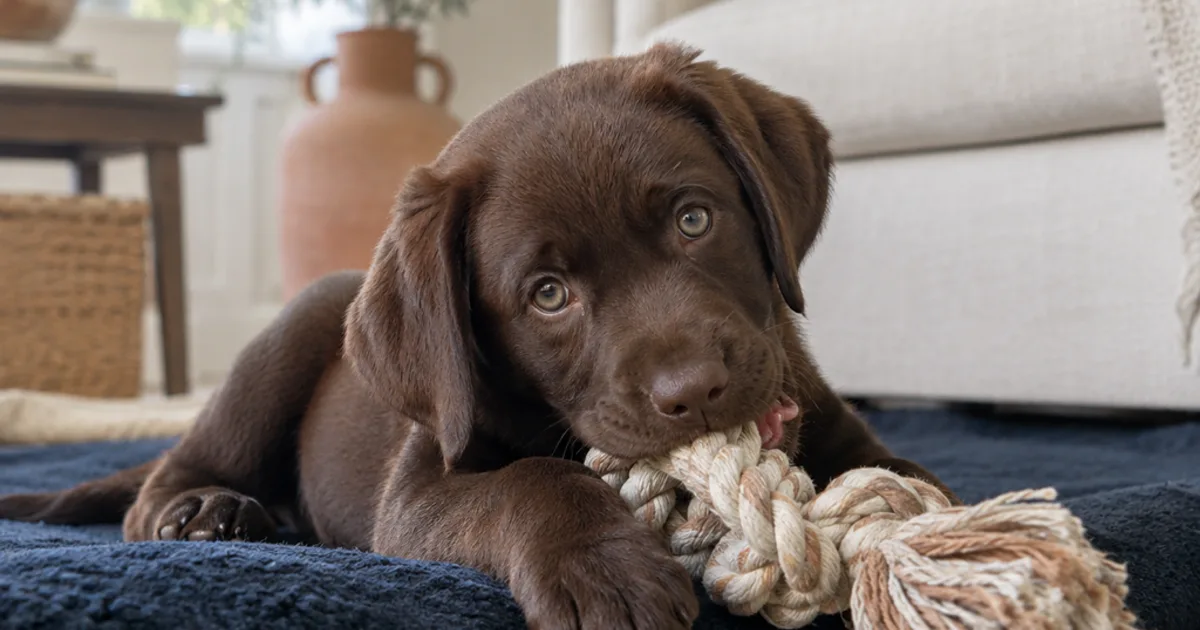
Potty, crate and sleep · 12 min
10 Week Old Puppy Schedule: Potty, Crate and Sleep Times
A full 10 week old puppy schedule, hour by hour: potty every 2 hours awake, two quiet night trips, three meals and planned naps, plus how 10 weeks compares with 9 and 12.
Potty, crate and sleep · 11 min
12 Week Old Puppy Schedule: Potty, Crate and Sleep Times
A full 12 week old (3 month old) puppy schedule: potty about every 2.5 hours awake, three meals, night trips at 1:30 and 5:00 am, naps and crate practice, compared with 10 and 14 weeks.
Potty, crate and sleep · 12 min
8 Week Old Puppy Schedule: Potty, Crate and Sleep Times
Your 8 week old puppy's first routine, by the hour: potty every 90 minutes awake, three quiet night trips, 20 minute crate practice, and how to keep it going when you are tired.