
Puppy Blues: Why the First Weeks Feel Awful and What Helps
In this article
The puppy blues are the regret, dread or flat sadness many people feel in the first weeks with a new puppy. They are common, they usually fade as the puppy's routine settles, and the fastest relief comes from making the job smaller, not from trying harder to feel grateful.
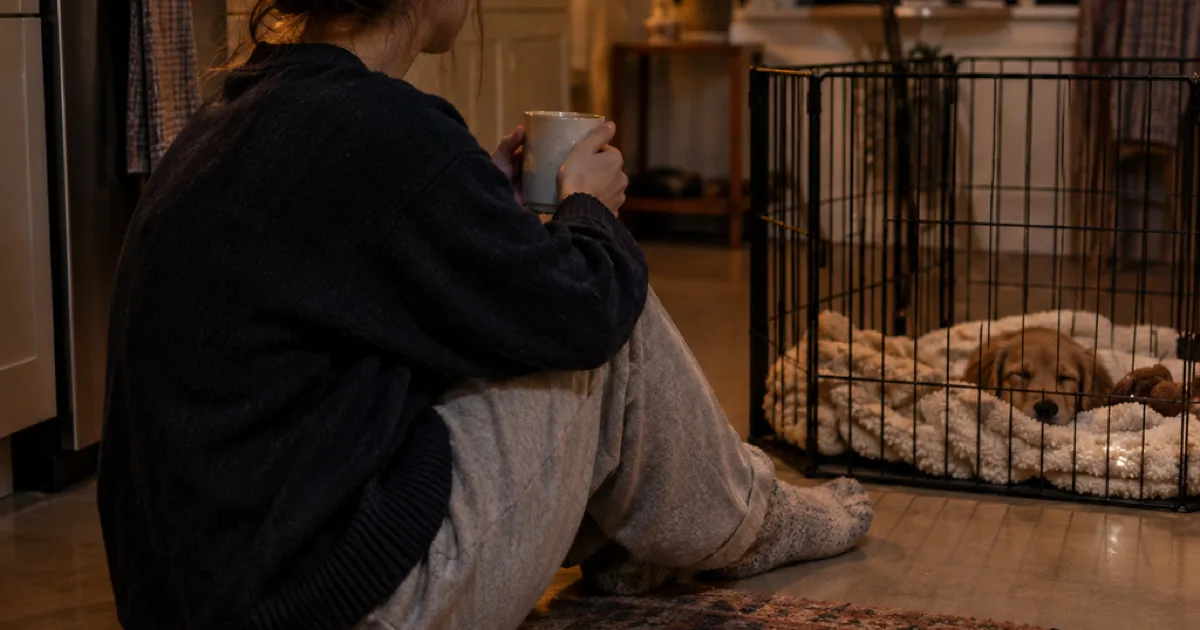
If you are reading this at 3 am, sitting on the floor next to a pen, with a puppy who finally fell asleep: you did not make a terrible mistake. You are short on sleep, your days have no edges anymore, and every small thing feels like a test you are failing. That is a schedule problem as much as a feelings problem, and schedules can be fixed tonight.
What are the puppy blues?
The puppy blues are the low mood, anxiety, irritability or regret that can show up after bringing a puppy home. They are not a diagnosis. They are a name owners gave to a very ordinary reaction to broken sleep, lost freedom and a small animal who needs you every two hours.
A 2024 survey of more than 1,500 dog owners, published in npj Mental Health Research, found that close to half of them described feeling this way, and that for most the feelings passed. You are in large company, even if your friends only post the cute photos.
Signs you are in it
- You think "I want my old life back" several times a day.
- You dread the next potty trip or the next nip on your ankle.
- You feel trapped at home because the puppy cannot be left yet.
- You cry, snap at your partner, or feel numb when the puppy is cute.
- You keep reading about rehoming at night, then feel guilty about it.
None of these make you a bad owner. They mean the load is bigger than the support around it.
Why the first weeks feel so heavy
The counterintuitive part: most people with the puppy blues are not short on love for the dog. They are short on edges. A puppy has no off switch you can see, so the day turns into one long shift with no start, no break and no finish.
Three things stack up:
- Sleep. Night potty trips and early wake-ups cut your sleep into pieces. Everything feels worse on four broken hours.
- Constant watching. A young puppy needs eyes on them when loose. Watching without a plan feels like failing, because you notice every mistake.
- No proof of progress. Training gains are small and slow. Without notes, a good Tuesday disappears under one bad Wednesday.
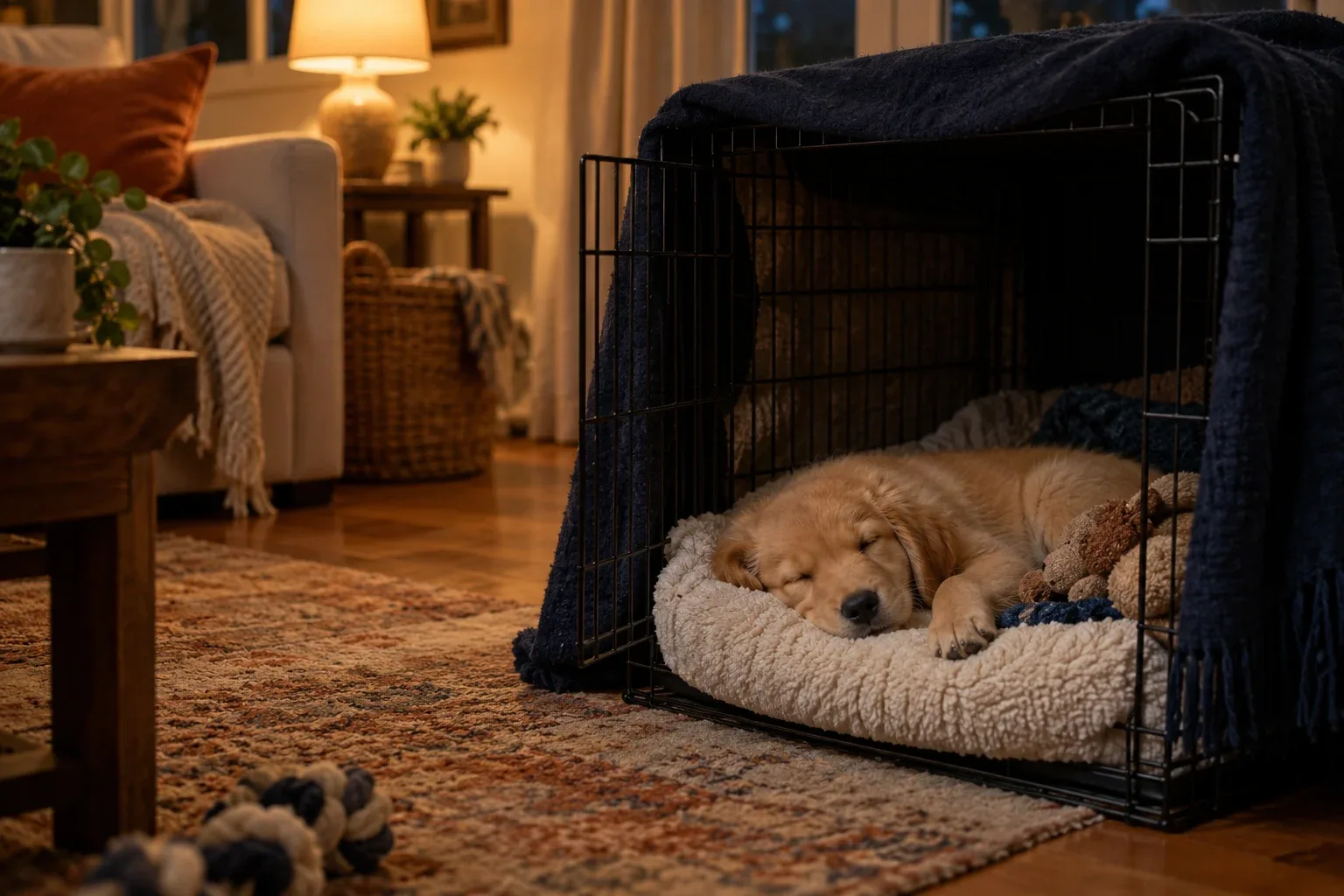
The fix for each one is structural. Planned naps give the puppy rest and give you a real break. A written day turns "watch the puppy forever" into short blocks. A two-line note each night shows you the trend your tired brain cannot see.
How long do puppy blues last?
For most people the worst of it eases within a few weeks, often as the puppy starts sleeping longer at night and the day falls into a rhythm. There is no fixed timeline, and it is common to have one or two harder days later, for example around a potty regression or a new teething phase.
What shortens it is not time alone. It is the moment you stop running the day from memory. If your puppy sleeps in longer stretches and you know when the next potty trip is, most of the dread goes with it. Our puppy sleep schedule guide shows how naps and night stretches change with age.
Shrink the job: what to change this week
Here is the honest version. You cannot make a 10 week old puppy need less care. You can make the care predictable, shared and shorter.
| What the day asks of you | The smaller version |
|---|---|
| Watch the puppy all day | Short awake blocks between planned naps in a crate or pen |
| Take them out "whenever" | Potty trips at set moments: after waking, eating, play and before bed |
| Fix biting, crying and potty at once | Pick one problem for this week and let the rest be "good enough" |
| Be on duty around the clock | Split the day into shifts with a clear handoff |
| Remember how today went | Two lines in a notes app before bed |
If crate time itself is where things fall apart, start with calm daytime crate steps before you ask for longer stays. If nights are the hard part, read what to do when your puppy cries in the crate at night.
How to get through a hard puppy week
- Write tomorrow on one page
List wake-up, meals, naps and potty trips with rough times. Use our schedule by age as a starting point and adjust it to your home.
- Book your breaks into the naps
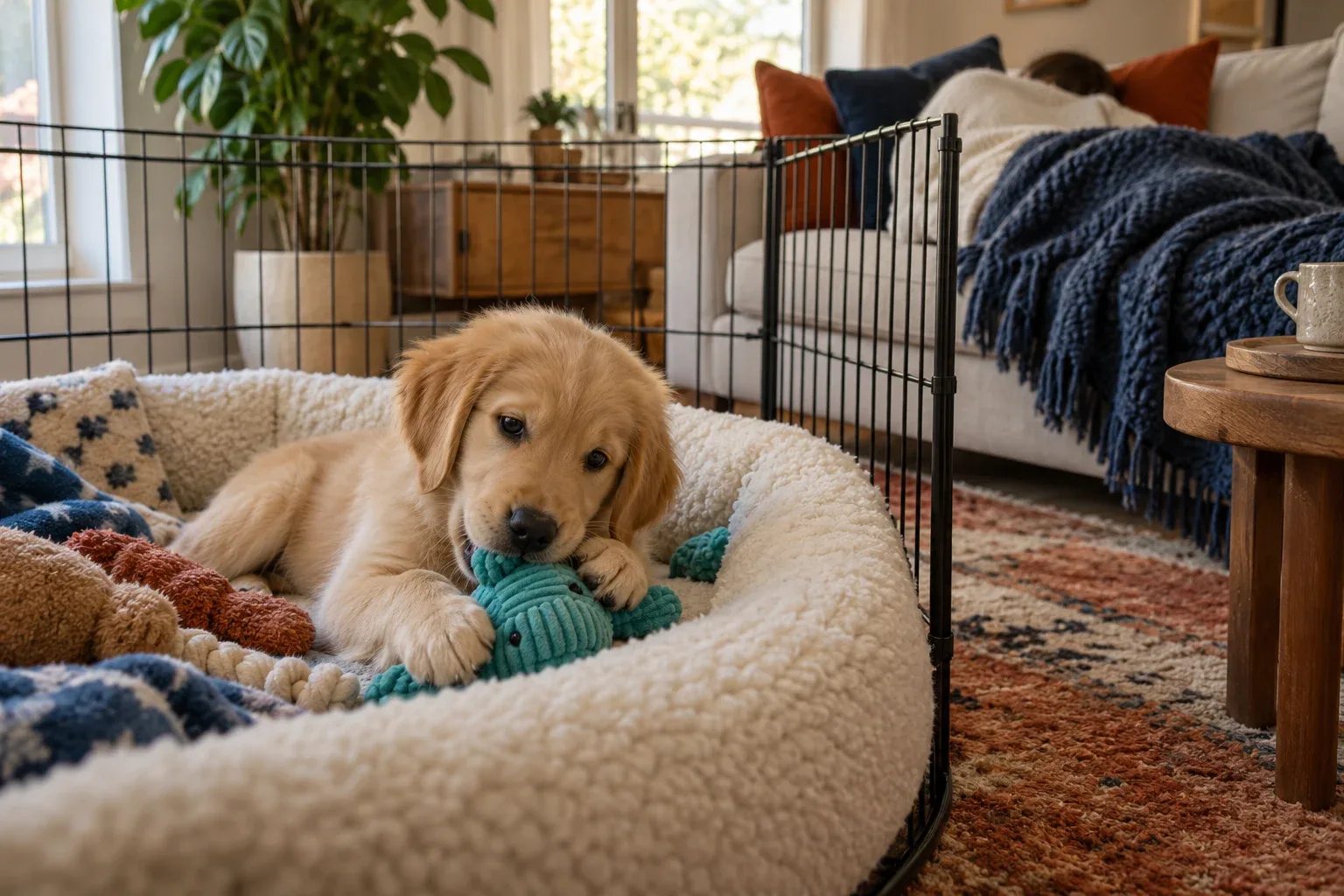
When the puppy is asleep in the crate or pen, you are off duty. Eat, shower or lie down. Do not use naps to catch up on chores.
- Split the shifts
If two people live with the puppy, take turns. One person owns the morning, the other owns the evening. Hand over the leash and a short note.
- Pick one problem
Choose biting, potty or nights. Work on that one with short, reward-based practice. Everything else just needs to be safe. Gross habits like a puppy eating poop can wait a week with closer supervision.
- Log two lines tonight
Write what went well and what was hard. In a week you will have real evidence of progress instead of a feeling.
When two people share the puppy
Shared care is the biggest single lever for the puppy blues, and the most common place it breaks down. One person ends up "on" all the time because the other does not know the routine.
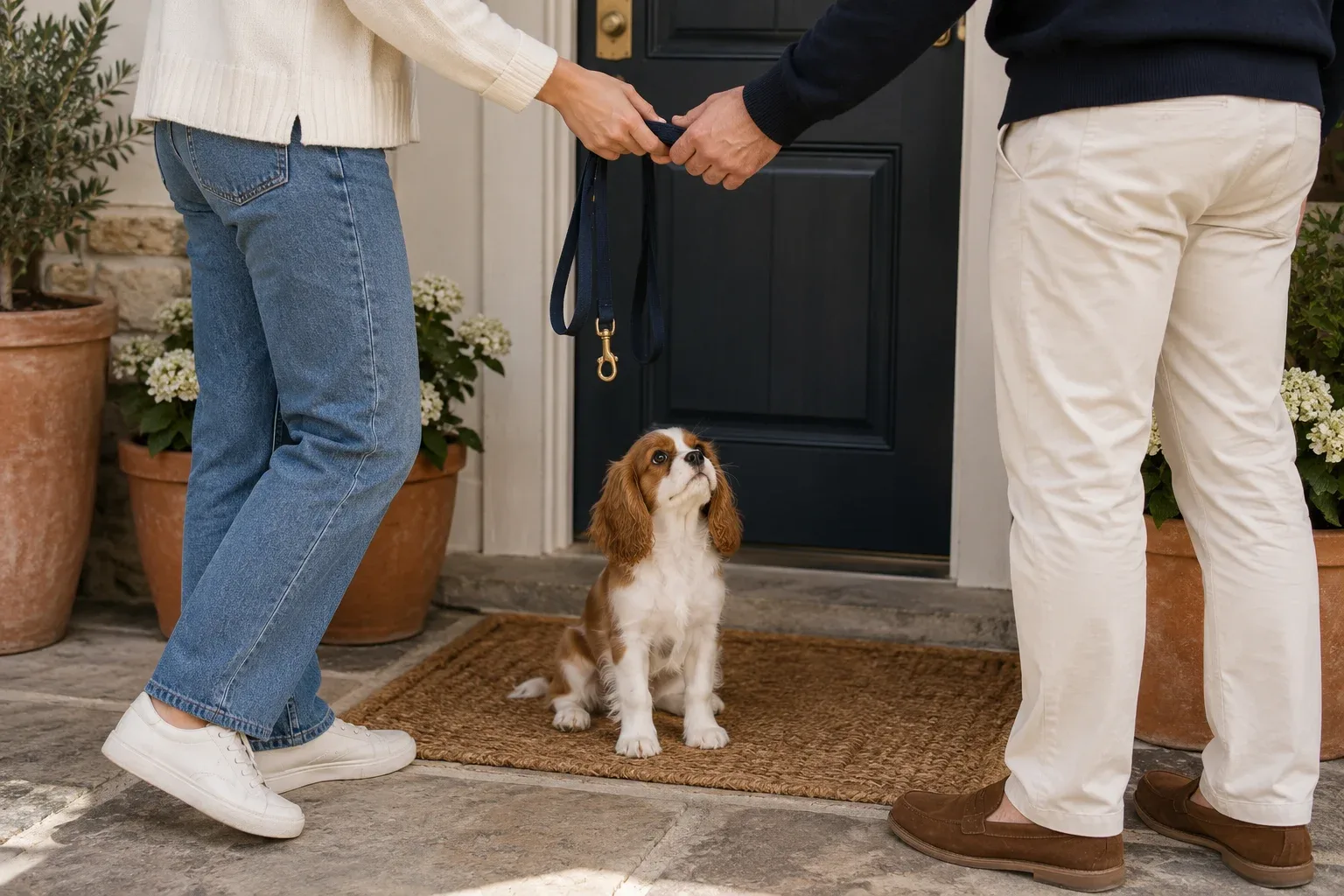
A good handoff answers three questions: when was the last potty trip and did it work, when did the puppy last eat, and how long have they been awake. With those three answers anyone can take over without guessing. If you live alone, the same idea applies to a friend, neighbor or paid sitter covering a block of the day.
Mistakes that make the puppy blues worse
- Comparing to someone else's puppy. The Instagram puppy sleeping through at 9 weeks is one data point, not a standard.
- Doing every training plan at once. Three new methods in a week means none of them gets a fair test.
- Skipping naps to keep the puppy tired. An overtired puppy bites more and settles less. See how to stop puppy biting for what that looks like.
- Punishing accidents or nips. Harsh corrections add stress for both of you and slow learning. Reward the behavior you want instead.
- Deciding about rehoming at 3 am. Big decisions made on no sleep feel certain and often are not. Give yourself a rested day first.
When it is more than the puppy blues
Feeling low for a few weeks after a big life change is common. Feeling hopeless most of the day for more than two weeks, being unable to eat or sleep even when the puppy is asleep, or having thoughts of harming yourself is different. Please talk to your doctor or a mental health professional. In the US you can call or text 988 at any time to reach the Suicide and Crisis Lifeline.
If the puppy has bitten someone and broken skin, or you are seeing growling and stiffening around food or toys, that is a job for a certified behavior professional, not a willpower problem.
The short version
The puppy blues are real, common and usually temporary. What helps most is not more effort but a smaller job: a written day, planned naps that are breaks for you too, shared shifts and one problem at a time. Start tonight by writing tomorrow on one page.
You can skip the blank page. Build a free schedule for your puppy's age in about a minute, then adjust it as the week goes.
Frequently asked questions
The puppy blues are the sadness, anxiety, irritability or regret many owners feel in the first weeks with a new puppy. They usually come from broken sleep, constant supervision and the loss of free time, and they tend to fade as the puppy's routine settles.
For most people they ease within a few weeks, often as the puppy sleeps longer at night and the day gets more predictable. A written routine and shared care usually shorten them. If low mood lasts more than two weeks or feels hopeless, talk to a doctor.
Yes, for most owners they do. They tend to lift once nights get longer, potty trips become predictable and you can see training progress. Writing two lines each night helps you notice that progress sooner.
Usually because your sleep, freedom and routine changed overnight while the puppy needs you every couple of hours. Sadness after a big life change is a common reaction, not proof you made the wrong choice.
Many owners find the first few weeks at home the hardest, because night wake-ups, potty training and biting all peak together. Some find a second hard patch in adolescence, when a puppy who seemed trained starts testing everything again.
Make the job smaller. Write tomorrow's schedule, treat naps as your breaks, split shifts with another person, work on one problem at a time and keep a two-line nightly log. Ask for help early rather than waiting to burn out.
Get tomorrow's plan, adapted to how today went
A printed schedule can't see that she peed at 7:10 today; the Coach plan rewrites tomorrow from today's log. Start with the free schedule for your puppy.
Build my puppy's plan- Free starting schedule
- Reward-based practice
- Fits your puppy's day
Share article
About the author
More articles

Puppy SOS: biting, crying, blues · 12 min
How to Stop Puppy Barking: Find the Reason, Reward the Quiet
How to stop puppy barking without shouting or collars: read what the bark is asking for, meet the need before it starts, and reward one second of quiet, then three, then ten.
Puppy SOS: biting, crying, blues · 12 min
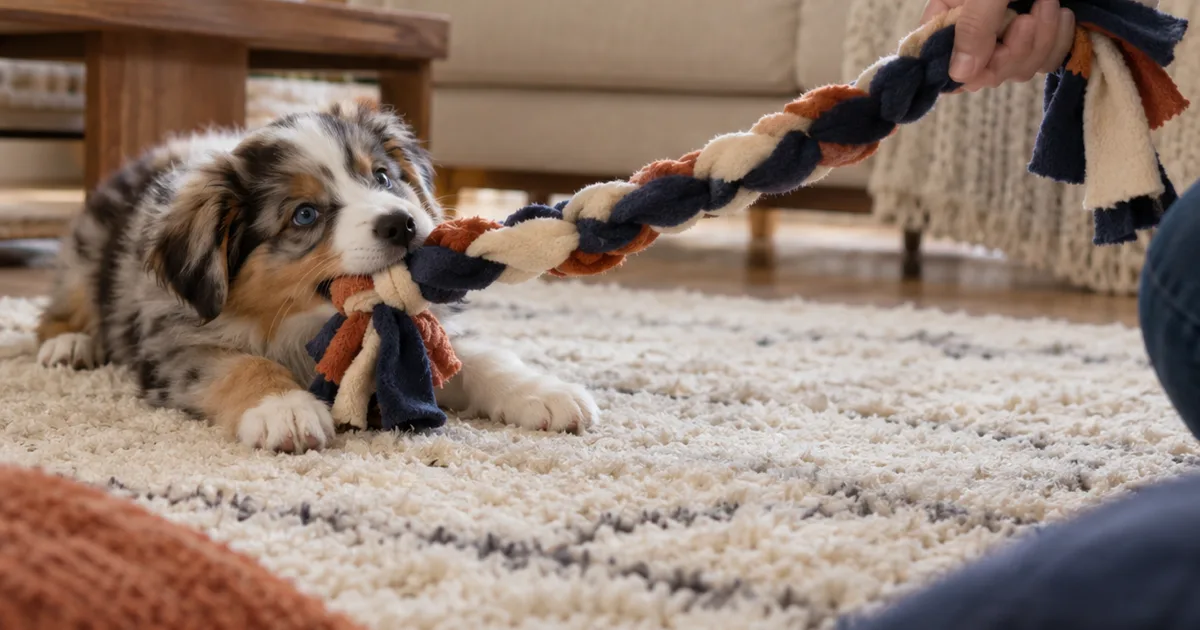
How to Stop Puppy Biting: Toy First, Calm Pause, More Naps
How to stop puppy biting without punishment: redirect to a toy before teeth find skin, pause calmly when they do, and protect naps. Plus puppy teething and when puppies stop teething.
Puppy SOS: biting, crying, blues · 11 min
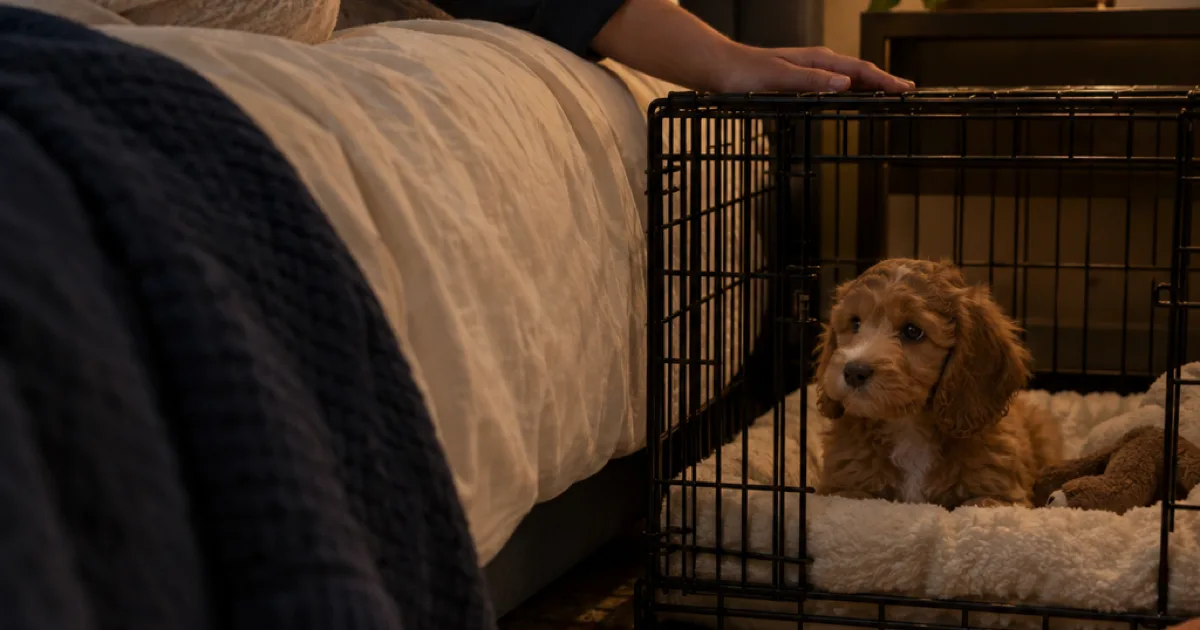
Puppy Crying in Crate at Night: What to Do Tonight
Puppy crying in the crate at night? Check the need, keep night potty trips quiet and keep the crate beside you. Night checks by age and a calm 4 step response.

Puppy SOS: biting, crying, blues · 8 min
Puppy Eating Poop: Why It Happens and How to Stop It
Why puppies eat poop, when it is a reason to call the vet, and the simple timing habit that stops it faster than any powder or taste trick.

Training that sticks · 12 min
Leash Training a Puppy: 6 Steps From the First Week Home
Leash training a puppy in short indoor sessions from 8 weeks: the gear to pick, where the reward goes, the stop-and-go rule for pulling, and fixes for a puppy who sits, bites the leash or lunges.

Potty, crate and sleep · 10 min
How Long Does It Take to Potty Train a Puppy?
Potty training takes steady support, not a weekend deadline. Learn which milestones matter, why timelines vary and how to spot the next useful change.