
Puppy Training Tips: 9 That Work in 3-Minute Sessions
In this article
The best puppy training tips come down to three habits: train in sessions of 3 to 5 minutes, several times a day, reward the behavior you want within a second, and set up your home so the wrong behavior is hard to practice. Start the day your puppy comes home, with their name, sit and a calm settle on a mat.
Here is the part most tip lists skip. Your puppy is learning all day, not only when you hold a treat. Every time they sit before the door opens, chew the toy instead of the chair leg, or lie down quietly while you cook, they learn something. If nobody notices, the lesson is "that did nothing." So the biggest gain is not a longer session. It is catching the good moments you did not ask for.
When should you start training a puppy?
Start on day one. An 8 week old puppy can learn their name, sit and coming to a hand in short, easy sessions. You are not waiting for an age; you are waiting for a calm minute after a nap and a potty trip.
Formal classes can come a little later, once your vet says your puppy's vaccinations fit group settings. The AKC puppy training timeline lays out the same idea: early skills at home, then more distraction and polish over the following months.
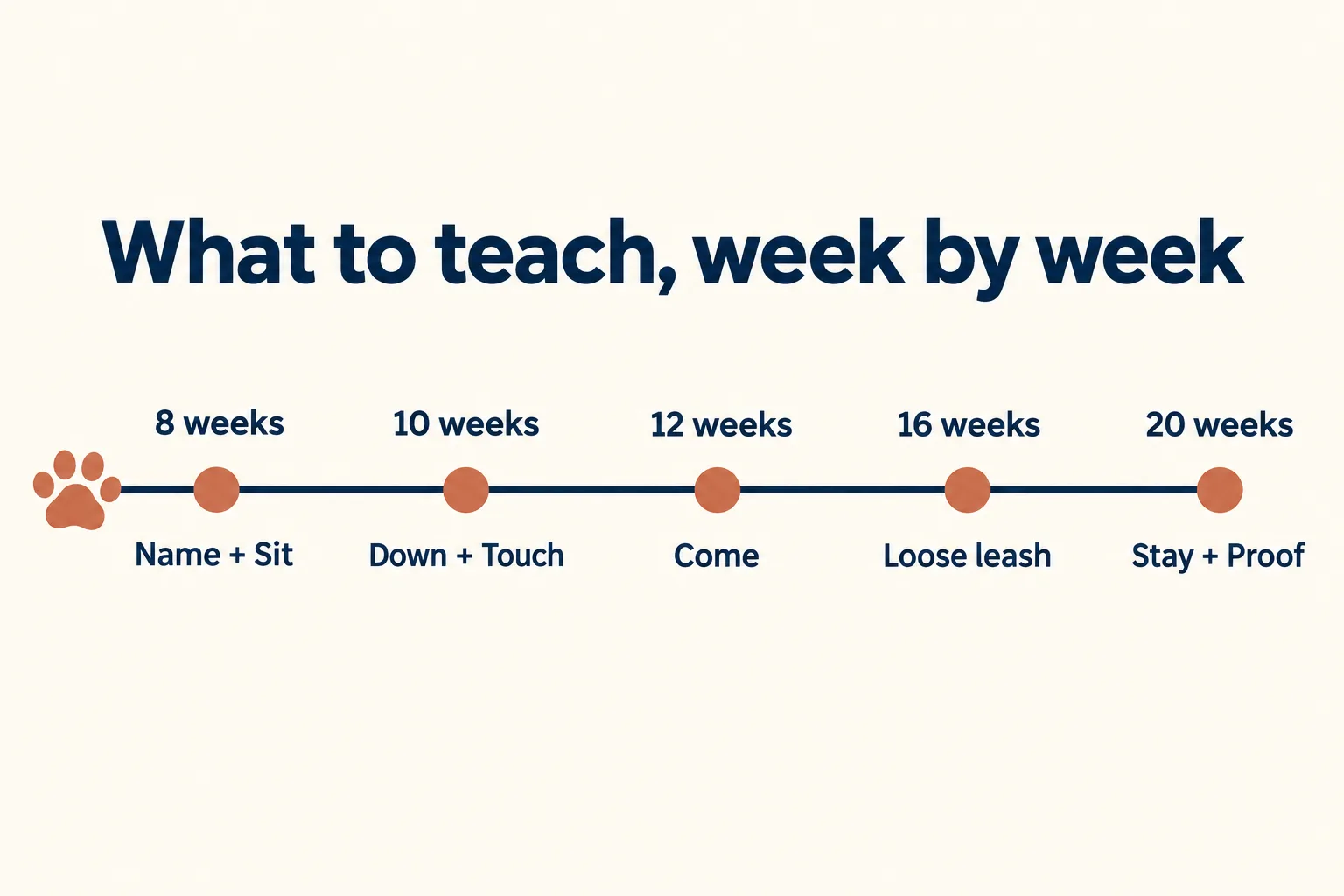
The timeline is a sequence, not a deadline. If your 12 week old puppy is still working on sit near the front door, keep going. Each skill gets easier when the one before it is solid.
What to teach first, by age
| Age | Teach | What "done" looks like |
|---|---|---|
| 8 to 9 weeks | Name, sit, settle on a mat | Turns to you when you say the name in a quiet room |
| 10 to 11 weeks | Down, hand touch, "drop it" with a trade | Sits for food bowl and leash without being asked twice |
| 12 to 14 weeks | Come, handling, short crate rests | Runs to you from 3 meters away in the house |
| 15 to 18 weeks | Loose lead walking, wait at doors | Walks to the end of the block without pulling the whole way |
| 19 to 20 weeks | Stay, practice in new places | Holds a sit for 10 seconds in the backyard |
The 9 puppy training tips that matter most
These are in order of payoff. If you only use the first three this week, your puppy will still learn a lot.
1. Keep sessions short and stop while it is going well
Three minutes at 8 weeks is enough. Five at 12 weeks, about ten by 5 months. Three short sessions beat one long one, because a tired puppy gets bitey and sloppy, and then you start practicing the mistakes.
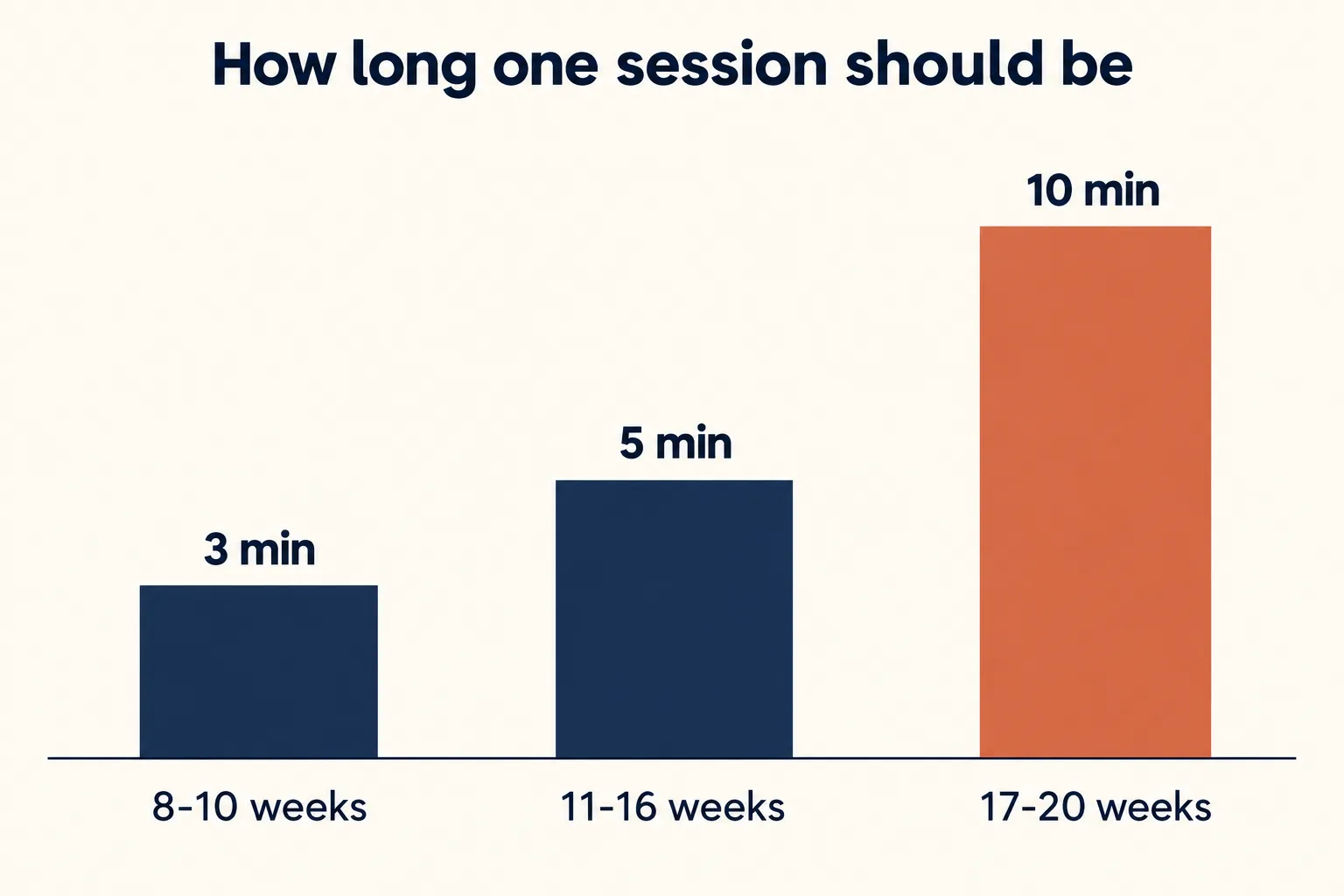
End on an easy win. If your puppy has just nailed three sits in a row, that is your cue to stop and play.
2. Reward within one second
Puppies connect a reward with whatever they were doing at that moment. If you reward two seconds late, you may be rewarding the stand-up after the sit. A short marker word fixes the timing problem: say "yes" the instant the behavior happens, then deliver the treat.
Say it once, in a normal voice, the moment your puppy's rump touches the floor. Treat follows within a couple of seconds.
3. Lure first, then fade the lure fast
Hold a treat at your puppy's nose and move it slowly up and back. Most puppies fold into a sit as their nose goes up. Mark, reward, repeat five times. Then do the same hand movement with an empty hand and pay from your other hand.
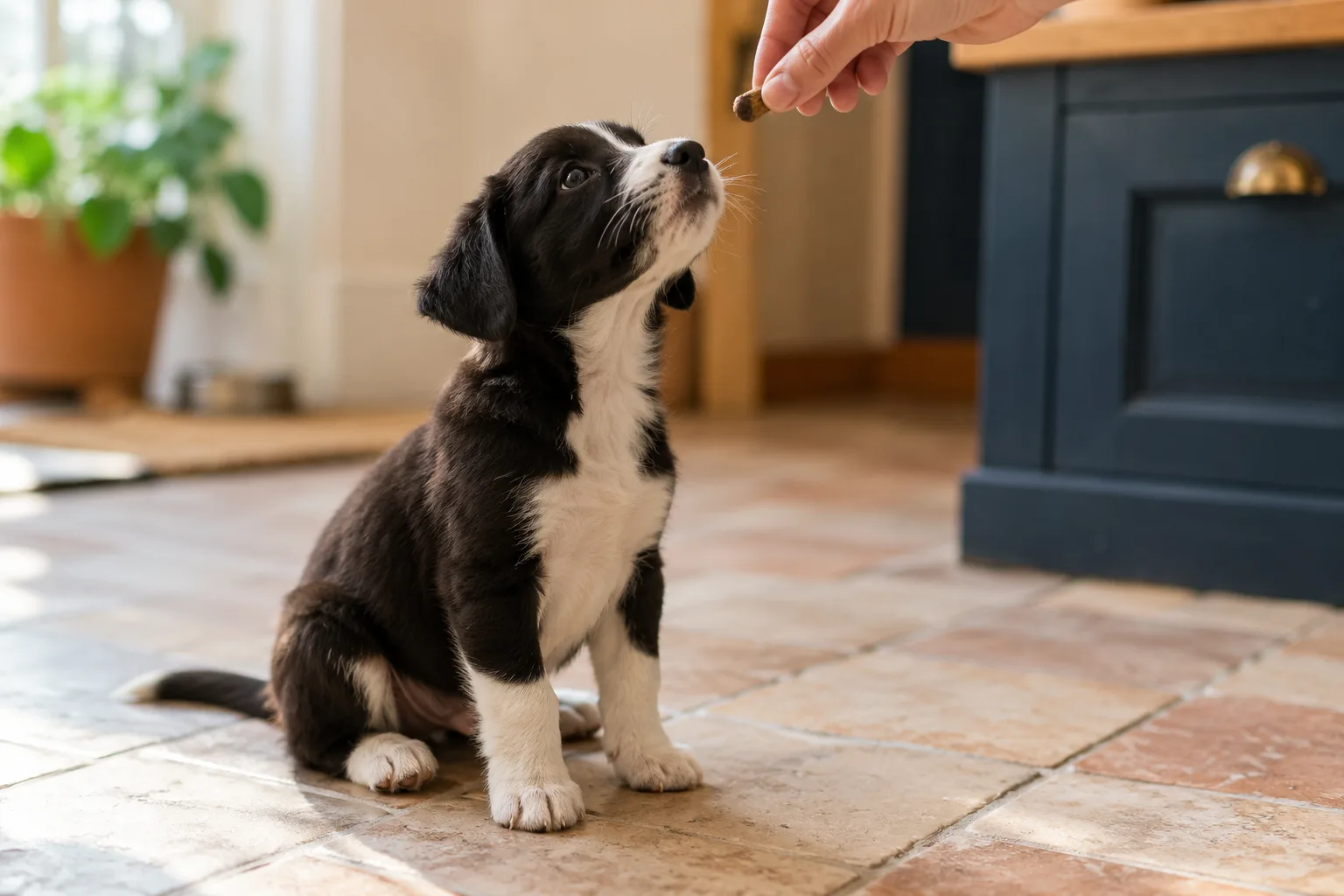
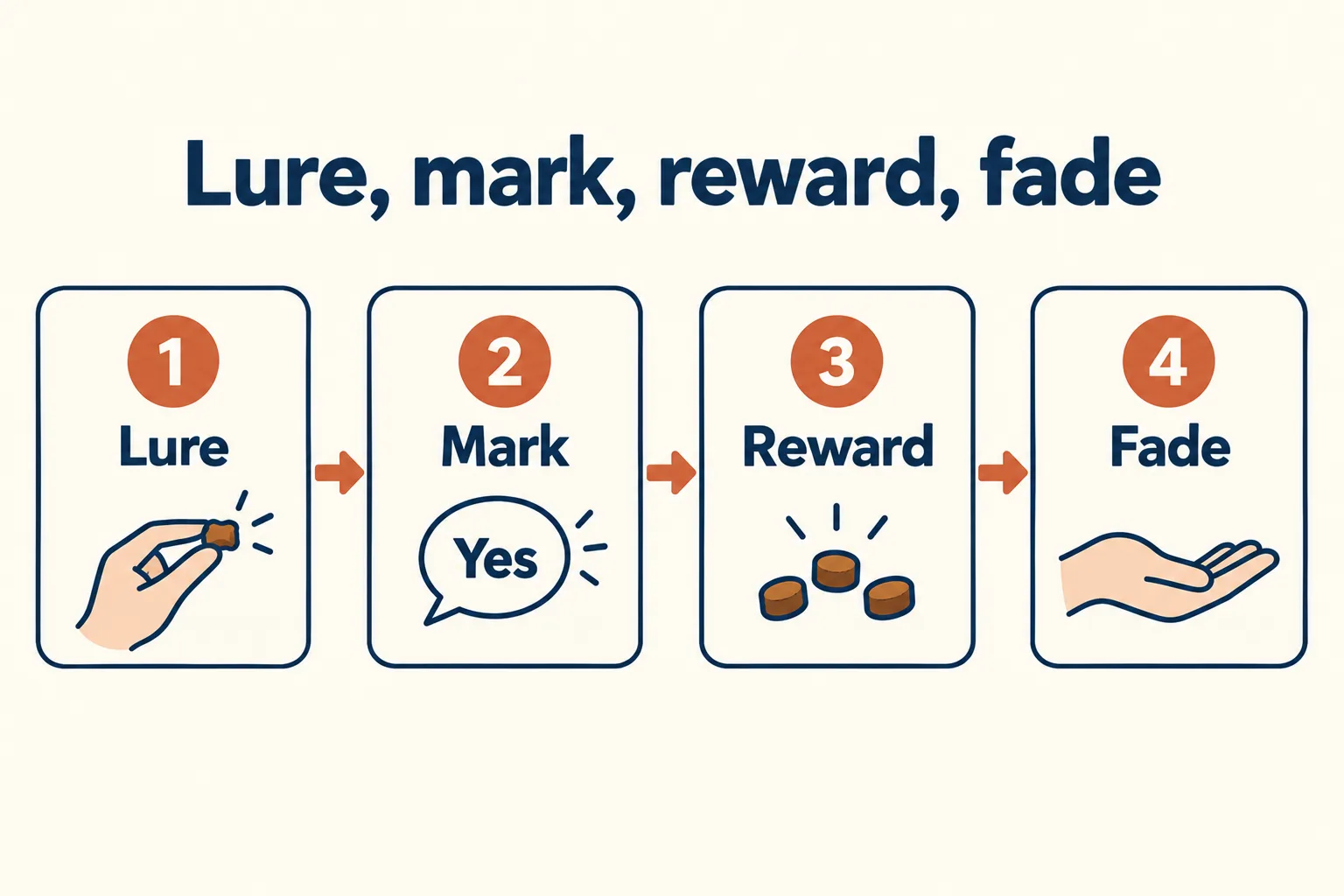
The mistake is luring for weeks. If the food is always in your hand, your puppy learns to follow food, not your signal. After five or six good reps, switch to the empty hand.
4. Make the name the best word in the house
Say your puppy's name once. The moment they look at you, mark and reward. Ten reps a day, in different rooms. Never use the name to call them for something unpleasant, like a bath or the end of play.
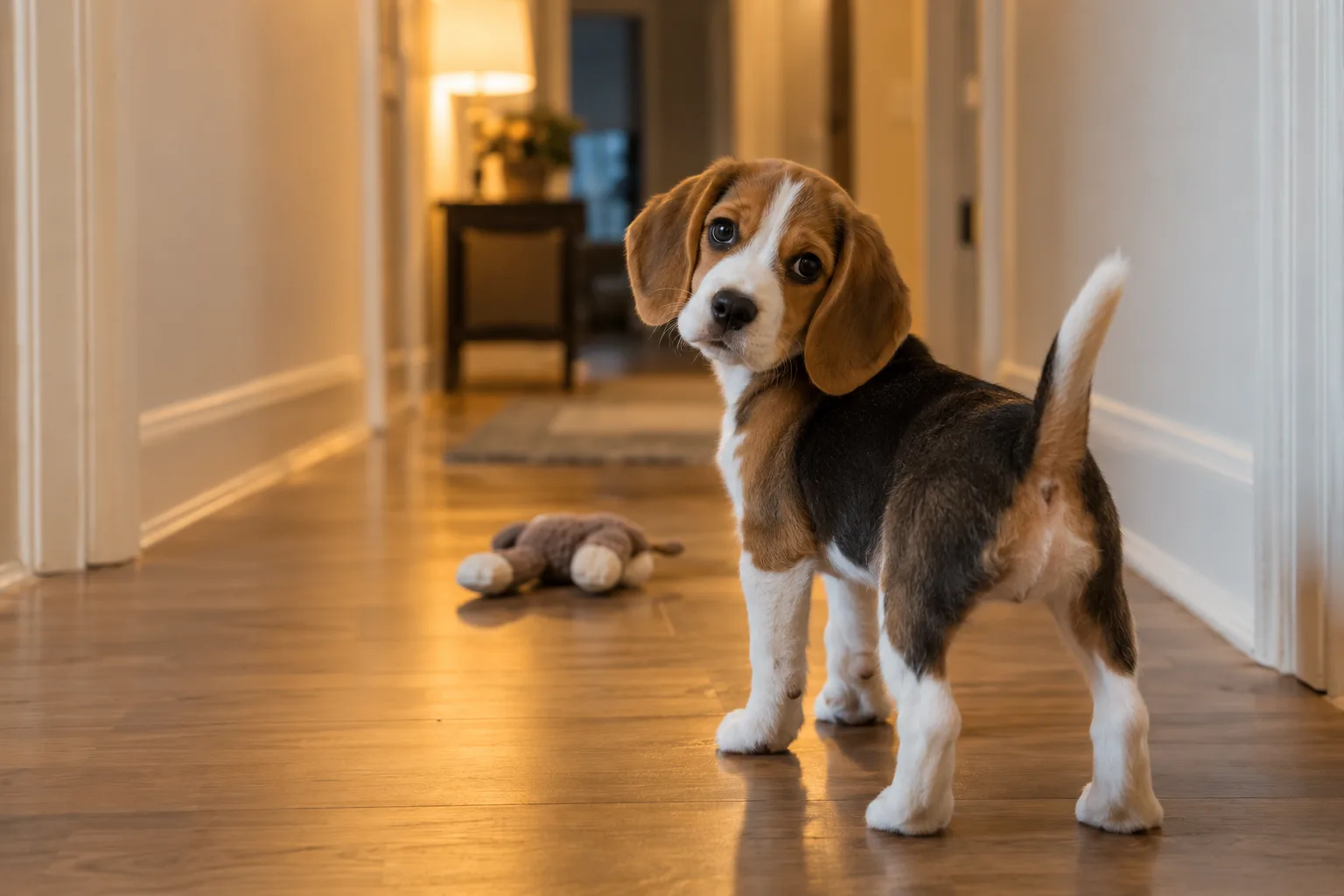
This is the base for come. A puppy who whips around at their name is halfway back to you already.
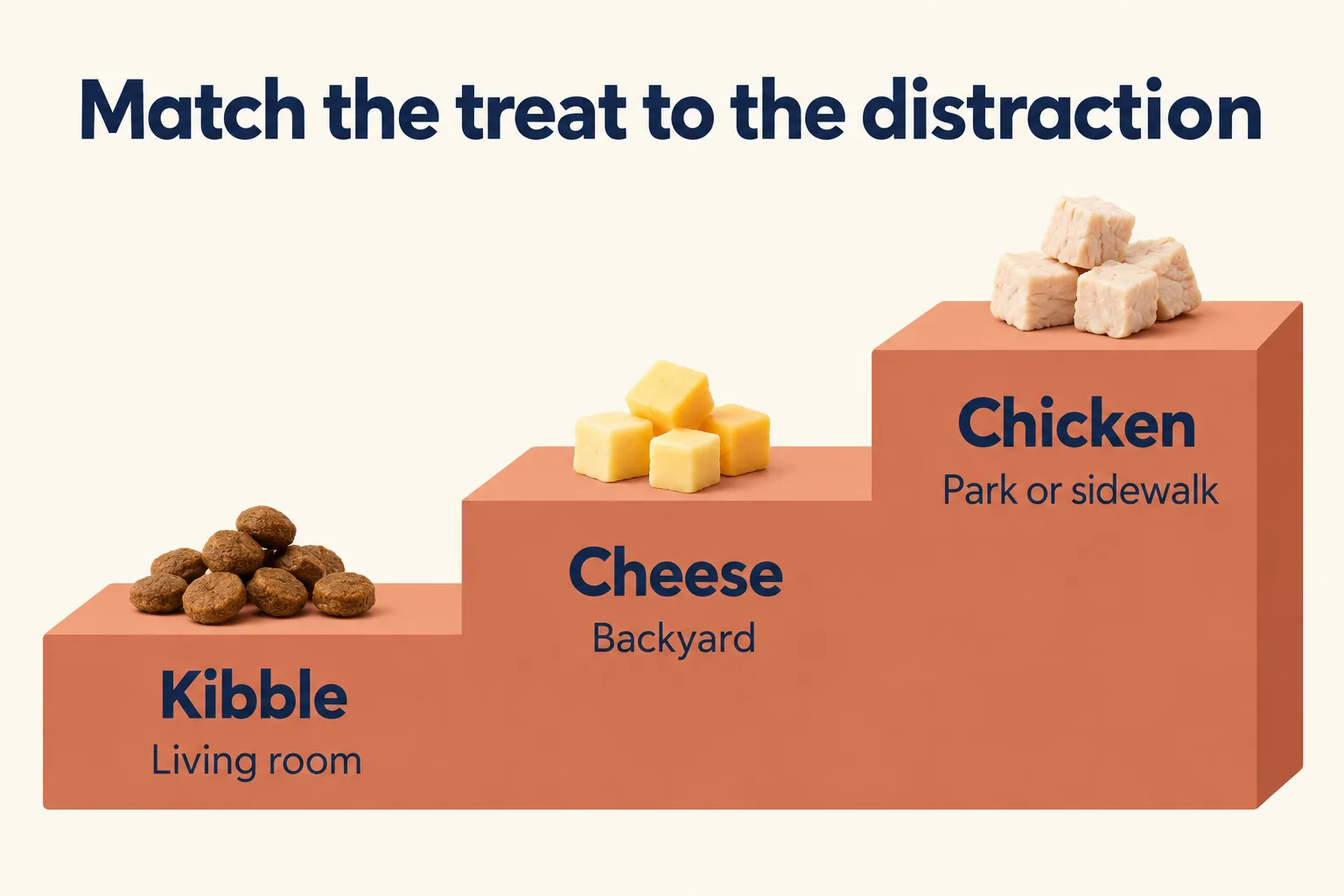
5. Match the treat to the distraction
Kibble works in a quiet living room. It does not compete with a squirrel. Pick rewards by difficulty: plain kibble indoors, tiny cheese cubes in the yard, small pieces of plain cooked chicken on the sidewalk. Use pea-sized pieces and take the treats out of the day's food so meals stay balanced.
6. Catch the good things you did not ask for
Keep a few treats in your pocket for the whole day. When your puppy lies down on their own, sits instead of jumping, or chews their toy, quietly drop a treat between their paws. This is called capturing, and it is how calm becomes a habit.
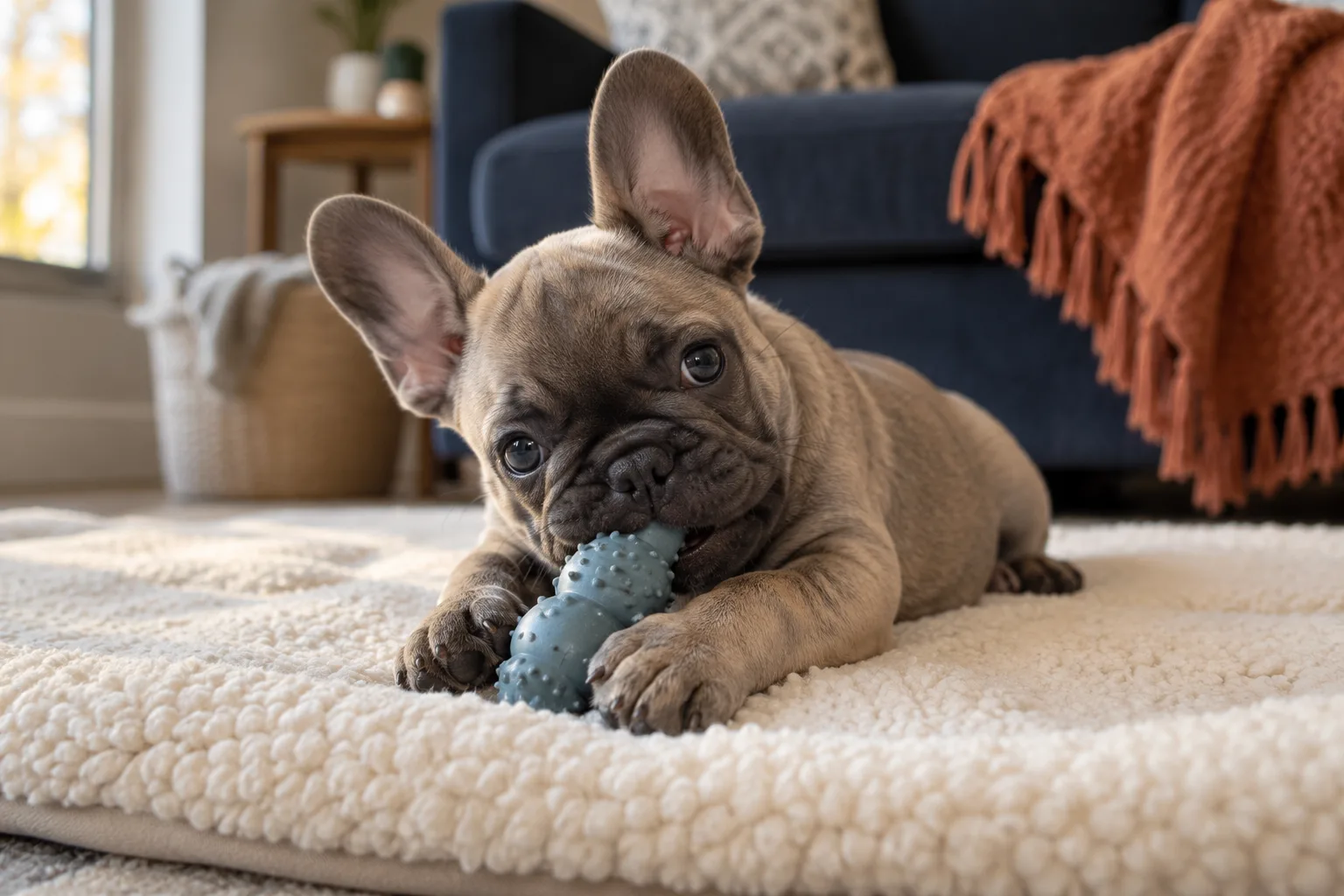
Most owners only notice their puppy when something goes wrong. Flip it. A puppy who gets attention for chewing the toy has less reason to chew your shoes. The same rule works for noise: reward the quiet seconds and you have the core of stopping demand barking.
7. Manage first, train second
A puppy cannot practice a habit you never let them start. Baby gates, a pen, a closed bathroom door and a lead indoors stop most problems before you need to teach anything. Management is not giving up on training. It buys you time to teach the right thing. Our crate training guide covers building a crate your puppy likes.
8. Teach a loose lead before the walks get long
Start indoors. Clip the lead on, take a step, and reward whenever your puppy is beside your leg with the lead slack. Outside, if the lead goes tight, stop and wait. Walk on the moment it loosens.
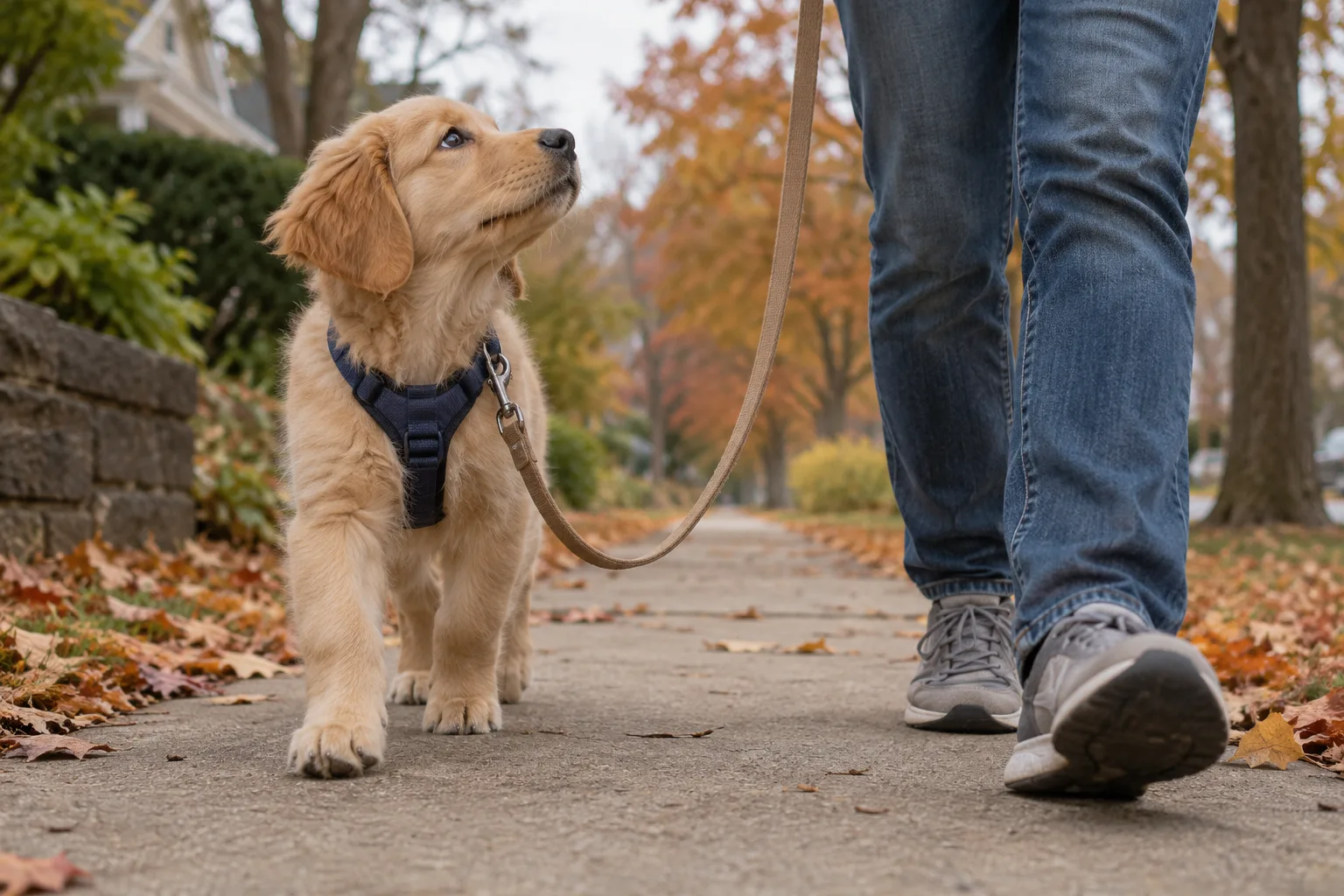
A harness that clips on the back is fine while you teach. Never jerk the lead. It hurts and teaches nothing about where to walk. Our step-by-step leash training guide covers gear, where the reward goes and the stop-and-go rule by age.
9. Socialize by watching, not by meeting
Socialization means calm experiences with the world, not greeting every person and dog. Sit on a bench and let your puppy watch bikes, strollers and traffic from a distance where they stay relaxed. Treat each new sight. Ask your vet which places fit your puppy's vaccination status.
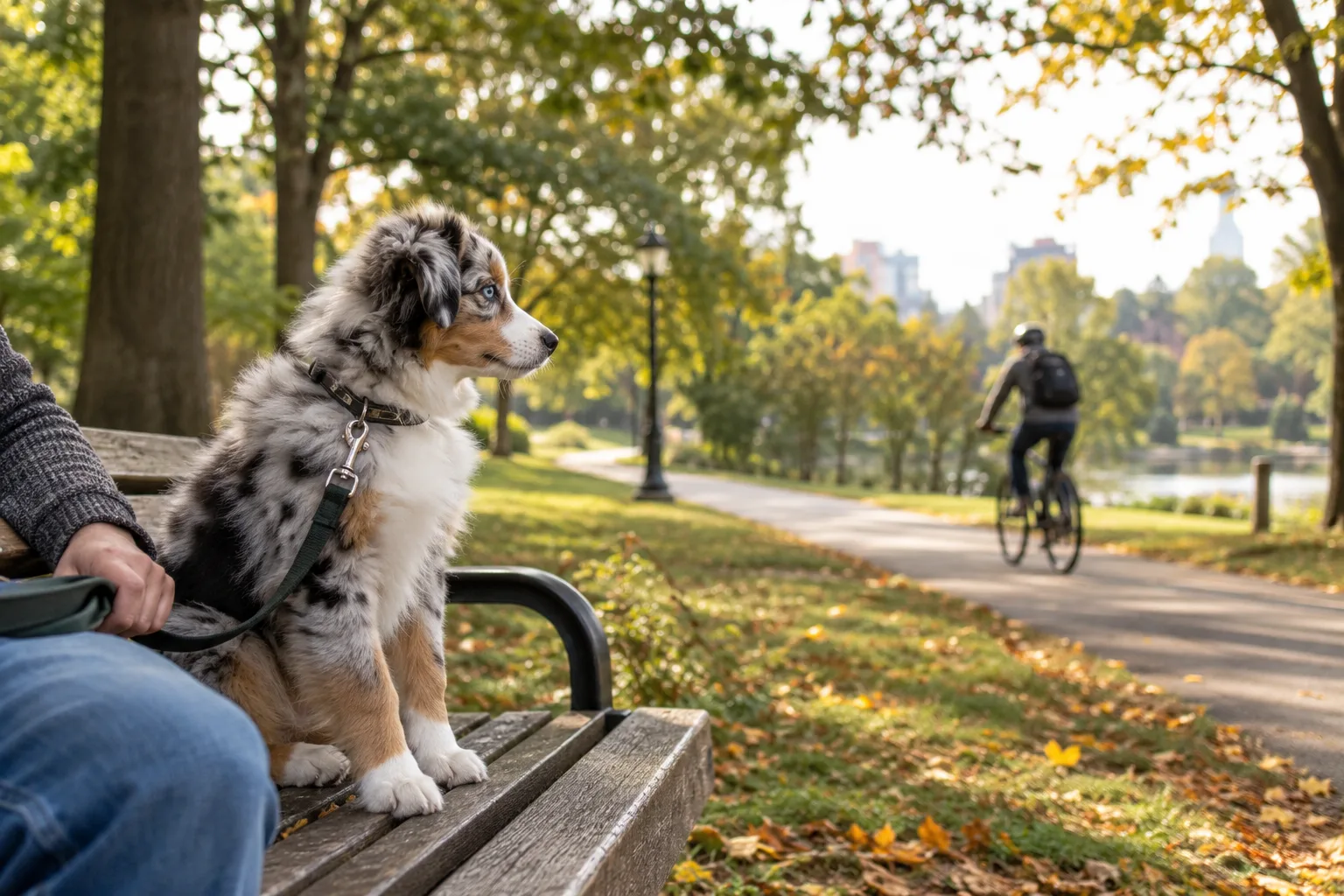
Add gentle handling too: touch a paw, look in an ear, then treat. Your vet and groomer will thank you later.
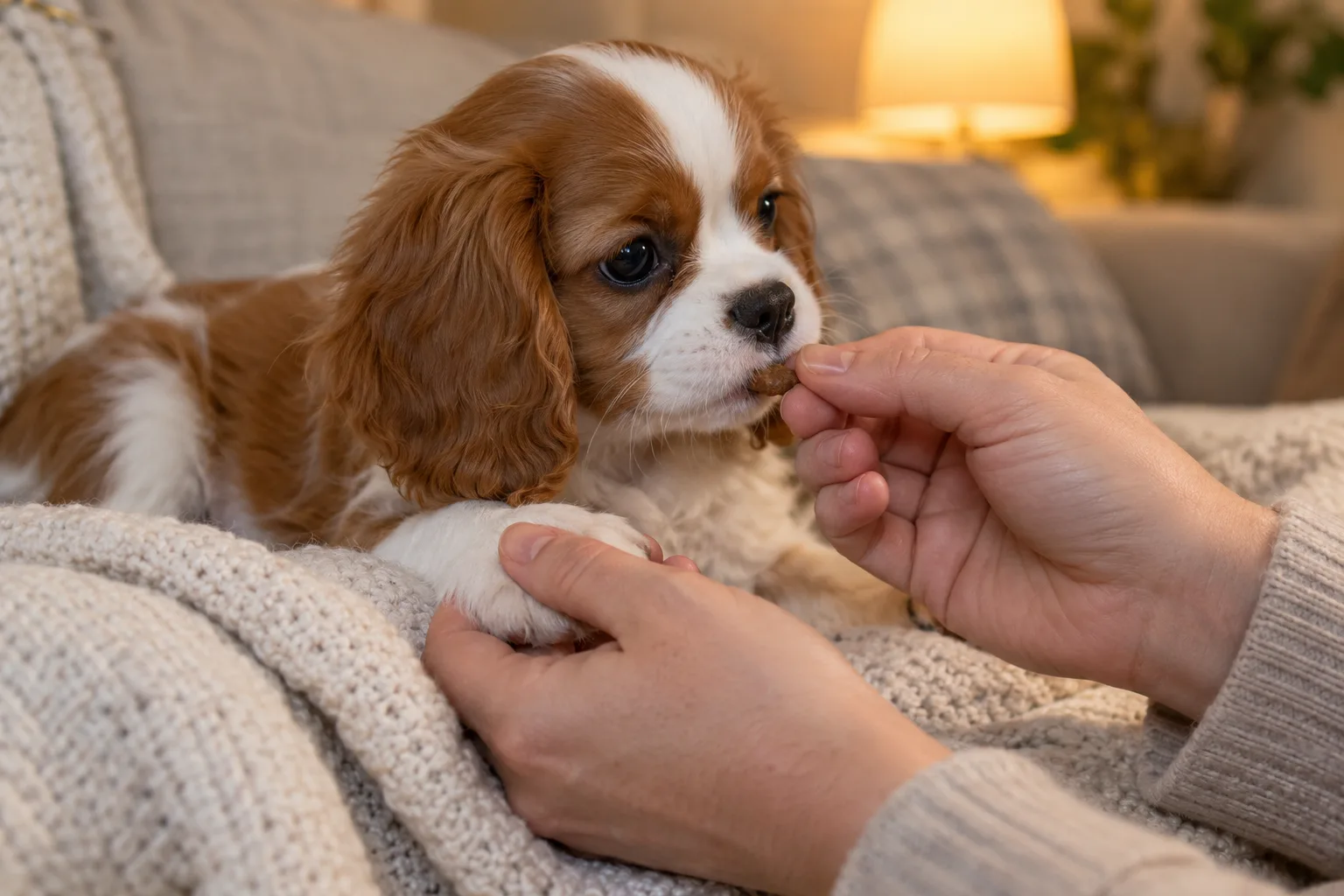
How to teach your puppy to sit
- Lure the sit
With a treat at your puppy's nose, move your hand slowly up and slightly back. As the rump touches the floor, say "yes" and give the treat.
- Repeat five times
Do five quick reps in a quiet room, then stop and play for a minute.
- Switch to an empty hand
Make the same hand movement with no food in it. Mark the sit and pay from your other hand or a pouch.
- Add the word
Once your puppy sits as your hand moves, say "sit" just before the hand signal. Over a few days, make the hand signal smaller.
- Practice in new places
Ask for a sit in the kitchen, the hallway, the yard, then the sidewalk. Use a better treat each time the place gets harder.
Common puppy training mistakes and what they cost
Most training stalls come from a handful of habits, not from a stubborn puppy. Fix these and progress usually comes back within days.
| Mistake | What it costs | Do this instead |
|---|---|---|
| Sessions of 20 minutes or more | A tired, bitey puppy and practiced mistakes | 3 to 5 minutes, several times a day |
| Repeating the cue ("sit, sit, SIT") | Your puppy learns the cue means "say it three times" | Say it once, then help with the lure |
| Rewarding late | The wrong behavior gets paid | Mark with "yes" the instant it happens |
| Scolding or punishment | Fear, hiding accidents, more biting | Reward the right choice, manage the wrong one |
| Only training in the kitchen | A puppy who sits at home and nowhere else | Add one new place a week |
| Giving the free run of the house | Chewing and accidents in empty rooms | Gates, pen and a lead indoors |
The AVSAB position statements explain why punishment-based methods are not recommended: they can raise fear and harm the bond between you and your puppy. Reward-based training is the standard to follow.
What about biting and potty training?
Both deserve their own plan. Mouthing is normal puppy behavior and usually fades as adult teeth come in; our guide on how to stop puppy biting has the full routine of trades and time-outs. For accidents and the potty routine, start with our potty training guide.
When to get help
Some things are not a training tip problem. Any bite that breaks skin on a person, growling when you go near food or toys, or sudden fear or aggression needs a certified behavior professional. Sudden changes along with vomiting, diarrhea, blood, straining, lethargy or a potty regression: call your vet today. This is general, reward-based training guidance, not medical advice.
The short version
Train in short bursts, reward within a second, fade the lure early and catch the good moments you did not ask for. Use better treats as distractions grow, manage the house so mistakes are hard, and let your puppy watch the world before they meet it. For age-specific routines, see the 8 week, 10 week and 12 week schedules. If the first weeks feel heavy, our post on the puppy blues is for you.
The wall with any list of tips is fitting them into a real day. Three short sessions sound easy until naps run long and a work call lands in the middle of one. That is what the plan is for: it puts training, potty and naps on one timeline for your puppy's age, then moves tomorrow around how today went. Build a free plan for your puppy in about a minute.
Get tomorrow's plan, adapted to how today went.
Frequently asked questions
Start with their name and a sit. A puppy who looks at you when you say their name is easy to guide away from trouble, and sit gives them a polite default for doors, food and greetings. Add a calm settle on a mat in the same first week.
As soon as your puppy comes home, often at 8 weeks. Keep it to short, easy sessions of about 3 minutes in a quiet room. Group classes can come once your vet says your puppy's vaccinations fit group settings.
Much less than people expect. Three to five short sessions of 3 to 5 minutes add up to 15 to 25 minutes of formal practice a day. The rest happens in everyday moments: rewarding a sit at the door or a quiet minute on the mat.
After a nap and a potty trip, and before a meal, when your puppy is alert and a little hungry. Avoid the minutes right before bedtime or after wild play, when puppies are overtired and more likely to bite.
It is a rule of thumb usually used for newly adopted dogs: about 3 days to decompress, 3 weeks to learn the routine and 3 months to feel at home. It is a reminder to be patient, not a schedule. A young puppy often settles faster, but give the first days room.
Many owners find the first one or two weeks the hardest: broken sleep, frequent potty trips and constant supervision. It usually gets easier as night stretches lengthen and routines settle. Sharing shifts and keeping sessions short helps a lot.
Get tomorrow's plan, adapted to how today went
A printed schedule can't see that she peed at 7:10 today; the Coach plan rewrites tomorrow from today's log. Start with the free schedule for your puppy.
Build my puppy's plan- Free starting schedule
- Reward-based practice
- Fits your puppy's day
Share article
About the author
More articles
Training that sticks · 12 min
German Shepherd Training: Puppy Routine, Week 8 to 16
German shepherd training for a puppy: the week-by-week routine from 8 to 16 weeks, crate size for a growing shepherd, and how to handle mouthing, herding nips and alarm barking.
Training that sticks · 12 min
Leash Training a Puppy: 6 Steps From the First Week Home
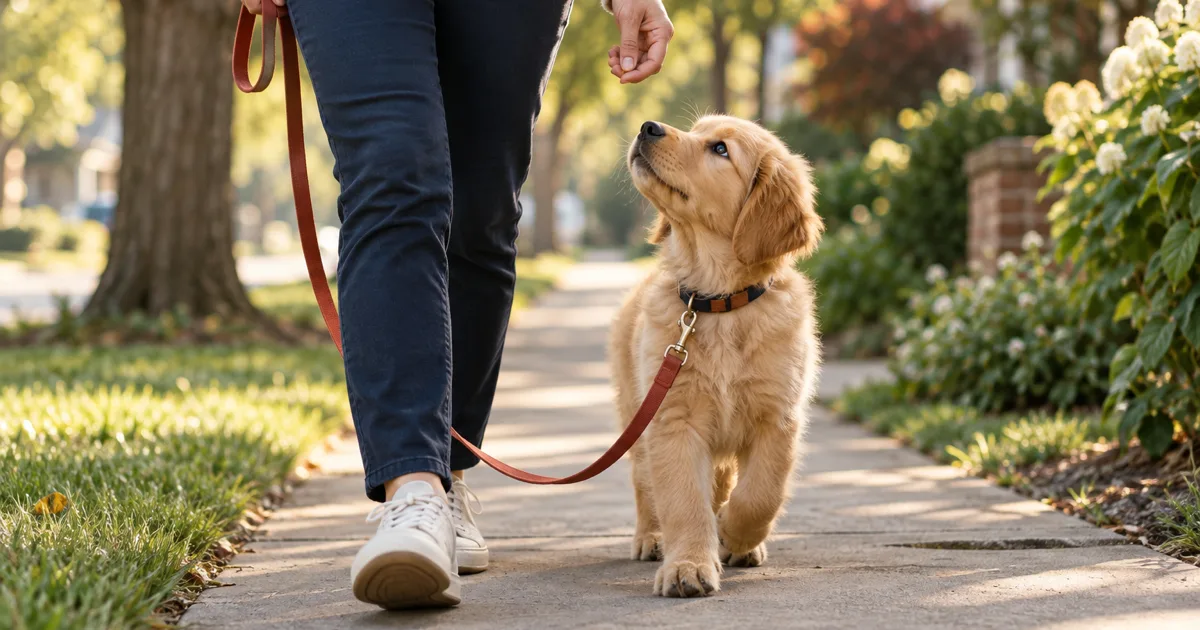
Leash training a puppy in short indoor sessions from 8 weeks: the gear to pick, where the reward goes, the stop-and-go rule for pulling, and fixes for a puppy who sits, bites the leash or lunges.
Training that sticks · 11 min
Puppy Socialization: A Calm Checklist for Real Life
Help your puppy feel safe around people, sounds and new places. Use this gentle checklist, comfort signals and one simple session to start without forced greetings.
Puppy SOS: biting, crying, blues · 12 min
How to Stop Puppy Barking: Find the Reason, Reward the Quiet
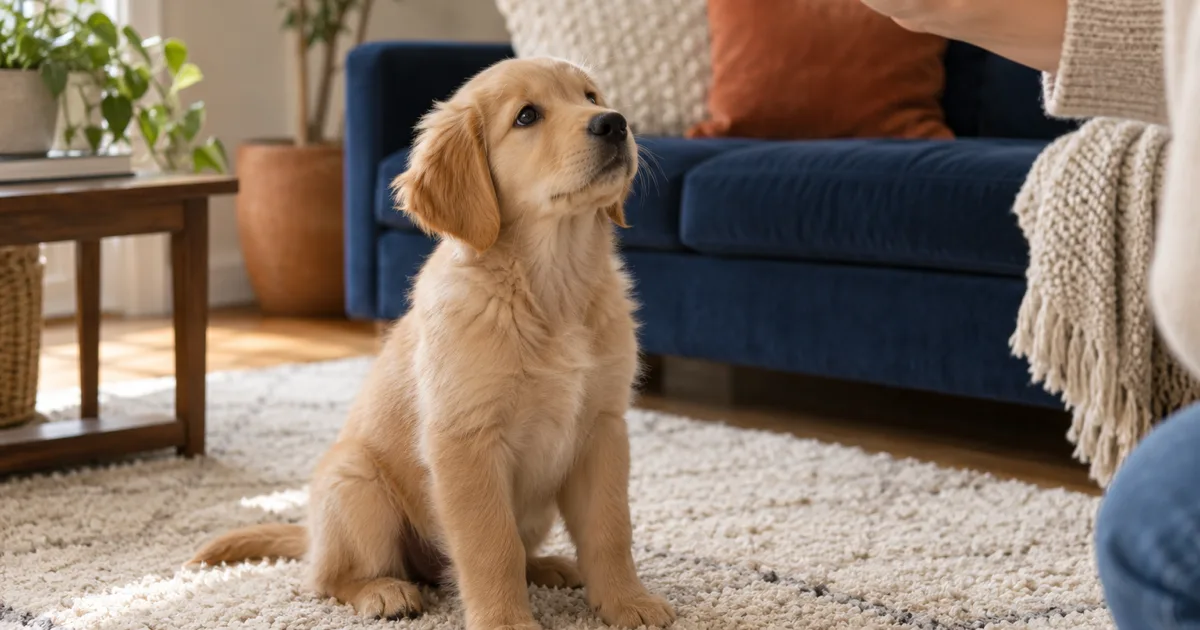
How to stop puppy barking without shouting or collars: read what the bark is asking for, meet the need before it starts, and reward one second of quiet, then three, then ten.
Potty, crate and sleep · 10 min
How Long Does It Take to Potty Train a Puppy?
Potty training takes steady support, not a weekend deadline. Learn which milestones matter, why timelines vary and how to spot the next useful change.
Potty, crate and sleep · 14 min
How to House Train a Dog: Puppy or Adult, Step by Step
How to house train a dog of any age: one outdoor spot, a schedule, a reward the second they finish, and supervision in between. What changes for puppies, adult rescues and dogs who start having accidents again.