
Puppy Crying in Crate at Night: What to Do Tonight
In this article
When your puppy is crying in the crate, check the need first: a quiet potty trip on a lead, a comfortable setup, and you close enough to hear and reach them. Then go straight back to bed with no play, and work on crate comfort separately in daylight.
Most nights go wrong for a simple reason: the crate is new, the puppy is alone for the first time, and the adult is guessing at 3 am. This guide gives you a calm response for tonight, the night potty checks we plan by age, and the setup that makes the next waking easier.
Why is my puppy crying in the crate at night?
A young puppy usually cries in the crate at night because they need to pee, they feel alone in a new place, or the crate itself still feels strange. You cannot tell which from the sound alone, so check the need before you decide anything.
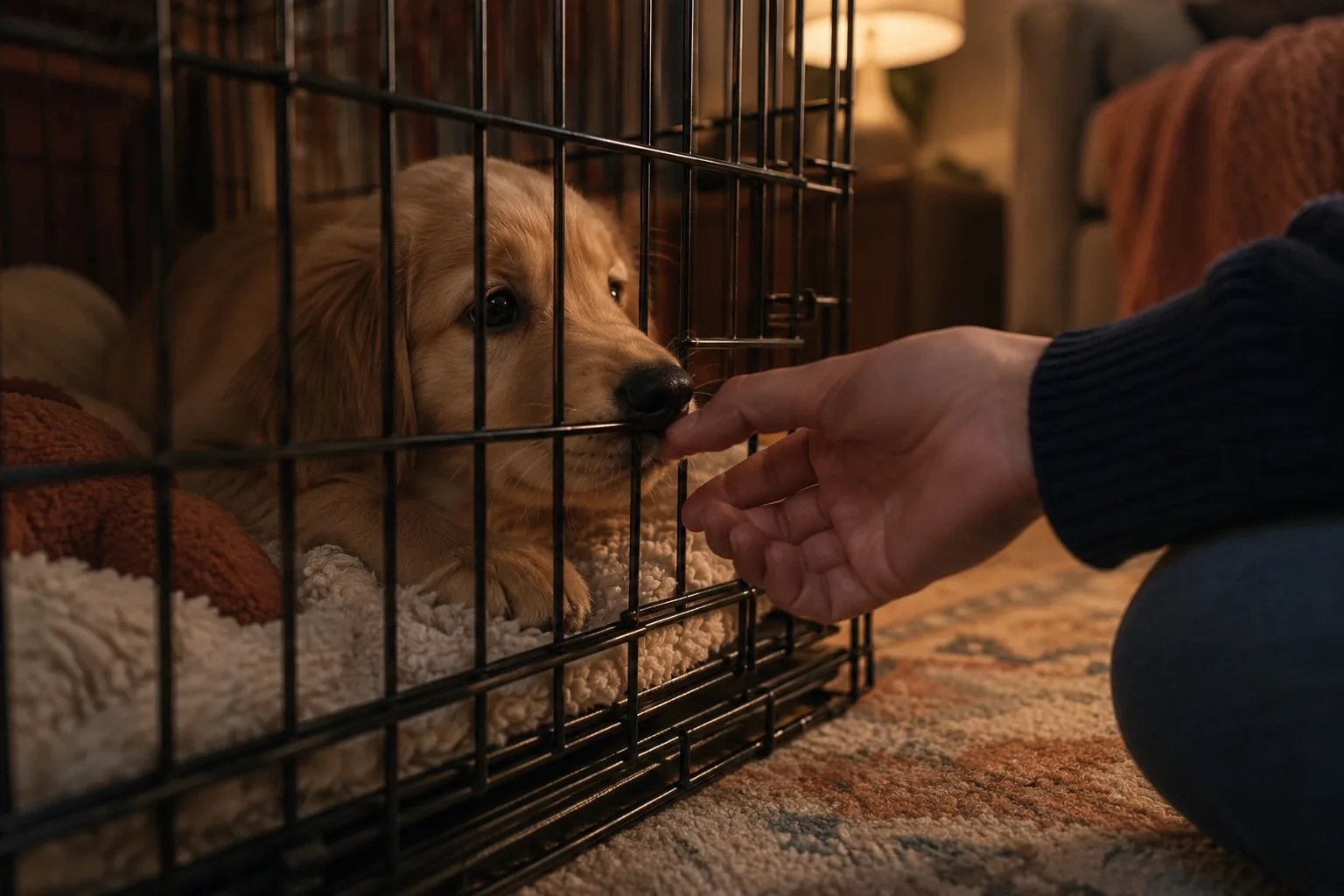
The counterintuitive part: the fastest route to quiet nights is answering early, not waiting it out. A puppy whose needs are met calmly learns that night is boring and safe. A puppy left to escalate learns that the crate is where panic happens, and that makes the next night louder. The AKC puppy sleep guide also recommends a consistent bedtime and keeping your puppy near you at first.
| What you notice | What it might be | What to do |
|---|---|---|
| Wakes, sniffs or circles, then whines | Potty need | Quiet trip on a lead, reward, straight back to bed |
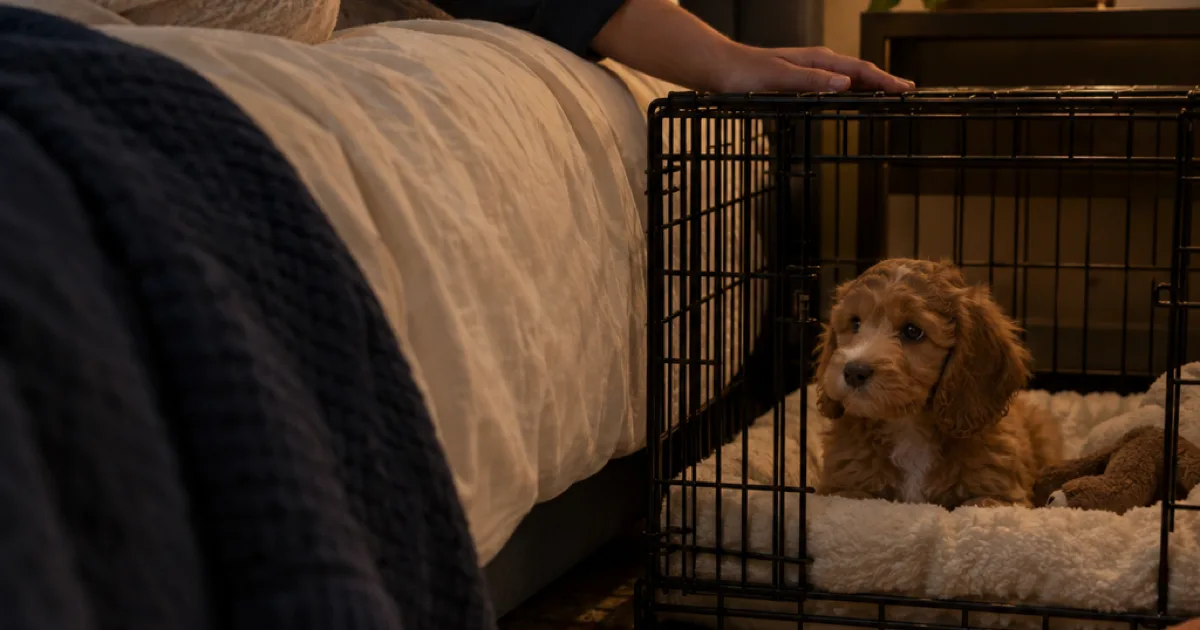
| Cries right after you leave the room | Alone in a new place | Move the crate beside your bed, rest a hand near it |
| Settles when you are close, cries when you move | Needs company to settle | Stay near tonight, build distance in daytime practice |
| Frantic, chewing bars, trying to escape | Panic | Stop, comfort, use a safe alternative and get help |
| Crying plus vomiting, diarrhea or straining | Possible health issue | Call your vet today |
Should I ignore my puppy crying in the crate?
No. Do not ignore escalating distress or a possible potty need. Check your puppy, offer a quiet trip if needed, and give calm company nearby. You do not have to sit through a set number of minutes of crying before you respond. If the crying has turned into sharp barking for attention once every need is met, our guide on how to stop puppy barking shows how to reward the quiet pauses instead.
What you can skip is the party. Respond in a flat, quiet way: no lights on full, no talking up a storm, no game. The AVSAB position statements support reward-based methods, and a calm, predictable response is exactly that. The goal tonight is a puppy whose needs are met and an adult who can still respond calmly at the next waking.
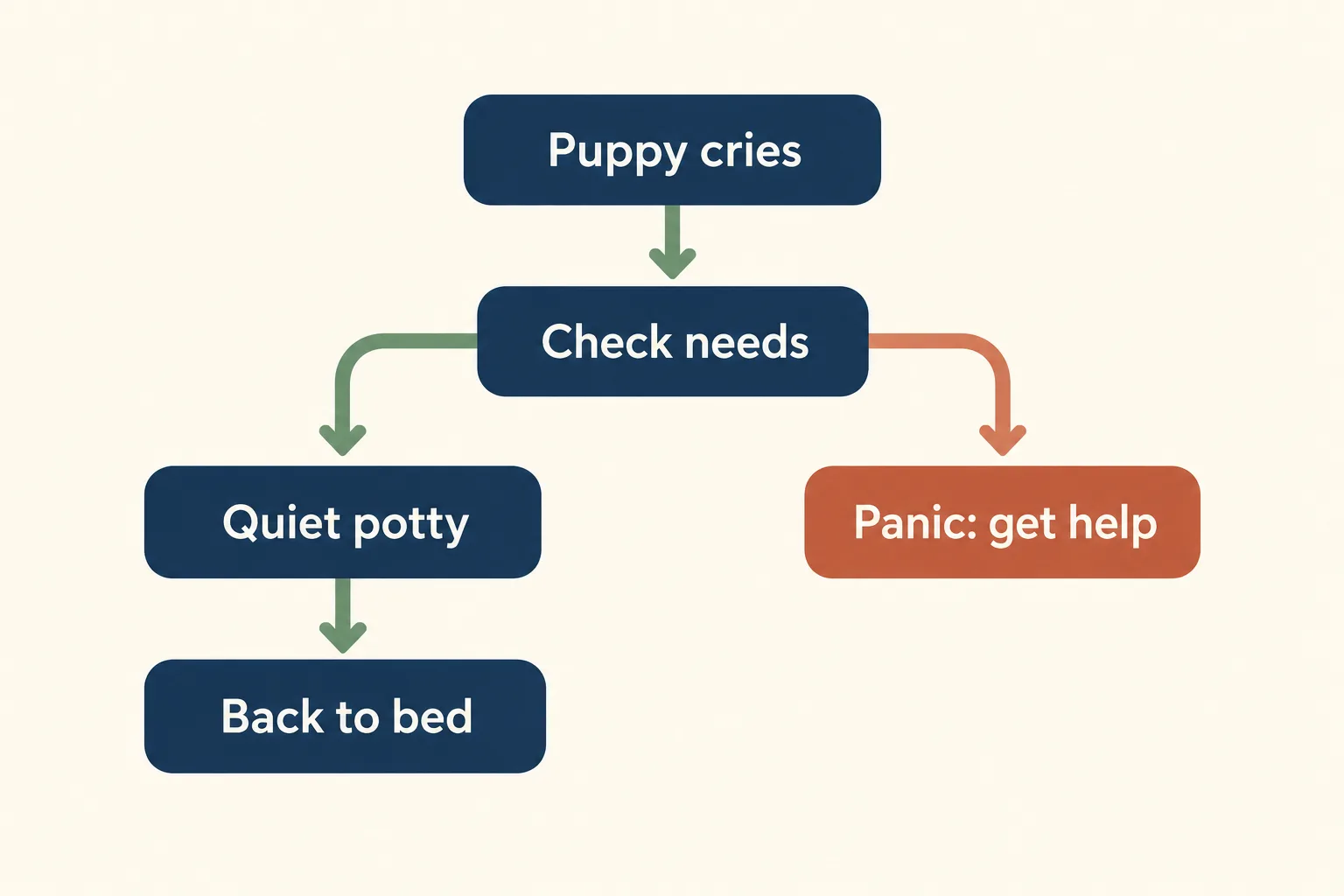
If your puppy panics, struggles to escape or cannot settle even with you right there, stop treating it as practice. Use a safe, supervised alternative for tonight and ask a qualified reward-based professional for help.
Night potty checks by age
Young puppies often need a trip in the night. Here are the planned night checks from our per-week rules, for a 10:00 pm bedtime. They are reminders to plan around, not a test of how long your puppy can wait. If your puppy wakes and signals earlier, go earlier.
| Age | Longest planned night stretch | Planned night checks |
|---|---|---|
| 7 weeks | 135 minutes | 12:15 am, 2:30 am, 4:45 am |
| 8 weeks | 150 minutes | 12:30 am, 3:00 am, 5:30 am |
| 9 weeks | 165 minutes | 12:45 am, 3:30 am, 6:15 am |
| 10 weeks | 180 minutes | 1:00 am, 4:00 am |
| 11 weeks | 195 minutes | 1:15 am, 4:30 am |
| 12 weeks | 210 minutes | 1:30 am, 5:00 am |
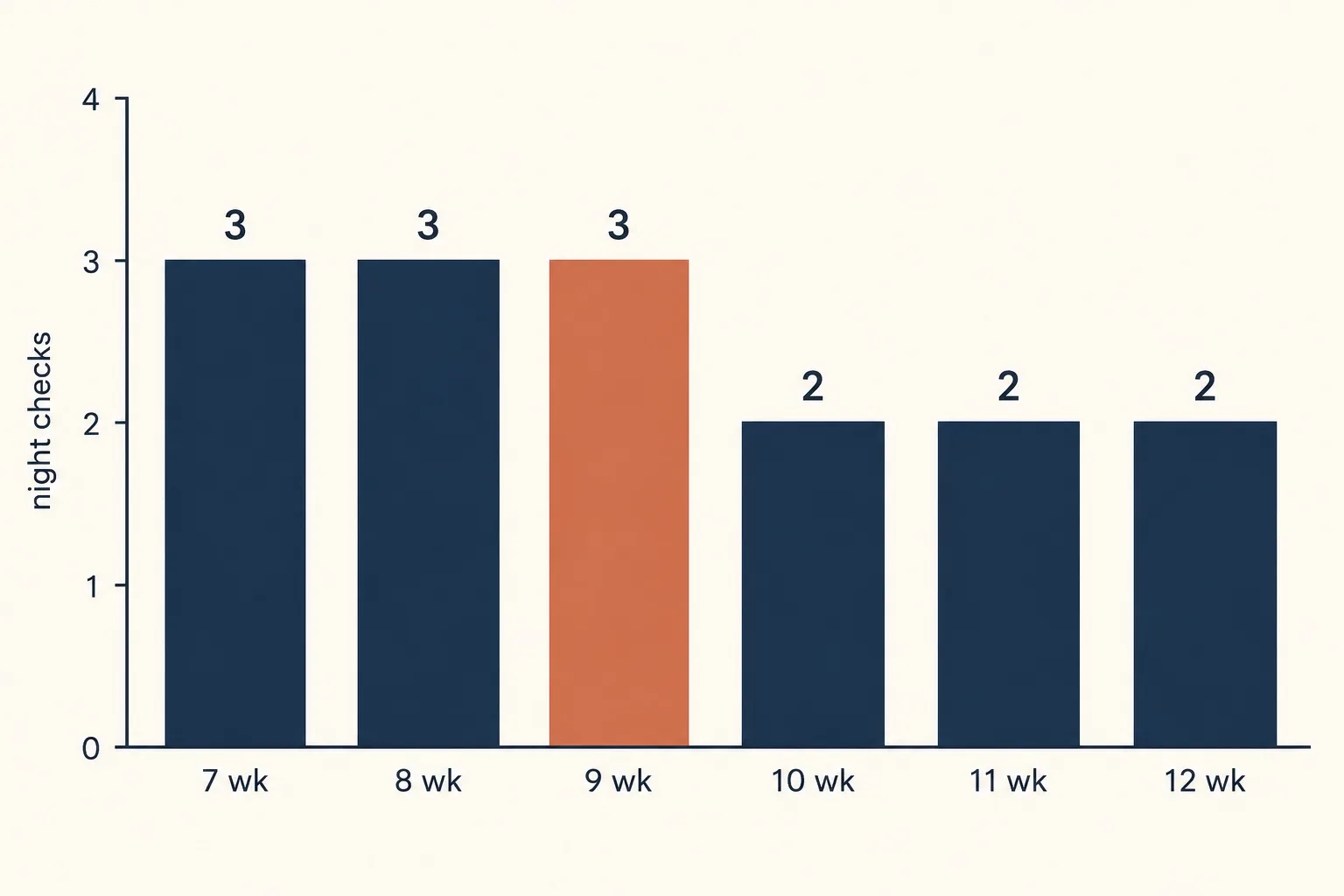
A larger breed does not get a longer night stretch in this plan. The 9 week old puppy schedule shows how these checks fit a full day, and the schedule by age has every week side by side.
A 9 week old puppy night, step by step
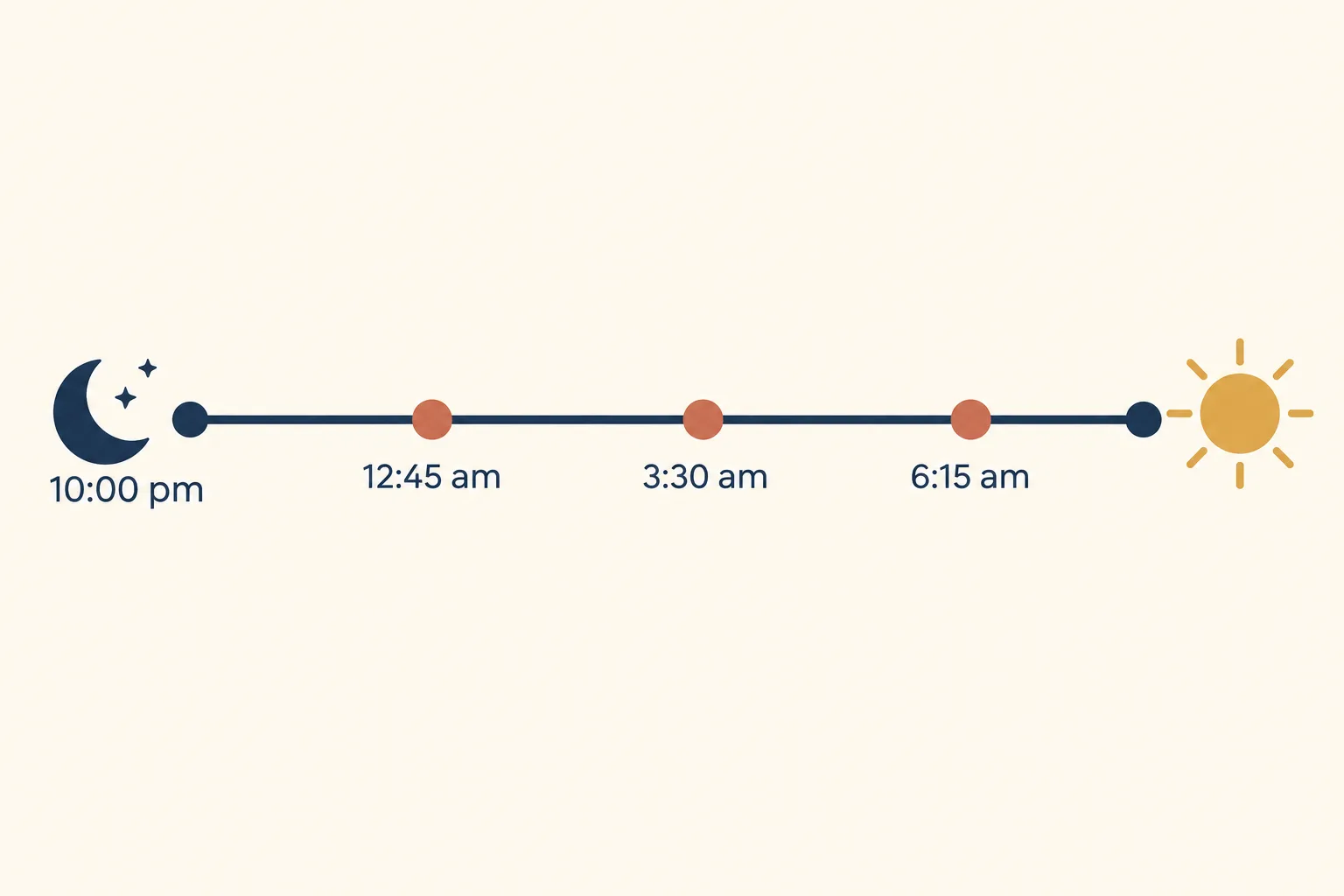
Here is the evening-to-morning part of our 9 week example. Notice that bedtime itself is a routine, and every night check ends with going back to bed.
| Time | What happens |
|---|---|
| 7:10 pm | Evening rest near you |
| 9:00 pm | Wake up, potty, then a quiet cuddle |
| 10:00 pm | Last potty, then bedtime beside your bed |
| 12:45 am | Quiet night potty on a lead, back to bed with no play |
| 3:30 am | Quiet night potty on a lead, back to bed with no play |
| 6:15 am | Quiet night potty on a lead, back to bed with no play |
| 6:30 am | Wake up, straight out for potty |
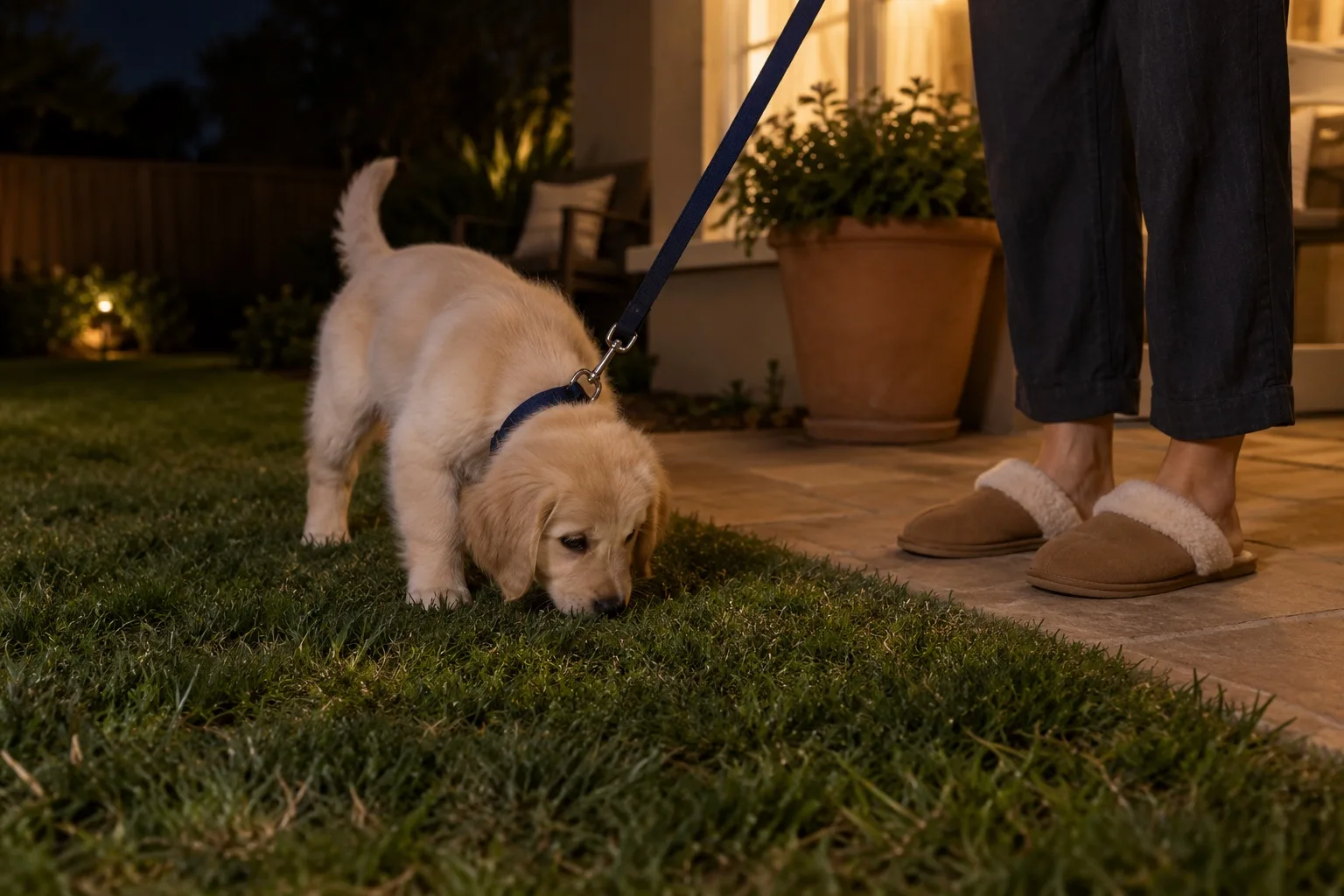
Offer a quiet night potty trip without starting the day
When your puppy needs to go, take the prepared route to the usual spot on a lead. Stay with them, keep it boring, and reward right after they finish. Then go straight back to the crate. A night trip has a clear start and a clear end.
If nothing happens, do not assume the trip solved it. Keep watching and offer another chance soon. Our guide on how to potty train a puppy explains how to keep the spot and the reward the same day and night, and the AKC housetraining guide backs regular trips and close observation.
How to respond when your puppy cries in the crate at night
- Check the puppy
Go to your puppy and look for an immediate need or rising distress. Use the red flags below if anything looks off. Keep your movements slow and the lights low.
- Keep care quiet
If a trip is needed, go out on a lead to the usual spot, reward after they finish, and return to the crate without a game. If they did not go, note it.
- Settle and stay near
Rest a hand near the crate or sit close for a few minutes while your puppy settles. You can step back as they relax.
- Reassess in daylight
Read your night notes in the morning. Change one thing for the next night, and practice short, happy crate visits during the day.
Set up the night before you need it
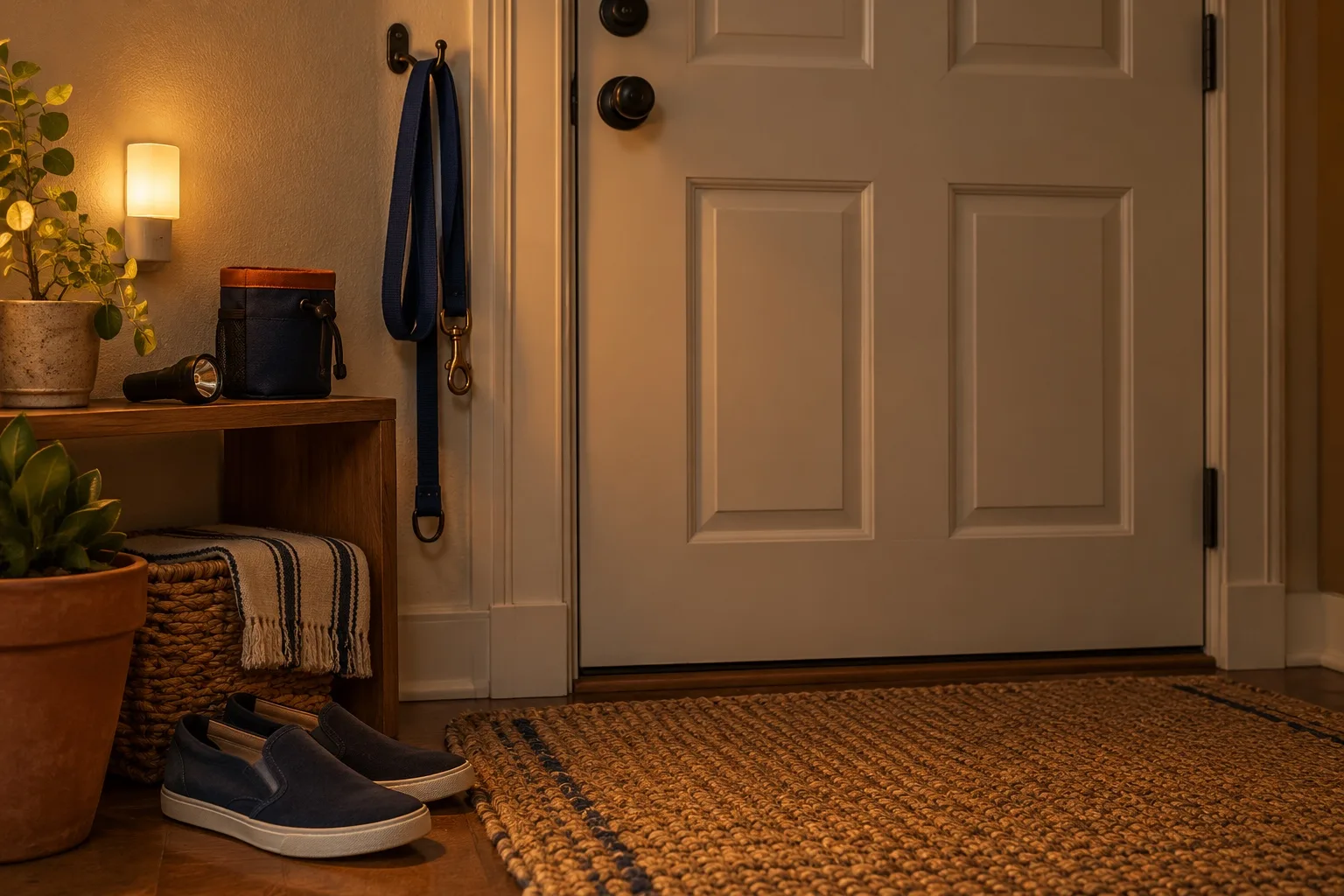
Write the night plan before you are standing in a dark hallway at 3 am. Where does the crate sleep, which door do you use, where are the leash and shoes, and who is on duty for each check?
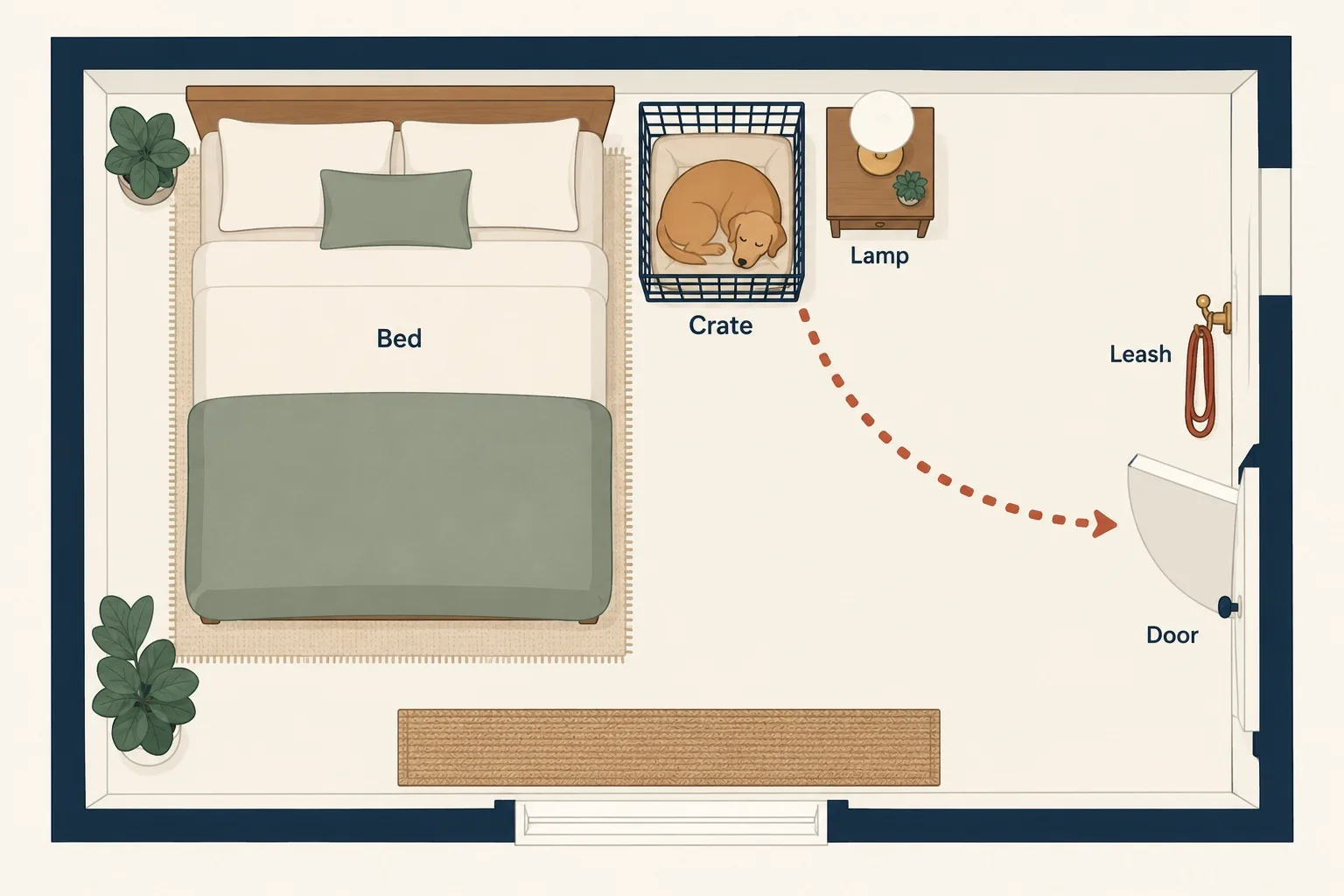
- Crate beside your bed. Close enough that you hear the first whine and can rest a hand on the crate. Make sure it fits well with the crate size calculator.
- Kit by the door. Leash, shoes, a small light and treats in one spot.
- Clear handoff. If two adults share nights, name who takes each check before lights out.
- Apartment route. Count the doors and the elevator so you can start moving the moment your puppy wakes.
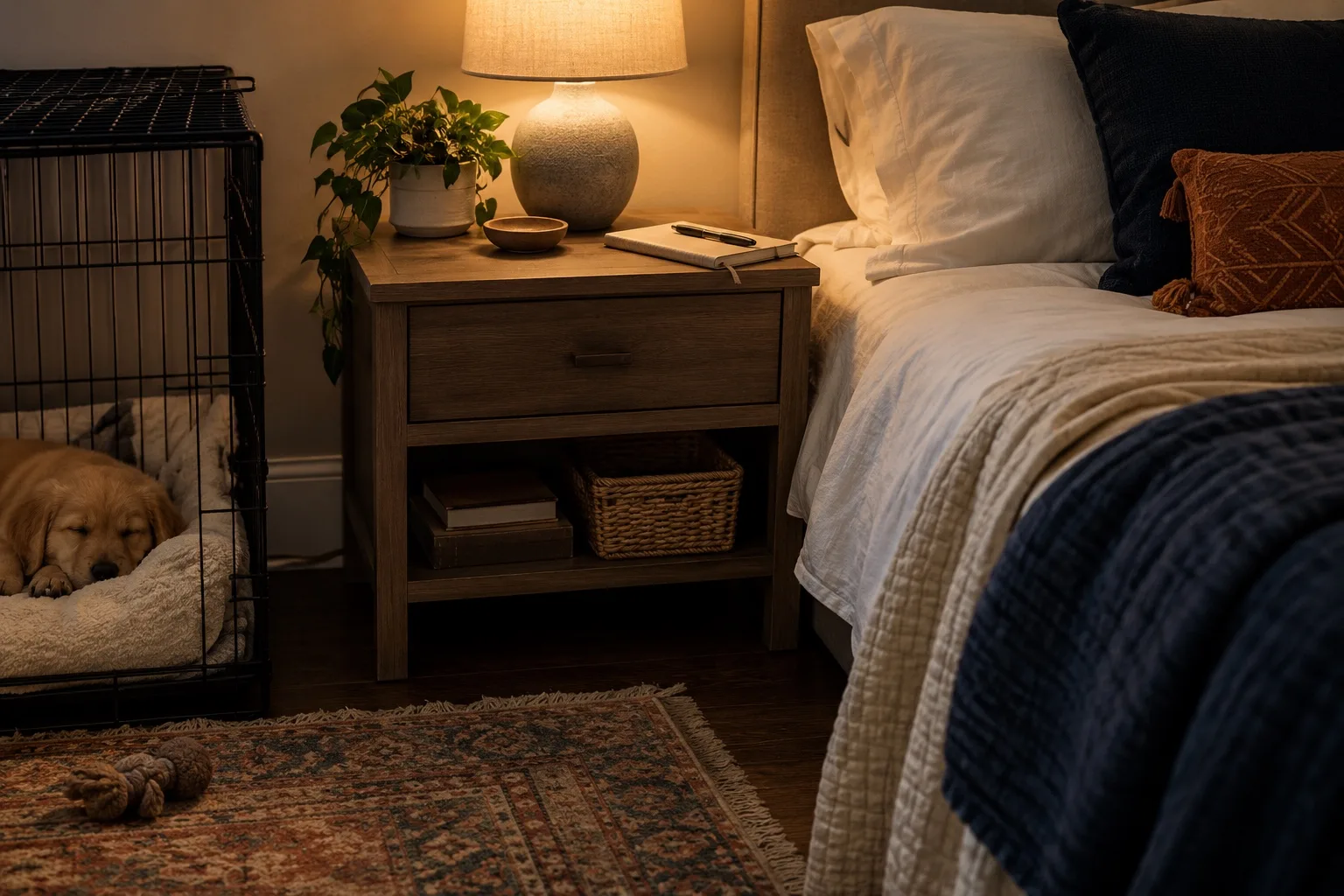
Keep a two-line note by the bed: time, whether the puppy went, how fast they settled. A factual record beats a vague "rough night" when you plan the next one.
Mistakes that make crate crying worse
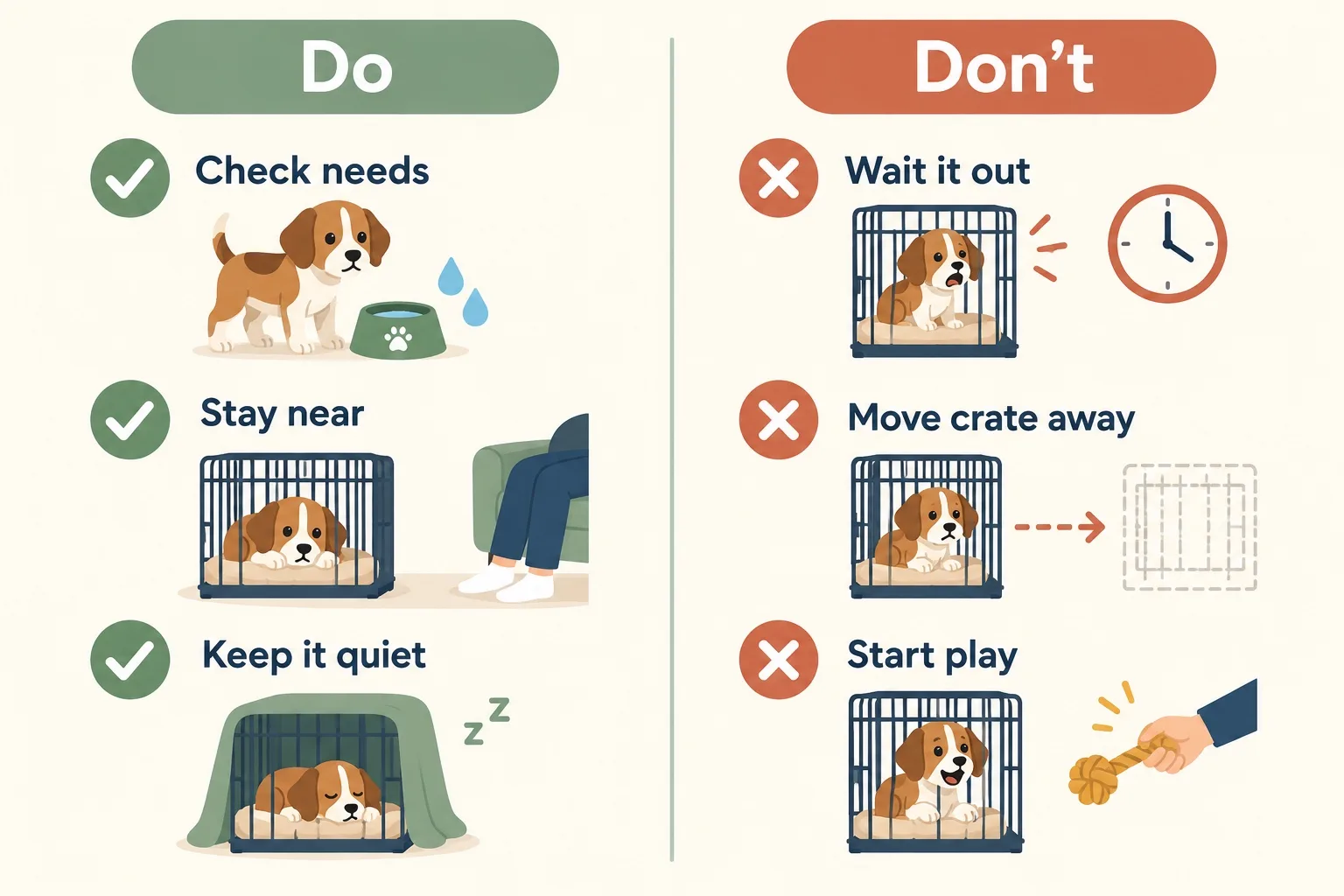
- Waiting it out by the clock. A timer should not decide when you respond to a distressed puppy.
- Moving the crate away so you cannot hear. Distance is a slow daytime skill, not a fix for tonight.
- Turning a night trip into play time. Your puppy learns that crying starts the fun.
- Assuming every cry means play. A trip outside does not prove your puppy went.
- Leaving the night shift undefined. Two tired adults each assuming the other has it is how gaps happen.
Can puppies regress with crate training at night?
Yes. Nights can get harder after a few easy ones, often after a change: a new sleeping spot, a different caregiver, a busy week. Look at what changed and go back to the easier setup for a few nights. A sudden potty regression is a reason to call your vet today.
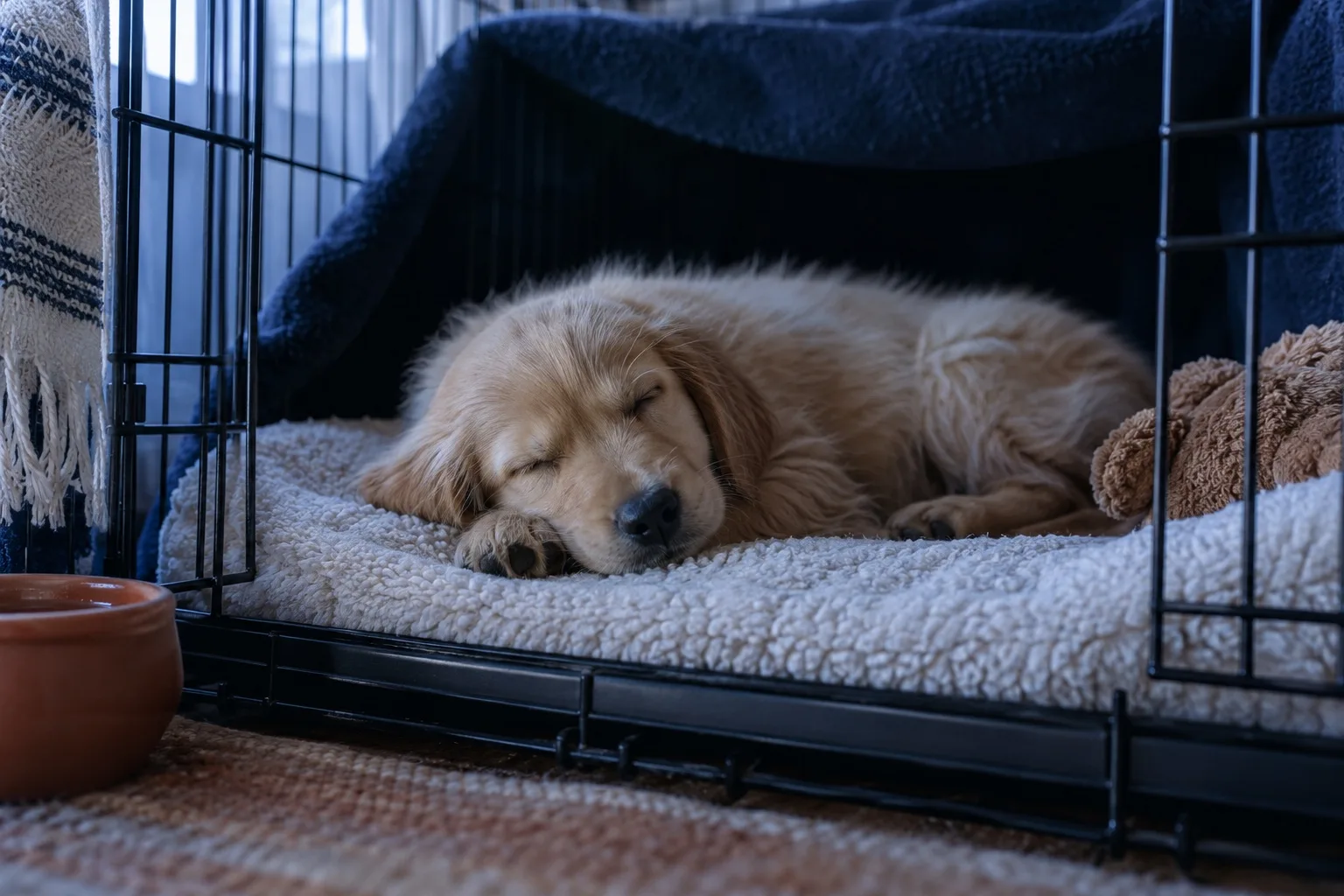
Do not make daytime crate practice harder to make up for a noisy night, and do not keep your puppy awake all day to force a quiet evening. Build crate comfort with short, happy daytime steps from our crate training guide and the AKC step-by-step crate training. Protect daytime naps with a steady puppy sleep schedule.
Here is the wall most owners hit. You can handle one bad night by hand, but every early waking shifts tomorrow's naps and checks, and working out the new plan at 6 am on no sleep is where things slip. If you are running on empty, our post on the puppy blues is for you too.
The short version
When your puppy cries in the crate at night, check the need, keep the response quiet, and go back to bed with no play. Keep the crate beside you, plan night checks for your puppy's age, and leave crate training for daylight. If distress turns into panic, stop and get help.
Our free generator lays out your puppy's night checks and naps for their exact age in about a minute, then adjusts tomorrow around how tonight actually went. Get tomorrow's plan, adapted to how today went.
Frequently asked questions
Check needs first and offer a quiet potty trip on a lead if needed. Keep the crate beside your bed so your puppy can sense you, respond calmly, and go straight back to bed with no play. Build crate comfort with short daytime practice.
There is no set time, and a crying target should not decide when you respond. Check needs, keep care calm and stay close. Write down what happens so you can make the next night easier. Persistent distress needs individual help.
No. Waiting through escalating crying teaches your puppy that the crate is stressful. Respond to needs quickly and quietly instead, and keep night visits boring so there is nothing to gain from crying beyond care.
Stop escalating a situation where your puppy is panicking or trying to escape. Use a safe, supervised alternative for now and contact a qualified reward-based professional. Work on crate comfort separately during the day.
Not as a fix. Keep the crate where the responsible adult can hear and respond. Building comfort with more distance is a slow daytime exercise, not a solution to a need your puppy has right now.
Note the waking times, the last potty result, where you were and what happened after you responded. Add anything that helped. Review it in daylight and change one thing for the next night.
Get tomorrow's plan, adapted to how today went
A printed schedule can't see that she peed at 7:10 today; the Coach plan rewrites tomorrow from today's log. Start with the free schedule for your puppy.
Build my puppy's plan- Free starting schedule
- Reward-based practice
- Fits your puppy's day
Share article
About the author
More articles
Puppy SOS: biting, crying, blues · 12 min
How to Stop Puppy Barking: Find the Reason, Reward the Quiet
How to stop puppy barking without shouting or collars: read what the bark is asking for, meet the need before it starts, and reward one second of quiet, then three, then ten.
Puppy SOS: biting, crying, blues · 12 min
How to Stop Puppy Biting: Toy First, Calm Pause, More Naps
How to stop puppy biting without punishment: redirect to a toy before teeth find skin, pause calmly when they do, and protect naps. Plus puppy teething and when puppies stop teething.
Puppy SOS: biting, crying, blues · 9 min
Puppy Blues: Why the First Weeks Feel Awful and What Helps
The puppy blues are common and usually pass. Why the first weeks with a puppy feel so heavy, how long it lasts, and the small changes that help this week.

Puppy SOS: biting, crying, blues · 8 min
Puppy Eating Poop: Why It Happens and How to Stop It
Why puppies eat poop, when it is a reason to call the vet, and the simple timing habit that stops it faster than any powder or taste trick.
Training that sticks · 12 min
Leash Training a Puppy: 6 Steps From the First Week Home
Leash training a puppy in short indoor sessions from 8 weeks: the gear to pick, where the reward goes, the stop-and-go rule for pulling, and fixes for a puppy who sits, bites the leash or lunges.

Potty, crate and sleep · 10 min
How Long Does It Take to Potty Train a Puppy?
Potty training takes steady support, not a weekend deadline. Learn which milestones matter, why timelines vary and how to spot the next useful change.