
How to Stop Puppy Biting: Toy First, Calm Pause, More Naps
In this article
To stop puppy biting, put a toy between your puppy's teeth and your skin before the game starts, and end the game calmly the moment teeth land on you. Do that every time, with every person in the house, and most puppy biting fades over weeks, not days.
Puppy mouthing is normal. Your puppy is not being bad or dominant. They explore with their mouth, they are teething, and they have learned that hands and ankles make the best moving toys. The job is to make the toy more interesting than you, and to stop the game being fun when it reaches skin. This guide covers how to redirect a landshark, puppy teething and when puppies stop teething, ankle biting, and when a bite needs a professional.
Puppy biting: what is normal and what is not
Puppy biting is normal play and exploring, and it usually peaks in the first weeks home. What is not normal is a bite that breaks skin on a person, stiff body language, or growling over food or toys. Those need a certified behavior professional, not a general guide.
The AKC guide to puppy teething and nipping describes puppies exploring and playing with their mouths. That does not mean you have to keep your hands in a game that hurts.
Set up play so a toy is ready before your puppy reaches for your sleeve. Keep your movements slow and give yourself an easy way to pause. Write down what led to the nip: reaching for a toy, fast feet, an exciting greeting. Those notes tell you what to change next time.
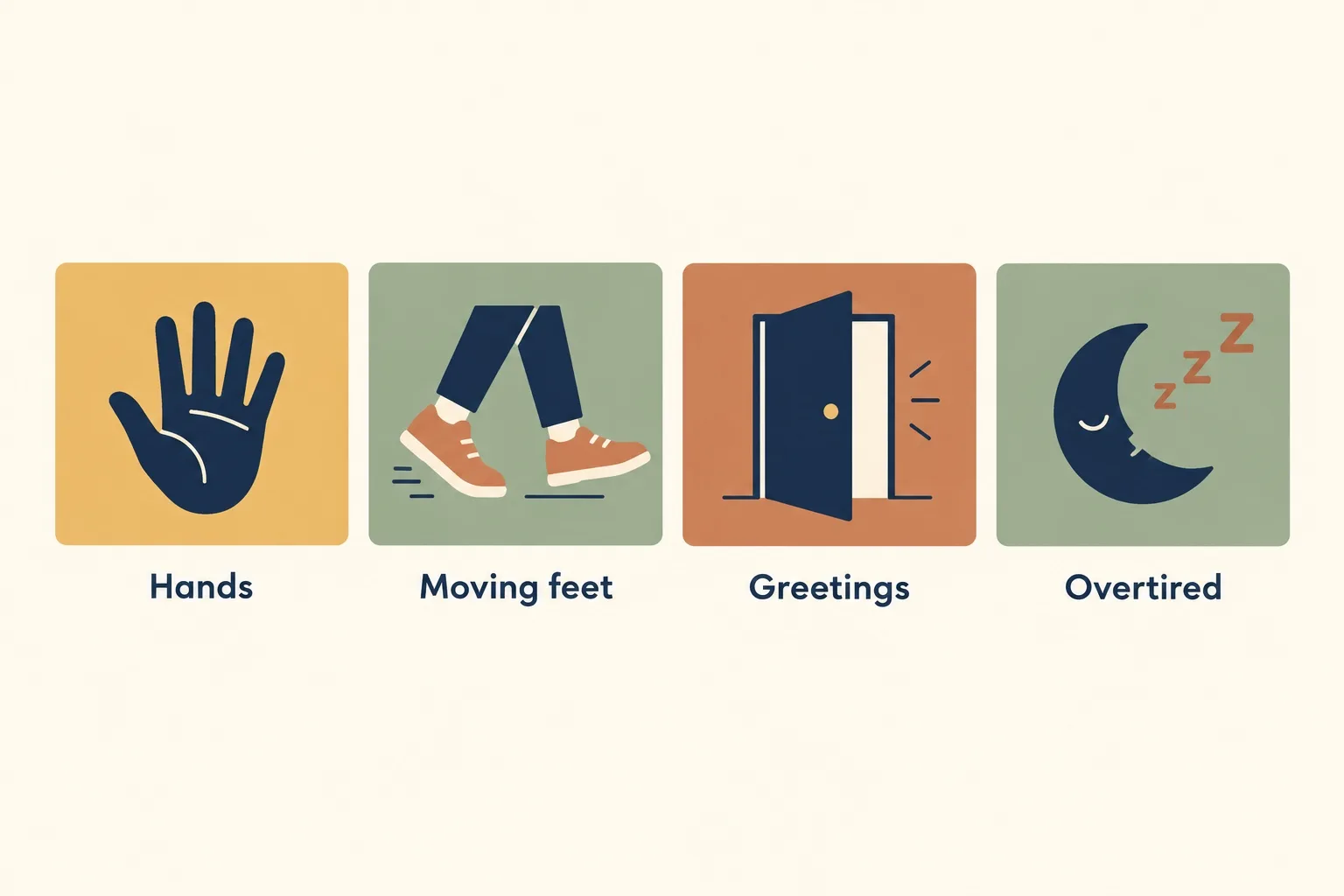
| What sets it off | What it looks like | Change this first |
|---|---|---|
| Hands | Grabbing fingers and sleeves during play or petting | Long toy in your hand before you reach in |
| Moving feet | Chasing ankles, pant legs and slippers | A gate between the puppy and busy hallways |
| Greetings | Jumping and nipping when people arrive | Puppy behind a gate with a chew when the door opens |
| Overtired | Wild biting late in the day that gets worse when you react | A nap in the crate or pen, not more play |
How to stop puppy biting with redirection
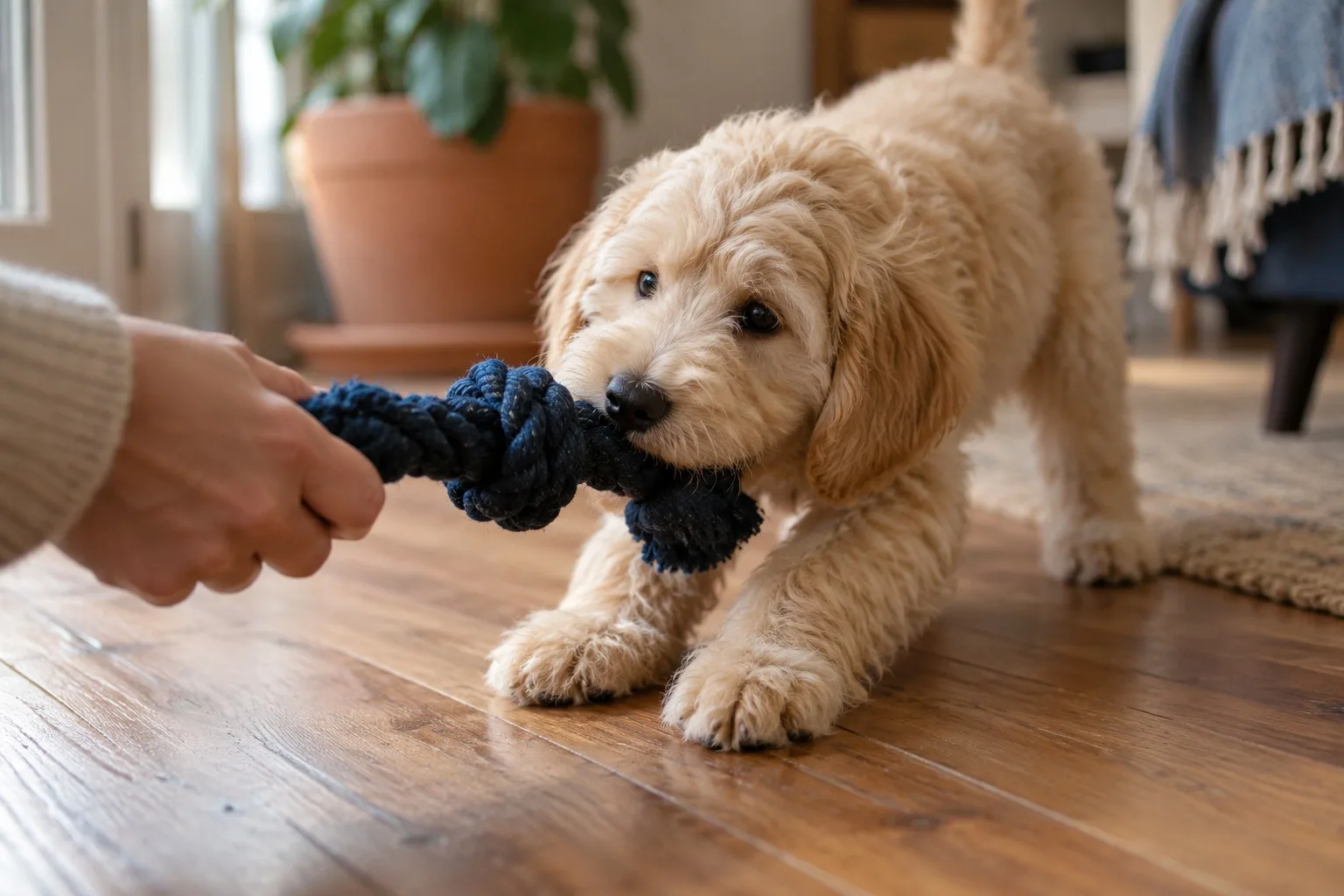
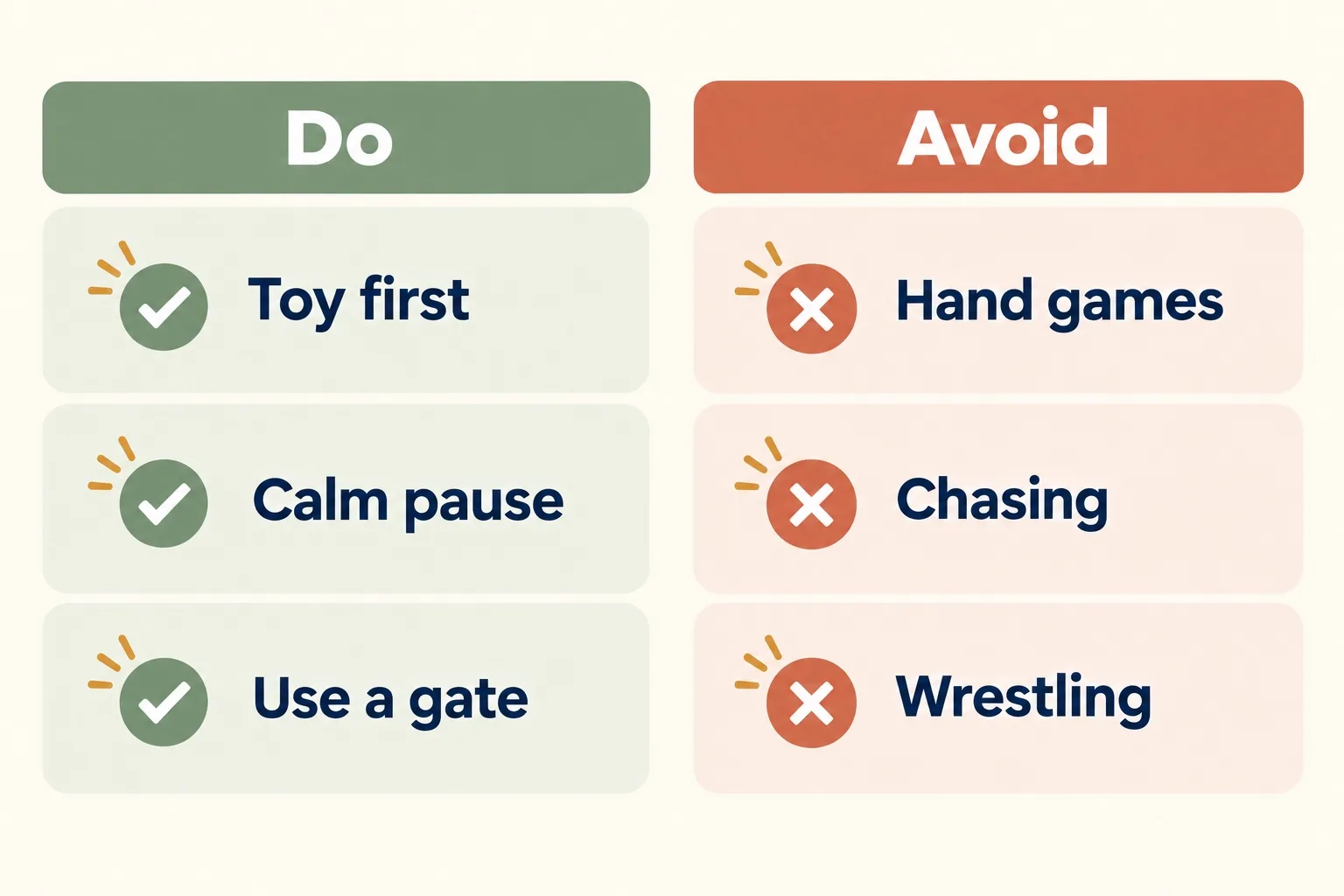
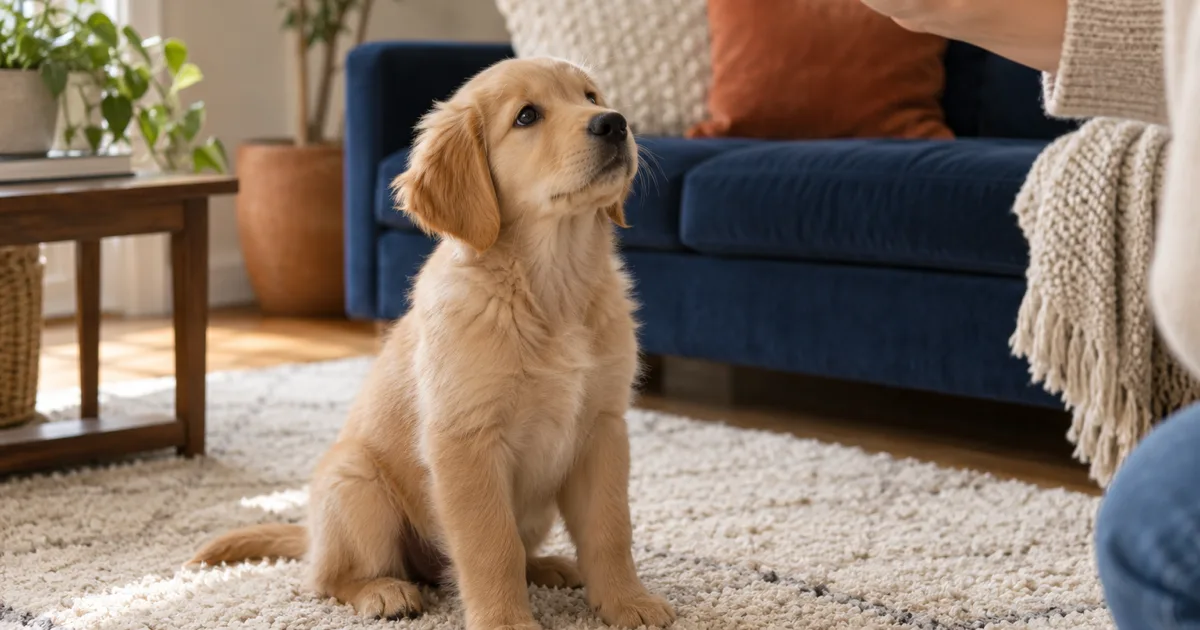
Redirection works when the toy arrives before the teeth do. Hold a long tug toy or a soft fleece rope so your hand is far from your puppy's mouth, and keep it moving low along the floor. Your puppy chooses the toy because it is the most interesting thing in the room.
Choose a toy that suits your puppy's size and chewing, follow the maker's guidance, and watch the play. Present it where your puppy can grab it without touching your fingers. Keep it in the play area instead of making your puppy chase your hands to get it.
The AVSAB position statements support reward-based teaching. Here, that means noticing the choice you want: taking the toy, letting go to switch activities, or lying down beside you. Reward that. Stop while play is still going well.
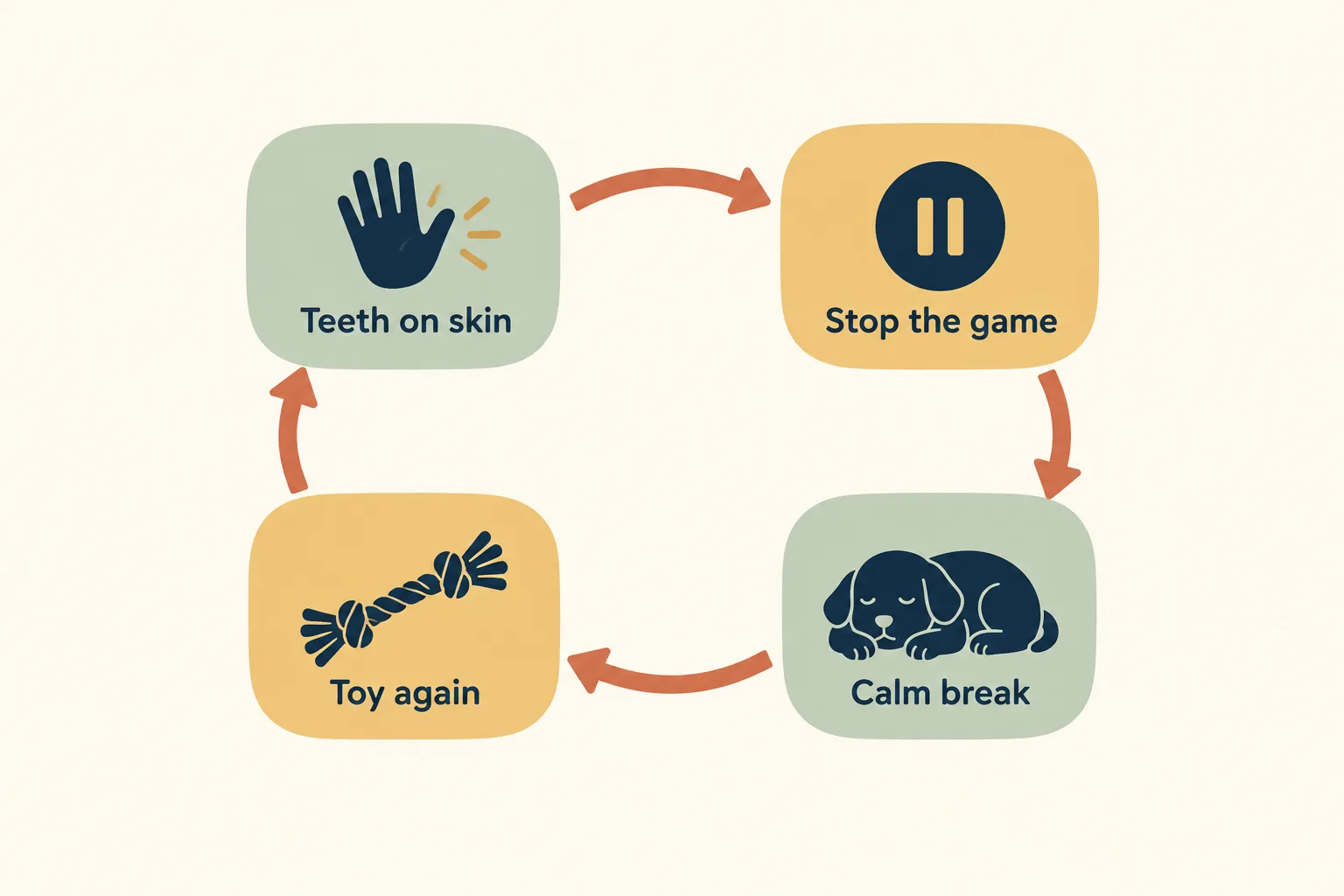
If teeth land on your skin, stop the hand game and take a calm break. Step out of reach or behind a gate. Do not wrestle, push the puppy away or turn it into a chase. Those all make the game more exciting. Restart with the toy once your puppy has settled for a few seconds.
Use one short cue so everyone in the house says the same thing when the toy comes out.
Say it once and present the toy low. Praise the moment teeth land on it.
How to stop puppy biting during play
- Set up safe play
Get a long toy ready and plan how you will pause, such as stepping behind a gate. Keep children out of the exercise unless a responsible adult supervises the whole time.
- Offer the toy first
Bring the toy out before your puppy reaches for skin. Keep your hand at the far end and move the toy low and slow.
- Pause when teeth hit skin
Stop the game calmly and step out of reach for a few seconds. No chasing, wrestling or loud reactions.
- Restart with the toy
When your puppy is calm, offer the toy again. End the session while it is still going well.
- Write down what happened
Note what came right before the nip and which setup helped. Share it with everyone who handles the puppy.
Overtired biting and the 12 week old puppy day
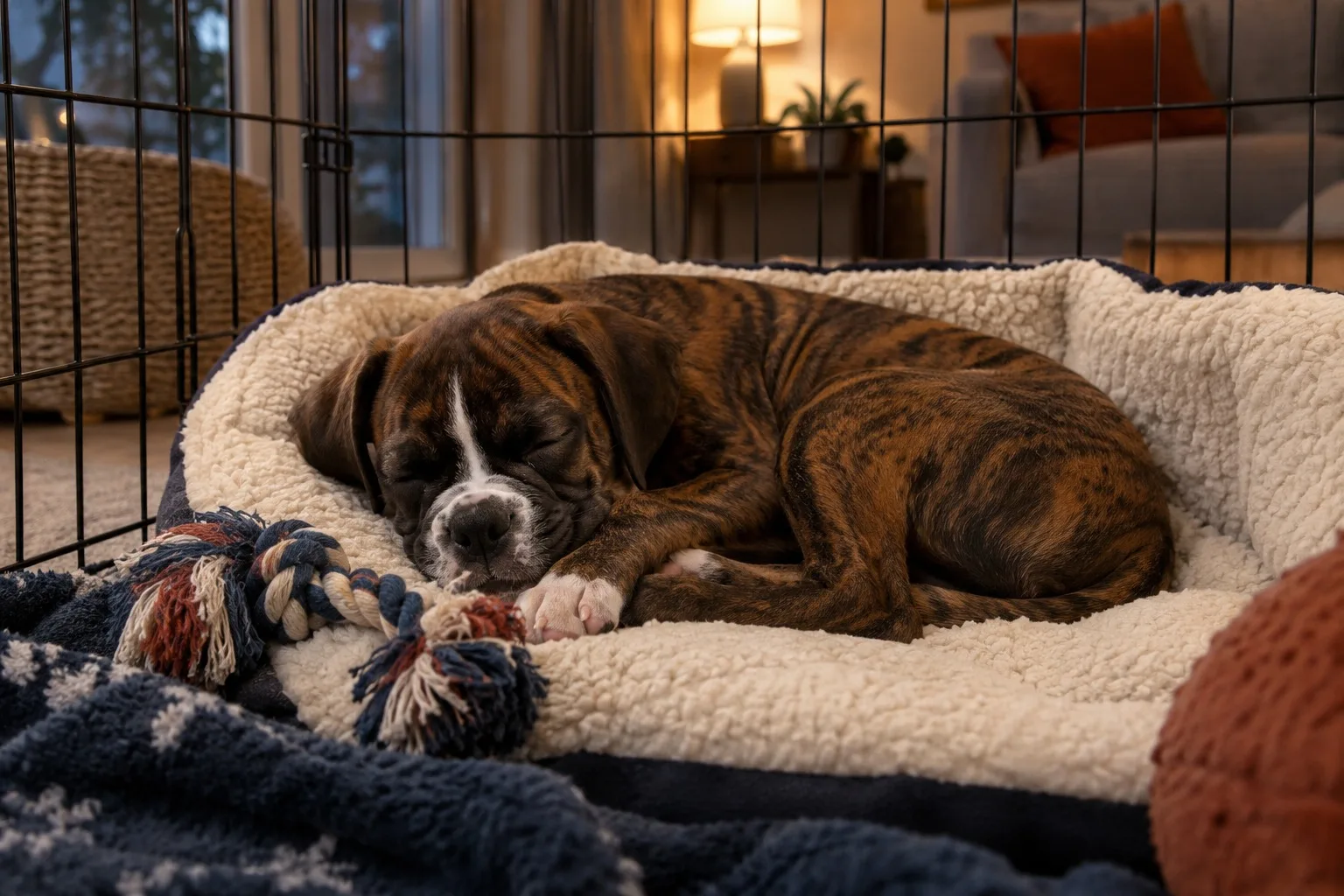
A lot of evening biting is a tired puppy, not a naughty one. If your puppy gets wilder the more you play, they likely need a nap more than a game. Rest is not the answer to every bite, but it is the first thing to check after a long awake stretch. The same tired evening often brings yapping too, and our post on puppy barking covers that side.
Here is how the example day for a 12 week old puppy looks, with the moments biting tends to show up. Awake blocks stay short and every one ends in a potty trip and a nap.
| Time | What happens | Biting watch |
|---|---|---|
| 6:30 am | Wake up, straight out for potty | Excited greeting: toy ready |
| 7:00 am | Breakfast, then a quiet moment | Calm chew after eating |
| 7:30 am | Reward-based training, 5 minutes | Short session, stop before it gets wild |
| 8:00 am | Crate nap | Rest |
| 10:00 am | Wake from nap, potty, gentle play | Toy play only |
| 12:00 pm | Wake up, potty, lunch at 12:10 | Ankle chasing in the kitchen: use a gate |
| 1:10 pm | Afternoon crate nap or quiet rest | Rest |
| 3:00 pm | Wake from nap, potty, gentle play | Toy play only |
| 6:00 pm | Wake up, potty, dinner at 6:10 | Busy household: gate and a chew |
| 6:45 pm | Reward-based training, 5 minutes | Short and calm |
| 7:10 pm | Evening rest near you | Peak landshark time: protect this rest |
| 10:00 pm | Last potty, then bedtime | Calm, no play |
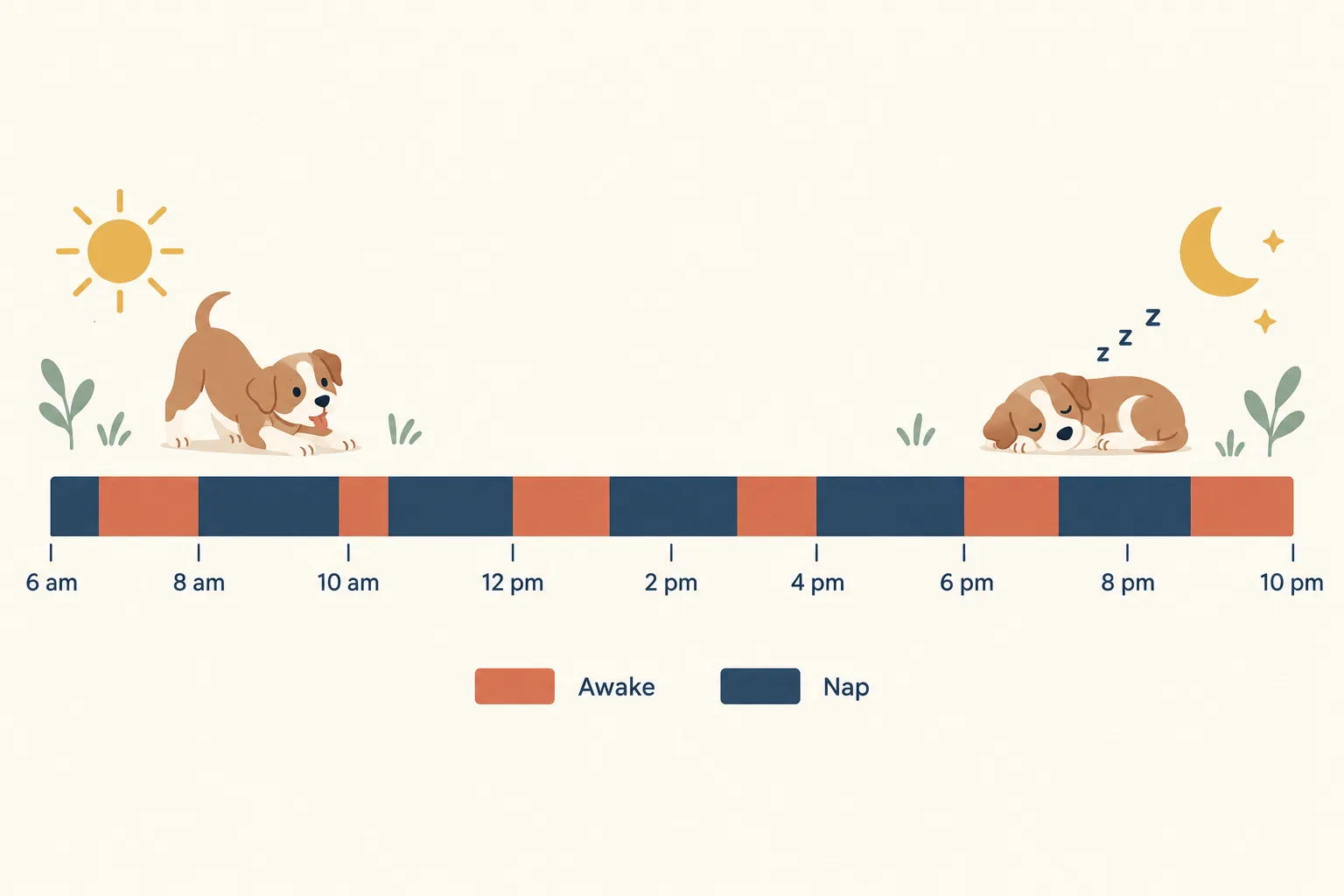
At 12 weeks the planning rules put the awake potty reminder at 150 minutes and sleep at 18 to 20 hours a day. Use the puppy sleep schedule to protect those naps. If the crate is new, build it up with the crate introduction steps so it is a place your puppy wants to rest.
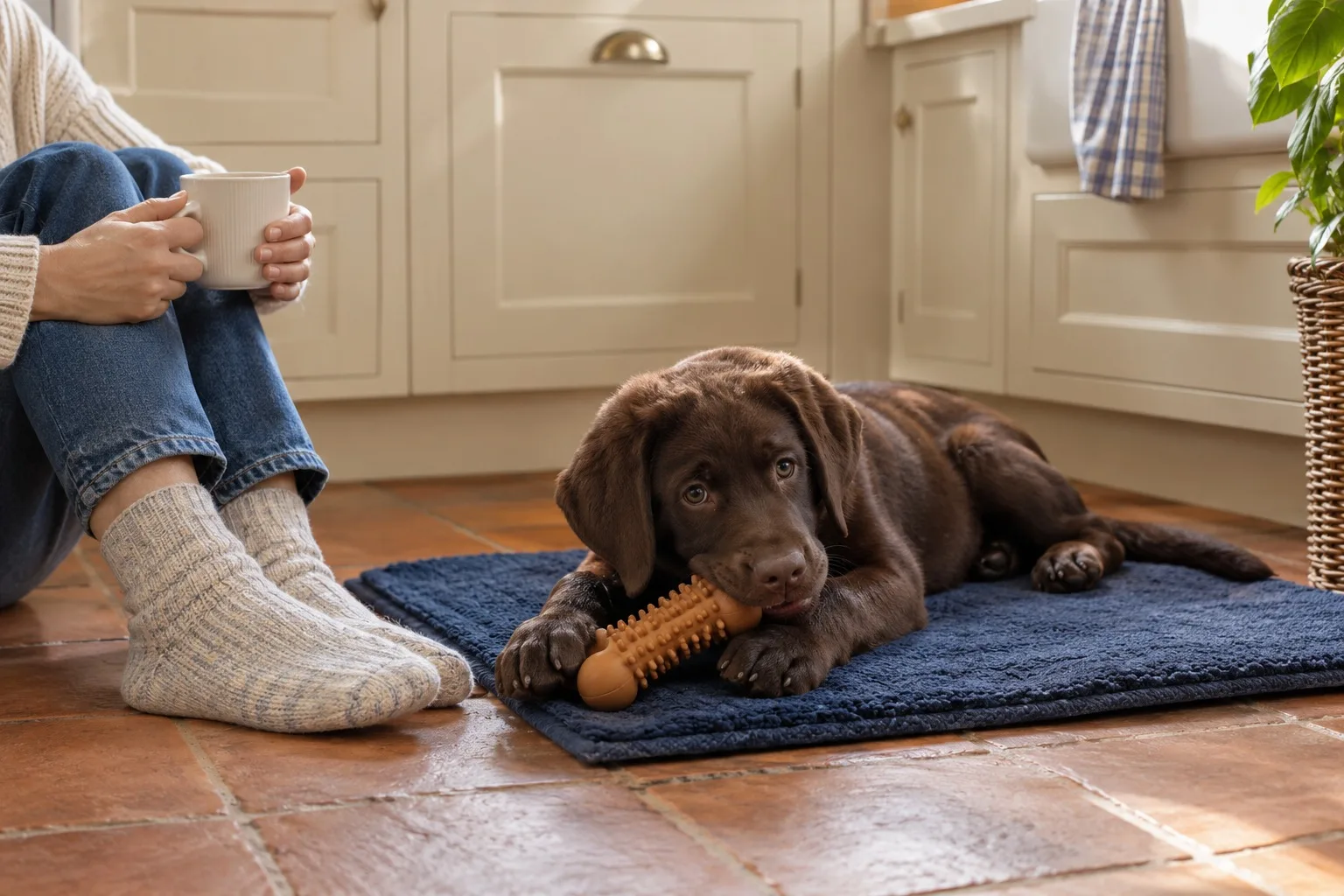
Puppy teething: chew choices and supervision
Puppy teething makes chewing stronger and more urgent, so give your puppy one good chew you can watch rather than a basket of untested toys. Teething explains the urge. It does not make biting people acceptable.
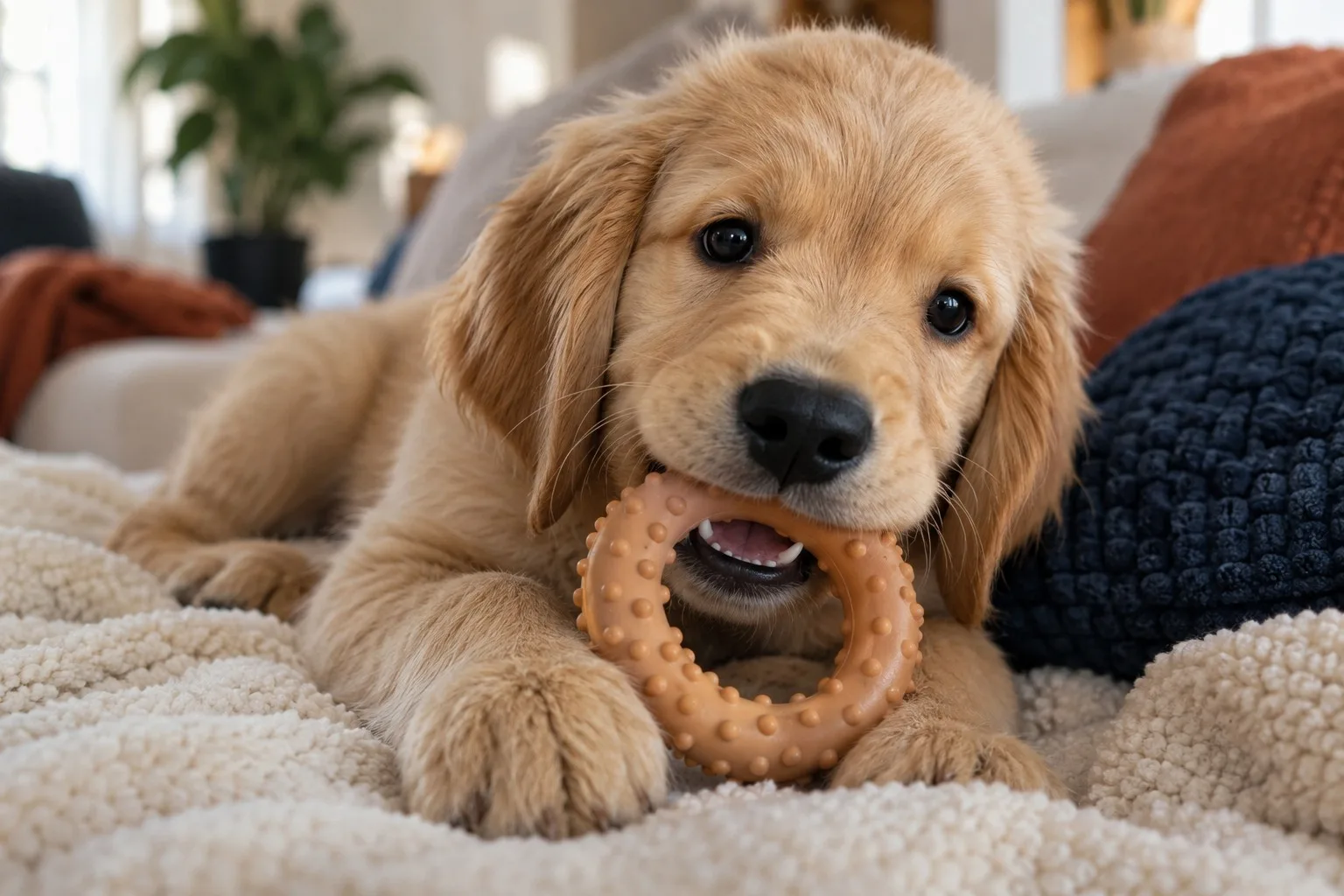
Offer a puppy-appropriate chew under supervision. Remove it if it breaks, gets too small or your puppy tries to swallow pieces. Follow the product guidance and ask your vet what suits your puppy. This guide does not recommend medicine, numbing gels or any treatment for a sore mouth. Pain, trouble eating or a damaged tooth go to your vet.
Set up a chew station where you can see it. Keep shoes, cords and loose objects out of reach, so your puppy has fewer chances to practice the wrong choice.
When do puppies stop teething?
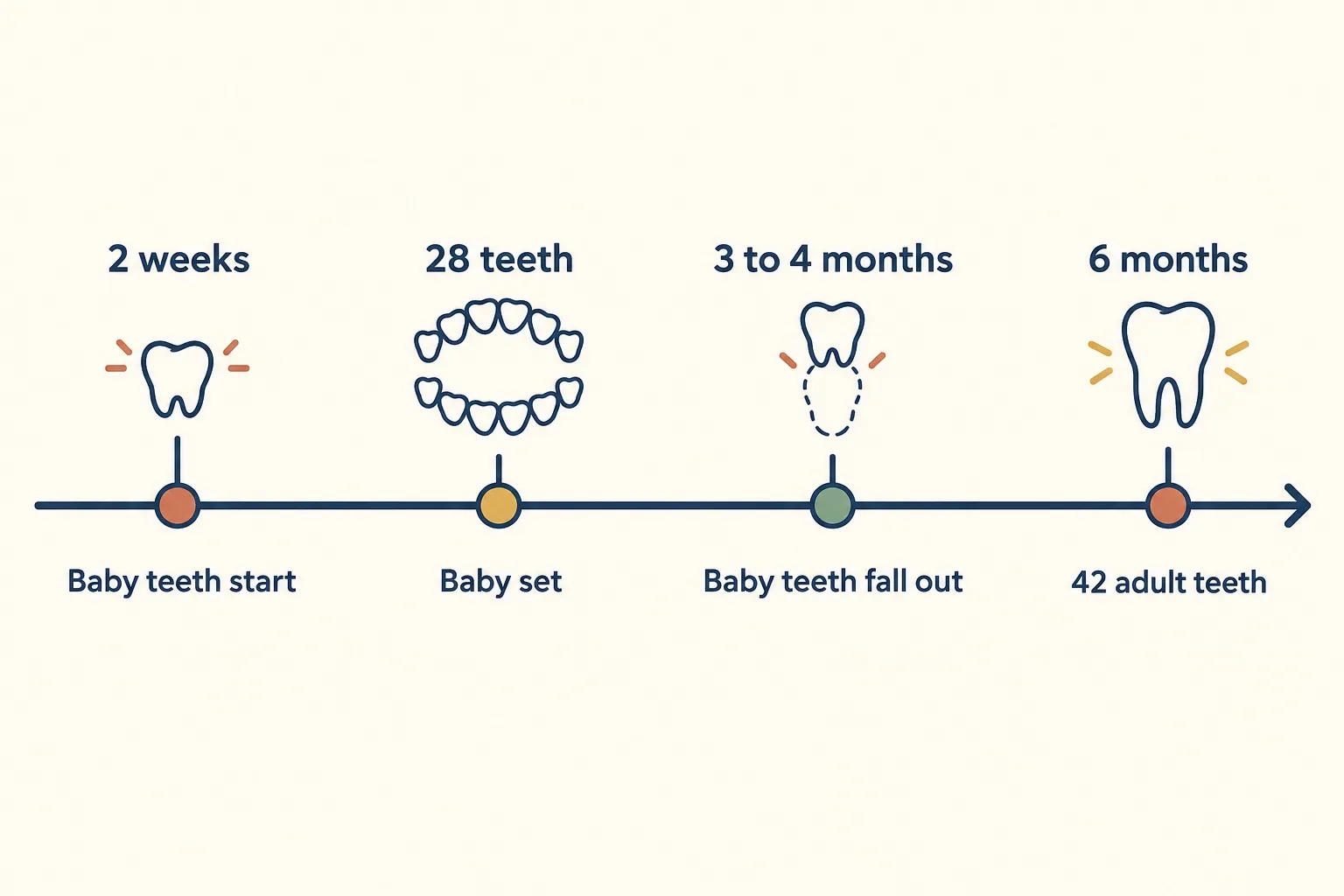
Most puppies stop teething at about 6 months old, when all their adult teeth are in. According to the AKC, baby teeth can arrive as early as 2 weeks, start falling out at about 3 to 4 months, and should be gone by 6 months.
| Age | What is happening in the mouth | What you do |
|---|---|---|
| From about 2 weeks | Baby teeth start coming in | Nothing yet, the puppy is with the litter |
| 8 to 12 weeks | 28 sharp baby teeth, lots of mouthing | Toy first, calm breaks, gates |
| 3 to 4 months | Baby teeth fall out, adult teeth push through | One supervised chew, watch for damaged toys |
| About 6 months | Teething usually done, 42 adult teeth | Keep the toy and pause habits going |
The end of teething is not a promise that mouthing stops on that day. Separate two questions in your notes. What chew can I offer under supervision? What happened just before teeth landed on skin? The first is management. The second is what you actually change. If you are earlier in the journey, the 10 week old puppy routine shows the same ideas at a younger age.
Nipping at ankles, busy greetings and children
For a puppy who chases feet, change the setup before the next busy moment. Put a gate between your puppy and the hallway rush, with a chew or toy on the puppy's side. Do not ask everyone to race past and hope for a different result.
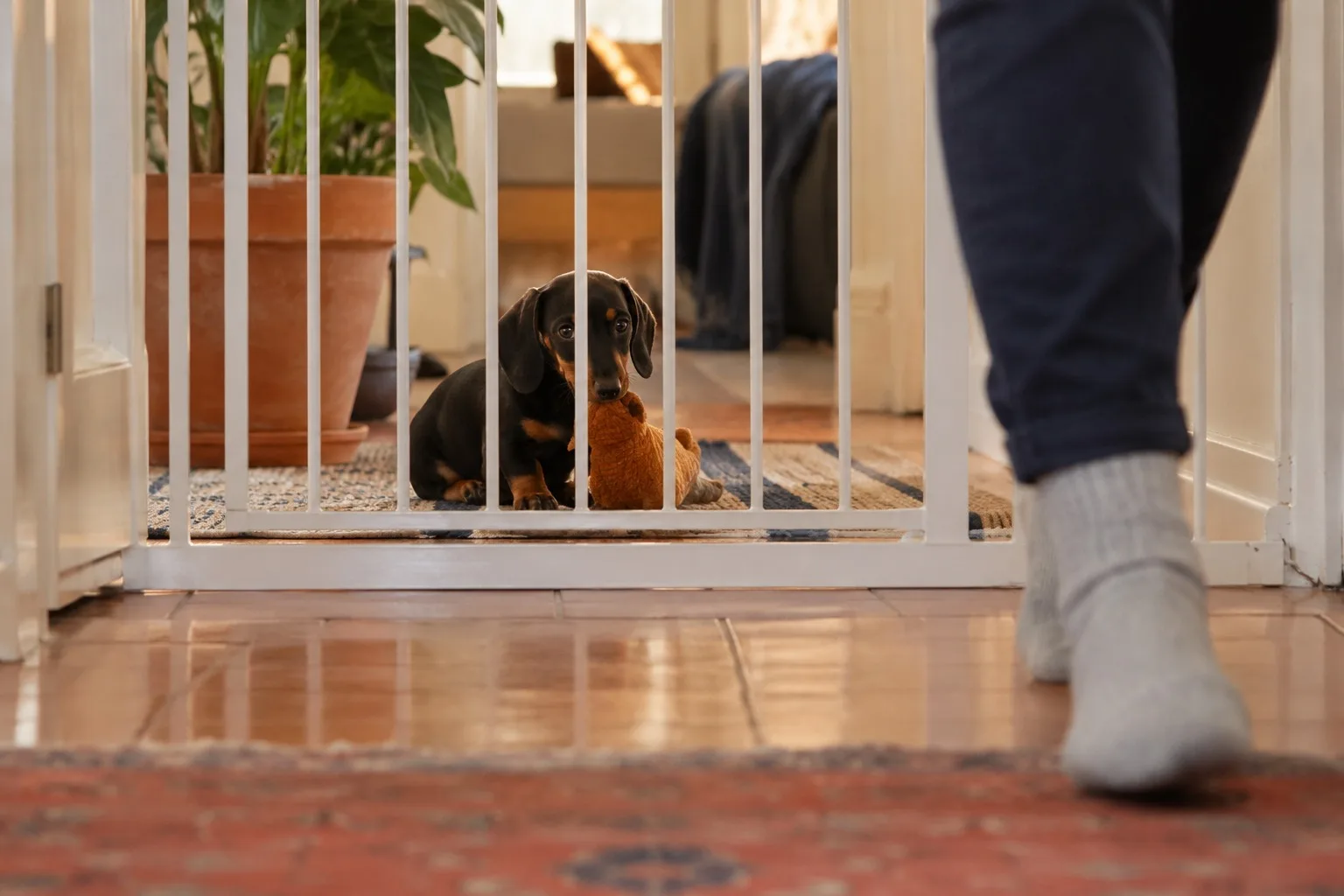
Practice greetings only when you can supervise closely. Ask visitors to follow the same simple plan and stop if it gets hard to manage. Children should never be responsible for correcting or training a biting puppy. A responsible adult manages the situation and keeps both the children and the puppy safe.
Herding breeds often chase moving feet more. The German shepherd puppy training guide covers managing movement and teaching calm alternatives.

Mistakes that keep puppy biting going
- Using hands as toys. Wiggling fingers teaches your puppy that hands are for biting, then you expect them to know when the game changed.
- Pushing, yelping loudly or wrestling. Big reactions often make the game more exciting.
- Punishing nips. Harsh corrections add stress and can make a puppy more defensive. Reward the behavior you want instead.
- Leaving a new chew unattended. Watch every new item and remove damaged pieces.
- Waiting for a birthday. A longer walk or a certain age will not fix an unsafe setup on its own.
- Carrying on after a bite breaks skin. That is the point to get professional help.
When puppy biting needs a professional
Any bite that breaks skin on a person, or any aggression, needs a certified behavior professional. Stop recreating the situation, keep people safely separated, and write down factually what happened before and during the incident so the professional has real context.
A general web page cannot assess a bite or say why it happened. If you feel worn down by the nipping, you are not alone: the puppy blues guide is for exactly those weeks. Health concerns go to your vet. The red flags are below.
The short version
How to stop puppy biting comes down to three habits: toy first, calm pause when teeth hit skin, and enough naps that your puppy is not running on empty. Teething makes the urge stronger until about 6 months, but the habits are what change the behavior.
The free method works. The hard part is the timing: knowing when the awake block is about to tip into overtired biting, when the next nap is due, and what to change tomorrow when tonight went badly. Build a free schedule for your puppy's age and it plans naps, play and potty trips so the landshark hours get shorter.
Get tomorrow's plan, adapted to how today went.
Frequently asked questions
Put a toy between your puppy's teeth and your skin before play starts, and pause the game calmly the moment teeth land on you. Restart with the toy once your puppy settles. Keep hands still, skip wrestling, and make sure everyone in the house does the same thing.
Reduce access to things you do not want chewed, and keep one suitable toy or chew ready that you can supervise. Notice which situations lead to biting, such as greetings or fast feet, and change those setups. Pause play when teeth reach skin.
Most puppies mouth much less once teething ends at about 6 months, especially if you have practiced toy first and calm breaks the whole time. There is no fixed birthday. The habits you build now do more than waiting.
Most puppies finish teething at about 6 months old. Baby teeth start falling out at about 3 to 4 months to make room for 42 adult teeth. Ask your vet about trouble eating, a damaged tooth or anything unusual in the mouth.
Choose a puppy-appropriate chew with your vet's guidance, follow the product instructions, and supervise it. Remove anything that breaks or that your puppy tries to swallow. This guide does not cover medication or treatment for a sore mouth.
Mouthing is normal, but a bite that breaks skin on a person is the point to get a certified behavior professional. Stop recreating the situation, keep everyone safe and write down what happened so the professional has factual context.
Get tomorrow's plan, adapted to how today went
A printed schedule can't see that she peed at 7:10 today; the Coach plan rewrites tomorrow from today's log. Start with the free schedule for your puppy.
Build my puppy's plan- Free starting schedule
- Reward-based practice
- Fits your puppy's day
Share article
About the author
More articles
Puppy SOS: biting, crying, blues · 12 min
How to Stop Puppy Barking: Find the Reason, Reward the Quiet
How to stop puppy barking without shouting or collars: read what the bark is asking for, meet the need before it starts, and reward one second of quiet, then three, then ten.
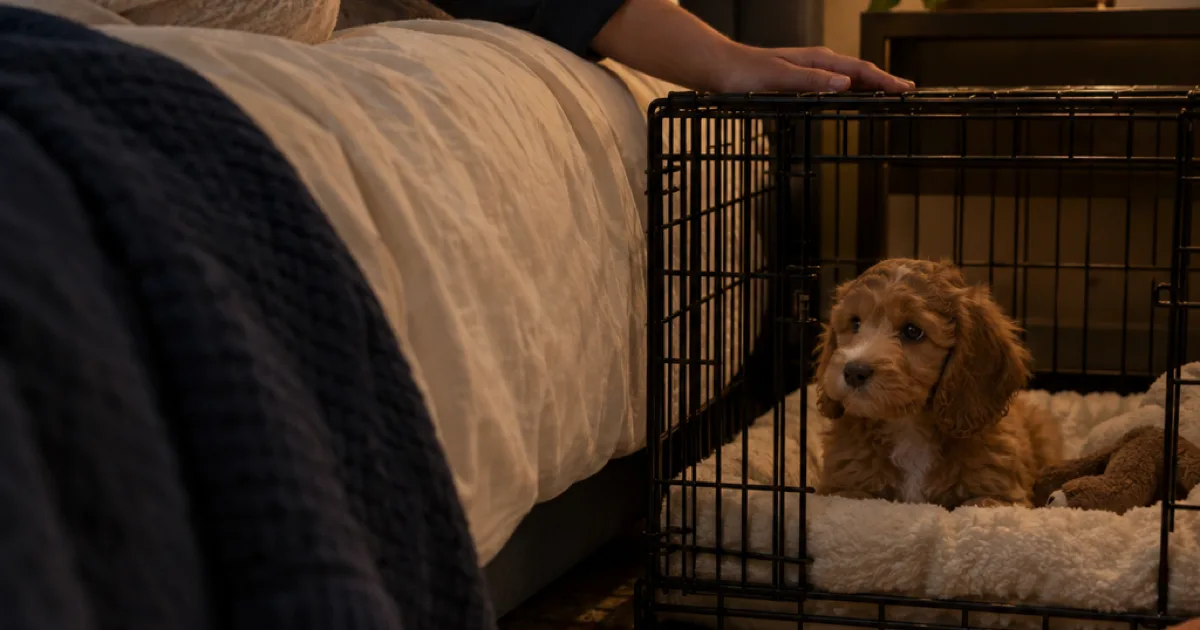
Puppy SOS: biting, crying, blues · 11 min
Puppy Crying in Crate at Night: What to Do Tonight
Puppy crying in the crate at night? Check the need, keep night potty trips quiet and keep the crate beside you. Night checks by age and a calm 4 step response.
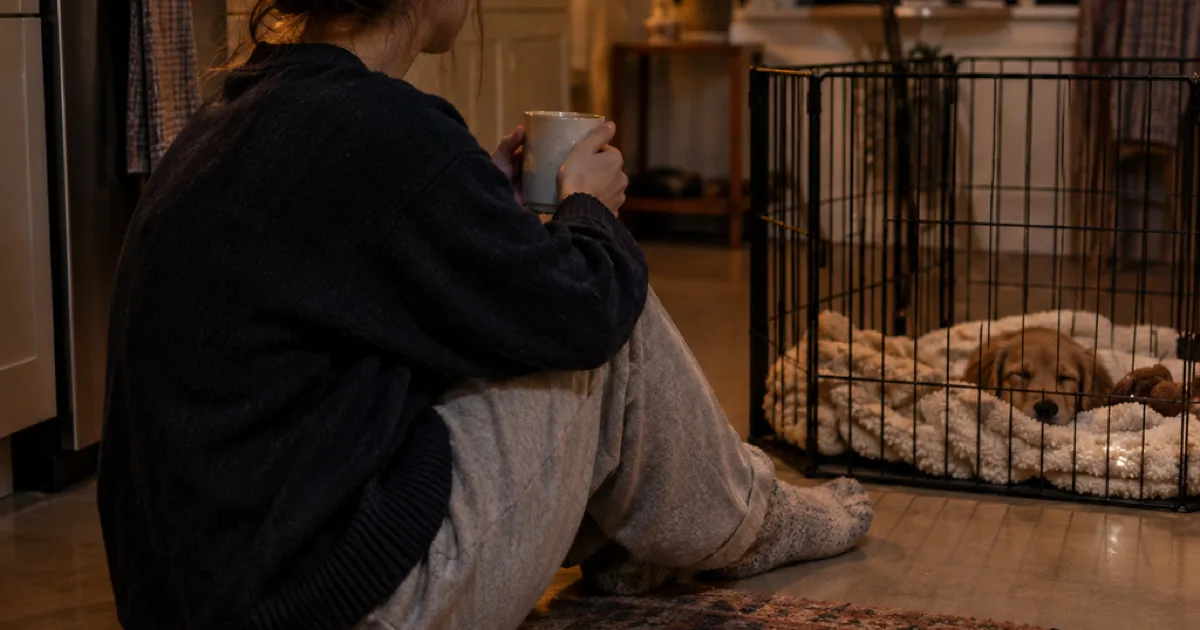
Puppy SOS: biting, crying, blues · 9 min
Puppy Blues: Why the First Weeks Feel Awful and What Helps
The puppy blues are common and usually pass. Why the first weeks with a puppy feel so heavy, how long it lasts, and the small changes that help this week.
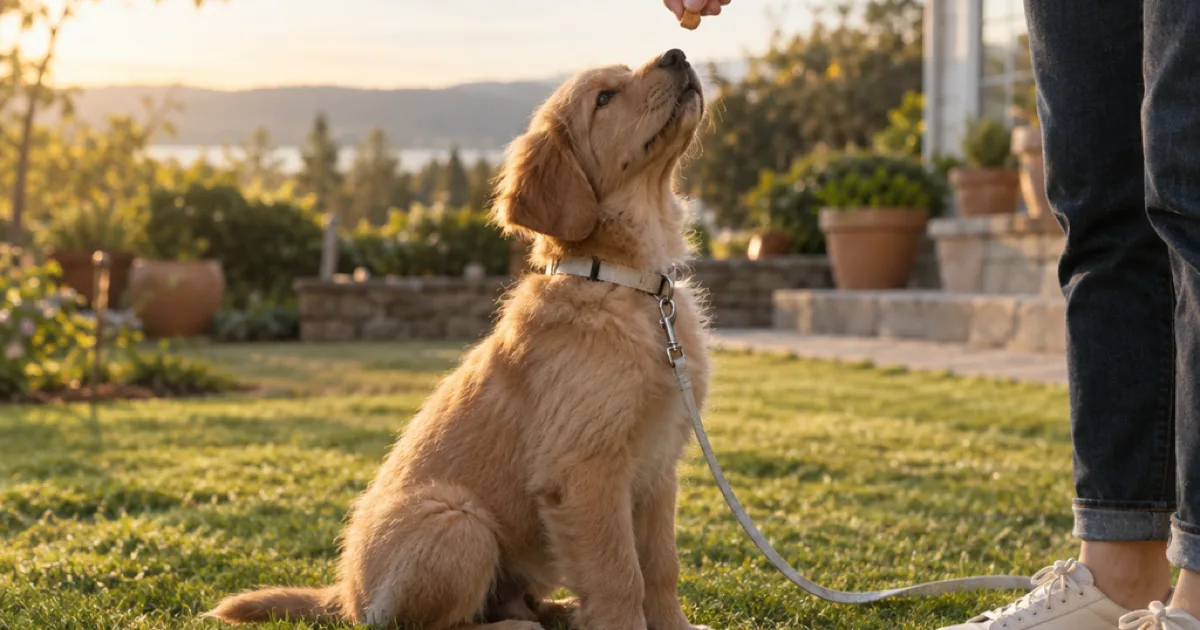
Puppy SOS: biting, crying, blues · 8 min
Puppy Eating Poop: Why It Happens and How to Stop It
Why puppies eat poop, when it is a reason to call the vet, and the simple timing habit that stops it faster than any powder or taste trick.
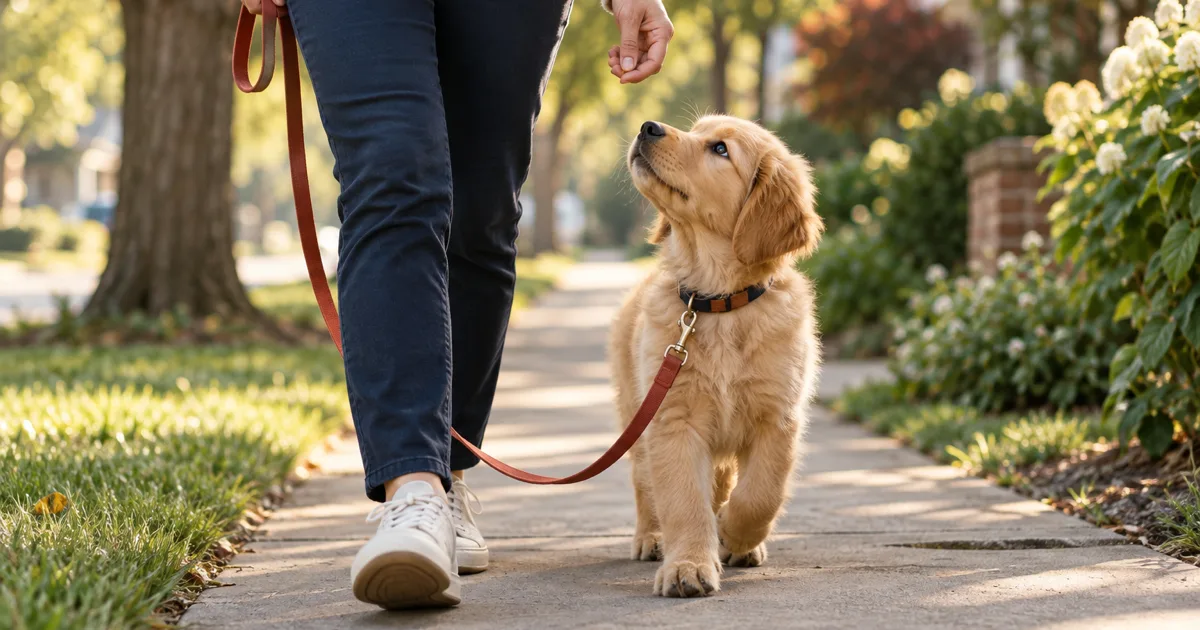
Training that sticks · 12 min
Leash Training a Puppy: 6 Steps From the First Week Home
Leash training a puppy in short indoor sessions from 8 weeks: the gear to pick, where the reward goes, the stop-and-go rule for pulling, and fixes for a puppy who sits, bites the leash or lunges.
Potty, crate and sleep · 10 min
How Long Does It Take to Potty Train a Puppy?
Potty training takes steady support, not a weekend deadline. Learn which milestones matter, why timelines vary and how to spot the next useful change.