
Puppy Socialization: A Calm Checklist for Real Life
In this article
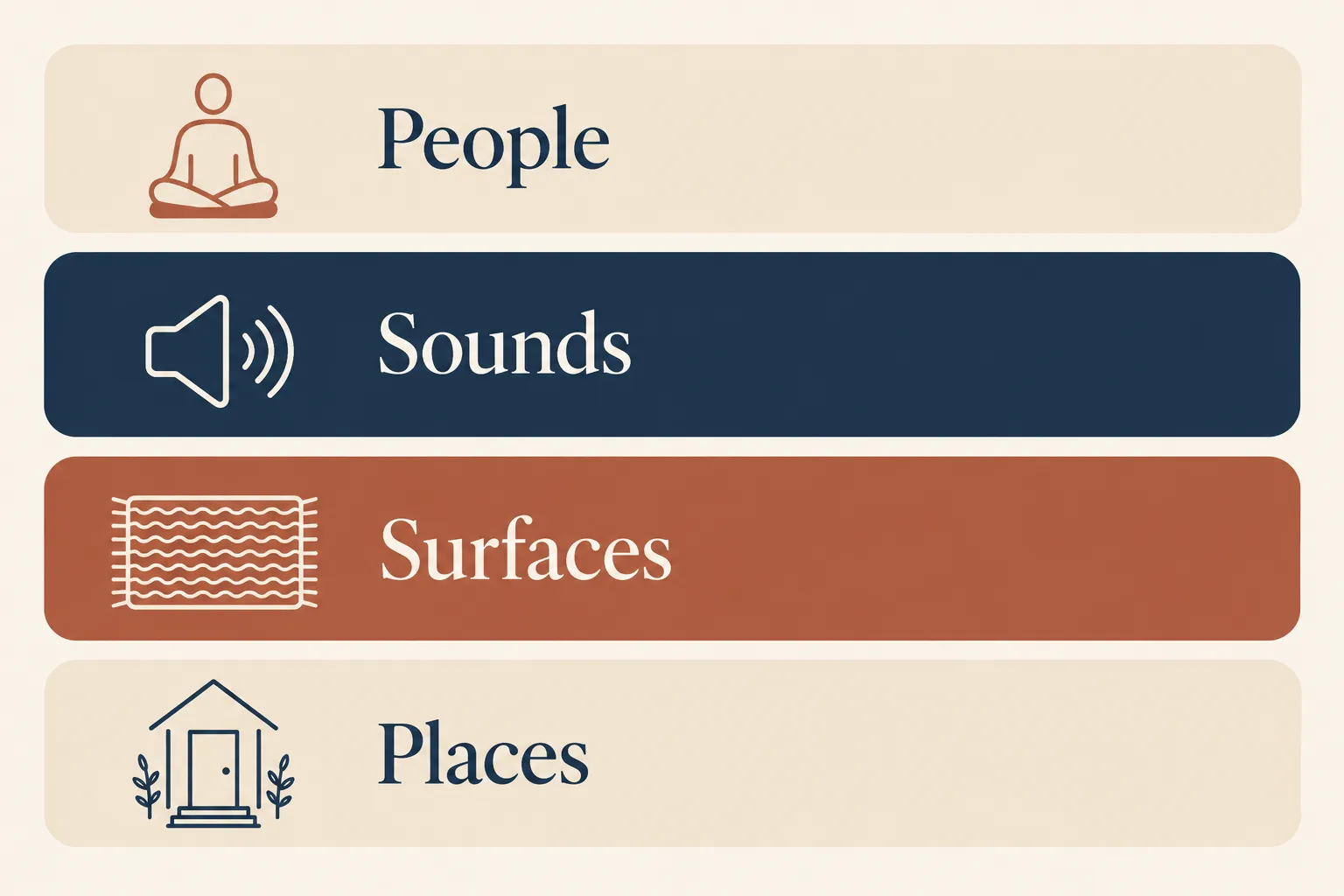
Puppy socialization means helping your puppy feel safe around everyday people, sounds, surfaces and places. Start with gentle experiences your puppy can leave, reward relaxed noticing, and stop before a small introduction becomes an endurance test.
The goal is not a puppy who greets everyone. It is a puppy who can see a person, hear a noise or pass another dog without needing to investigate. Watching quietly from a comfortable distance counts.
You do not need a crowded outing today. You need one easy experience, an escape route and enough attention to notice when your puppy has had enough.
When should puppy socialization start?
Start gentle, positive introductions early, including at home when your puppy arrives. The American Veterinary Society of Animal Behavior's puppy socialization statement describe the first three months as especially important for socialization, but learning does not stop on a birthday.
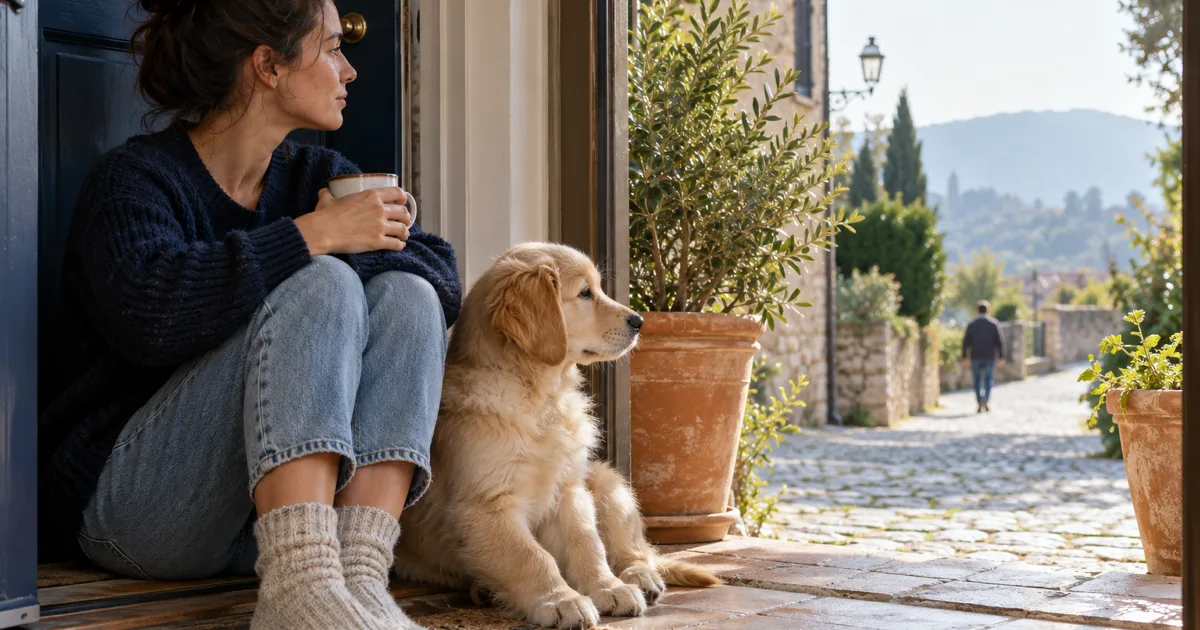
Early does not mean intense. A quiet visitor sitting across the room can be a better lesson than five strangers reaching down at once. If you are settling in with an 8 week old puppy, choose familiar surroundings and brief introductions between rests.
Ask your veterinarian which locations, dog contacts and class arrangements are appropriate for your puppy's individual health and vaccination status. This guide covers behavior practice, not vaccination schedules or medical clearance. Do not assume a public floor or unfamiliar dog is safe because an outing is called socialization.
A socialization checklist is a menu, not a deadline
Choose something easy from one category. Repeat it until it feels ordinary before making it closer, louder or busier. You do not need to complete every row this week, and you should not move through a list while your puppy is struggling.
| Category | An easy first experience | What makes it harder | Your exit option |
|---|---|---|---|
| People | One quiet adult seated sideways | Reaching, staring or several visitors | Move behind a gate with you |
| Sounds | A gentle household noise far away | Louder volume or a sudden start | Stop the sound or leave the room |
| Surfaces | A stable mat beside familiar flooring | Slippery, moving or noisy surfaces | Step back onto the familiar floor |
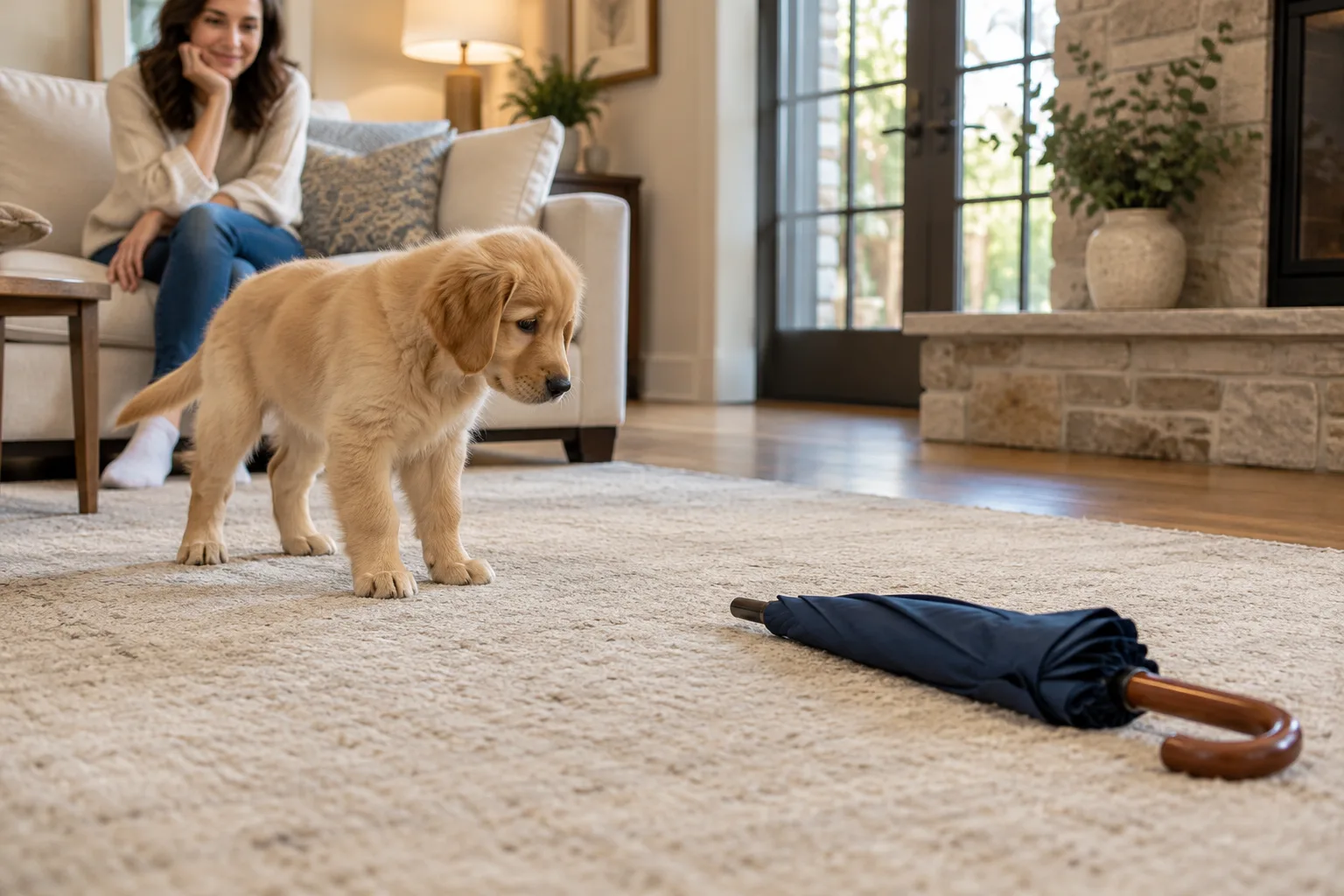
| Objects | A folded umbrella placed still | Opening it or moving it closer | Put it away and try another day |
| Places | Watch from a familiar doorway | Foot traffic and closer movement | Go back indoors |
| Dogs | Observe a suitable calm dog at a distance | Direct approaches or rough play | Increase space and end the session |
This is not an exposure challenge. Keep the surface stable and non-slip, put away anything chewable or sharp, and supervise throughout. A puppy who chooses not to step onto a mat has given you useful information. Do not pull them across it.
Read the puppy, not the checklist
Look at the whole puppy and the change from their usual behavior. A wagging tail alone does not tell you an introduction is comfortable. Treat-taking is useful information, but accepting food is not permission to keep moving closer.
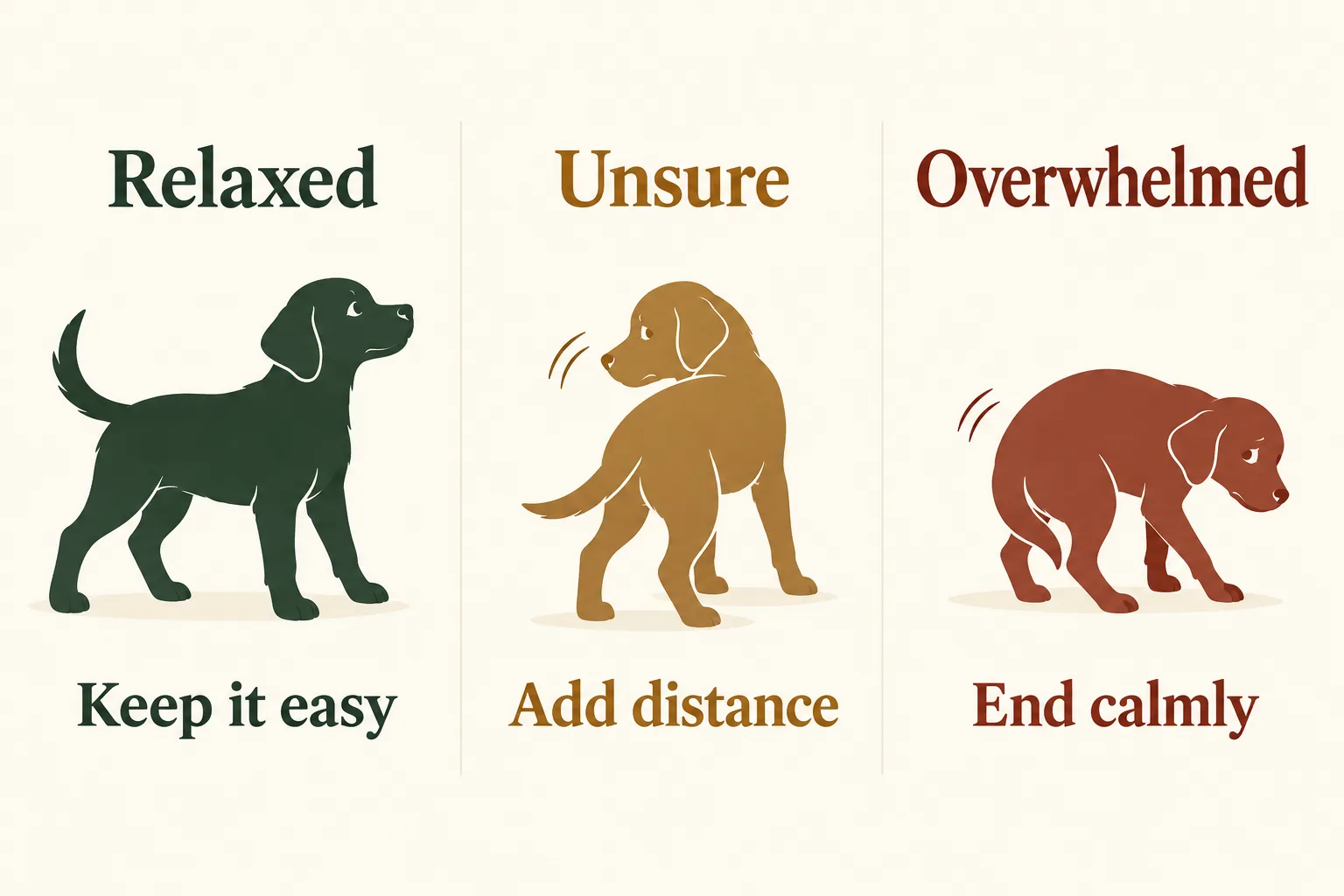
| What you see | What it may mean | What to do now |
|---|---|---|
| Loose body, ordinary sniffing, easy attention back to you | The setup may be manageable | Keep the same distance and finish early |
| Repeated looking away, slowing down, staying behind you | Your puppy may want more space | Add distance and reduce the activity |
| Freezing, trying to hide, repeated escape attempts | The experience is too much | Leave calmly; make the next attempt easier |
| Refusing food they usually enjoy | Stress is one possibility, not a diagnosis | Pause and assess the setting; do not lure them closer |
| Growling, snapping, aggression or a bite on a person | This needs individualized help | End contact safely and seek a certified behavior professional |
Do not punish a growl or make someone keep petting a puppy who is trying to leave. Create space. For aggression or any bite on a person, involve a certified behavior professional rather than trying to solve it through more greetings.
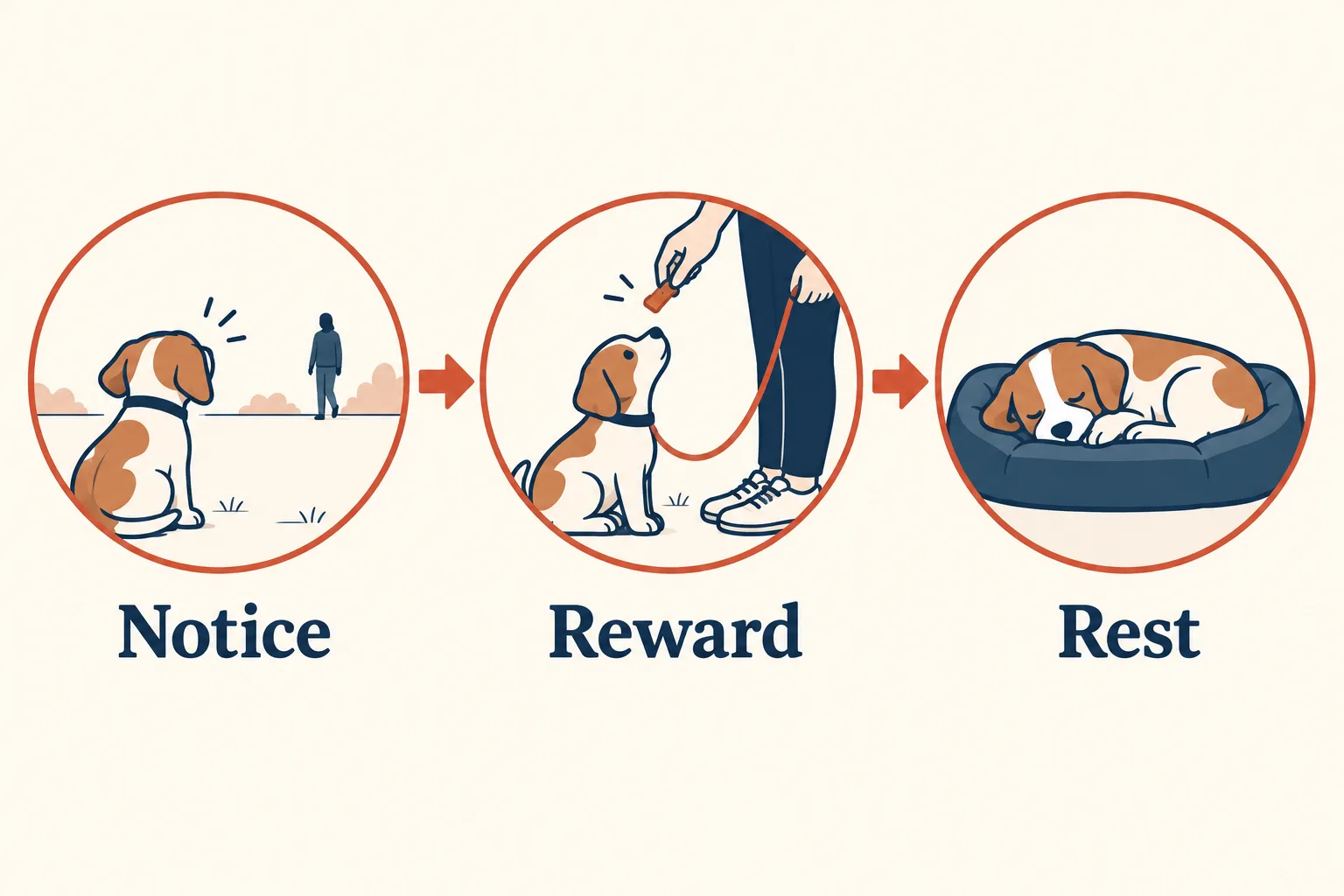
How to run one easy puppy socialization session
Pick a place where you control the distance and can leave immediately. Keep the first attempt brief enough to finish while your puppy is still comfortable. The steps below are a practical routine, not a test your puppy must pass.
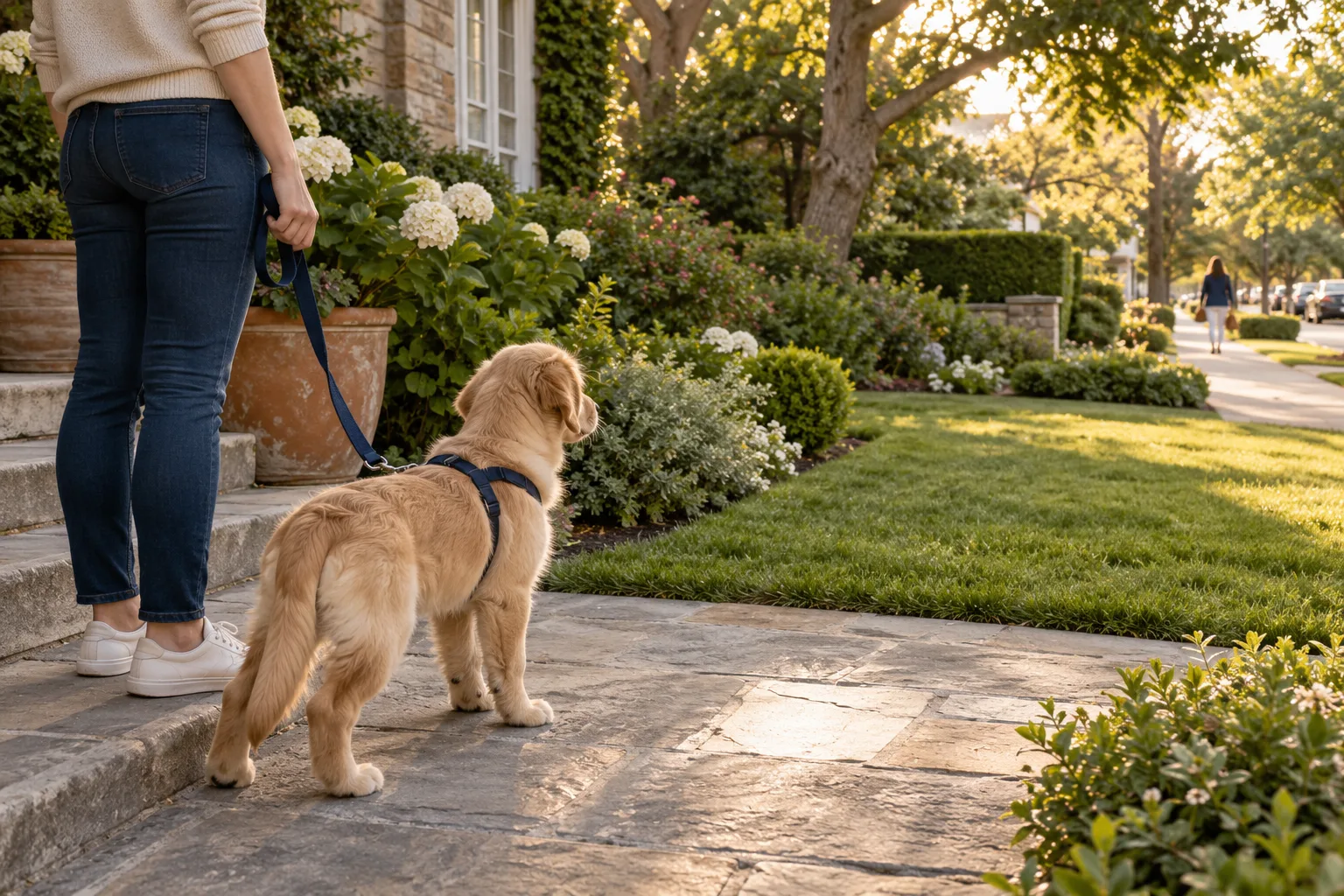
How to introduce one new experience
- Choose one quiet thing
Choose a seated visitor, a stationary household object or a distant person to watch. Avoid adding a new place, new sound and new dog at the same time.
- Start farther away than you think
Stand or sit where your puppy can notice the thing without being trapped beside it. Use a comfortable harness and loose leash when needed for safety, not to pull your puppy toward the experience.
- Reward noticing without approaching
When your puppy notices calmly, offer a small familiar reward near you. Let them look away, sniff or choose a little more distance. You do not need to ask for a sit or eye contact first.
- Finish while it is still easy
Leave after a few comfortable observations. Leave sooner if your puppy stiffens, hides or tries to get away. Return to a familiar quiet spot.
- Record what actually happened
Write the experience, approximate distance and response. Next time repeat the easy version, or make it easier if your puppy struggled. Change only one part at a time.
A note such as "watched a neighbor across the street, loose body, then sniffed" is more useful than "met one person." It tells the next caregiver what to repeat. The puppy training basics use the same principle: arrange an easy success, reward it and stop before frustration takes over.
People: let the puppy choose the greeting
Ask a visitor to sit sideways, keep their hands to themselves and ignore the puppy at first. You can reward your puppy near you while the visitor remains still. Approaching is optional, and approaching once is not an invitation to be picked up.
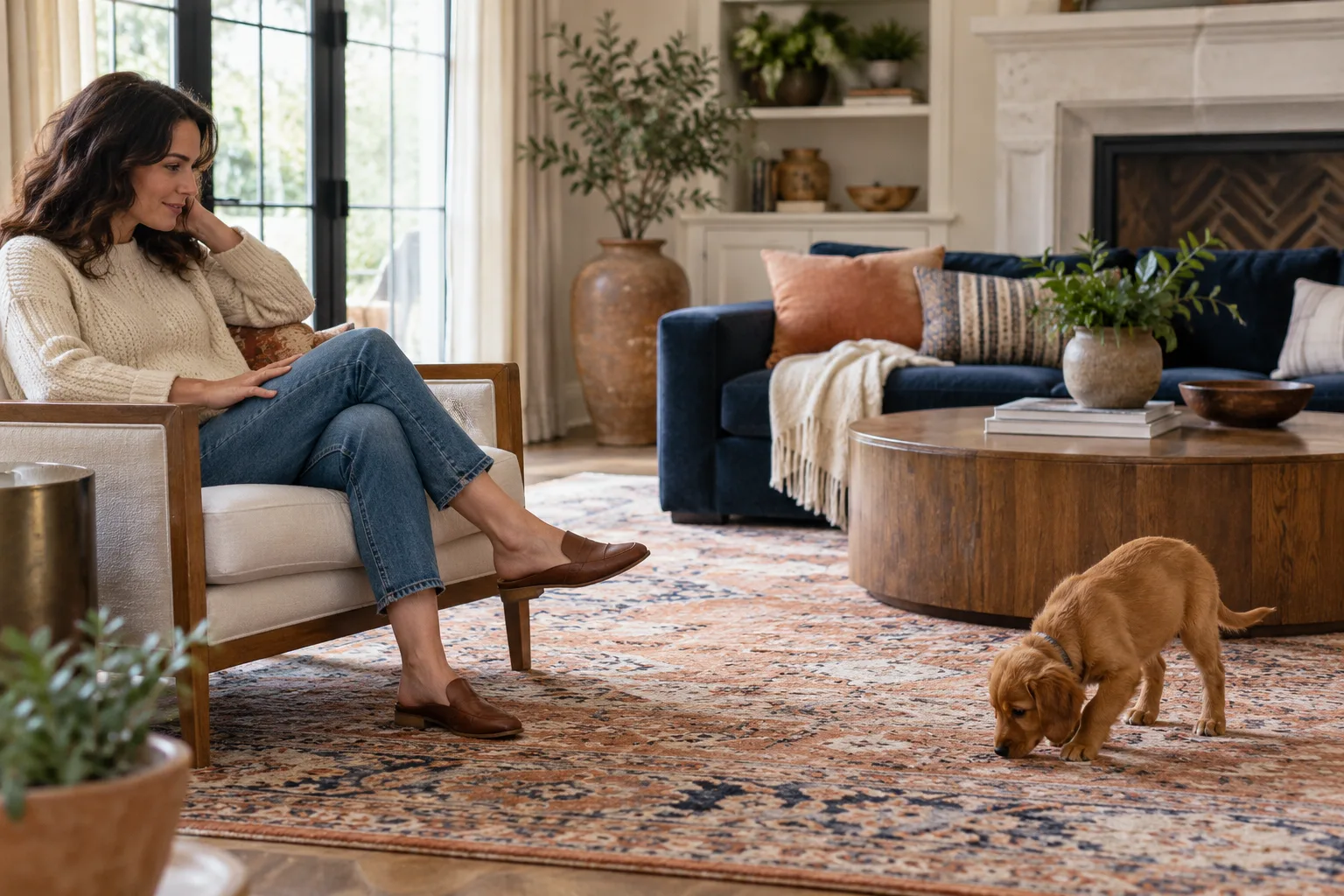
If your puppy chooses to come closer, keep any interaction brief. Pause and give them room to leave. Do not have a stranger hold food against their body to pull a worried puppy into touching distance. Food should make the experience pleasant, not override the puppy's wish for space.
Children need active adult supervision. Start with quiet observation at a comfortable distance, not hugging, chasing or face-to-face contact. A physical barrier can make an introduction easier for everyone.
If visitors cannot follow those instructions, skip the greeting. Watching from a quiet space beside you is still practice.
Sounds and objects: change one thing at a time
Introduce a household object while it is still and quiet. A switched-off vacuum across the room is a different experience from a moving vacuum beside the puppy. Do not jump straight from one to the other.
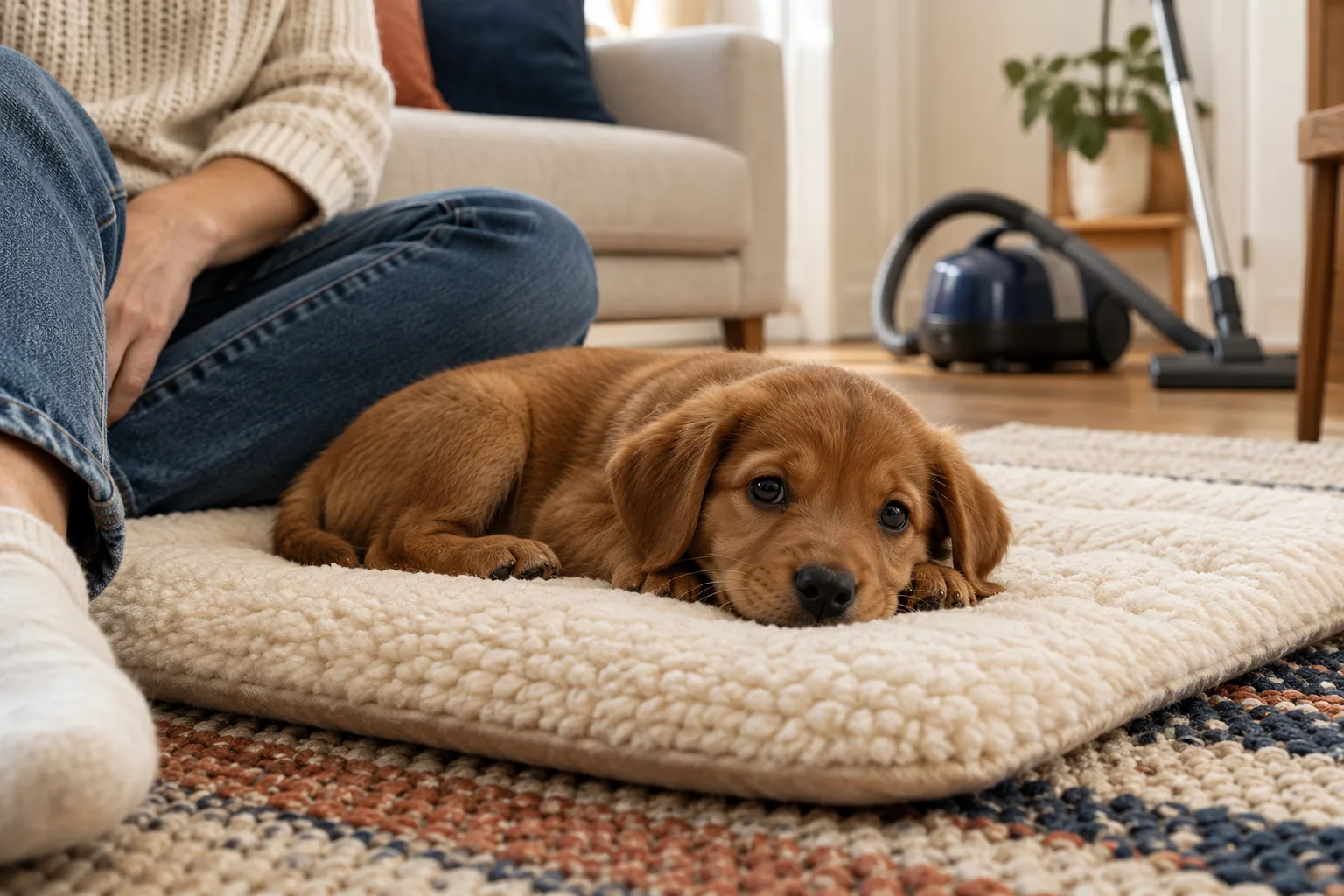
For a sound you can control, start softly and at a distance. Stop if your puppy startles and does not settle, tries to hide or cannot comfortably disengage. Never surround a puppy with loud recordings to make them get used to noise.
If the noise is unavoidable, such as work in the next apartment, prioritize a quieter space over a training exercise. You can arrange an easier introduction another day. Your puppy does not need to learn through every disruption.
Other dogs: calm observation beats forced play
Socialization does not require a dog park or a greeting with every dog on a walk. A puppy can learn from seeing a calm dog at a distance and then moving on with you. If those walks keep turning into pulling, practice leash training a puppy somewhere quiet first.
For direct contact, ask your vet about health suitability and choose a known dog whose caregiver can manage the interaction. A class should use reward-based methods, manage space and let worried puppies take breaks. Ask how the instructor handles hiding or rough play before attending.
Do not hand a frightened puppy to a group and hope they work it out. Separate calmly if one dog cannot disengage or the interaction becomes one-sided. If there is aggression or a bite on a person, contact a certified behavior professional.
The mistakes that turn practice into pressure
The most common mistake is counting contacts instead of checking comfort. Ten rushed greetings can be less useful than one easy observation. A puppy who stood still while surrounded did not necessarily enjoy the experience.
- Luring closer with food. Reward where your puppy already feels comfortable. Do not use a treat to pull them into an interaction they avoid.
- Holding them in place. Keep a clear route out. Restraint is not the same as confidence.
- Making every outing harder. Repeat familiar successes. Progress can mean the same quiet spot feeling ordinary.
- Skipping rest. A busy afternoon does not need an extra evening lesson. Protect a quiet recovery period.
- Treating a difficult day as failure. Lower the difficulty next time. Persistent fear deserves professional support, not a fuller checklist.
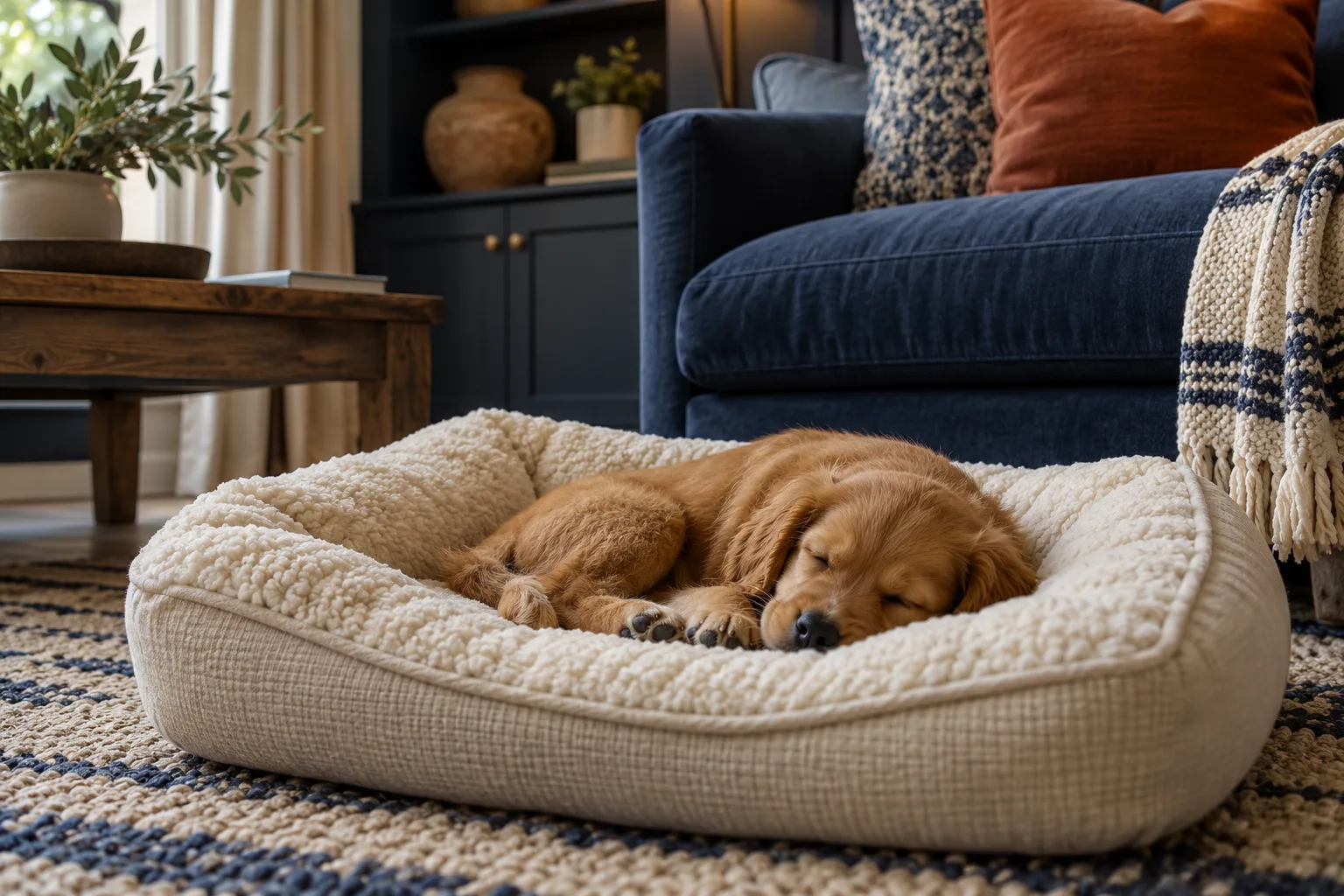
Fit practice around the puppy sleep routine, rather than keeping your puppy awake to finish a list. If you are caring for a 12 week old puppy, age alone is not a reason to increase the crowd or noise level.
Keep a tiny log you will actually use
Use three columns: experience, response, next attempt. For example: "visitor seated across room; sniffed and rested beside me; repeat same setup." If the puppy hid, the next attempt should involve more distance or less activity, not a longer visit.
A handwritten log works well for one caregiver. The difficult part is fitting those notes around sleep, meals and another person's shift. Puptoday's plan generator gives you a routine to organize the day around; keep your observation notes alongside it rather than treating a schedule as a demand to push through fear.
Tomorrow, repeat one comfortable experience
Choose one easy thing your puppy handled well today. Repeat it with the same distance and a clear exit. If today was difficult, make tomorrow quieter instead of trying to catch up.
Frequently asked questions
Gentle, positive introductions should begin early, including at home when your puppy arrives. The first three months are especially important, according to AVSAB, but you should continue comfortable learning after that. Ask your vet which settings and dog contacts are suitable for your puppy.
A quiet, supervised introduction to a person can be part of early socialization. Let your puppy choose distance and avoid passing them from person to person. Ask your vet about any health precautions for your individual puppy and environment.
It is a popular adjustment shorthand about the first days, weeks and months in a new home, not a reliable timetable for an individual puppy. Do not use it to predict when fear will disappear or to delay appropriate help. Watch your puppy's actual comfort and behavior instead.
There is no single hardest month for every puppy or household. The first days home, disrupted sleep and changing behavior can all feel difficult. Make introductions smaller during a stressful stretch and protect rest. If you feel overwhelmed, the puppy blues guide helps you simplify the day.
No. Continue gradual, rewarding introductions at a level your puppy can comfortably handle. Do not compensate for missed experiences with crowds or forced greetings. If fear is persistent or worsening, ask a certified behavior professional for an individual plan.
Get tomorrow's plan, adapted to how today went
A printed schedule can't see that she peed at 7:10 today; the Coach plan rewrites tomorrow from today's log. Start with the free schedule for your puppy.
Build my puppy's plan- Free starting schedule
- Reward-based practice
- Fits your puppy's day
Share article
About the author
More articles
Training that sticks · 12 min
Leash Training a Puppy: 6 Steps From the First Week Home
Leash training a puppy in short indoor sessions from 8 weeks: the gear to pick, where the reward goes, the stop-and-go rule for pulling, and fixes for a puppy who sits, bites the leash or lunges.
Training that sticks · 12 min
Puppy Training Tips: 9 That Work in 3-Minute Sessions
Nine reward-based puppy training tips in order of payoff: 3 minute sessions, a one-second marker, fading the lure, better treats for harder places, and what to teach from 8 to 20 weeks.
Training that sticks · 12 min
German Shepherd Training: Puppy Routine, Week 8 to 16
German shepherd training for a puppy: the week-by-week routine from 8 to 16 weeks, crate size for a growing shepherd, and how to handle mouthing, herding nips and alarm barking.
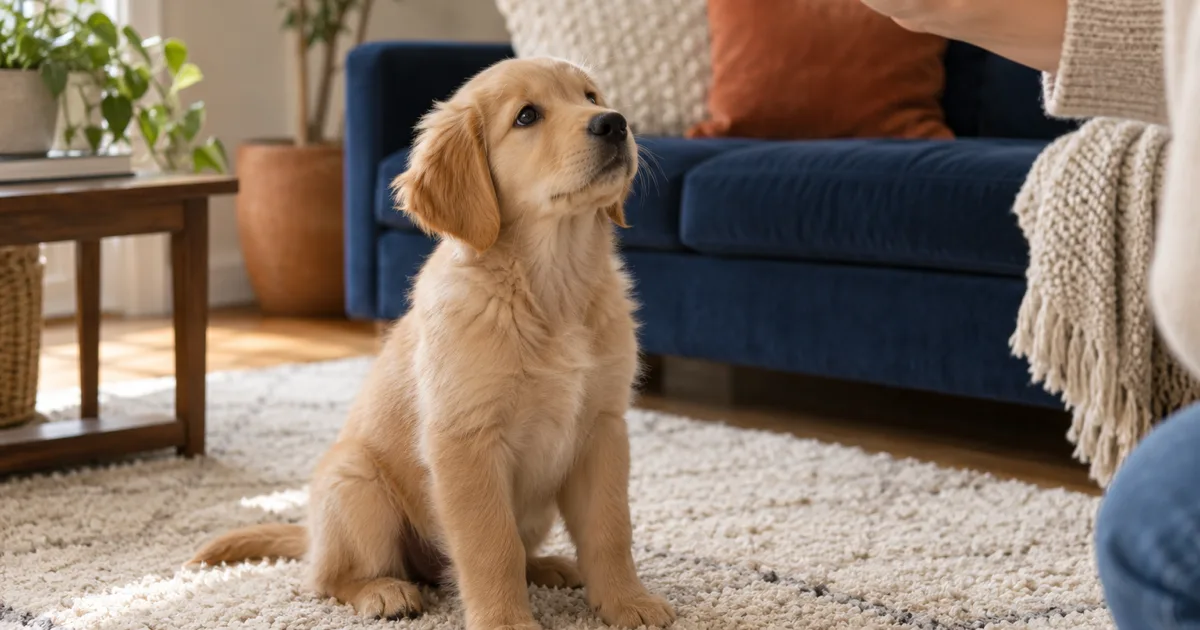
Puppy SOS: biting, crying, blues · 12 min
How to Stop Puppy Barking: Find the Reason, Reward the Quiet
How to stop puppy barking without shouting or collars: read what the bark is asking for, meet the need before it starts, and reward one second of quiet, then three, then ten.
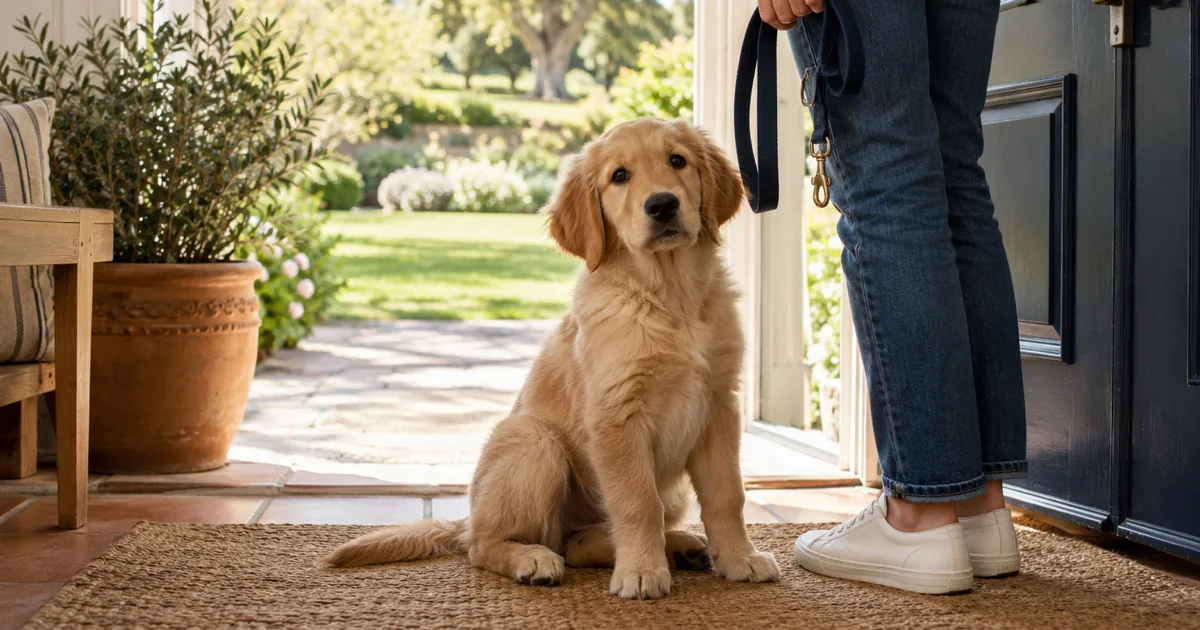
Potty, crate and sleep · 10 min
How Long Does It Take to Potty Train a Puppy?
Potty training takes steady support, not a weekend deadline. Learn which milestones matter, why timelines vary and how to spot the next useful change.
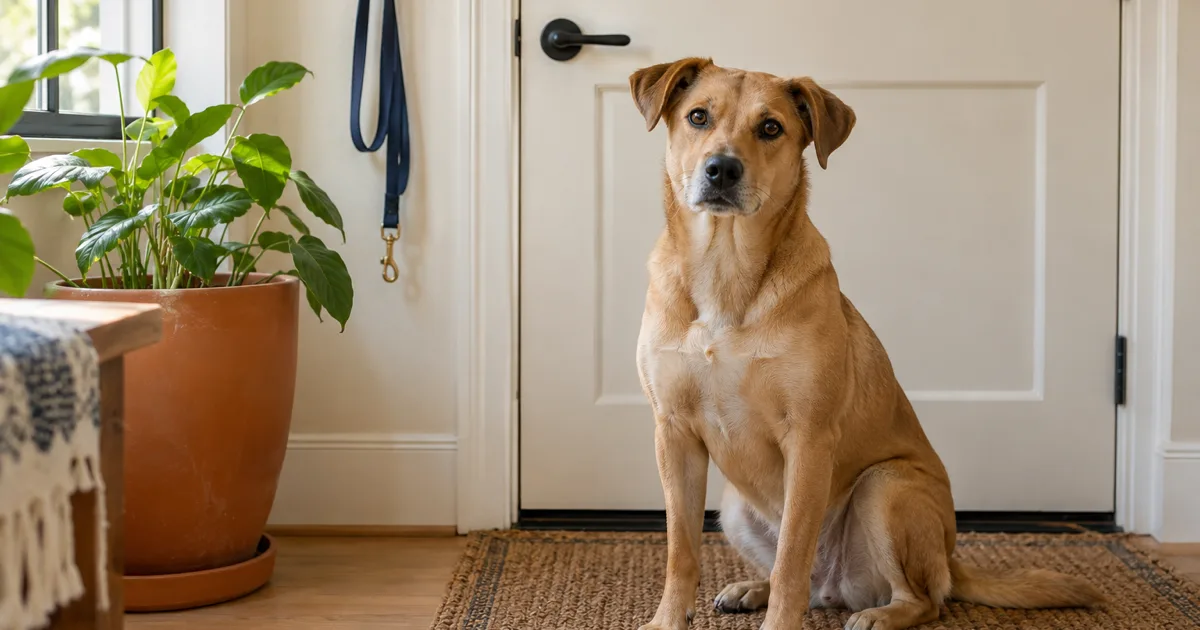
Potty, crate and sleep · 14 min
How to House Train a Dog: Puppy or Adult, Step by Step
How to house train a dog of any age: one outdoor spot, a schedule, a reward the second they finish, and supervision in between. What changes for puppies, adult rescues and dogs who start having accidents again.