
Puppy Sleep Schedule: Naps, Bedtime and Night Checks by Age
In this article
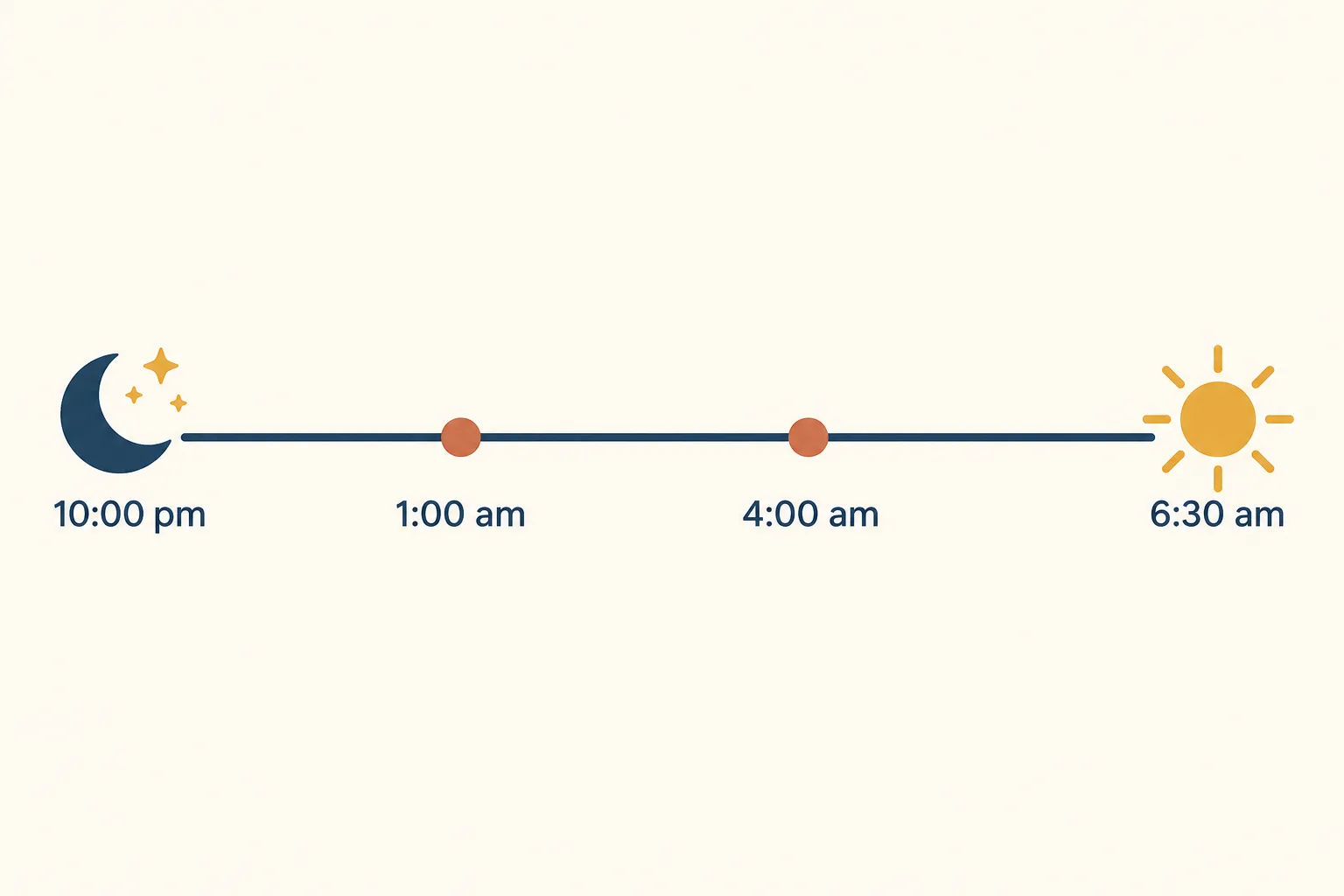
A good puppy sleep schedule is mostly naps: young puppies sleep 18 to 20 hours a day, so plan short awake blocks of play, potty and food between long rests, then one quiet night with a few planned potty checks. At 10 weeks that looks like five daytime naps and a night from 10 pm to 6:30 am with checks at 1:00 and 4:00.
The hard part is not knowing the number. It is protecting it in a real home, with meetings, visitors and a puppy who wakes early and then turns into a landshark at 7 pm. This guide gives you the sleep numbers by age, a full sample day, and what to do when the day falls apart.
How much should a puppy sleep?
Most puppies sleep 18 to 20 hours across a full day and night. The AKC puppy sleep guide gives the same broad range. Treat it as a reason to protect rest, not a stopwatch your puppy has to match.
The counterintuitive part: a puppy who is "bouncing off the walls" in the evening is usually short on sleep, not short on exercise. Overtired puppies bite more, settle worse and cry more at night. Adding another energetic game to tire them out tends to make it worse.
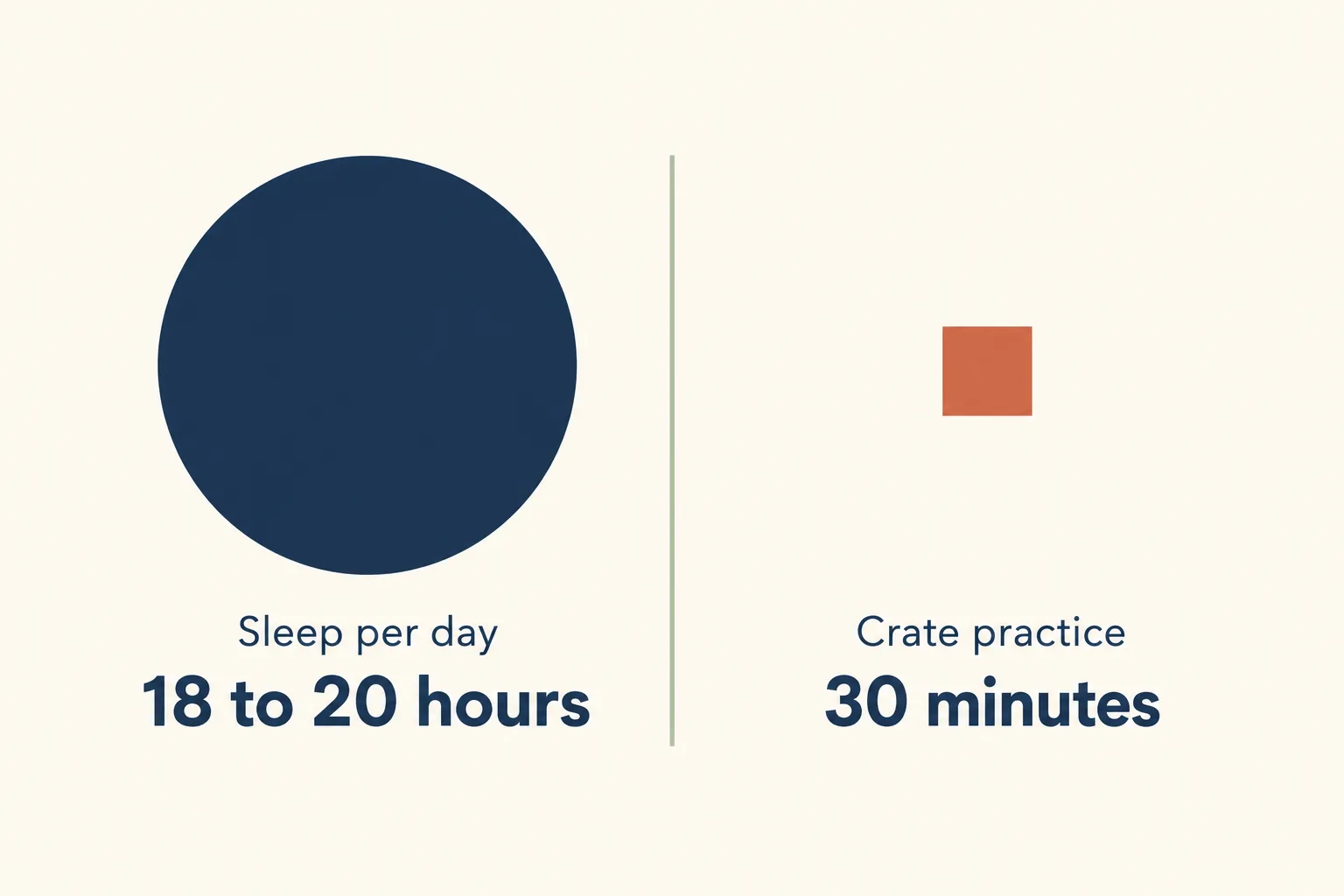
One more thing that trips people up: 18 to 20 hours of sleep is not 18 to 20 hours behind a closed crate door. Sleep happens in many places: a pen, a bed in a quiet corner, your lap. The crate practice number below is a separate, much smaller training example.
Puppy sleep schedule by age
Each row comes from the same per-week rules that power our age schedules and generator. The four columns do four different jobs, so read them separately.
| Age | Awake potty reminder | Awake crate practice | Sleep per day | Planned night stretch |
|---|---|---|---|---|
| 8 weeks | 90 minutes | 20 minutes, only while comfortable | 18 to 20 hours | 150 minutes |
| 9 weeks | 105 minutes | 25 minutes, only while comfortable | 18 to 20 hours | 165 minutes |
| 10 weeks | 120 minutes | 30 minutes, only while comfortable | 18 to 20 hours | 180 minutes |
| 11 weeks | 135 minutes | 35 minutes, only while comfortable | 18 to 20 hours | 195 minutes |
| 12 weeks | 150 minutes | 40 minutes, only while comfortable | 18 to 20 hours | 210 minutes |
| 13 weeks | 165 minutes | 45 minutes, only while comfortable | 18 to 20 hours | 225 minutes |
| 14 weeks | 180 minutes | 50 minutes, only while comfortable | 18 to 20 hours | 240 minutes |
| 15 weeks | 195 minutes | 55 minutes, only while comfortable | 18 to 20 hours | 240 minutes |
| 16 weeks | 210 minutes | 60 minutes, only while comfortable | 18 to 20 hours | 240 minutes |
- Awake potty reminder is a prompt to offer a trip while your puppy is awake. Go sooner if they signal.
- Awake crate practice is a comfortable training exercise, not a nap length.
- Planned night stretch is our planning calculation for the gap between night checks. It is not a prediction about your puppy's bladder.
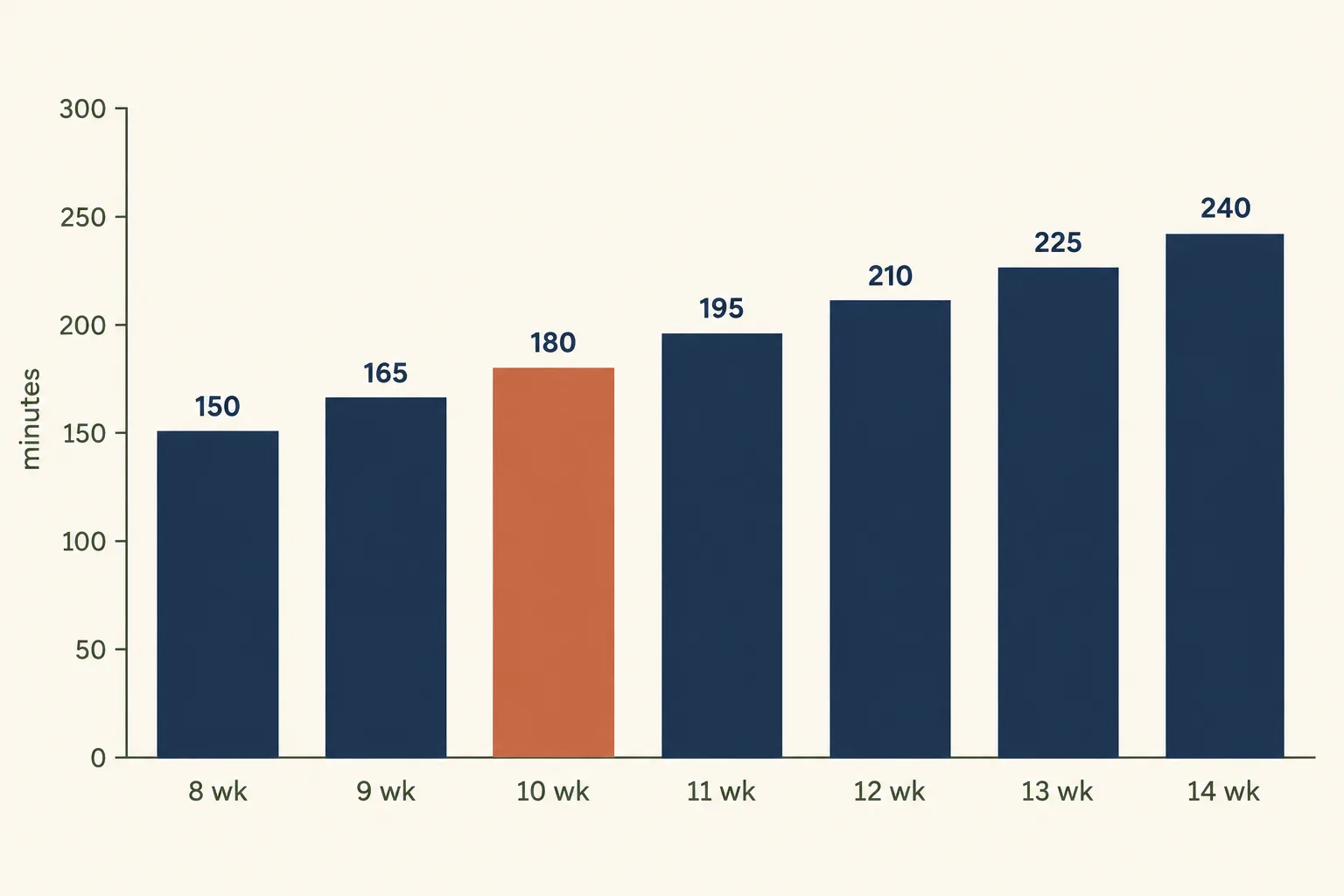
The night stretch grows 15 minutes a week and levels off at 240 minutes from 14 weeks. Toy puppies get shorter reminders in our generator. Large puppies use the same timings as medium, because size is not a reason to stretch.
A sample 10 week old puppy sleep schedule
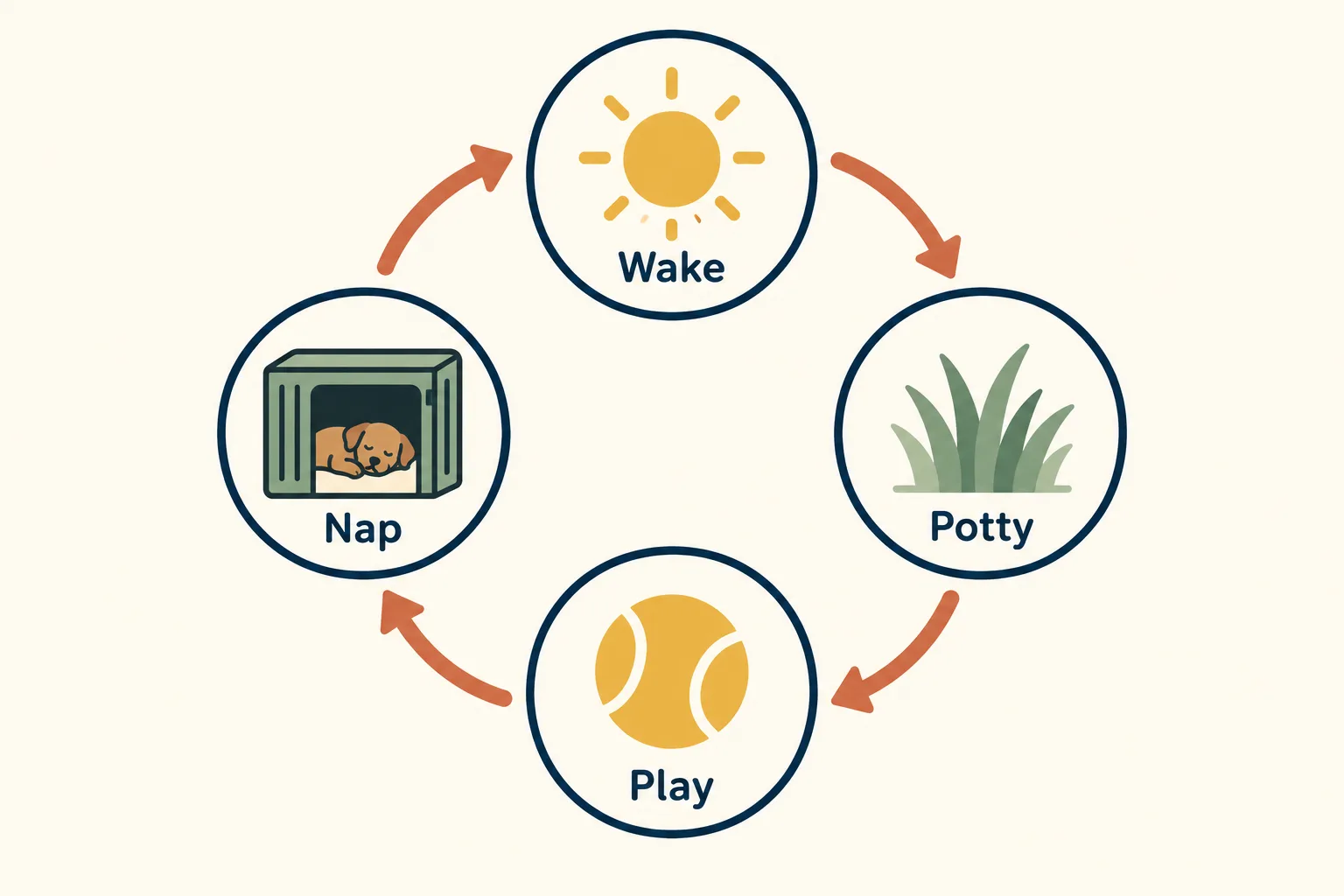
Here is the full example day for a 10 week old puppy, with the sleep blocks pulled out so you can see how much of the day is rest. Every nap ends with a potty trip.
| Time | Block | What happens |
|---|---|---|
| 6:30 am to 8:00 am | Awake | Potty, breakfast, potty, 4 minutes of training, a little play, potty |
| 8:00 am to 10:00 am | Nap | Crate nap, settle nearby, door open until comfortable |
| 10:00 am to 10:30 am | Awake | Potty, gentle play, potty |
| 10:30 am to 12:00 pm | Nap | Quiet rest or a crate nap |
| 12:00 pm to 1:10 pm | Awake | Potty, lunch, potty, a little play, potty |
| 1:10 pm to 3:00 pm | Nap | Afternoon crate nap or quiet rest |
| 3:00 pm to 3:50 pm | Awake | Potty, gentle play, potty |
| 3:50 pm to 6:00 pm | Nap | Another quiet nap |
| 6:00 pm to 7:10 pm | Awake | Potty, dinner, potty, 4 minutes of training, calm play, potty |
| 7:10 pm to 9:00 pm | Rest | Evening rest near you |
| 9:00 pm to 10:00 pm | Awake | Potty, then a quiet cuddle |
| 10:00 pm | Bed | Last potty, then bedtime beside your bed |
| 1:00 am | Night check | Quiet potty on a lead, back to bed with no play |
| 4:00 am | Night check | Quiet potty on a lead, back to bed with no play |
That is about 9 hours of daytime naps plus about 8 hours overnight. The 10 week old puppy schedule explains each block, and the schedule by age shows how the same day shifts from 8 to 16 weeks.
Build naps around the events in your home
Start with the parts of the day that already have an owner: breakfast, the first work meeting, lunch, the evening meal. Put the puppy's naps beside them, then decide who handles the potty trip when each nap ends.
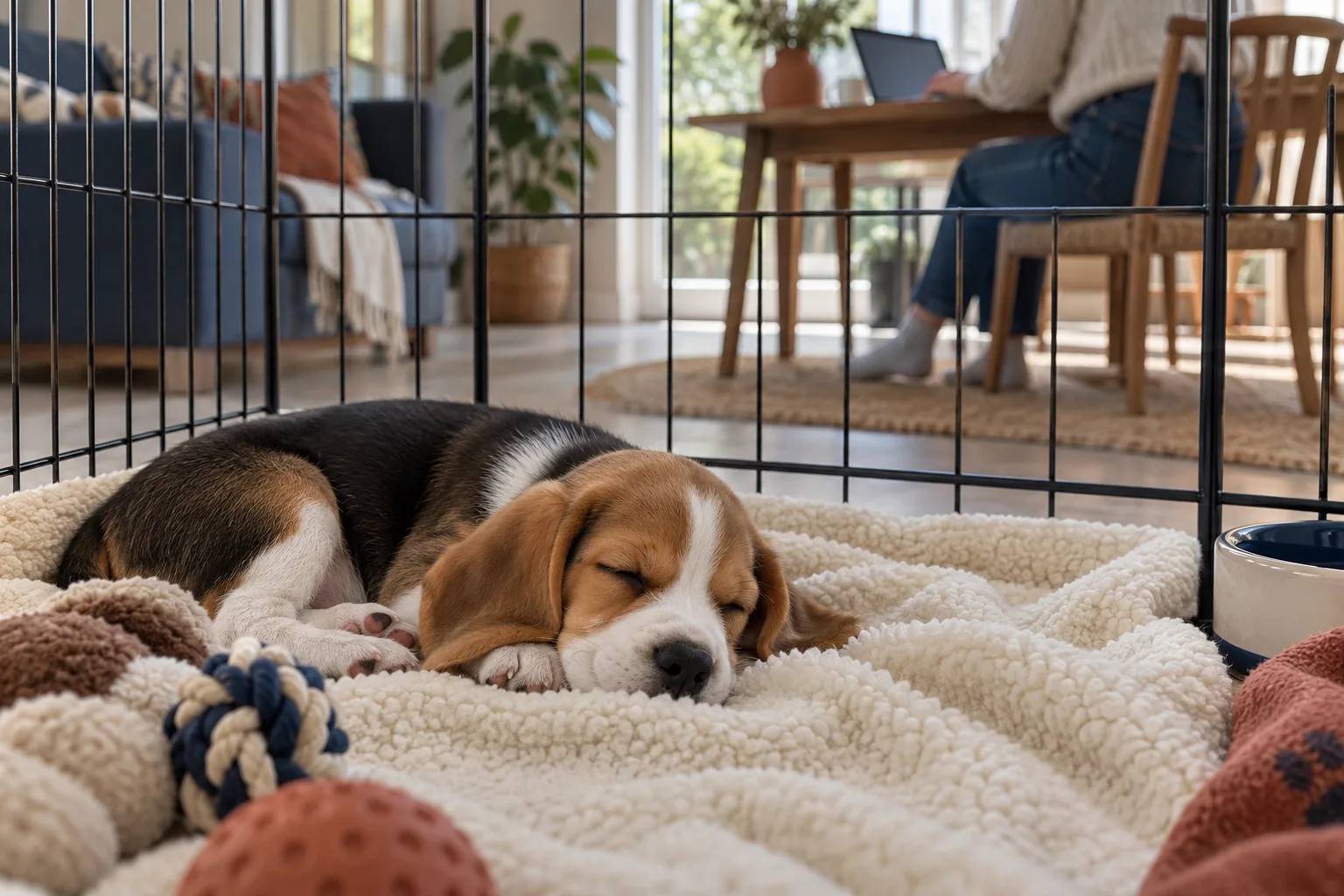
If a nap ends early, take care of the puppy first and update the plan afterward. If your puppy is sleeping comfortably, do not wake them to start a planned game. Write an alternative beside each nap: another safe resting spot, a caregiver swap, or a quiet chew while you wait. Then a missed nap does not turn into improvised long confinement.
A comfortable crate can be one resting option, but introduce it gradually during the day before you rely on a closed door. The AKC crate training steps explain why small, positive steps matter.
What time should a puppy go to bed?
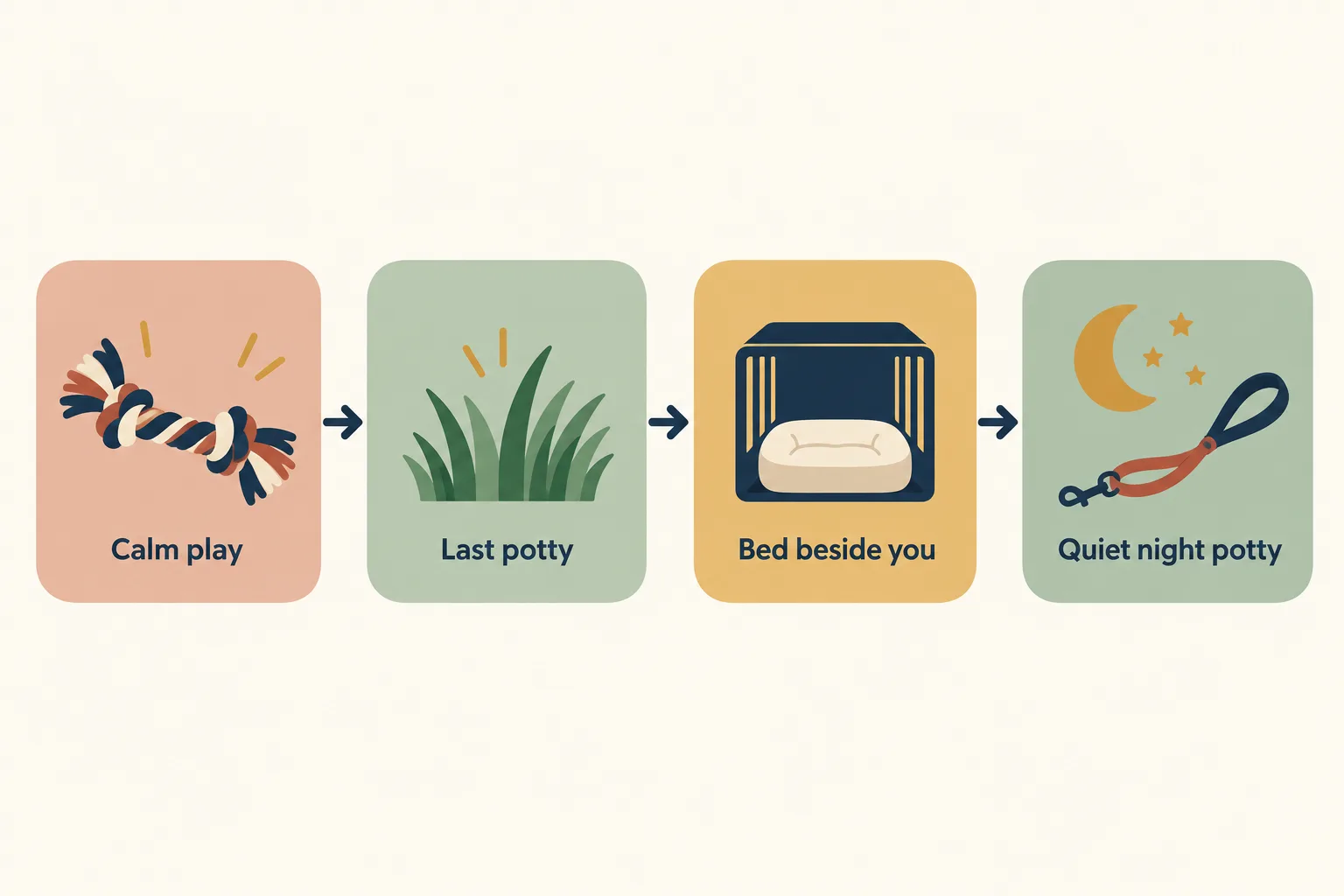
Pick a bedtime your household can repeat, often around 10 pm, and keep the same short sequence every night: calm play, last potty, then bed beside you. The exact clock time matters less than the order and the fact that it repeats.
How to set up a puppy bedtime routine
- Wind down for an hour
Swap active games for calm play, a chew or a cuddle from about 9 pm. Keep the room quiet and the lights low.
- Last potty trip
Take the prepared route to the potty spot at bedtime. Stay with your puppy and reward when they finish.
- Bed beside you
Put the crate or bed next to where the responsible adult sleeps, so you can hear and reach your puppy without getting fully up.
- Quiet night checks
At each planned check, or sooner if your puppy wakes and signals, go out on a lead, reward, and go straight back to bed with no play.
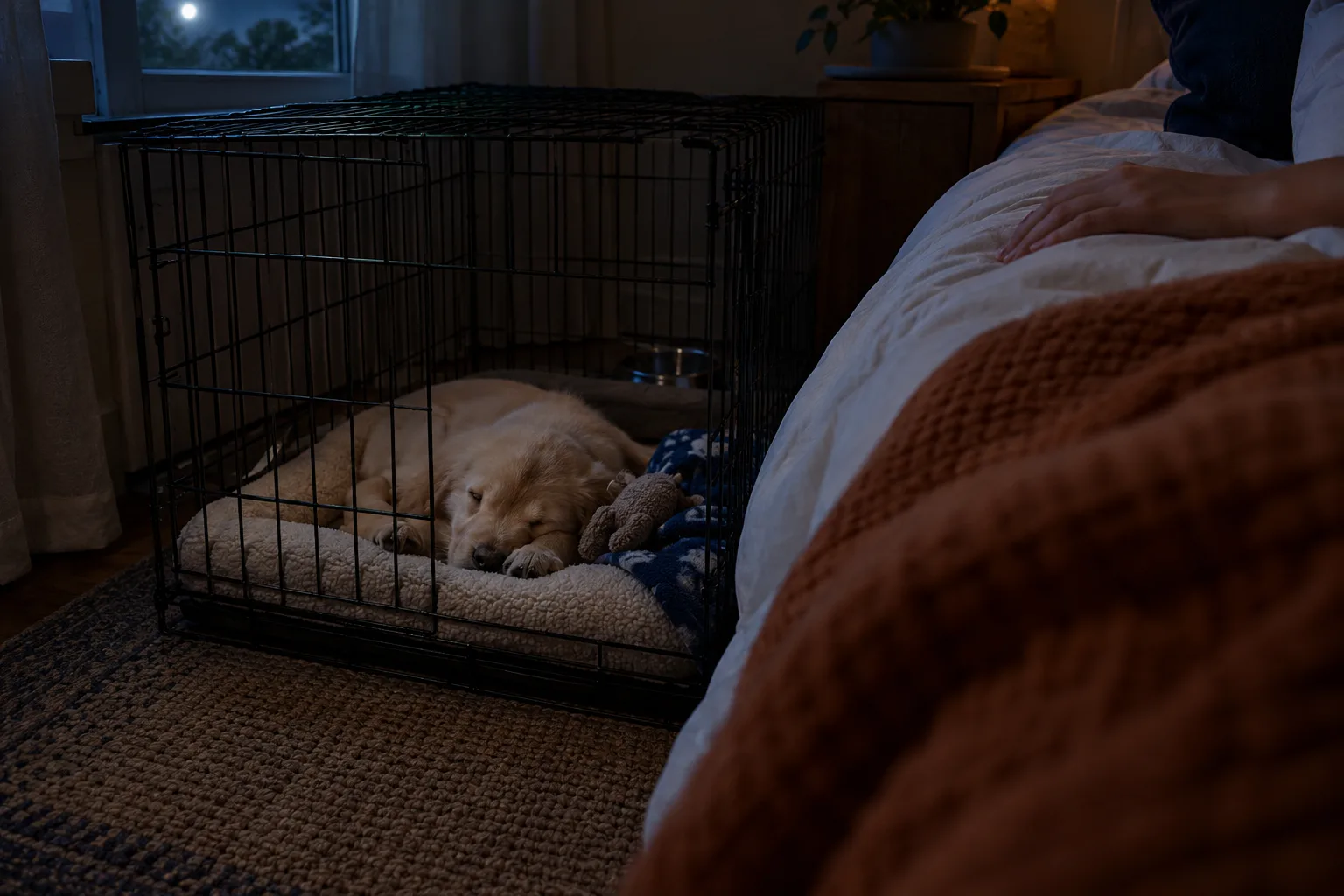
Before lights out, write three things where the night person can see them: the last potty result, the next planned check, and who is on duty. If two adults share care, say the handoff out loud. A plan that depends on nobody waking for an unrealistic stretch needs more support, not a more determined puppy.
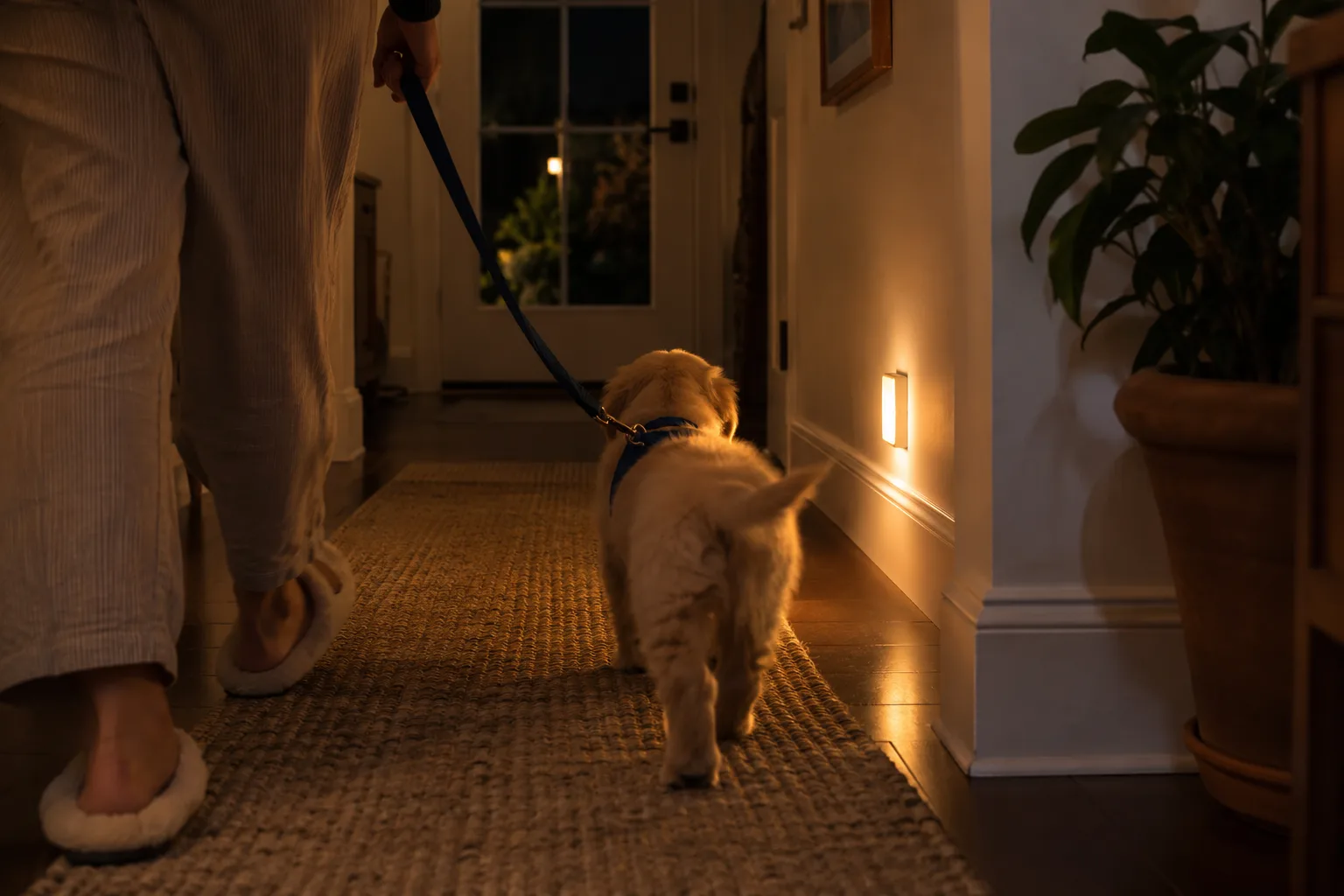
If your puppy wakes and cries after bedtime, our guide to a puppy crying in the crate at night walks through a calm response.
When the day turns into zoomies and missed naps
If the afternoon no longer looks like the plan, stop trying to catch up minute by minute. Check three things: the next potty trip, a resting spot, and who is supervising. Then make the room calmer rather than adding a game to force sleep.
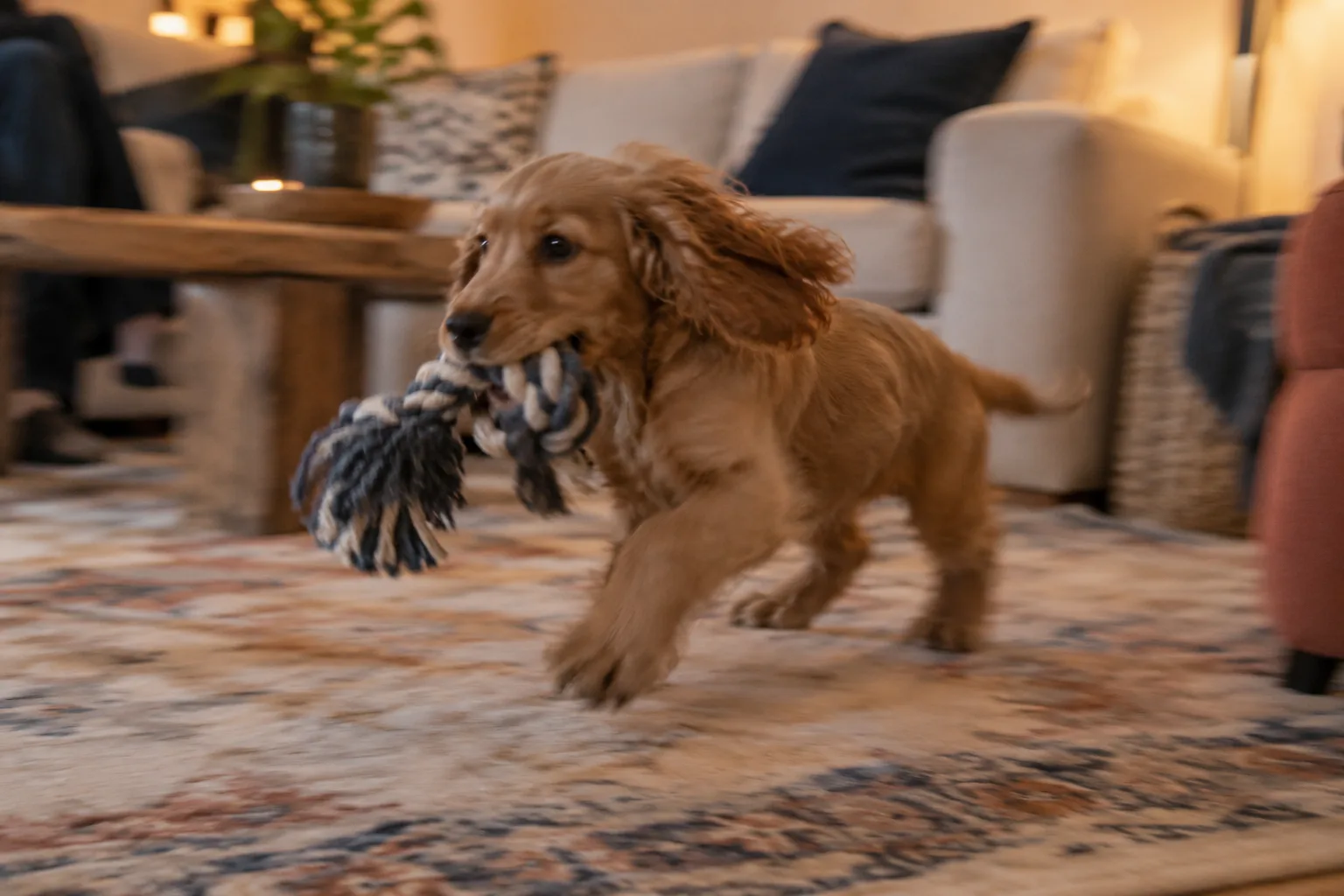
Reward a relaxed choice when you see it, without calling your puppy over to do it again. The AVSAB position statements support this kind of reward-based handling. For the evening landshark phase, our puppy biting guide covers safe toy play and when to call it a night.
| What you see | Likely reason | What to try |
|---|---|---|
| Wild biting and zoomies around 7 pm | Missed or short afternoon nap | Quiet room, a chew, then an early rest |
| Wakes at 5 am every day | Night gap longer than the puppy can manage | An earlier last potty or a check before the wake-up |
| Will not settle in the crate | Crate still new or too exciting nearby | Rest in a pen or bed while crate practice stays short |
| Sleeps much more than usual and seems flat | Could be a health change | Call your vet today |
Here is where a paper plan runs out. You can fix one day by hand, but every early wake-up and missed nap shifts tomorrow, and rewriting the whole day each night is the job most tired owners stop doing by week two.
Common puppy sleep mistakes
- Using 18 to 20 hours as a crate allowance. Sleep and closed-door crate time are different numbers.
- Keeping the puppy awake to guarantee a quiet night. It usually backfires with an overtired, bitey evening.
- Assuming the nap and your meeting will line up. Name a backup caregiver or resting spot.
- Copying an older puppy's night stretch. A dog age conversion like our dog age calculator gives context later in life, but it cannot set a puppy's nap or night limits.
- Ignoring a sudden change in alertness because the schedule says it is nap time.
The short version
Plan your puppy's day as naps with short awake blocks between them, not the other way round. Expect 18 to 20 hours of sleep, keep crate practice separate and short, repeat the same bedtime sequence, and use planned night checks that stretch about 15 minutes a week. When a nap slips, fix the next hour, not the whole day. For the potty side of every wake-up, see how to potty train a puppy.
Our free generator builds this day for your puppy's age in about a minute, then reshapes tomorrow around the naps that actually happened. Get tomorrow's plan, adapted to how today went.
Frequently asked questions
Most puppies sleep 18 to 20 hours across a day and night. Plan it as several daytime naps with short awake blocks for potty, food and play, plus a night with a few quiet potty checks.
Aim for a routine you can repeat: quieter activity, a last potty trip, then the prepared sleeping spot. The order matters more than the exact clock time. Adjust it if it keeps leaving care gaps or an upset puppy.
No. The schedule is an example, not an order to interrupt comfortable sleep. Have someone ready for the potty trip when your puppy wakes, then shift the rest of the day from there.
A pen is a good resting option, not a replacement for care. Your puppy still needs potty trips, meals and company during the workday. Write down who covers each break instead of assuming the puppy will sleep through it.
No. Sleep across the day is different from time behind a closed door. Use comfortable resting spots, keep crate practice short, and do not add up the sleep hours as a confinement plan.
Take care of the puppy first, including a potty trip, then move the next part of the day. Note the actual wake time for the next caregiver. If unusual waking comes with a health concern, call your vet.
Get tomorrow's plan, adapted to how today went
A printed schedule can't see that she peed at 7:10 today; the Coach plan rewrites tomorrow from today's log. Start with the free schedule for your puppy.
Build my puppy's plan- Free starting schedule
- Reward-based practice
- Fits your puppy's day
Share article
About the author
More articles
Potty, crate and sleep · 10 min
How Long Does It Take to Potty Train a Puppy?
Potty training takes steady support, not a weekend deadline. Learn which milestones matter, why timelines vary and how to spot the next useful change.
Potty, crate and sleep · 14 min
How to House Train a Dog: Puppy or Adult, Step by Step
How to house train a dog of any age: one outdoor spot, a schedule, a reward the second they finish, and supervision in between. What changes for puppies, adult rescues and dogs who start having accidents again.
Potty, crate and sleep · 13 min
Crate Training a Puppy: Calm Steps and a Schedule by Age
Crate training a puppy starts with an open door and seconds, not hours. Open-door first steps, a crate training schedule from 8 to 16 weeks, playpen vs crate, and when to reset.
Potty, crate and sleep · 12 min
10 Week Old Puppy Schedule: Potty, Crate and Sleep Times
A full 10 week old puppy schedule, hour by hour: potty every 2 hours awake, two quiet night trips, three meals and planned naps, plus how 10 weeks compares with 9 and 12.
Potty, crate and sleep · 11 min
12 Week Old Puppy Schedule: Potty, Crate and Sleep Times
A full 12 week old (3 month old) puppy schedule: potty about every 2.5 hours awake, three meals, night trips at 1:30 and 5:00 am, naps and crate practice, compared with 10 and 14 weeks.
Potty, crate and sleep · 12 min
8 Week Old Puppy Schedule: Potty, Crate and Sleep Times
Your 8 week old puppy's first routine, by the hour: potty every 90 minutes awake, three quiet night trips, 20 minute crate practice, and how to keep it going when you are tired.