
Accidents inside
The rug is wet 20 minutes after you came back in. Add a potty trip after meals and play.
How to potty train a puppyTell us your puppy's age, size and home. Get a potty, crate and sleep schedule for today in one minute. Free, no card.
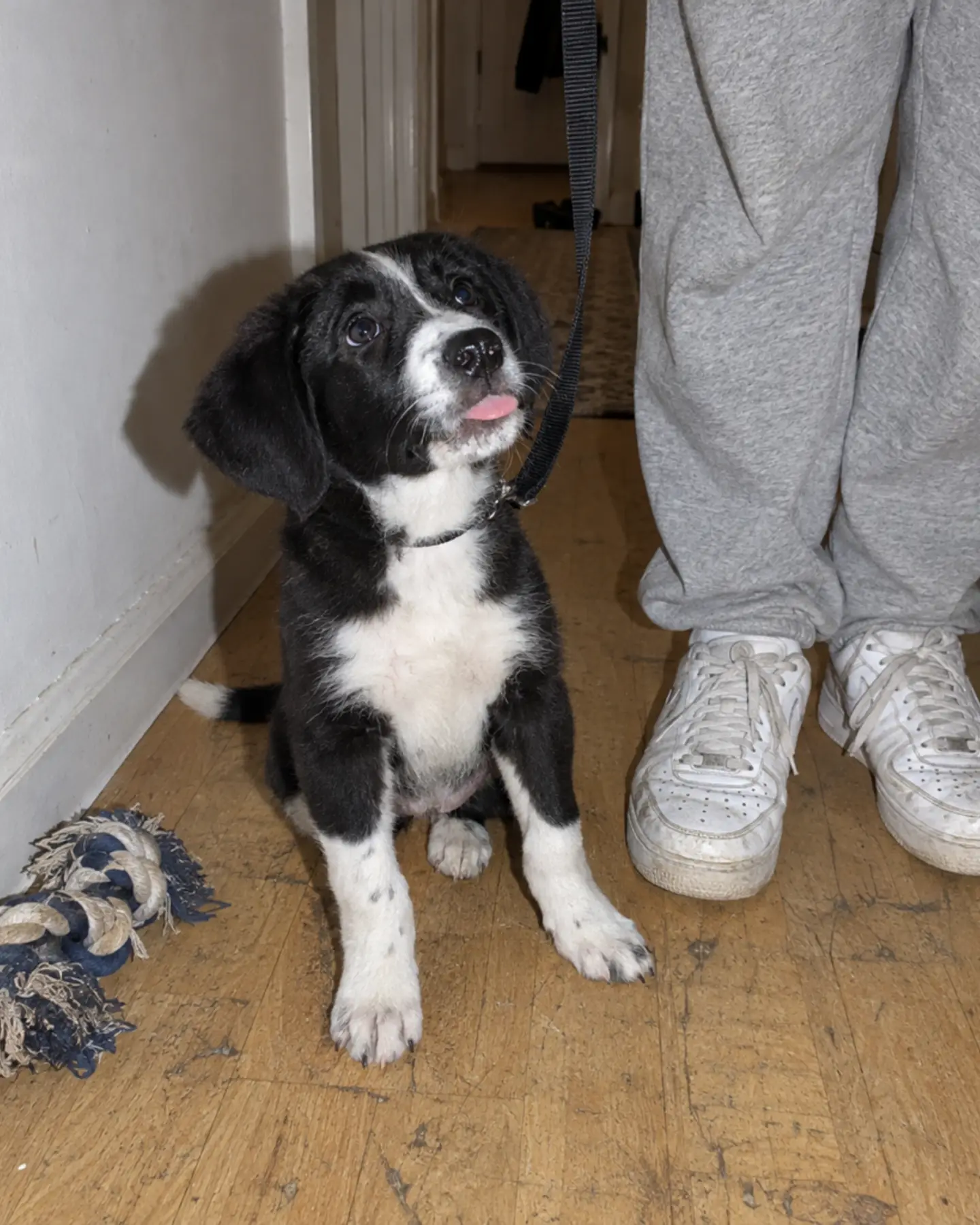
Build a puppy potty training schedule around age, size and home. The example below starts at 8 weeks; change the details to make today's plan yours.
8 weeks · medium · apartment · 4 to 6 hours away
While awake, offer potty at least every 90 minutes, sooner after activity or if your puppy signals. Rule of thumb, not a target.
Leave room for 18 to 20 hours of sleep across the day and night. If your puppy wakes earlier, take them out then.
Use praise and rewards. Never withhold water to stretch potty times.
Apartment plan: leave 5 minutes before the potty time (elevator/stairs). A safe pen with a potty pad is an option when you cannot get outside in time.
Plan a midday potty break (sitter, neighbor, dog walker) or a pen with a potty pad. Arrange enough breaks for the full time you are away; a crate is not a substitute for a potty break.
Pick the problem in front of you today and take one small next step.
The rug is wet 20 minutes after you came back in. Add a potty trip after meals and play.
How to potty train a puppyA crate beside your bed and a quiet potty alarm give the night a predictable rhythm.
Crate crying at nightBiting often means a chew, a calmer game or a nap is overdue. Short play and rest blocks help.
How to stop puppy bitingA crate is not a substitute for a potty break. Plan a sitter or a safe pen for longer absences.
Crate training, step by stepHow long can a puppy hold its pee? A daytime rule of thumb is about one hour for each month of age plus one, and less when they are active. Use these as starting points, never as targets to make a puppy wait, then follow the puppy training schedule by age for your next week.
| Age | Potty breaks while awake | Longest night stretch | Meals/day | Sleep per day | Training per session |
|---|---|---|---|---|---|
| 8 weeks: daily routine | 1 to 2 hours | 2 to 3 hours | 3 (4 for toy breeds) | 18 to 20 hours | 5 minutes |
| 10 weeks: daily routine | About 2 hours | 3 to 4 hours | 3 (4 for toy breeds) | 18 to 20 hours | 5 minutes |
| 12 weeks: daily routine | 2 to 3 hours | 3 to 4 hours | 3 | 16 to 20 hours | 5 to 10 minutes |
| 16 weeks | 3 to 4 hours | Usually through the night | 3 | 15 to 18 hours | 5 to 10 minutes |
| 6 months | 4 to 6 hours | Usually through the night | 2 to 3 | 14 to 18 hours | 5 to 10 minutes |
Offer potty after waking, after play, and 15 to 30 minutes after meals, whatever the clock says. Use three meals under six months; four small meals for toy breeds under 12 weeks.
The schedule above is free. The paid Coach plan adds a daily log, video checks, chat and a plan rewritten each night. See what each plan includes. Reward-based guidance only, with no medical or medication advice.
In the Coach plan, potty, crate and sleep times are rewritten each night from your logs.
Notice the patterns between meals, play and accidents.
Did the sit hold for 3 seconds? Was the leash slack, the treat on time? The coach checks a 20-second clip. Optional, with your phone propped up.
Chat about crate crying, puppy blues or regression with your dog's history already there.
Match the help to the job. The free schedule handles planning; Coach plan contents add ongoing support. Trainers and classes vary, so ask about methods, qualifications and follow-up before choosing.
| Capability | Puptoday free schedule | Coach plan | Private trainer | Group class | Free articles and videos |
|---|---|---|---|---|---|
| Adapts daily | Partial: rebuild with new details | Yes: nightly changes from logs | Partial: depends on follow-up | Partial: between-class homework | No: you adapt the advice |
| Knows your puppy's age | Yes: age-based starting points | Yes: age and history | Yes: ask during assessment | Partial: often grouped by age | Partial: choose an age-specific guide |
| Available at 3 am | Yes: build a schedule online | Yes: app guidance, not emergency care | Partial: only if arranged | No: scheduled class times | Yes: read or watch anytime |
| In-person handling | No | No | Yes: if booked in person | Yes: with an in-person class | No |
| Aggression help | No: seek a professional | No: seek a professional | Partial: needs a qualified specialist | No: seek an individual assessment | No: seek a professional |
For aggression or any bite on a person, work with a certified behavior professional. Online guidance cannot replace individual assessment and in-person help.
A useful routine starts with the day you actually have. Write down when your puppy wakes, when meals happen and who can offer a break while you are away. Put a potty trip after waking and another after food or active play. Keep the route to the door simple. In an apartment, have the leash ready before you need it. Our reward-based potty training steps explain how to reward the moment your puppy finishes and handle an accident calmly.
Age helps you choose a starting point, but it cannot tell you exactly when your puppy will need to go. An exciting game, a drink or an early wake-up can change the next break. Follow the week-by-week puppy routines as your puppy grows, and use the puppy-to-human age calculator to compare ages while keeping your puppy's actual weeks in focus. Watch your puppy's signals and shorten the interval when needed. Never make a puppy wait to prove the table right.
Rest belongs beside potty practice. Offer a quiet place to settle after a short game, and let a waking puppy go out before asking for another lesson. The guide to daytime naps and sleep helps you leave room for rest. For the crate itself, begin with open-door crate practice. A comfortable nap does not mean your puppy is ready for a long absence. Arrange a person to help when your workday exceeds the breaks your puppy can manage.
Keep the next change small. If nights are difficult, read the night crying and comfort guide before stretching an alarm. If play turns into grabbing sleeves, try the gentle steps for puppy biting and make space for a calmer activity. Check that the resting space fits with the crate sizing tool. Your free plan gives the day a shape; your observations decide when it needs to change. Rebuild or print it whenever that helps you and the people sharing care stay consistent.
Start with the routine, then the plan details. See Free and Coach plans.
One common version: take your puppy on a lead to the same spot and give them up to 10 minutes. If nothing happens, spend 10 minutes under close supervision or in a comfortable crate, then try again. Praise and reward within seconds of going; never use the crate as punishment.
Usually that is too long for their bladder while awake. Plan a potty break every 1 to 2 hours with a sitter or neighbor, or use a safe pen with a potty pad. Build comfortable alone time in minutes, with short returns before your puppy becomes distressed.
For an 8-week-old puppy, start with potty at 6:30, breakfast at 7:00 and potty again at 7:20. Alternate brief play and training with naps, offer lunch and dinner with potty 20 minutes later, and finish with last potty at 10:00 pm and quiet night breaks. Build your puppy’s plan above for the full timeline.
Build today's schedule →There is no fixed deadline for every puppy. Age, size, opportunities to go outside and a consistent routine all affect progress. Keep rewarding outdoor potty and supervise between breaks. A sudden potty regression needs a vet check rather than more training pressure, even if your puppy was previously reliable.
Young puppies often need a break every 1 to 2 hours while awake, and sooner after waking, eating or active play. Age-based timings are starting points, not a reason to delay a needed trip. Nighttime patterns vary too. Follow your puppy’s signals and arrange help for absences that exceed their comfortable routine.
No, you can build and print the free schedule without an email address. Your generator answers stay in this browser and are not submitted to our server. Choosing to explore a Coach plan is a separate step with its own explanation of what information is used.
It is a practical starting point, not a prediction or a guarantee. The schedule applies rules of thumb to age, size, home and hours away. Watch your puppy and offer breaks sooner after activity or whenever they signal. Rebuild the plan when those details change, and seek a vet’s advice for sudden changes.
No, Puptoday does not replace an individual assessment or in-person handling. The free schedule gives everyday potty, crate and rest a structure. A qualified reward-based trainer can observe your puppy and household directly. Aggression or any bite on a person needs a certified behavior professional, not an app-based routine.
Compare apps, trainers and classesYes, Coach plans can be canceled at any time with one-tap cancellation through the billing provider. Plans use monthly or annual billing, never weekly billing. Review the cancellation and refund terms before any purchase. The free daily schedule does not require a Coach subscription.
The daily schedule is free; see plans for the separate Coach offering. You can build today’s routine and print it without a card or an email address. Logs, video checks, chat and nightly adjustments are Coach plan contents, rather than features of this free generator.
Blood in urine or stool, straining, vomiting, diarrhea, a sudden potty regression or lethargy: call your vet today. It is not a training problem. Any bite that breaks skin on a person, or aggression, needs a certified behavior professional.
From the blog
Leash training a puppy in short indoor sessions from 8 weeks: the gear to pick, where the reward goes, the stop-and-go rule for pulling, and fixes for...
How to stop puppy barking without shouting or collars: read what the bark is asking for, meet the need before it starts, and reward one second of quie...
Potty training takes steady support, not a weekend deadline. Learn which milestones matter, why timelines vary and how to spot the next useful change.
Keep reading in all puppy training articles, or try the free dog age calculator, puppy weight calculator and crate size calculator.