
Leash Training a Puppy: 6 Steps From the First Week Home
In this article
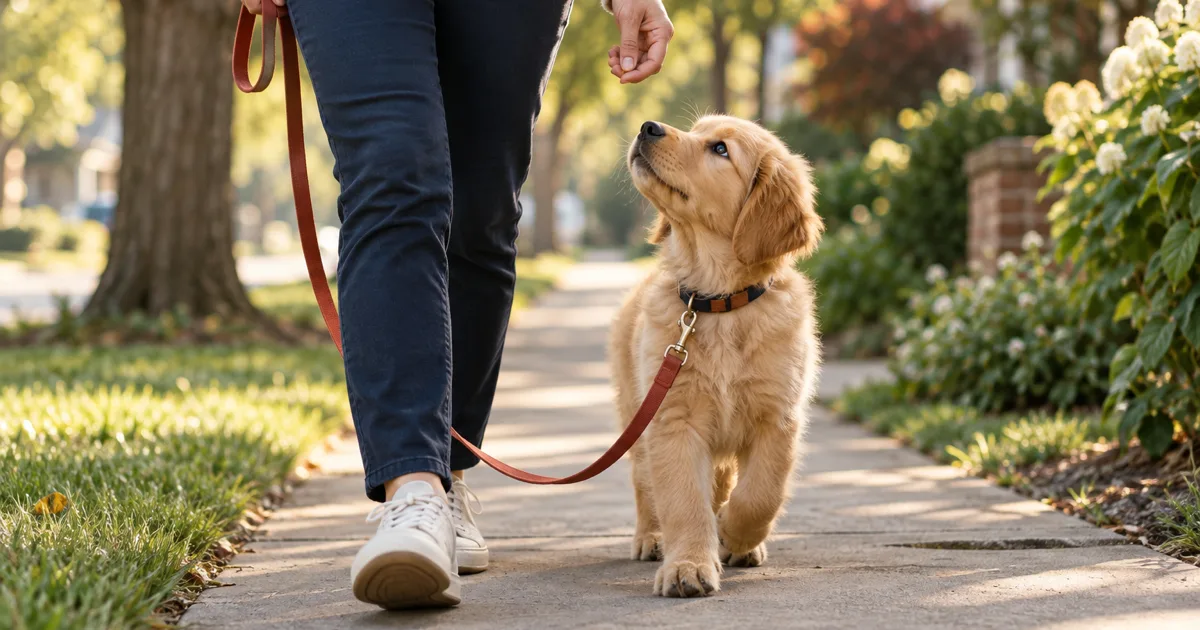
Leash training a puppy starts indoors at 8 to 10 weeks, with a light leash, a pocket of tiny treats and sessions of 3 to 5 minutes. The whole method fits in one sentence: pay your puppy for standing next to your leg, and let a tight leash stop the walk.
Most puppies pull for one reason. Pulling works. Every time the leash goes tight and you follow, your puppy learns that a tight leash gets them to the grass faster. You do not fix that with a stronger grip or new gear. You fix it by making the spot beside your leg the best place to be, and by making a tight leash the one thing that never gets them anywhere.
At what age should you start leash training a puppy?
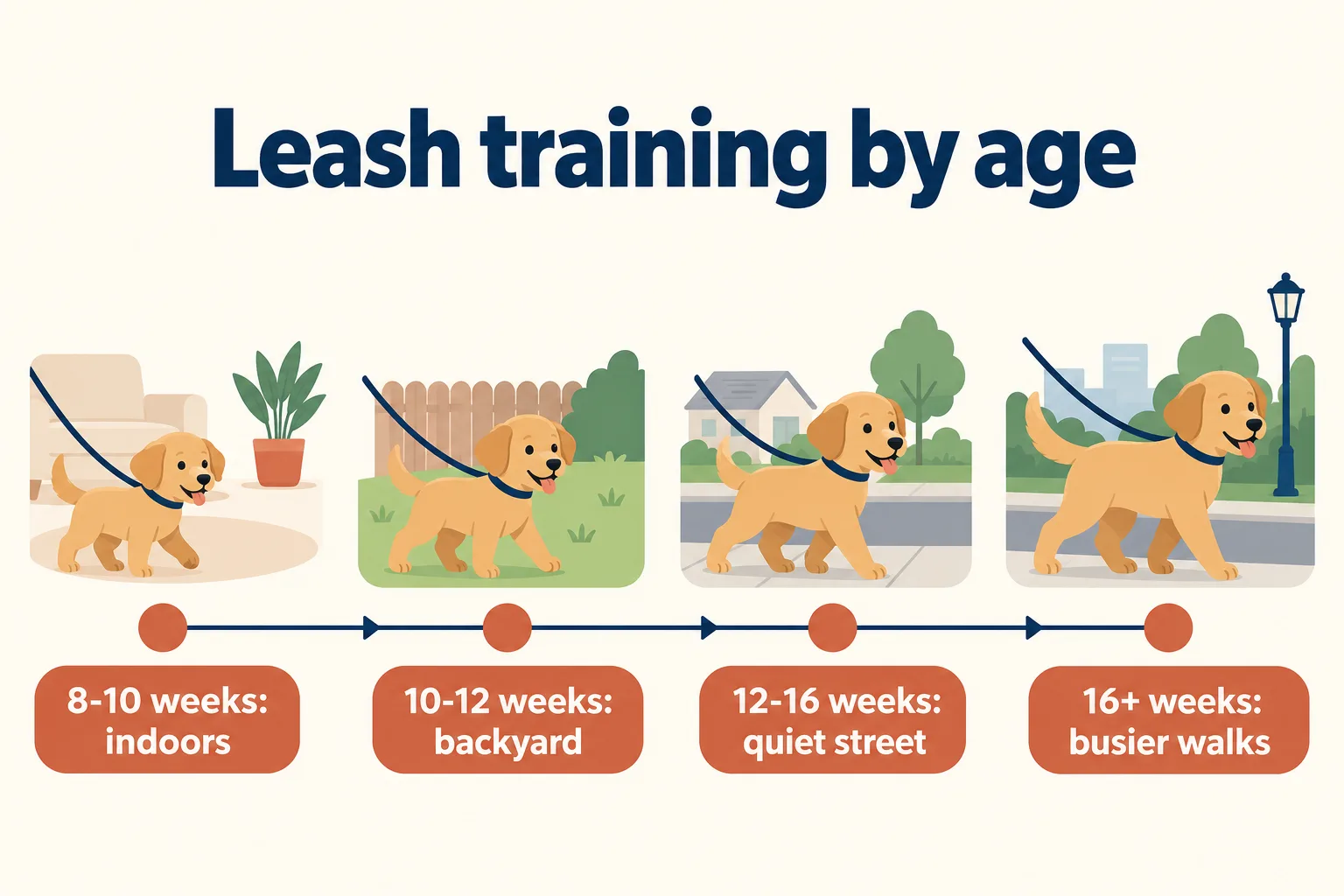
Start the day your puppy comes home, usually around 8 weeks. At that age, leash training means wearing a collar or harness, getting used to a leash trailing behind them, and following you a few steps in the kitchen for a treat. Street walks come later, once your vet says your puppy's vaccinations allow it.
Early does not mean long. A 9 week old puppy learns more from three 3 minute sessions than from one 15 minute walk. The table below is a rule of thumb for where to practice and for how long. Move on when your puppy finds the current place easy, not when the calendar says so.
| Age | Where to practice | Session length | Goal for the week |
|---|---|---|---|
| 8 to 10 weeks | Kitchen, hallway, living room | 3 minutes | Wears gear calmly, follows you a few steps |
| 10 to 12 weeks | Backyard or a quiet patio | 5 minutes | Comes back to your side when the leash goes tight |
| 12 to 16 weeks | A quiet street at a quiet hour | 5 to 7 minutes | Ten loose steps in a row, then a sniff break |
| 16 weeks and up | Busier sidewalks, short errands | 10 minutes of focused practice | Loose leash past one distraction at a time |
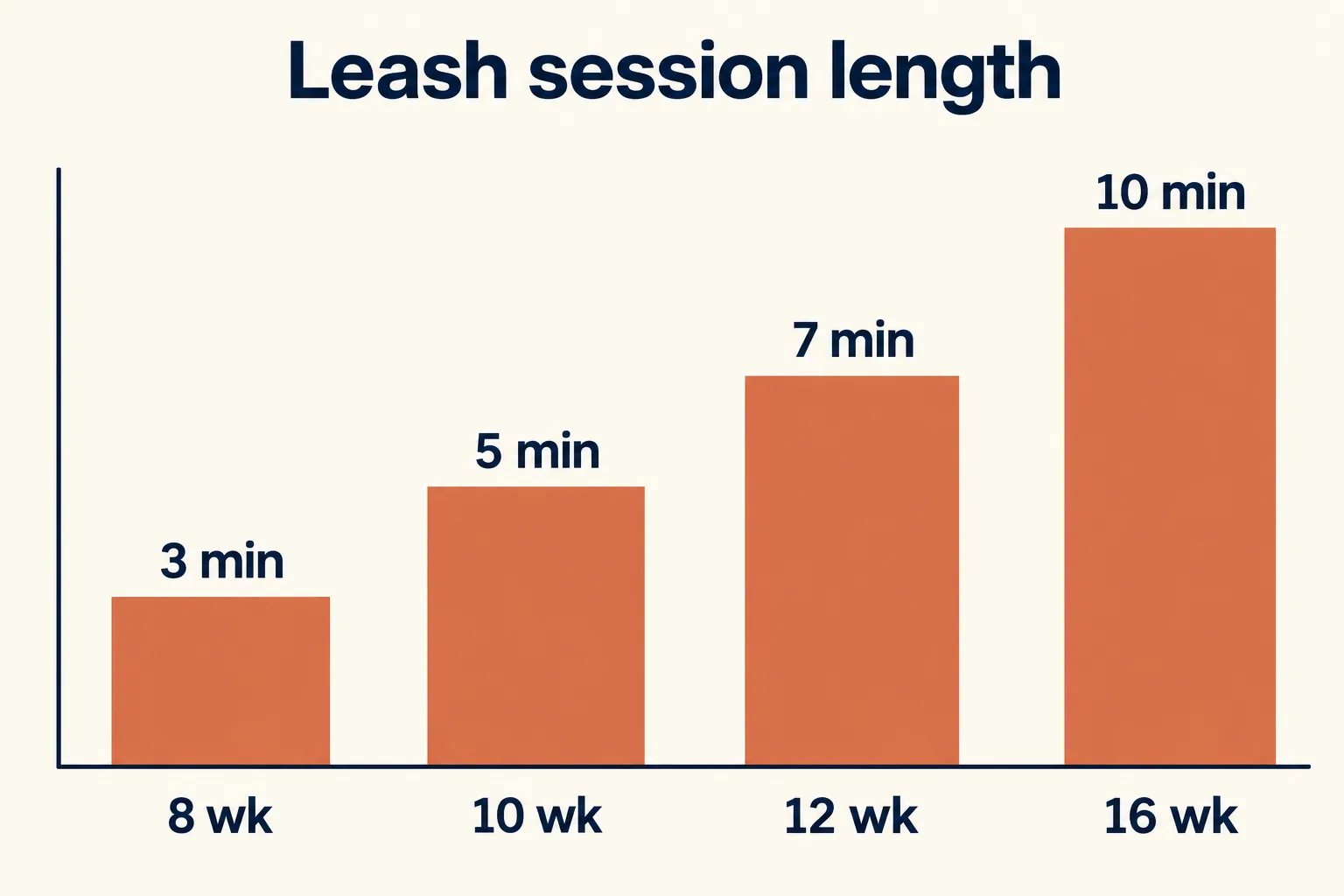
These minutes are for focused practice. A potty trip or a slow sniffy stroll does not count, and that is fine. For how leash practice fits around naps and meals, see the 10 week old puppy schedule.
Pick the right gear before the first walk
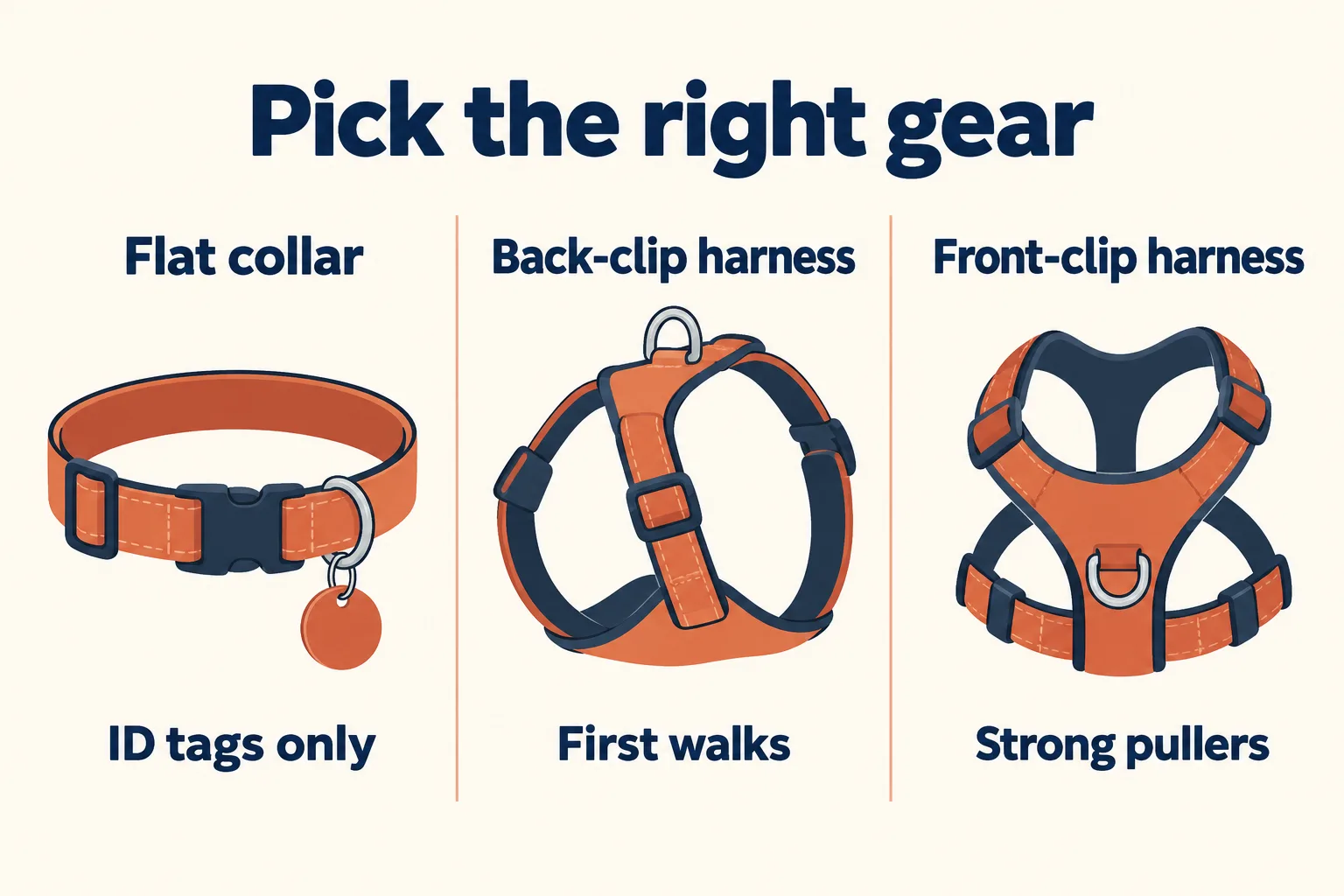
For a young puppy, a flat collar carries the ID tag and a back-clip harness carries the leash. A plain 6 foot leash is enough. Skip retractable leashes while you train: they teach your puppy that pulling makes the leash longer, which is the exact lesson you are trying to undo.
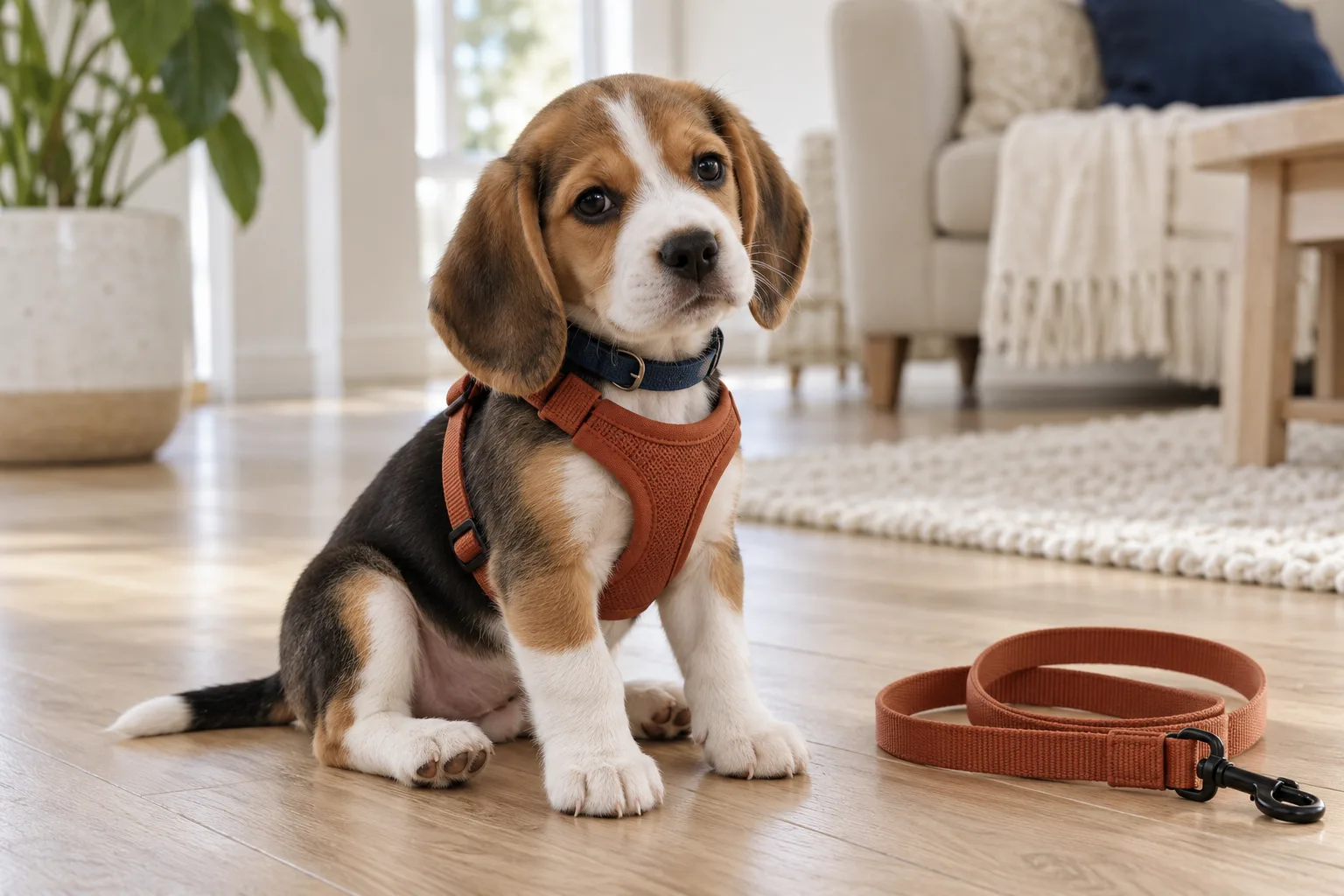
A front-clip harness, with the ring on the chest, helps a strong puller later because pulling turns the puppy sideways. It is a management tool, not a training method. Never use prong, choke or shock collars. They work by causing discomfort, and the AVSAB position statements are clear that reward-based training is the humane standard.
| Gear | Best for | Watch out for |
|---|---|---|
| Flat collar | ID tags, quick clip-on for a potty trip | Pressure on the throat if your puppy pulls |
| Back-clip harness | First walks and most young puppies | Some puppies pull harder in it, like a sled dog |
| Front-clip harness | Bigger puppies who already pull | Fit it snug; check it does not rub under the legs |
| 6 foot leash | Everyday training | None at this age |
| Retractable leash | Not for training | Rewards pulling with more leash |
How to get a puppy used to the leash
Let your puppy wear the harness for a few minutes during a meal or a game, then take it off before they start scratching at it. Next, clip on the leash and let it trail behind them indoors while you watch. Then pick up the end and follow your puppy around for a minute. Only after that do you ask them to follow you.
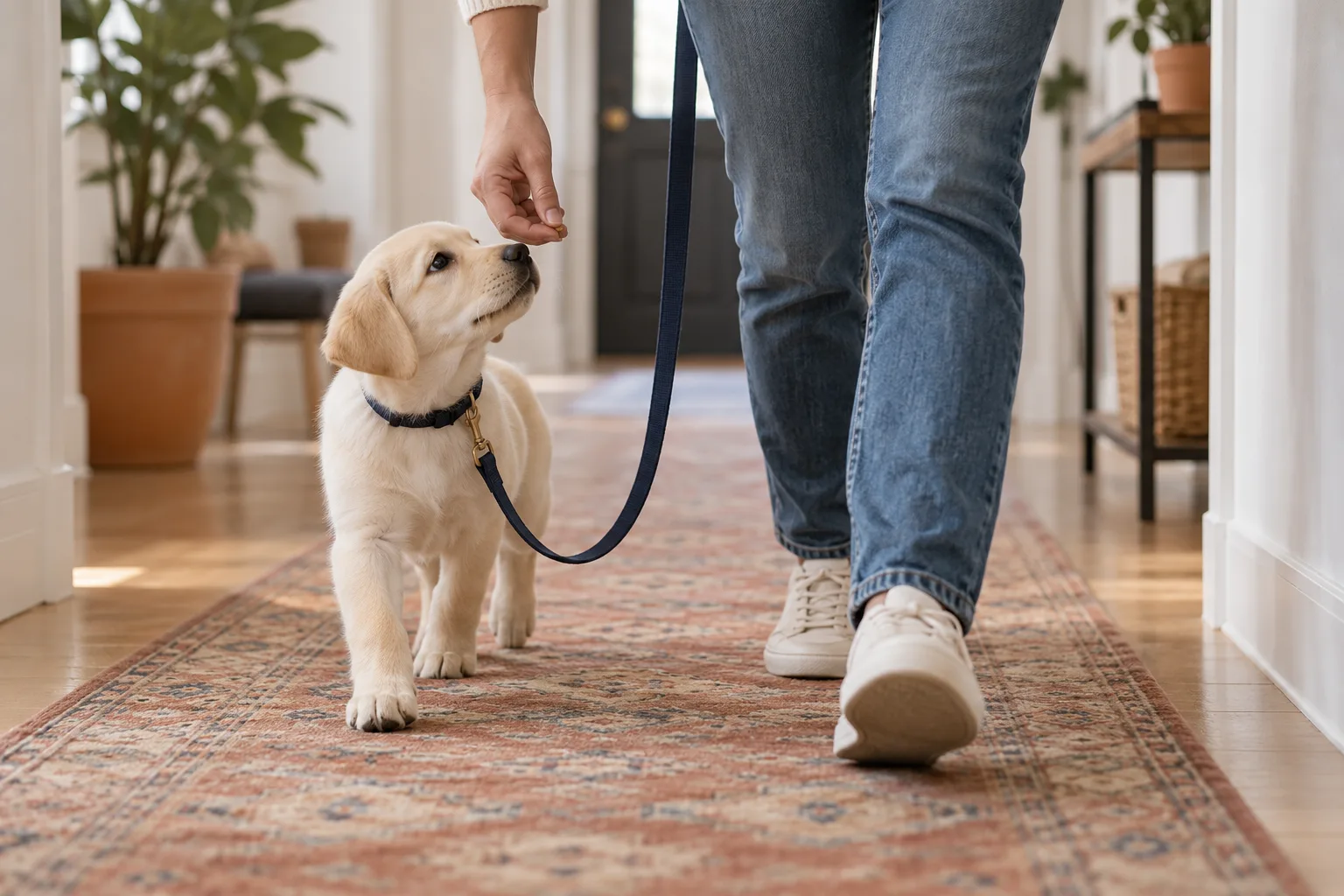
Here is the part most guides skip. The reward goes in one exact place: right beside the seam of your trousers, at your puppy's nose height. Feed there every time. Your puppy learns that the jackpot spot is next to your leg, and they start drifting back to it on their own. Treats tossed ahead of you teach the opposite: that the good stuff is out in front.
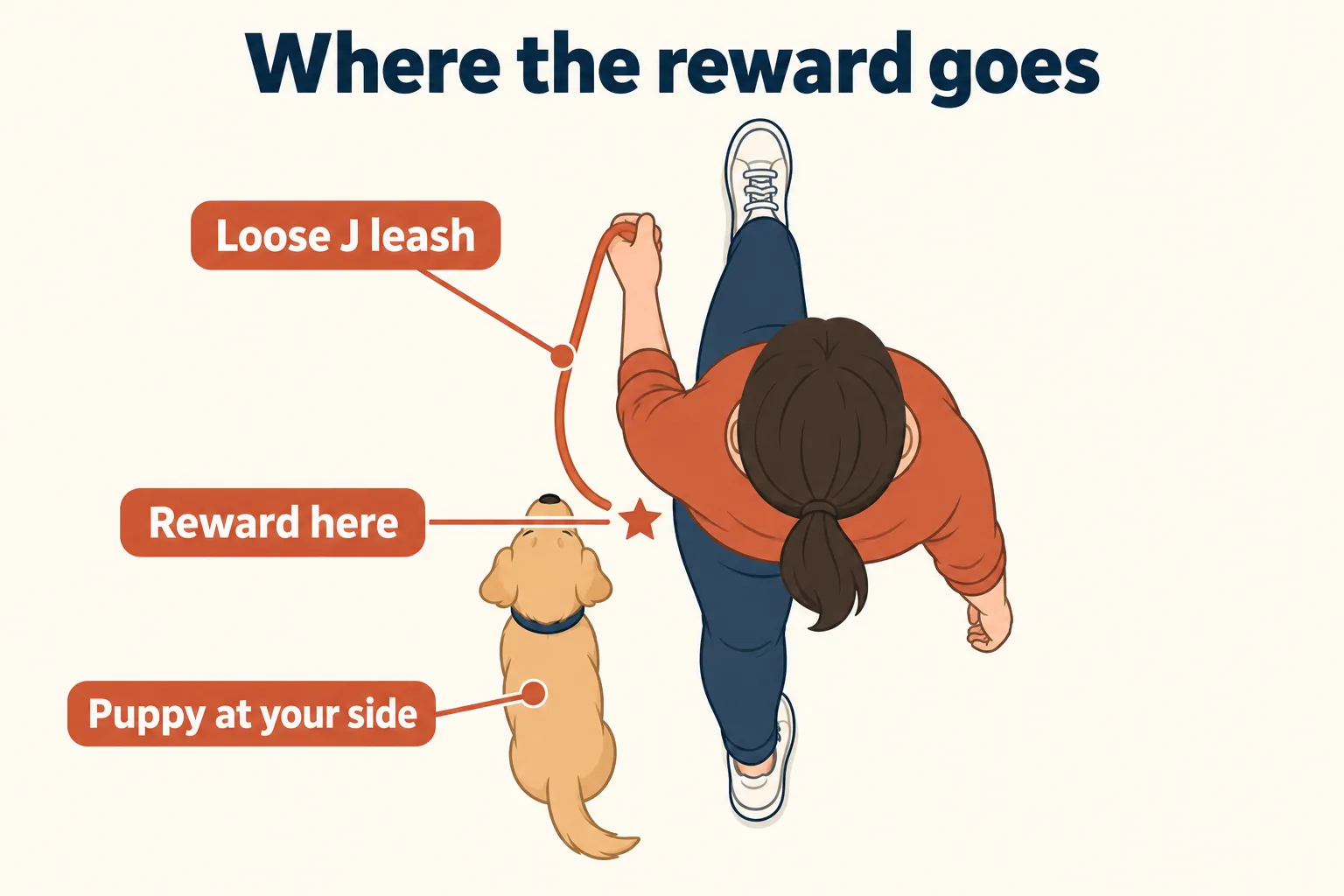
Pick one side and stick with it for now. Left is traditional, but any side works as long as everyone in the house uses the same one.
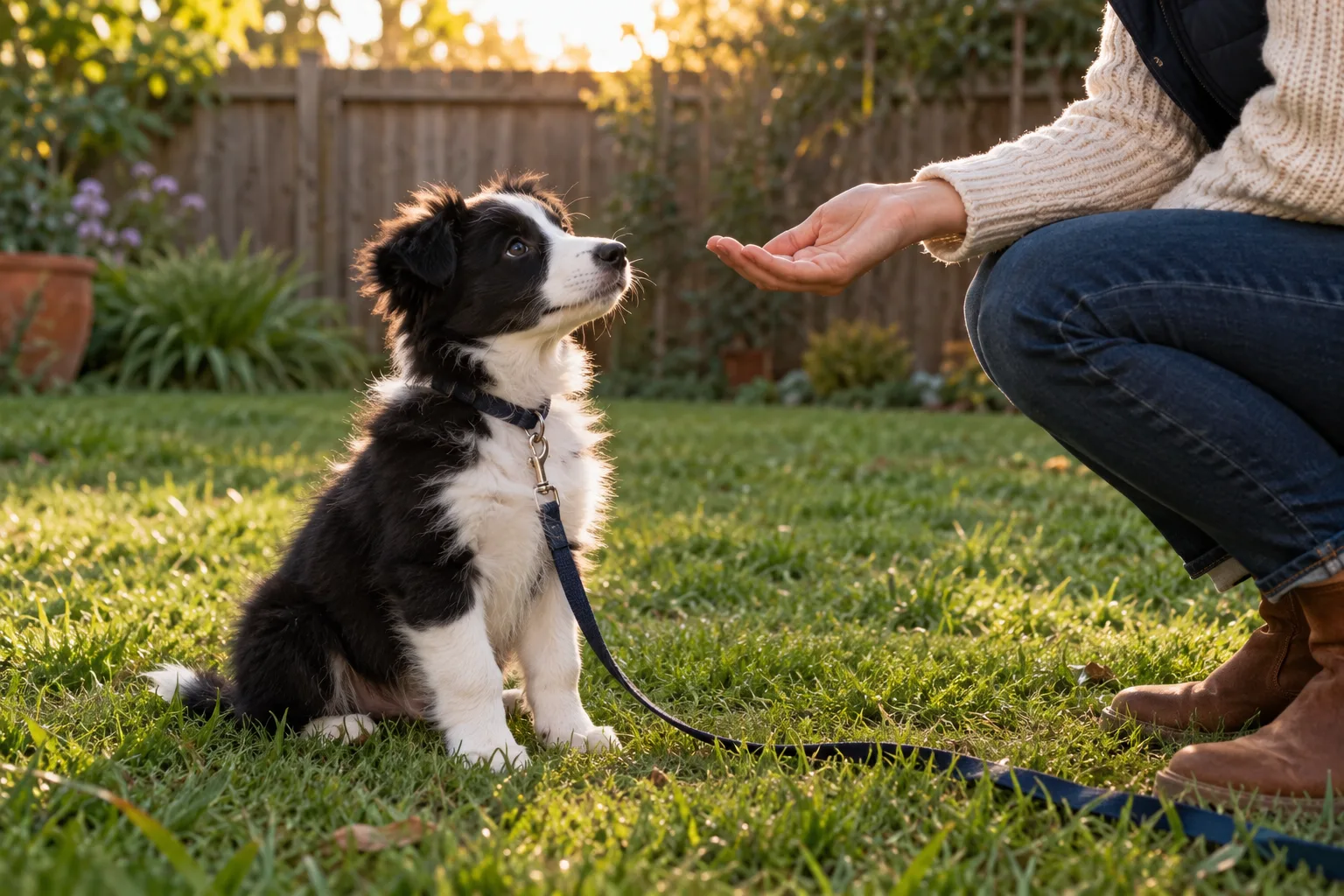
Say it once, cheerfully, as you start walking. Use the same words every time so your puppy knows a walk is starting.
How to leash train a puppy
- Get the gear on calmly
Put the harness on during dinner or a game for a few minutes a day. Take it off before your puppy gets fussy. Repeat until they ignore it.
- Let the leash trail indoors
Clip on a light leash and let it drag while you supervise for a few minutes. Never leave a puppy alone wearing one.
- Reward the spot beside your leg
Stand still and feed a tiny treat next to your trouser seam whenever your puppy is at your side. Do this ten times.
- Take a few steps together
Say your walk cue, take two or three steps, and feed at your leg while your puppy is still beside you. Build to ten steps.
- Stop when the leash goes tight
If your puppy pulls, stop and stand still. The moment the leash goes slack, say "yes", feed at your leg and walk on.
- Move outside slowly
Repeat the same game in the backyard, then on a quiet street. Make each new place feel easy before you add a harder one.
How to stop a puppy pulling on the leash
When the leash goes tight, stop and stand still. Wait for the leash to go slack, even by an inch, then say "yes", feed at your leg, and walk on. Pulling stops the walk. A loose leash starts it again. That is the whole rule, and it only works if you apply it every single time.
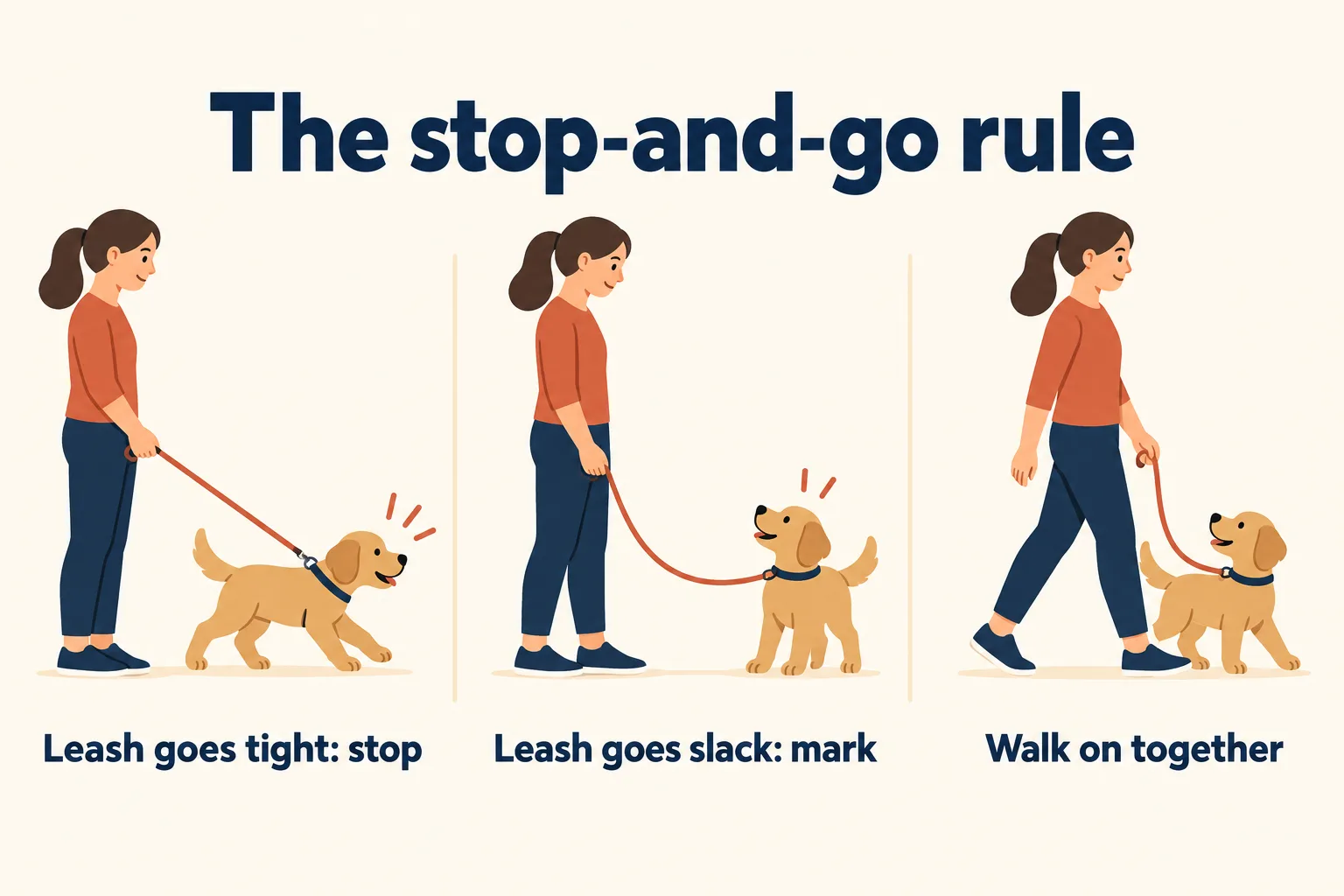
The first few walks with this rule are slow. You may cover one block in 15 minutes. That is the training working. If you are late and need to get somewhere, switch to the front-clip harness for that trip and keep practice for a time when you are not in a hurry.
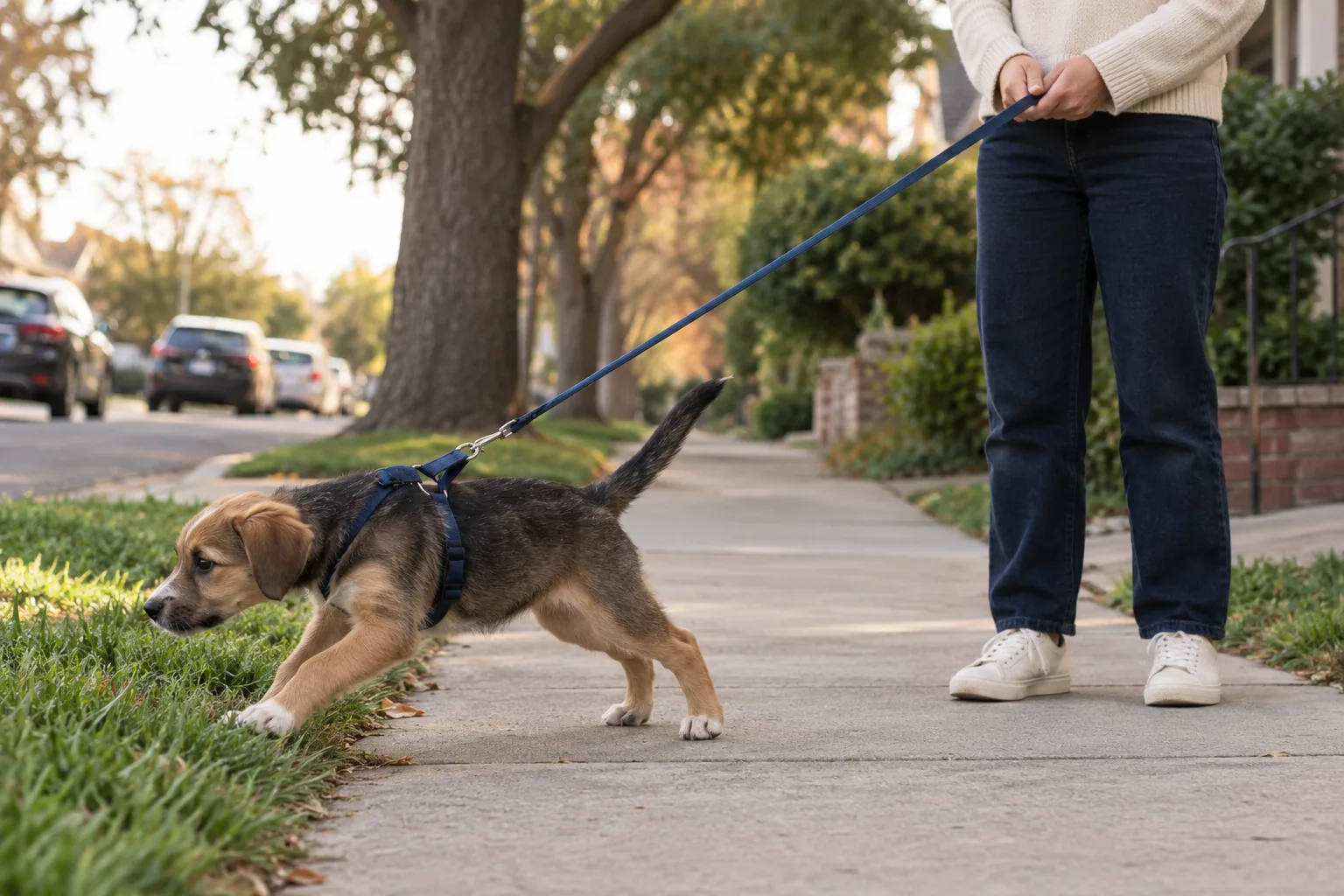
Keep your hands still at your belly so you are not yanking back. If waiting does not work after about 10 seconds, turn and walk the other way a few steps, then reward your puppy for catching up at your side. The RSPCA's loose lead guide teaches the same stop and reward approach.
Let your puppy sniff on cue
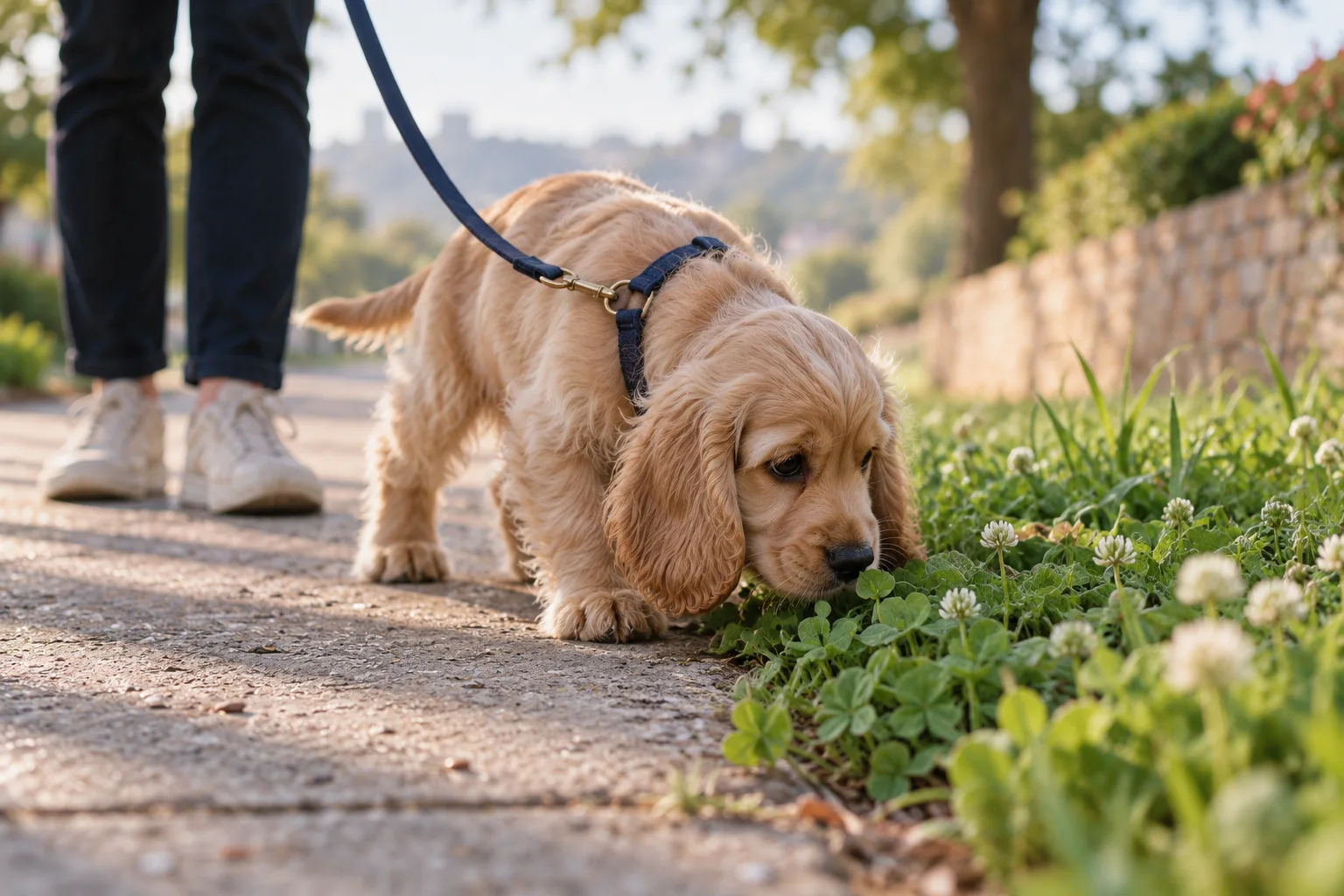
Sniffing is not the enemy. It is how a puppy reads the world, and it tires them out more than distance does. Give regular sniff breaks with a cue like "go sniff", and let them choose where to smell for a minute. Then say your walk cue and carry on. A puppy who knows sniffs are coming pulls less to get them.
Common leash problems, by situation
Most leash trouble falls into a few patterns. Find yours in the table, then read the short fix below it.
| Your puppy | What it usually means | What to try |
|---|---|---|
| Pulls toward everything | Pulling has been paying off | Stop when tight, go when slack, every time |
| Sits or lies down and will not move | Overwhelmed, tired or unsure | Go back to an easier place, shorter session |
| Bites or tugs the leash | Overexcited, often teething | Swap the leash for a toy, then walk again |
| Zigzags in front of you | Too much to smell at once | More sniff breaks, rewards at your side |
| Lunges at dogs or people | Too close for their comfort | More distance, then reward calm looks |
My puppy sits and will not walk
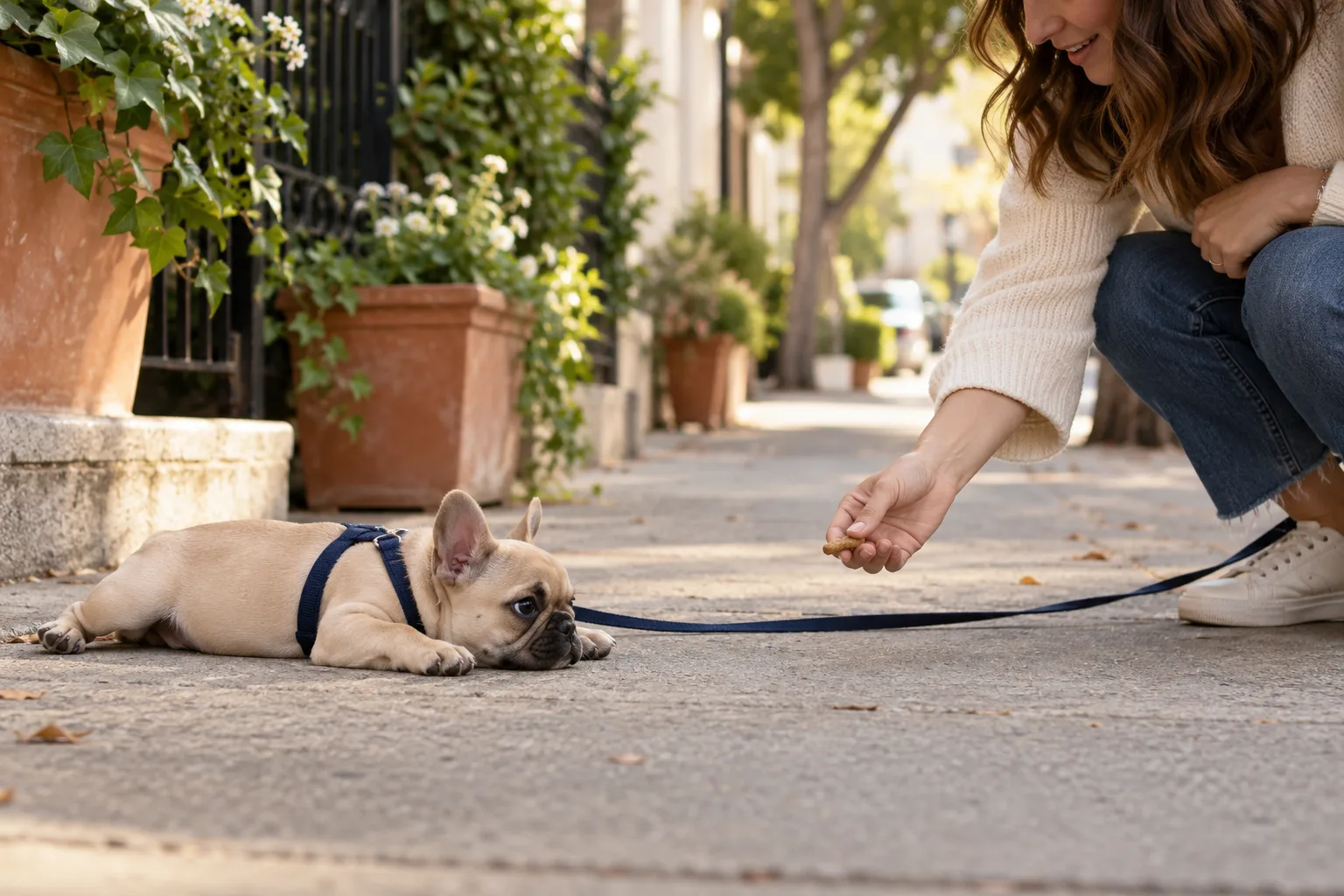
A puppy who plants on the sidewalk is usually saying "this is too much", not "I am being stubborn". Do not drag them. Crouch a few feet ahead, cheer them on, and reward the first step toward you. Then go back to a quieter place or a shorter route, and carry a tired puppy home if you need to.
My puppy bites the leash
Leash biting is common in teething puppies and in the first exciting minute of a walk. Stop moving, so the leash stops being a tug toy. Offer a toy to carry, or scatter a few treats on the ground, then start again. If mouthing turns into hard bites on hands or legs, our guide to stopping puppy biting covers it in depth.
My puppy lunges or barks at other dogs
Usually, this means the other dog is too close. Cross the street, add distance, and reward your puppy for looking at the other dog and then back at you. Leash greetings with strange dogs are optional and often go badly; play dates off leash in a safe space are better. Gentle exposure from a distance is part of puppy socialization, not a test to pass.
When to get help
If leash walks keep turning into fear, freezing or frantic pulling, that is a sign to slow down, not push harder. A limp, sore paws, coughing in a collar, vomiting or sudden lethargy on walks: call your vet today. Any bite that breaks skin on a person, or growling, snapping or lunging that is getting worse, needs a certified behavior professional. This is general, reward-based training guidance, not medical advice.
The short version
Start indoors at 8 to 10 weeks, keep sessions to 3 to 5 minutes, and feed at one spot next to your leg. When the leash goes tight, stop. When it goes slack, walk on. Add sniff breaks, and only move to a busier place once the current one is easy. For the rest of the basics, our puppy training tips cover cues, rewards and short sessions.
The wall with any leash guide is that your puppy has a different day every day. Teething, a bad nap or a new noise on the street, and yesterday's walk plan is wrong. That is what the plan is for: you tell it how today went, and it moves tomorrow's walks around your puppy. Build a free plan for your puppy in about a minute.
Get tomorrow's plan, adapted to how today went.
Frequently asked questions
Start as soon as your puppy comes home, usually around 8 weeks. Begin indoors with a harness, a light leash and 3 minute sessions. Move to the backyard and then quiet streets over the next few weeks, once your vet confirms vaccinations allow outdoor walks.
Let your puppy wear the harness for a few minutes during meals or play, then let a light leash trail behind them indoors while you watch. Next, follow them around holding the leash, and only then ask them to follow you, rewarding each step at your side.
Most puppies learn the basics of following you on a leash within a couple of weeks of short daily practice. Walking nicely past real distractions takes months and keeps improving into adulthood. Consistency matters more than session length.
A flat collar for the ID tag and a well-fitted back-clip harness for the leash suit most young puppies. A front-clip harness helps bigger puppies who already pull. Avoid prong, choke and shock collars; they rely on discomfort rather than rewards.
Only once your puppy comes back reliably when called in busy places, which for most puppies is months away. Until then, use a long line in a safe open area to practice recall. Many areas also have leash laws, so check local rules.
Keep the walk short, let your puppy sniff on cue, and reward them at your side when the leash is loose. Stop when the leash goes tight. Choose quiet places at quiet times while your puppy is learning, and end the walk before they get tired.
Get tomorrow's plan, adapted to how today went
A printed schedule can't see that she peed at 7:10 today; the Coach plan rewrites tomorrow from today's log. Start with the free schedule for your puppy.
Build my puppy's plan- Free starting schedule
- Reward-based practice
- Fits your puppy's day
Share article
About the author
More articles
Training that sticks · 11 min
Puppy Socialization: A Calm Checklist for Real Life
Help your puppy feel safe around people, sounds and new places. Use this gentle checklist, comfort signals and one simple session to start without forced greetings.
Training that sticks · 12 min
Puppy Training Tips: 9 That Work in 3-Minute Sessions
Nine reward-based puppy training tips in order of payoff: 3 minute sessions, a one-second marker, fading the lure, better treats for harder places, and what to teach from 8 to 20 weeks.
Training that sticks · 12 min
German Shepherd Training: Puppy Routine, Week 8 to 16
German shepherd training for a puppy: the week-by-week routine from 8 to 16 weeks, crate size for a growing shepherd, and how to handle mouthing, herding nips and alarm barking.
Puppy SOS: biting, crying, blues · 12 min
How to Stop Puppy Barking: Find the Reason, Reward the Quiet
How to stop puppy barking without shouting or collars: read what the bark is asking for, meet the need before it starts, and reward one second of quiet, then three, then ten.
Potty, crate and sleep · 10 min
How Long Does It Take to Potty Train a Puppy?
Potty training takes steady support, not a weekend deadline. Learn which milestones matter, why timelines vary and how to spot the next useful change.
Potty, crate and sleep · 14 min
How to House Train a Dog: Puppy or Adult, Step by Step
How to house train a dog of any age: one outdoor spot, a schedule, a reward the second they finish, and supervision in between. What changes for puppies, adult rescues and dogs who start having accidents again.