
How to Stop Puppy Barking: Find the Reason, Reward the Quiet
In this article
To stop puppy barking, first find out what the bark is asking for, meet the real needs before the bark starts, and reward the quiet seconds instead of answering the noise. Most puppy barking is a need (potty, a nap, something to do) or a request for you, and both fade fast once barking stops being the thing that works.
It is 9 pm, the puppy is yapping at you from the kitchen floor, and every option feels wrong. Pick it up and you teach it that barking works. Ignore it and it gets louder. Here is the way through, for an 8 to 20 week old puppy, with no shouting, no sprays and no collars.
Why is my puppy barking?
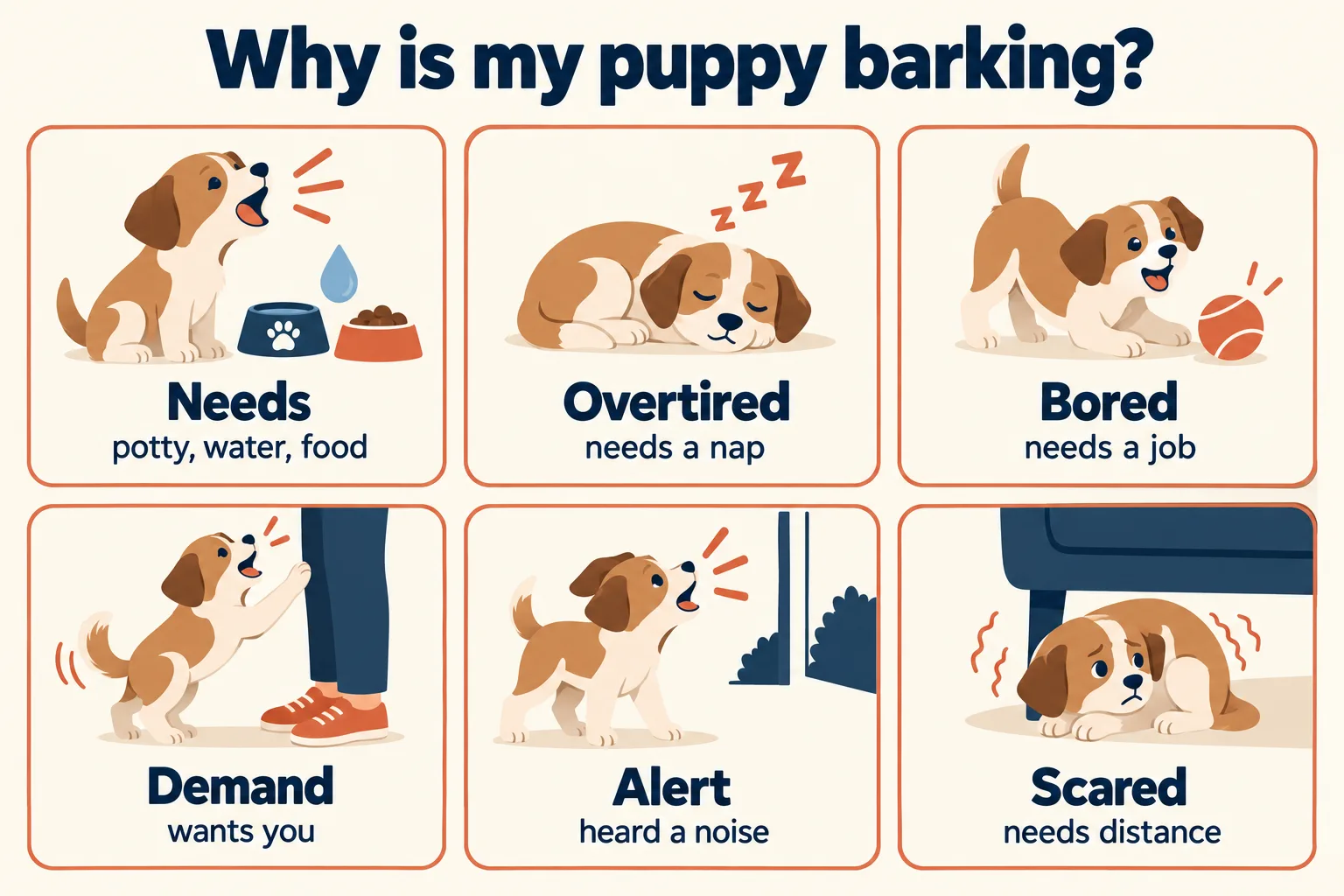
Your puppy is barking because it wants something and has not found a better way to ask. Read the situation, not the sound. The same yap can mean "I need to pee" at 6 am and "throw the toy" at 6 pm, and the fix for each is different.
| Bark type | What it looks like | What it is asking for | First move |
|---|---|---|---|
| Needs | Barks after waking, after eating, or at the door | Potty, water, food | Take it out now, no fuss |
| Overtired | Late evening, frantic, mixed with biting | Sleep | Calm space and a nap |
| Bored | Long awake stretch, nothing to chew | Something to do | A chew, a lick mat or a sniff game |
| Demand | Sits facing you and barks, stops when you look | Your attention | Wait for quiet, then reward |
| Alert | Runs to the window or door at a sound | Information | Acknowledge once, move away, reward |
| Scared | Backs away, tail low, barks at a person or dog | Distance | Add space, then treats |
Here is the part most guides skip. The bark you answer is the bark you get more of. That includes telling it "no", picking it up, or opening the crate mid-bark. Your puppy does not care which kind of attention it gets. It learns that noise makes things happen.
Why the needs come first
A puppy that barks because it needs to pee is doing the right thing. Never wait out a needs bark. Check the clock: if it woke up, ate or played in the last 20 minutes, go out first and train second. Our potty training guide has the trip times by age.
How to stop a puppy from barking for attention
Demand barking is the most common kind in a young puppy and the one you can fix fastest. The method is simple and dull: barking gets nothing, a second of quiet gets everything.
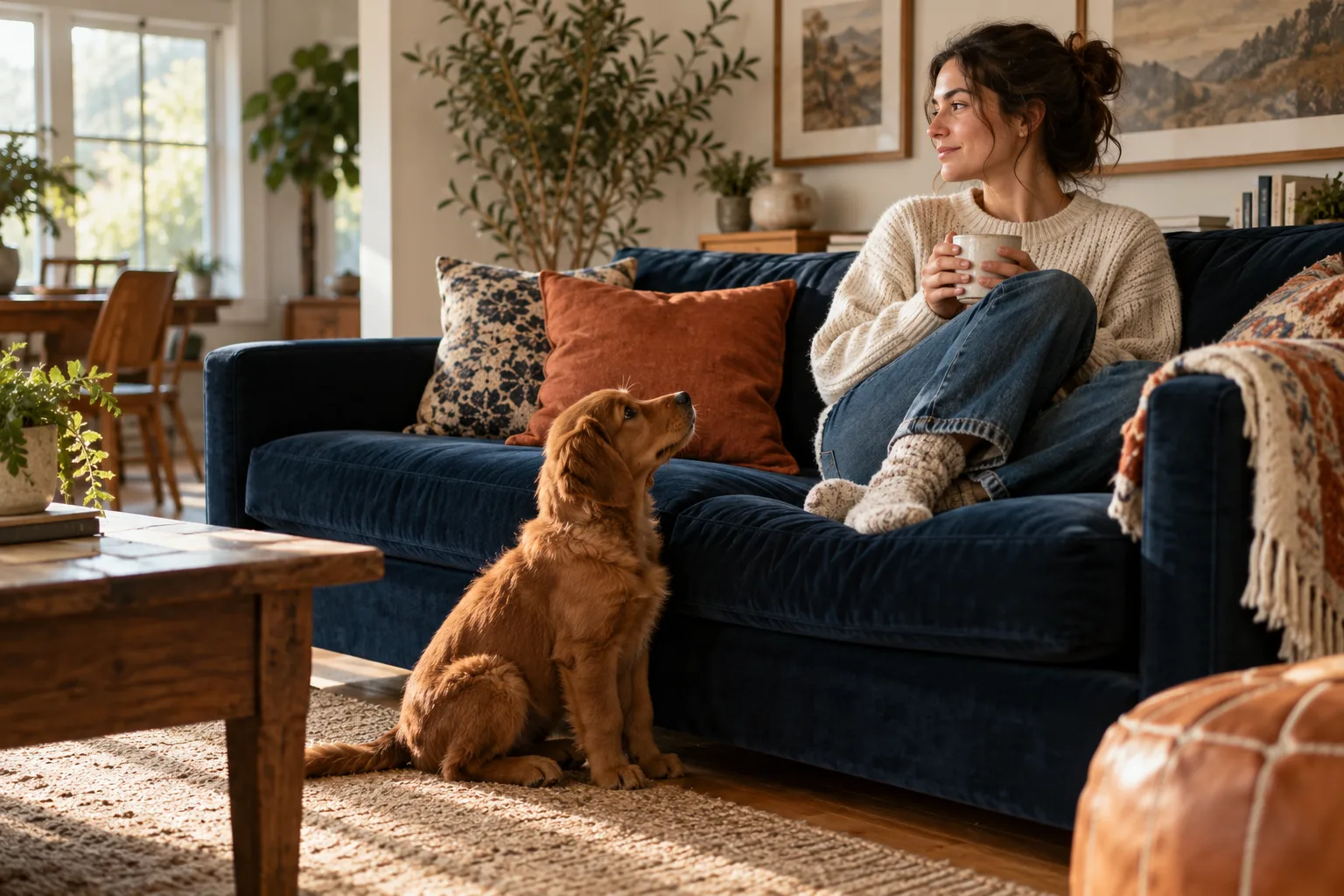
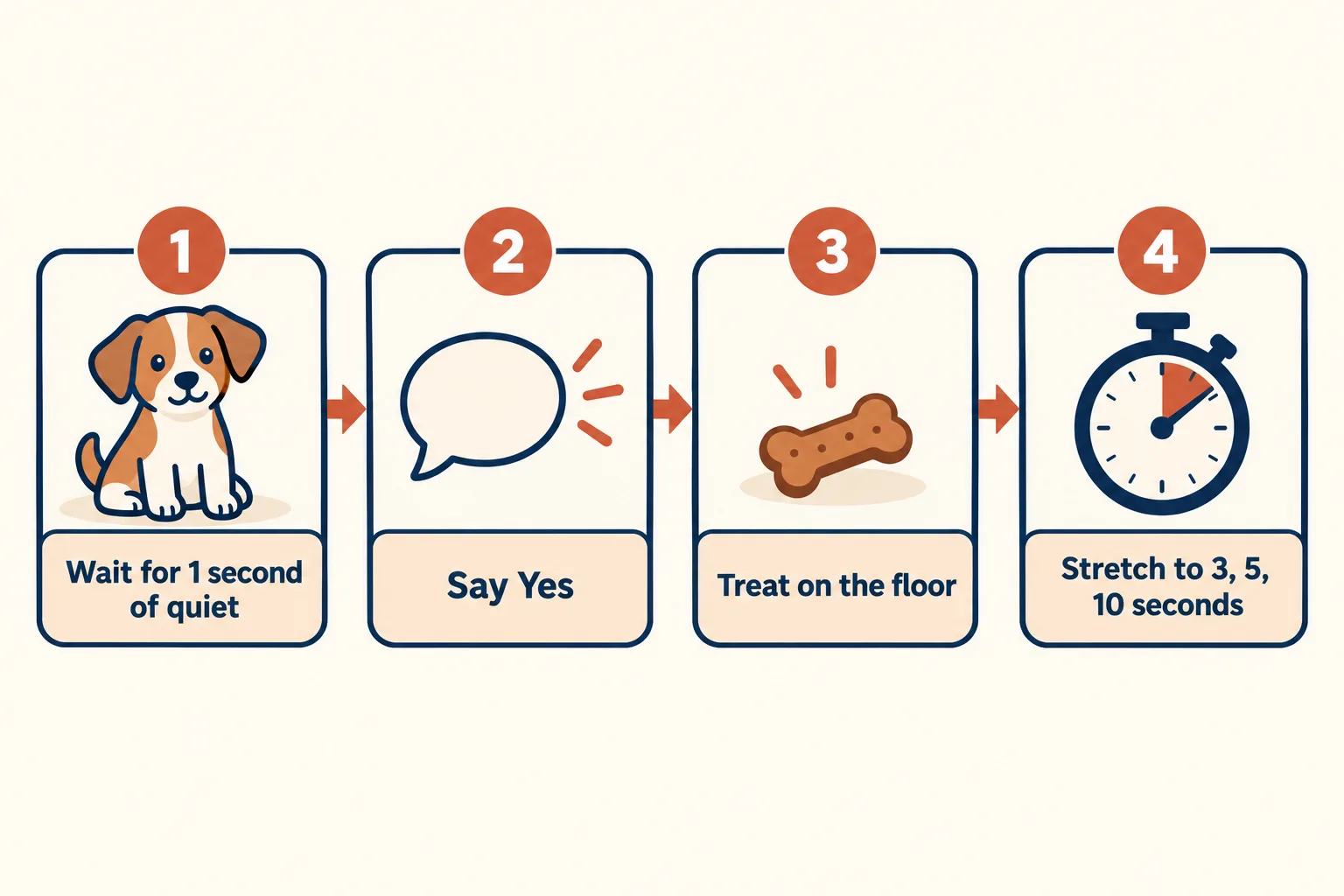
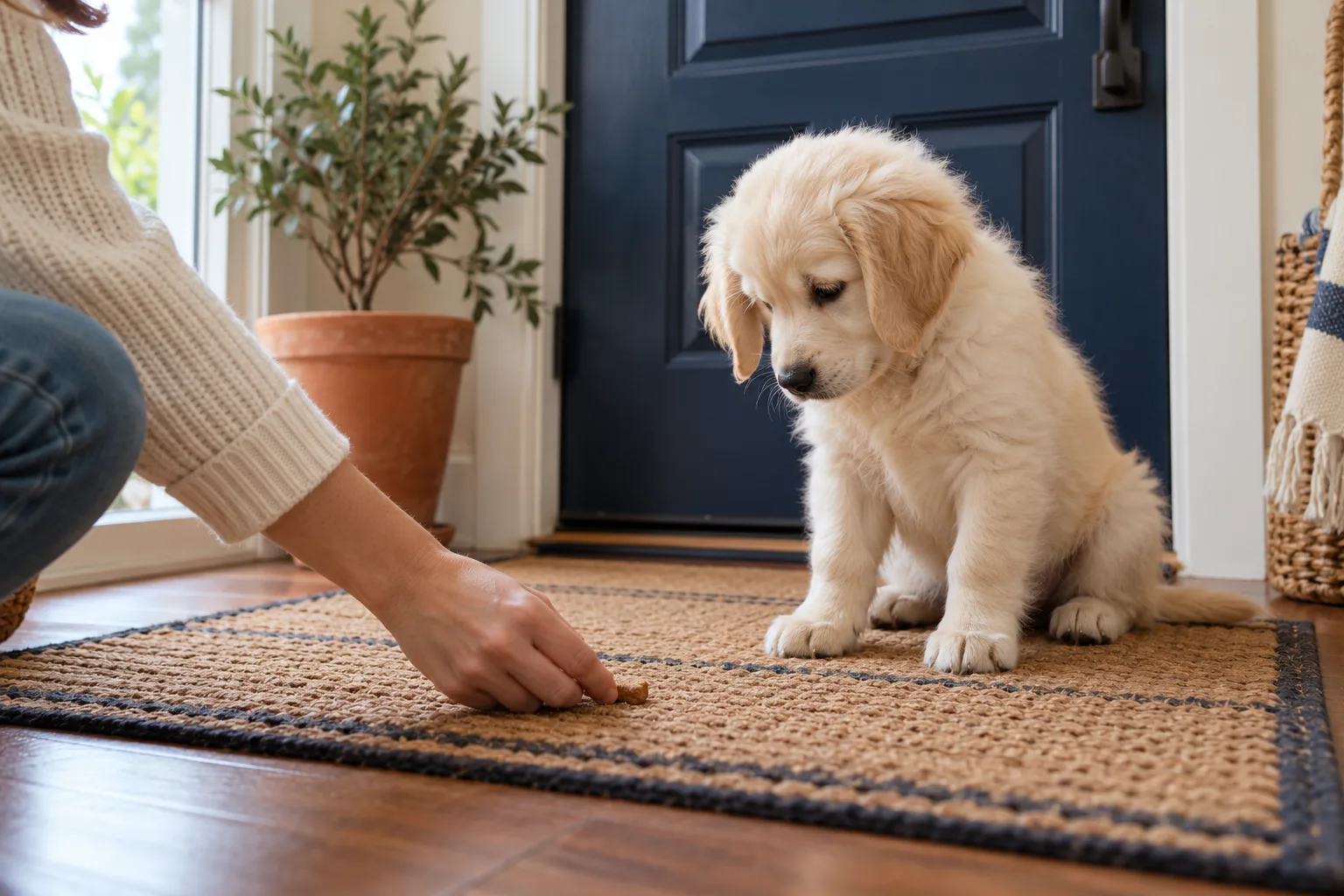
Turn away or stay still when the bark starts. Do not look, talk or reach. The moment there is a breath of silence, even one second, say "yes" and drop a treat on the floor near its feet. Floor, not hand, so your puppy looks down instead of up at your face to bark again.
Then make it harder. Wait for 3 seconds of quiet, then 5, then 10. Most puppies start to sit and look at you instead of barking within a few short sessions, because that is now what pays.
How to teach a puppy that quiet gets attention
- Pick your moment
Start when you have 5 minutes and the puppy has been out for potty, fed and is not overtired. Keep a pouch of small treats on you.
- Go still when the bark starts
Turn your body away, keep your hands still and do not speak. Scolding counts as attention.
- Mark the first quiet second
Say "yes" the instant the barking stops, then drop a treat on the floor by its paws.
- Stretch the quiet
Over the next sessions, wait for 3, then 5, then 10 seconds of quiet before you mark it. If you get stuck, go back to the last length that worked.
- Give it a job instead
Ask for a sit or send it to its mat, and reward that. A puppy with something to do has less to bark about.
Expect it to get louder first
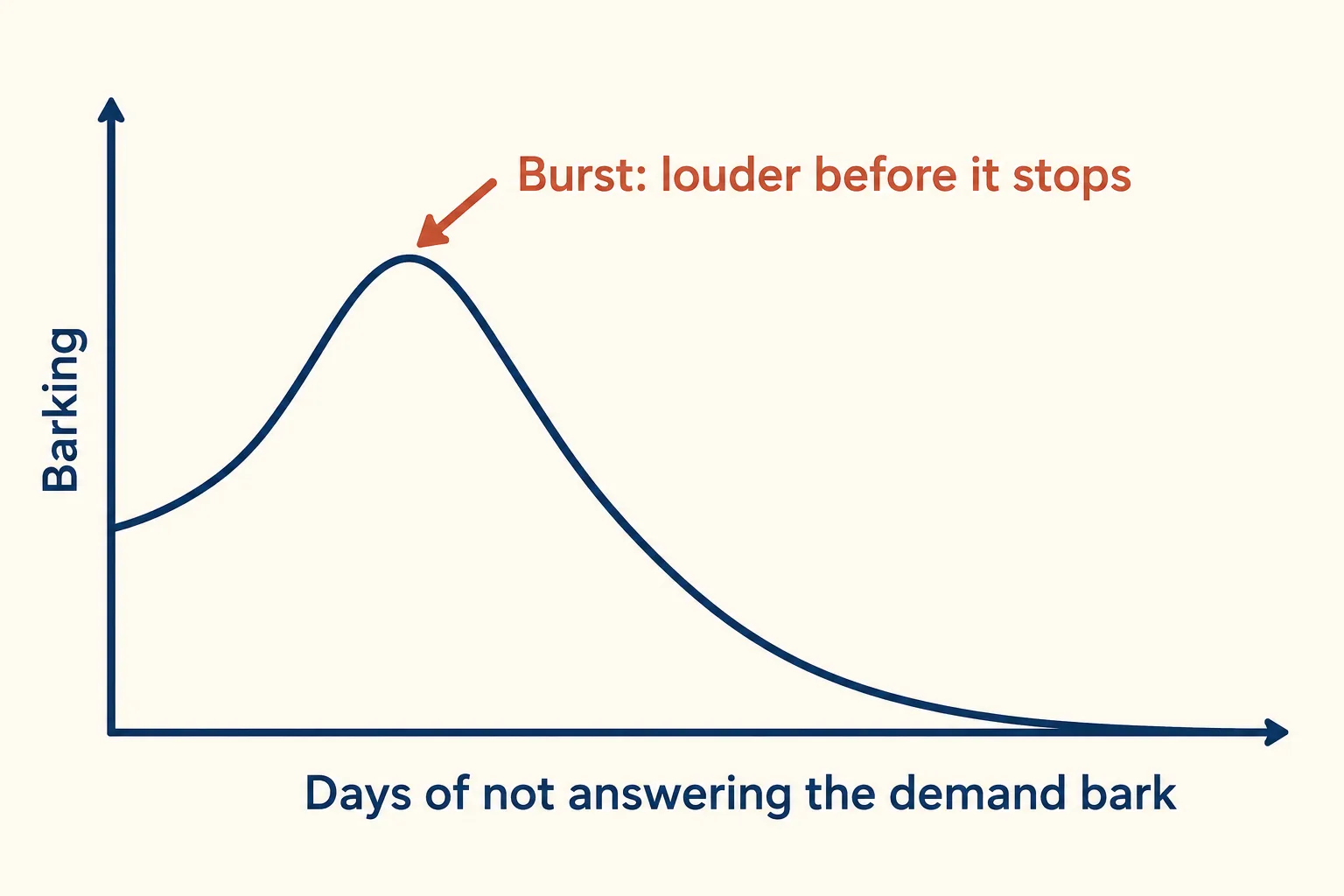
When barking suddenly stops working, many puppies try harder before they give up. Trainers call it an extinction burst. It is the worst moment to give in, because you teach your puppy that it just needs to bark longer. If you know the burst is coming, it is easier to sit through. Decide before you start whether you can hold out, and pick a calm time of day to try.
Say it once, the instant the quiet starts, then the treat goes on the floor.
Puppy barking in the crate or playpen
A puppy barking in a crate is usually asking for one of three things: a potty trip, you, or a way out of a crate it does not like yet. Check the need first, then shrink the problem.
- If it has been more than its usual potty gap, take it out on a lead, quietly, and straight back in. No play.
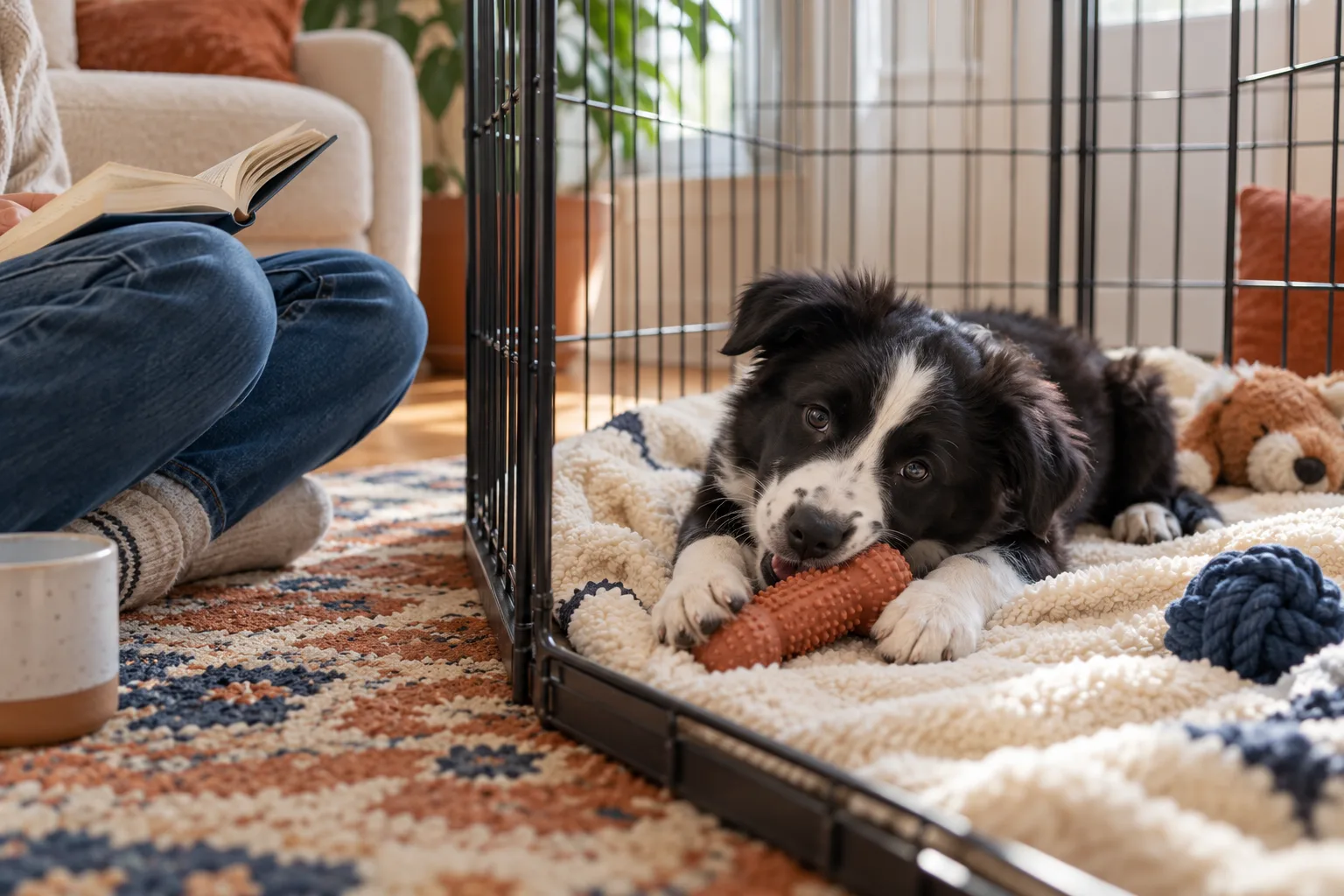
- If it just went, sit beside the crate or pen with a book. Being near you is often enough. Move further away over the following days.
- Give it a good chew inside so it has something better to do than call you.
- Open the door during a pause, not during a bark. That one habit fixes a lot of crate barking on its own.
At night, a few minutes of fussing after lights out is normal in the first week. Steady, rising barking an hour into the night usually means it needs to go out. Our guides to puppy crying in the crate and crate training go step by step.
Barking at noises, the window and the door
Alert barking is your puppy telling you it noticed something. You cannot stop it noticing, but you can change what happens next. Acknowledge the first bark, calmly say "thanks", walk away from the window and reward your puppy when it follows you.
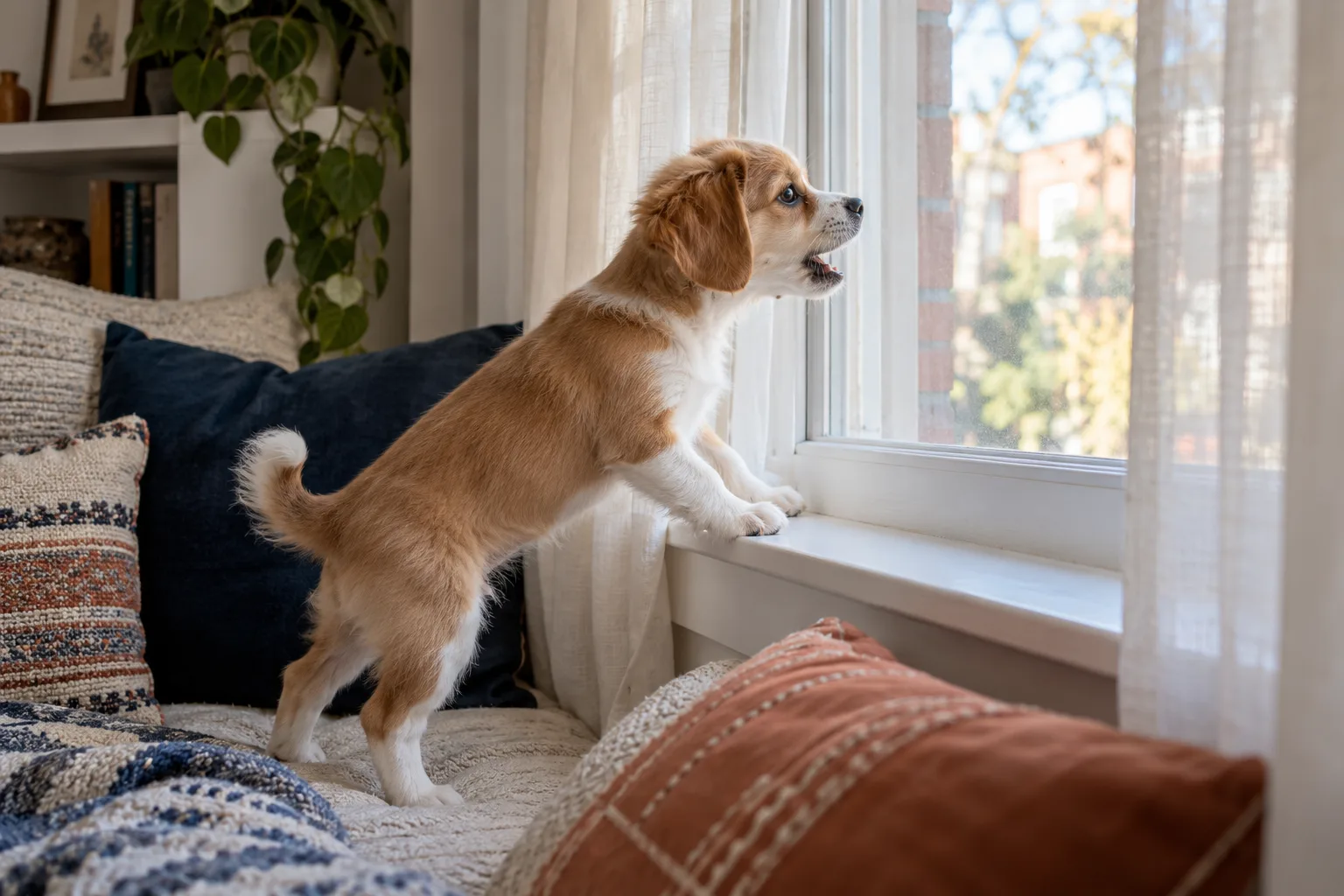
Block the view it barks at most. Frosted window film or a closed blind on a busy street window does more than any amount of training in the first month. Fewer rehearsals means a quieter puppy.
For the doorbell, practise when nobody is coming. Ring the bell or knock, then drop a treat on the mat. Repeat until the sound makes your puppy look at the floor for a treat instead of barking at the door.
When boredom or tiredness is the real problem
A lot of evening barking is a puppy that has been awake too long. Young puppies sleep a great deal, and the AKC sleep guidance puts it at many hours a day. If barking, biting and zoomies all arrive together after dinner, the answer is a nap, not more play. See our puppy sleep schedule for nap lengths by age.
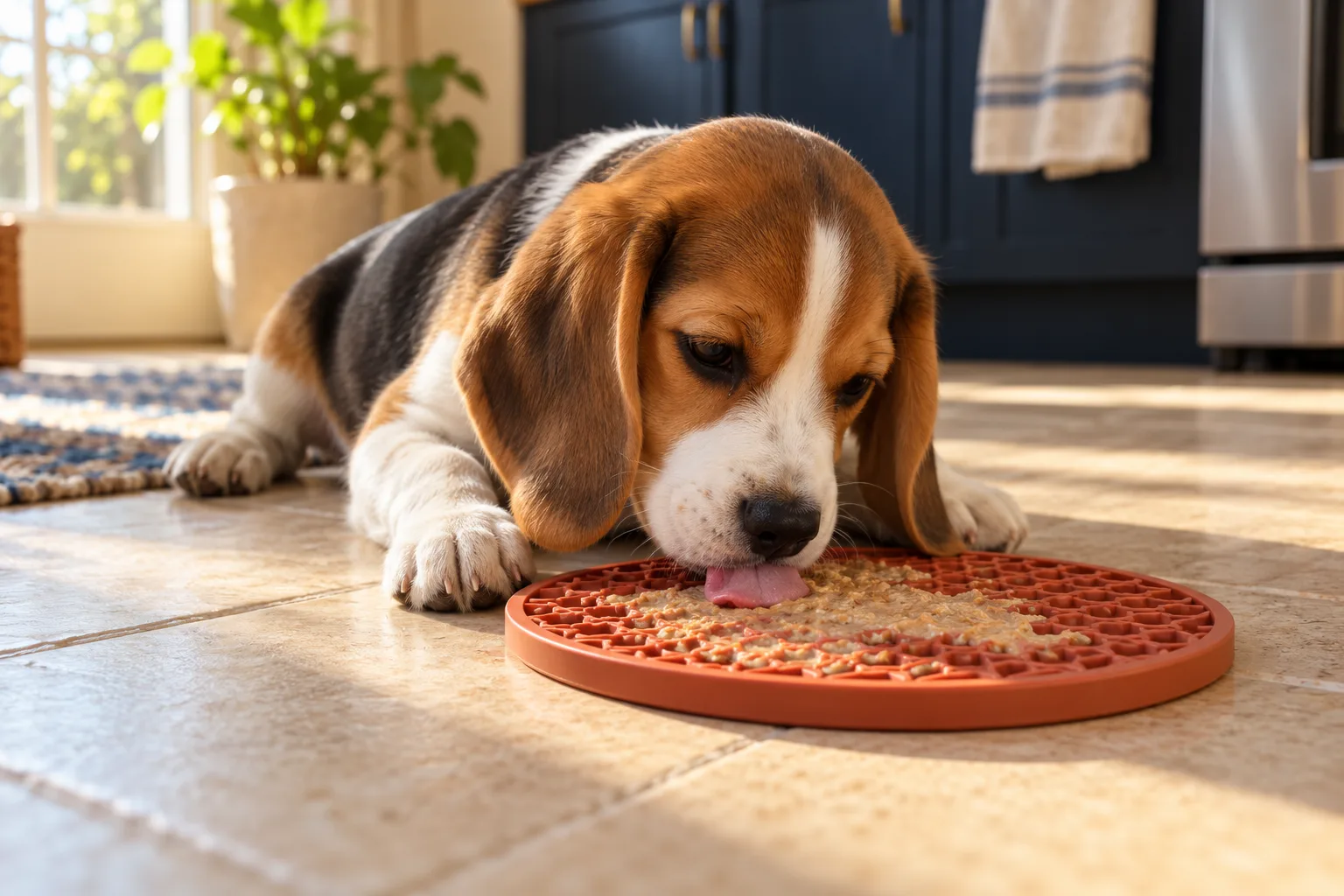
Boredom barking needs a job. Sniffing and licking calm puppies down. A lick mat, a stuffed rubber toy or a handful of kibble scattered in a towel gives it 10 quiet minutes and gives you a break.
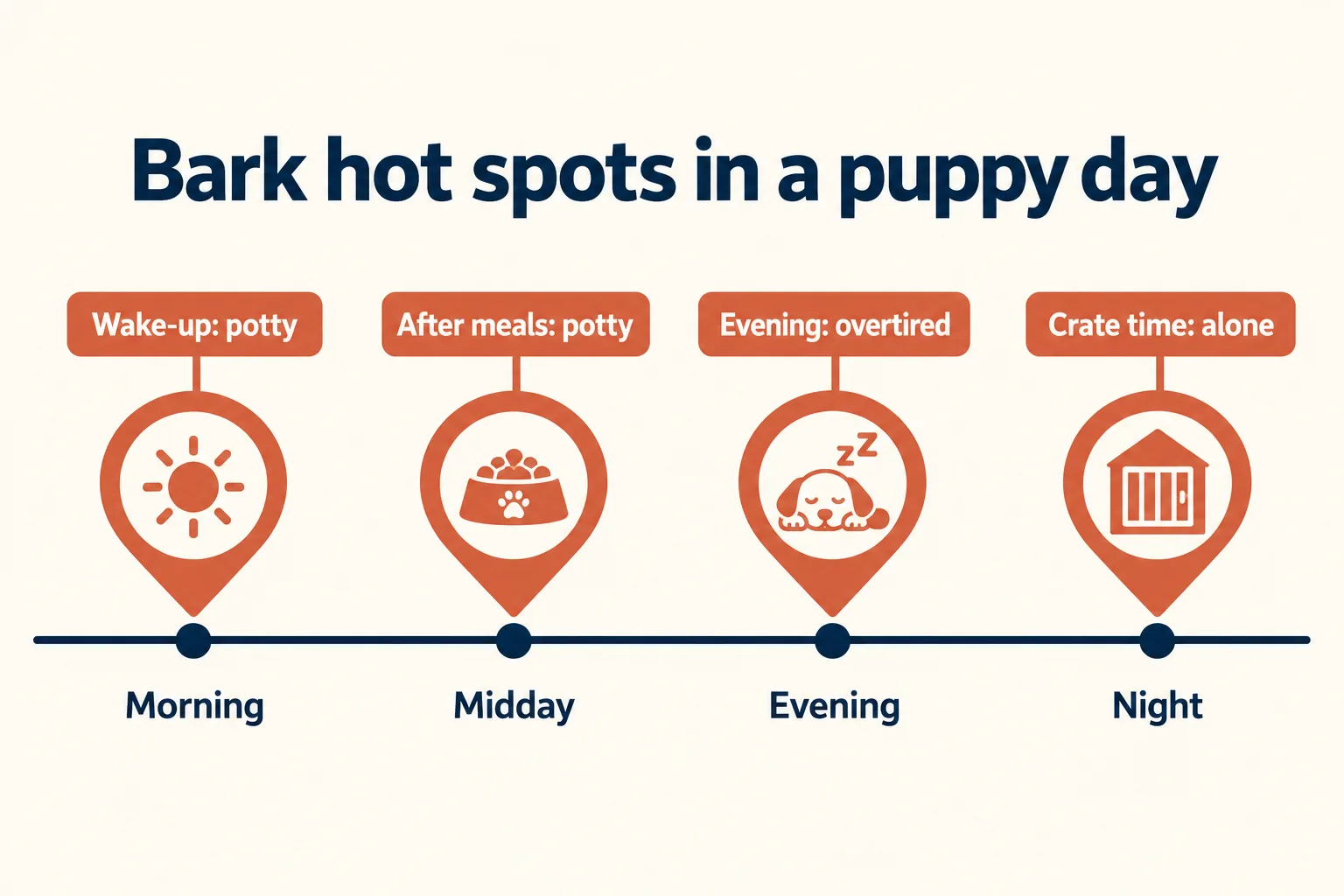
| Time of day | Likely reason | What to set up ahead of time |
|---|---|---|
| Right after waking | Needs a potty trip | Lead and shoes by the door |
| 20 minutes after a meal | Needs a potty trip | A planned trip outside |
| Long awake stretch | Bored | A chew or lick mat ready |
| Late evening | Overtired | A quiet crate or pen nap |
| You on a call or cooking | Wants you | A stuffed toy before you start |
| Doorbell or street noise | Alert | Blinds closed, treats by the door |
Barking at people or other dogs
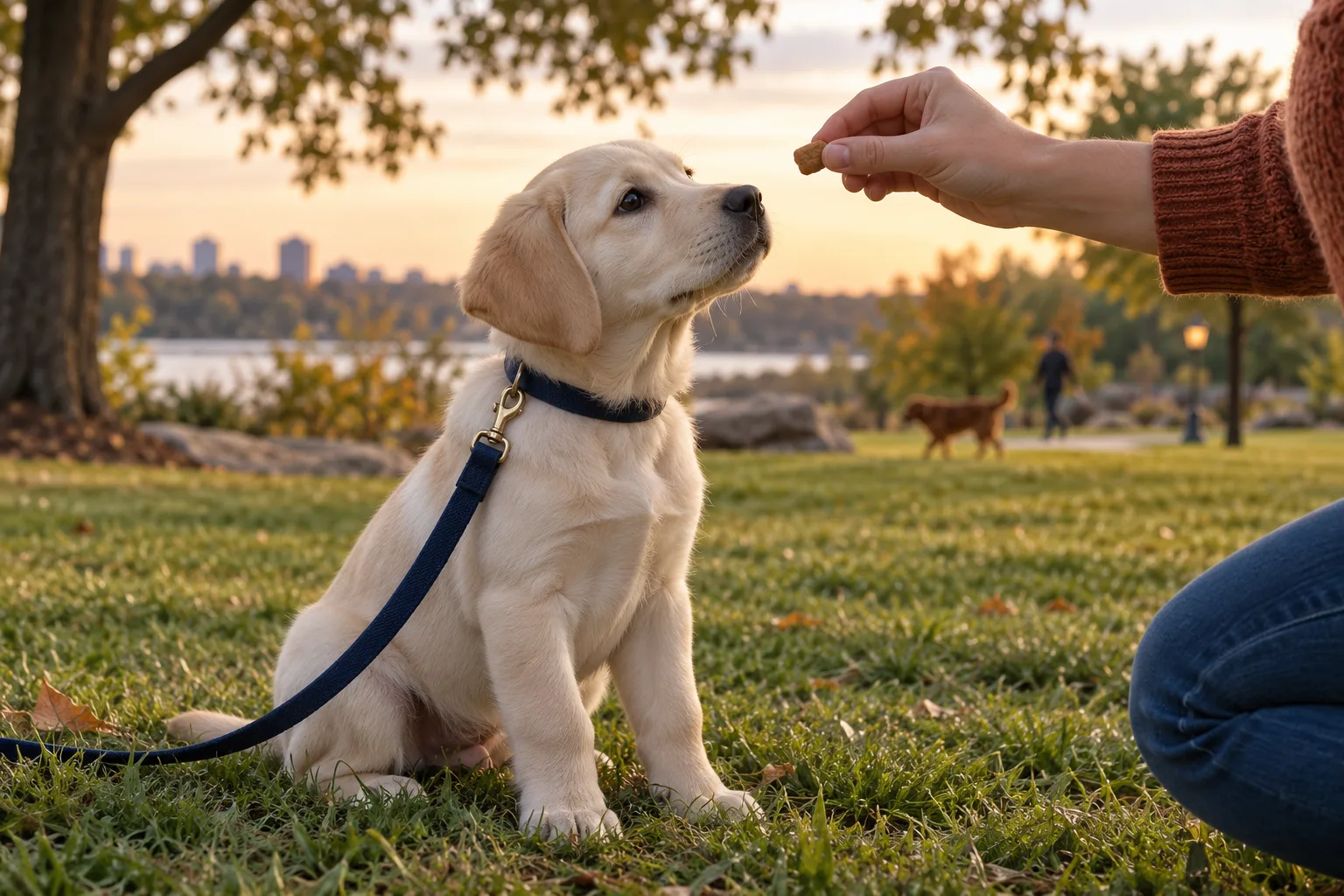
If your puppy barks at a person or dog while backing away, it is telling you it is too close. Make the distance bigger, then feed treats while it watches calmly. Get closer only as fast as your puppy stays relaxed. Our puppy socialization guide has gentle first steps.
Some barking is not a training project for you alone. If your puppy growls and lunges, or has bitten a person, stop practising and talk to a certified behavior professional. Ask your vet to rule out pain first if the barking started suddenly.
What not to do
These are the common fixes that make barking worse or teach the wrong lesson:
- Shouting or saying "no". To your puppy, you just barked back.
- Bark collars, spray bottles and shake cans. They punish fear and alert barking and can make a scared puppy more scared. The AVSAB position statements recommend reward-based training over punishment.
- Opening the crate or picking it up mid-bark. It works once, for you, and teaches the puppy to bark longer next time.
- Giving in after ten minutes. This is the extinction burst. Holding out for one more minute is what ends it.
- Waiting out a potty bark. If it might need to go, take it out.
The Humane World for Animals guide to barking takes the same line: find the reason, remove the reward, and teach something else.
The short version
Ask what the bark wants. Meet real needs before the bark: potty after waking and meals, naps before the evening crash, a chew before a call. For demand barking, go still, mark the first second of quiet and stretch it. Expect it to get louder before it stops, and do not give in during the burst.
The wall with all of this is timing. Your puppy barks at the same hot spots every day, but they move as it grows, and a nap that runs long shifts the whole evening. That is what the plan is for: tell it how today went and it puts tomorrow's potty trips, naps and chews before the barking starts. Build a free plan for your puppy in about a minute.
Get tomorrow's plan, adapted to how today went.
Frequently asked questions
Find the reason first: potty, tiredness, boredom, attention, a noise or fear. Meet real needs right away, then stop answering demand barks and reward the first second of quiet with a treat on the floor. Build up to longer quiet over a few days.
Do not set a timer. Rule out a potty need first, especially if it has been longer than its usual night stretch. If it just went, sit near the crate quietly and open the door only during a pause. Steady barking that rises after a long sleep usually means it needs to go out.
The most common reasons are a potty need, a new noise, or being moved further away from you. A growth spurt in sleep needs can also shift its schedule. If sudden barking comes with vomiting, diarrhea, straining or lethargy, call your vet today.
To your puppy, telling it off is still attention, and it may sound like you are joining in. Go quiet and still instead, then reward the first pause. Scolding tends to make demand barking last longer.
It is a trainer's rule of thumb for alert barking: let your puppy bark a couple of times to tell you about a noise, then calmly thank it, call it away and reward it for coming. The point is to acknowledge the alert without letting it turn into a long barking session.
Many hounds such as beagles, many terriers and small companion breeds like Chihuahuas and Yorkshire Terriers are known for being vocal. Breed is only a tendency. Any puppy that learns barking works will bark more, and any puppy can learn that quiet works better.
Get tomorrow's plan, adapted to how today went
A printed schedule can't see that she peed at 7:10 today; the Coach plan rewrites tomorrow from today's log. Start with the free schedule for your puppy.
Build my puppy's plan- Free starting schedule
- Reward-based practice
- Fits your puppy's day
Share article
About the author
More articles
Puppy SOS: biting, crying, blues · 12 min
How to Stop Puppy Biting: Toy First, Calm Pause, More Naps
How to stop puppy biting without punishment: redirect to a toy before teeth find skin, pause calmly when they do, and protect naps. Plus puppy teething and when puppies stop teething.
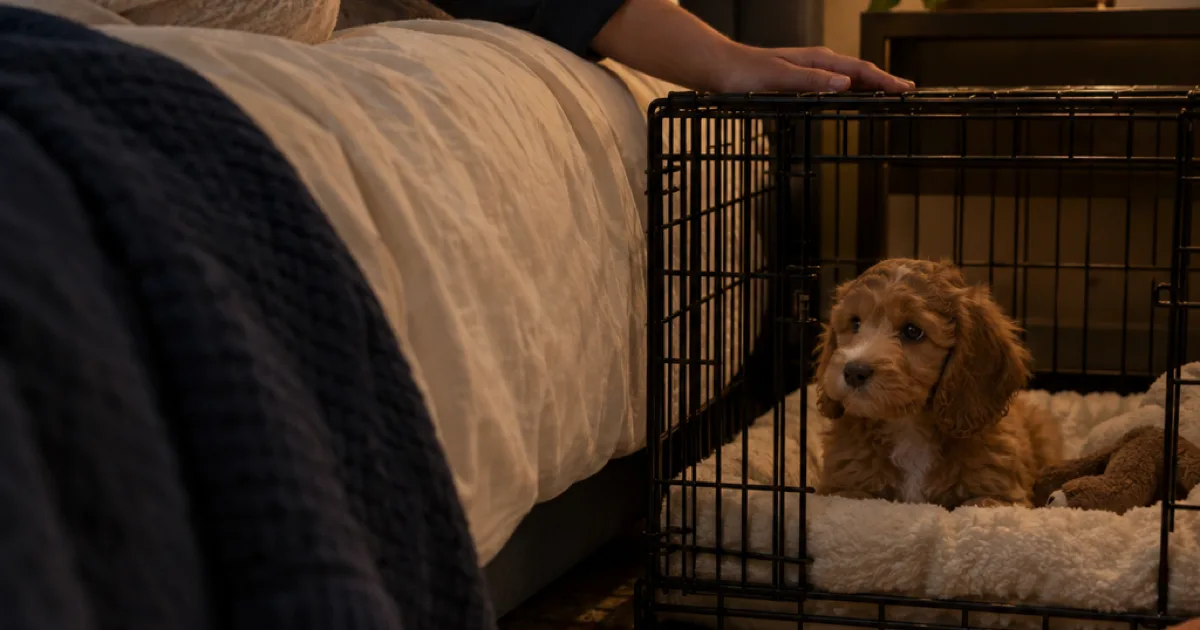
Puppy SOS: biting, crying, blues · 11 min
Puppy Crying in Crate at Night: What to Do Tonight
Puppy crying in the crate at night? Check the need, keep night potty trips quiet and keep the crate beside you. Night checks by age and a calm 4 step response.
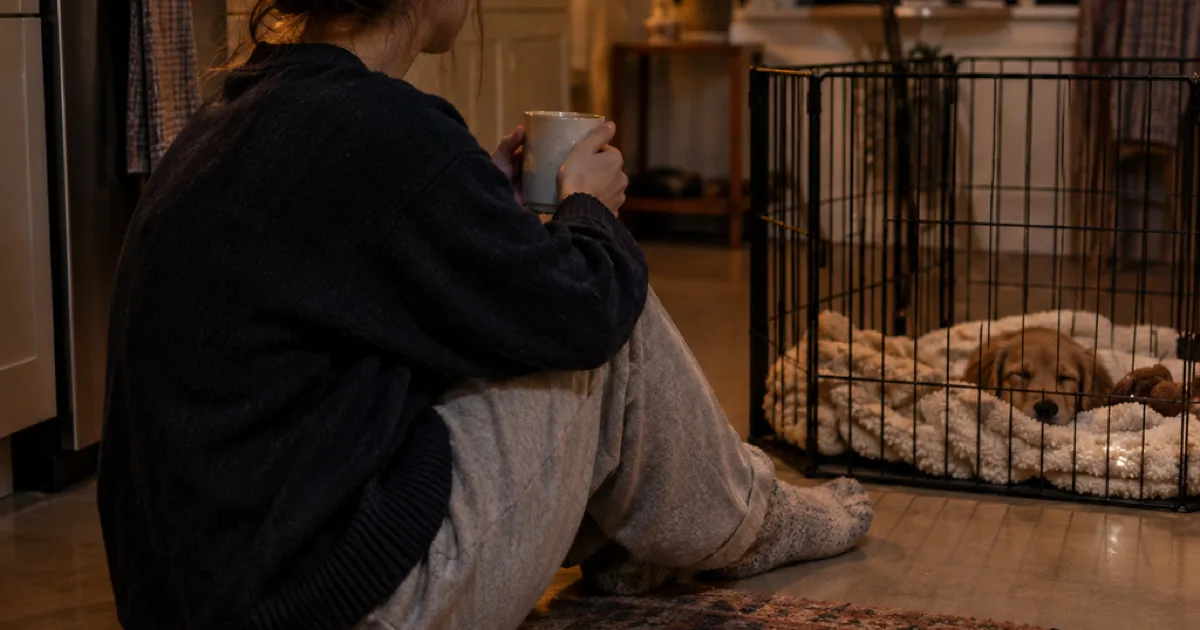
Puppy SOS: biting, crying, blues · 9 min
Puppy Blues: Why the First Weeks Feel Awful and What Helps
The puppy blues are common and usually pass. Why the first weeks with a puppy feel so heavy, how long it lasts, and the small changes that help this week.
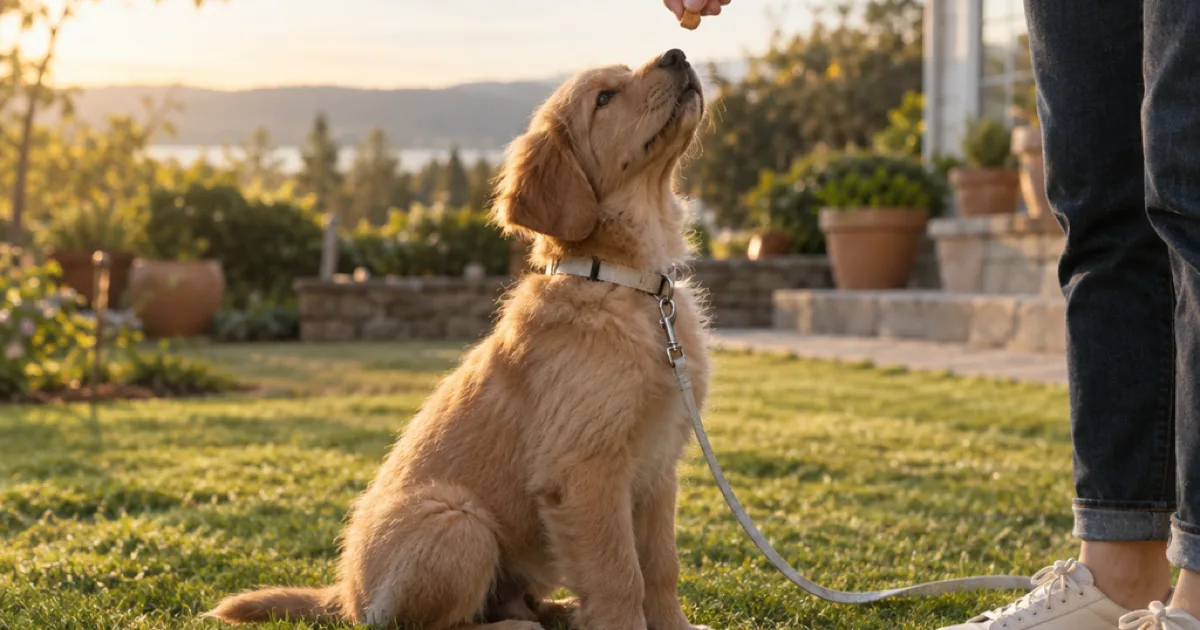
Puppy SOS: biting, crying, blues · 8 min
Puppy Eating Poop: Why It Happens and How to Stop It
Why puppies eat poop, when it is a reason to call the vet, and the simple timing habit that stops it faster than any powder or taste trick.
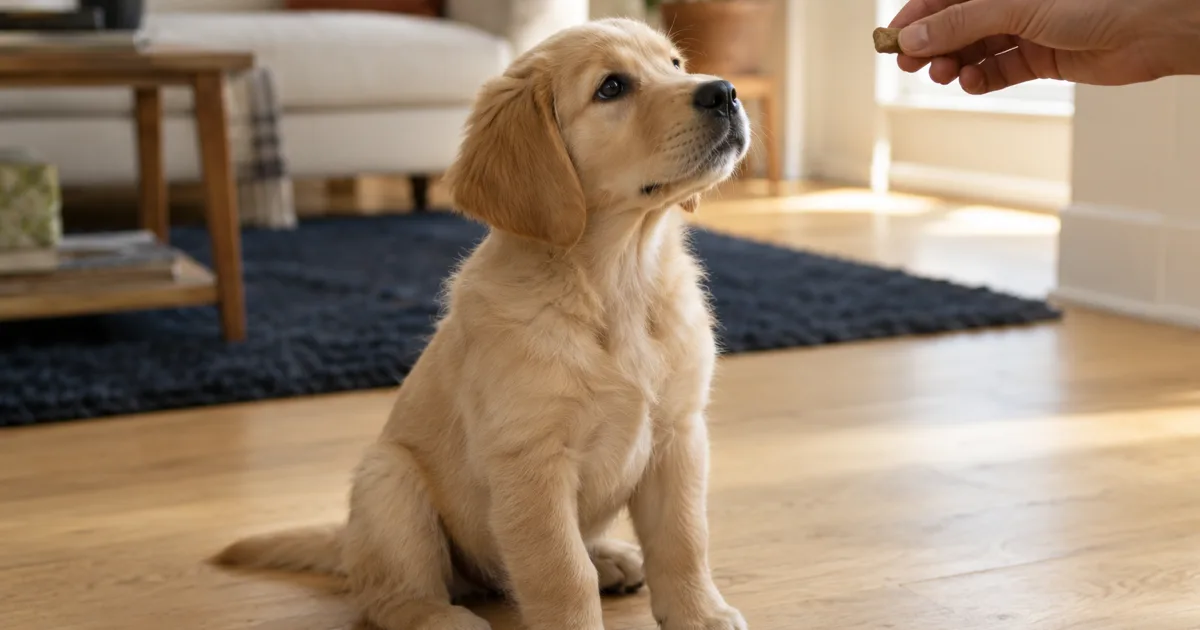
Training that sticks · 12 min
Puppy Training Tips: 9 That Work in 3-Minute Sessions
Nine reward-based puppy training tips in order of payoff: 3 minute sessions, a one-second marker, fading the lure, better treats for harder places, and what to teach from 8 to 20 weeks.
Training that sticks · 12 min
German Shepherd Training: Puppy Routine, Week 8 to 16
German shepherd training for a puppy: the week-by-week routine from 8 to 16 weeks, crate size for a growing shepherd, and how to handle mouthing, herding nips and alarm barking.