
Puppy Eating Poop: Why It Happens and How to Stop It
In this article
Puppies eat poop mostly out of curiosity, boredom or habit, and many grow out of it as they mature. The fix that works fastest is not a powder or a taste trick. It is getting to the poop before your puppy does, every time, for a few weeks, so the habit has nothing to feed on.
That sounds obvious, but it changes what you work on. Eating poop is usually a timing and supervision problem wearing a gross costume. If you know when your puppy is going to go, you can be standing there with a treat instead of chasing them across the yard.
Why do puppies eat poop?
Most of the time it is normal puppy behavior with an unpleasant target. Puppies explore with their mouths, and poop smells interesting to a dog. The vets at Banfield list the common reasons as curiosity, copying their mother, boredom, attention and, less often, hunger, diet or a health problem.
| Why it happens | What it often looks like | What to try first |
|---|---|---|
| Curiosity | Sniffing, mouthing, then eating it in the yard | Leash potty trips and a treat the moment they finish |
| Attention | Your puppy grabs it and runs when you shout | Stay calm, call them away, reward coming to you |
| Boredom | Happens when the puppy is alone in a pen or yard | More chew and lick time, less unsupervised yard time |
| Cleaning the den | Indoor accidents disappear before you see them | Tighter potty timing and an enzyme cleaner |
| Hunger or a health issue | Sudden start, eating more of everything, weight change | Call your vet before trying anything else |
The last row matters. If the habit started suddenly, or your puppy is losing weight, eating much more than usual or has diarrhea, the answer is a vet visit, not a training plan.
The 3-second race: why timing beats everything
Here is the part most advice skips. Every time your puppy eats poop, the habit gets a small reward. Every time they finish and find you holding something better, a new habit starts. Who gets there first in those three seconds decides which habit grows.
To win the race you need two things:
- You know roughly when the puppy will poop. Most puppies go shortly after waking, after meals and after play. A written potty schedule turns "anytime" into a few predictable moments. Our guide on how to potty train a puppy walks through that timing.
- You are close when it happens. That means a leash in the yard for now, even in a fenced yard. A loose puppy across the lawn will always beat you.
How to stop a puppy from eating poop
How to stop a puppy eating poop
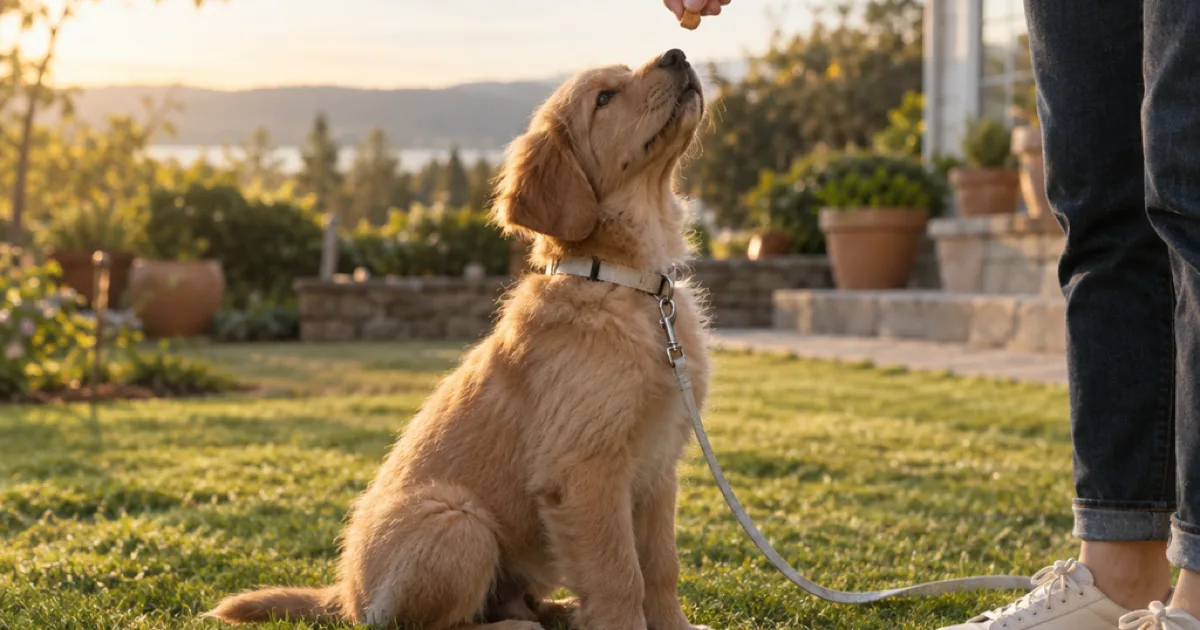
- Take every potty trip on leash
Walk your puppy to the same spot on a short leash. Stand still and let them sniff and go. The leash keeps you within reach for the important moment.
- Reward the moment they finish
As soon as your puppy finishes, say a happy marker word like "yes" and hand over a high-value treat at your hand, away from the poop. Their nose turns toward you instead of the ground.
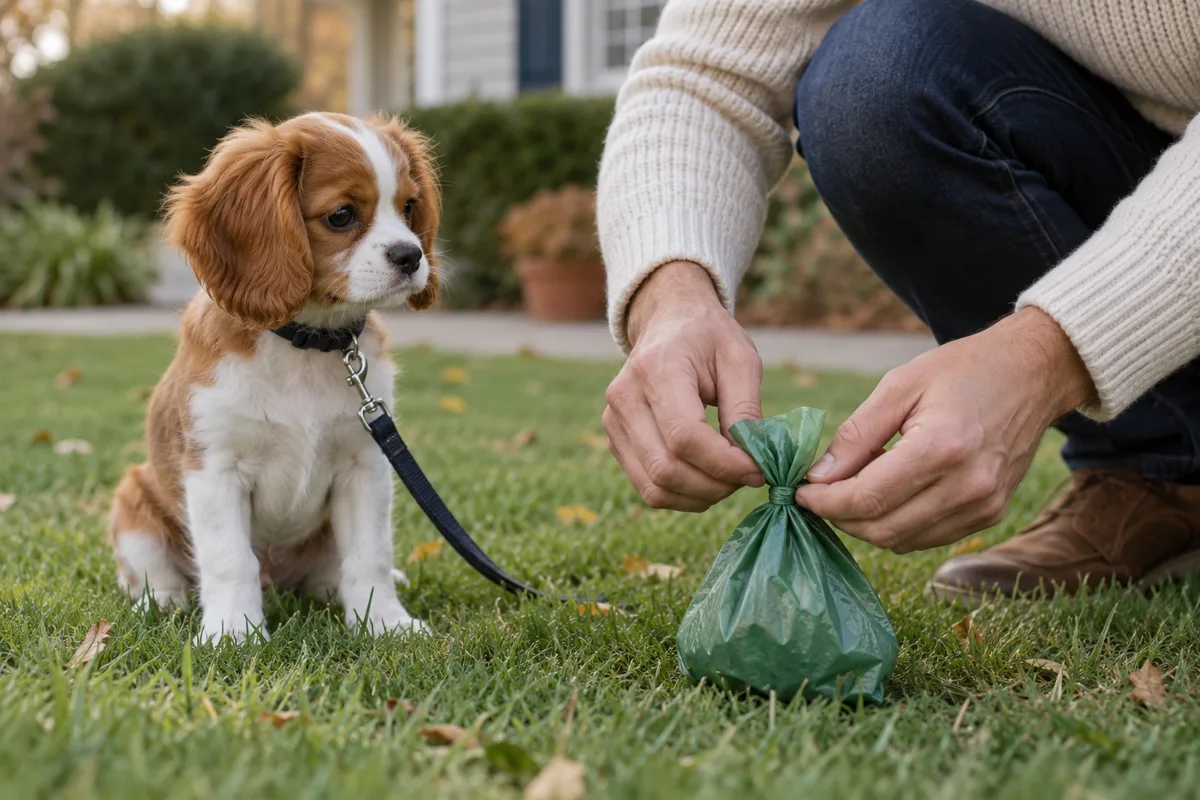
- Walk away together, then clean up
Lead your puppy a few steps away, give another treat, then pick up the poop with a bag. Clean up promptly so nothing is left for later.
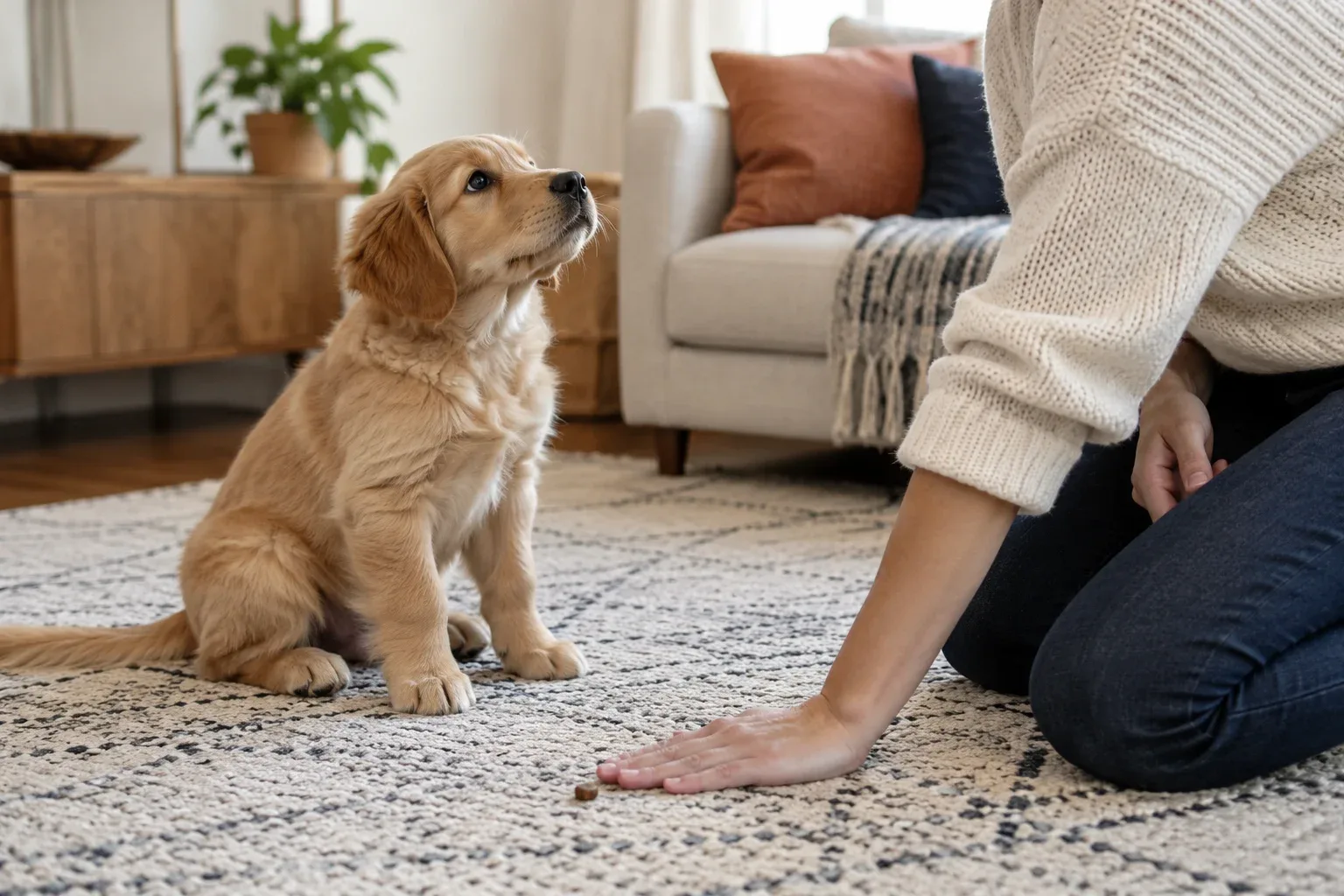
- Teach "leave it" in calm moments
Practice indoors with a treat under your hand. When your puppy backs off, reward from your other hand. Short daily sessions make it reliable before you need it outside.
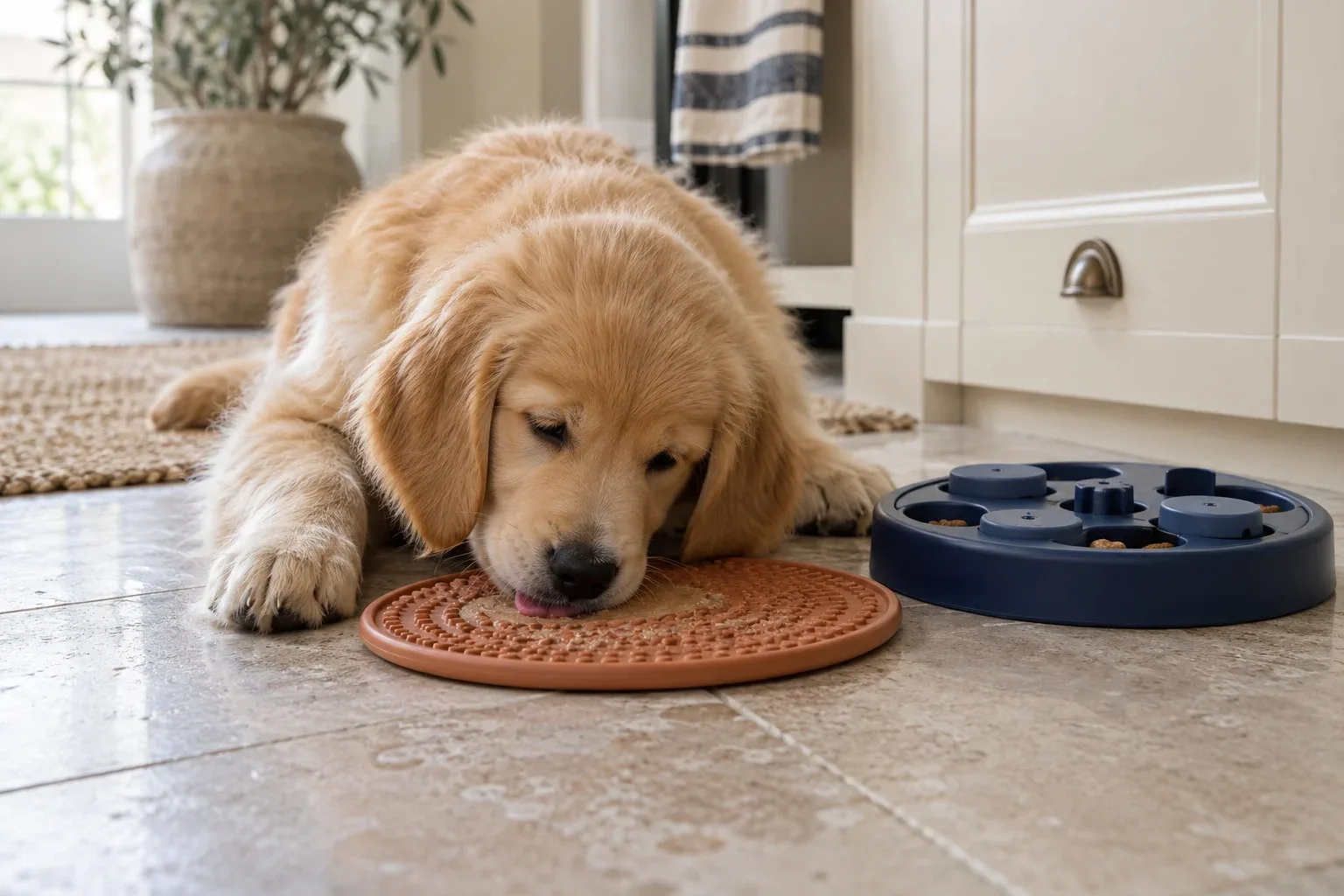
- Fill the boredom gap
Add lick mats, food puzzles and chews during awake time, and shorten unsupervised time in the yard or pen. A busy puppy has less reason to look for entertainment on the ground.
Do this every trip for a few weeks. It is tedious, but it is also the same work as potty training, so you are fixing two things at once. Once trips are predictable, teaching a potty bell gives your puppy a way to tell you when it is time.
Don't make a scene
Shouting, grabbing or chasing your puppy can backfire. Some puppies learn that poop is a great way to start a game of chase. Others learn to eat it faster, or to hide accidents from you indoors, which makes potty training harder.
Stay boring. Call your puppy away in a cheerful voice, reward them for coming, and clean up when they are not watching. Never punish your puppy for eating poop or for having an accident. Reward-based training gets you there faster and keeps the puppy happy to go in front of you.
Indoor accidents and the "clean den" habit
If poop keeps disappearing indoors, two things are usually going on. Accidents are happening when nobody is watching, and the puppy is tidying up. Shorter unsupervised stretches, crate or pen naps and more frequent potty trips fix both. The puppy sleep schedule helps you plan those naps by age.
Clean accident spots with an enzyme cleaner so the smell does not draw your puppy back. If your puppy is crated, check that the crate is not too big, since extra room makes it easier to go in one corner. The crate size calculator gives a starting size.
What about pineapple, powders and vitamins?
You will see advice to add pineapple, pumpkin, meat tenderizer or store-bought deterrent chews so poop tastes bad. Evidence for these is thin, and they do nothing about the timing that keeps the habit going. Before adding anything to your puppy's food or giving supplements, ask your vet. If your vet suspects a diet or health cause, follow their plan.
Mistakes that keep the habit alive
- Leaving poop in the yard "for later". Every pile left out is a chance to practice.
- Off-leash potty trips too soon. Freedom in the yard comes after a few weeks of clean trips.
- Big reactions. Shouting turns poop into the most exciting thing in the yard.
- Relying on a taste deterrent. It skips the part that actually changes behavior.
- Ignoring a sudden change. New poop eating plus weight loss, diarrhea or a big appetite change needs a vet.
The short version
Puppies eat poop because it is interesting and available. Make it less available and make you more interesting: leash potty trips, a treat the second they finish, quick cleanup, "leave it" practice and more chew time. Call your vet if it started suddenly or comes with other symptoms.
The whole plan depends on knowing when your puppy will need to go. Build a free potty and nap schedule for your puppy's age and you will know where to stand.
Frequently asked questions
Many puppies grow out of it as they mature, especially when they never get much chance to practice. There is no fixed age. Consistent leash potty trips, rewards and quick cleanup speed it up. If it continues or gets worse, ask your vet.
It is common, but it is not something to allow. Poop, especially from other animals, can carry parasites and germs. Clean up promptly, keep up with your vet's parasite prevention, and call your vet if your puppy seems unwell.
Often nothing obvious happens. Some puppies get an upset stomach. Watch for vomiting, diarrhea, lethargy or loss of appetite and call your vet the same day if you see them.
A sudden start can be stress, boredom, a change in routine or a sign of a health or diet problem. Because it can be medical, a sudden change is a good reason to call your vet before working on it as a training issue.
Keep your dog on a short leash in areas where people do not clean up, practice "leave it" at home first, and reward your dog for looking at you as you pass. Walk past at a brisk pace rather than letting them sniff around it.
Any breed can do it. Puppies of every size and type eat poop, so supervision and timing matter far more than breed.
Get tomorrow's plan, adapted to how today went
A printed schedule can't see that she peed at 7:10 today; the Coach plan rewrites tomorrow from today's log. Start with the free schedule for your puppy.
Build my puppy's plan- Free starting schedule
- Reward-based practice
- Fits your puppy's day
Share article
About the author
More articles
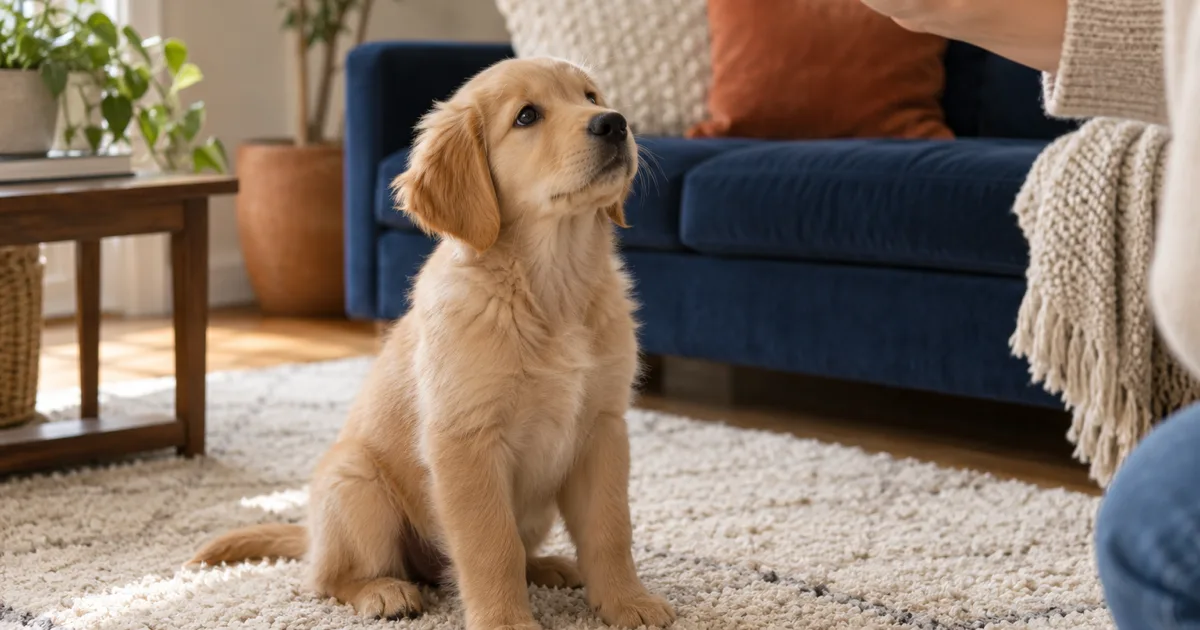
Puppy SOS: biting, crying, blues · 12 min
How to Stop Puppy Barking: Find the Reason, Reward the Quiet
How to stop puppy barking without shouting or collars: read what the bark is asking for, meet the need before it starts, and reward one second of quiet, then three, then ten.
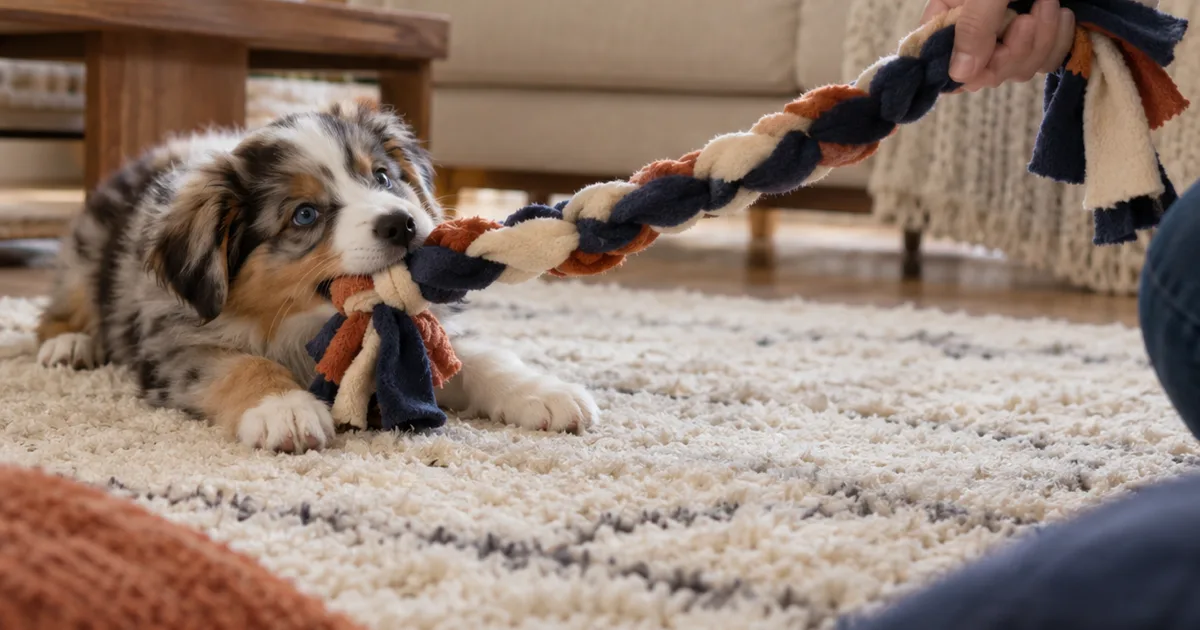
Puppy SOS: biting, crying, blues · 12 min
How to Stop Puppy Biting: Toy First, Calm Pause, More Naps
How to stop puppy biting without punishment: redirect to a toy before teeth find skin, pause calmly when they do, and protect naps. Plus puppy teething and when puppies stop teething.
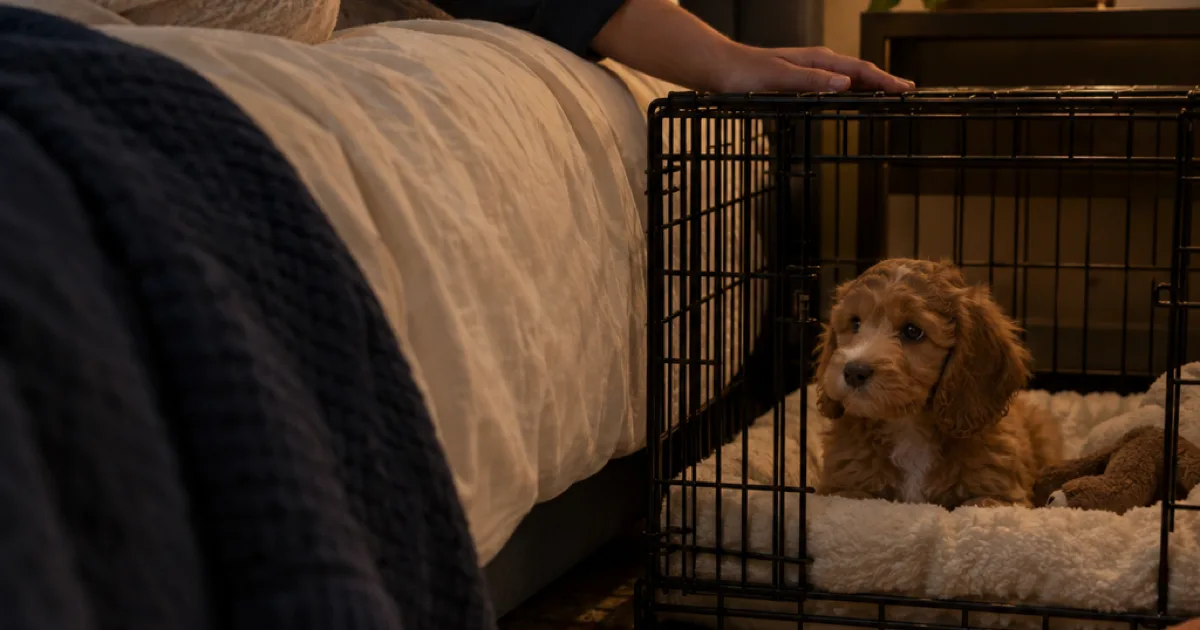
Puppy SOS: biting, crying, blues · 11 min
Puppy Crying in Crate at Night: What to Do Tonight
Puppy crying in the crate at night? Check the need, keep night potty trips quiet and keep the crate beside you. Night checks by age and a calm 4 step response.
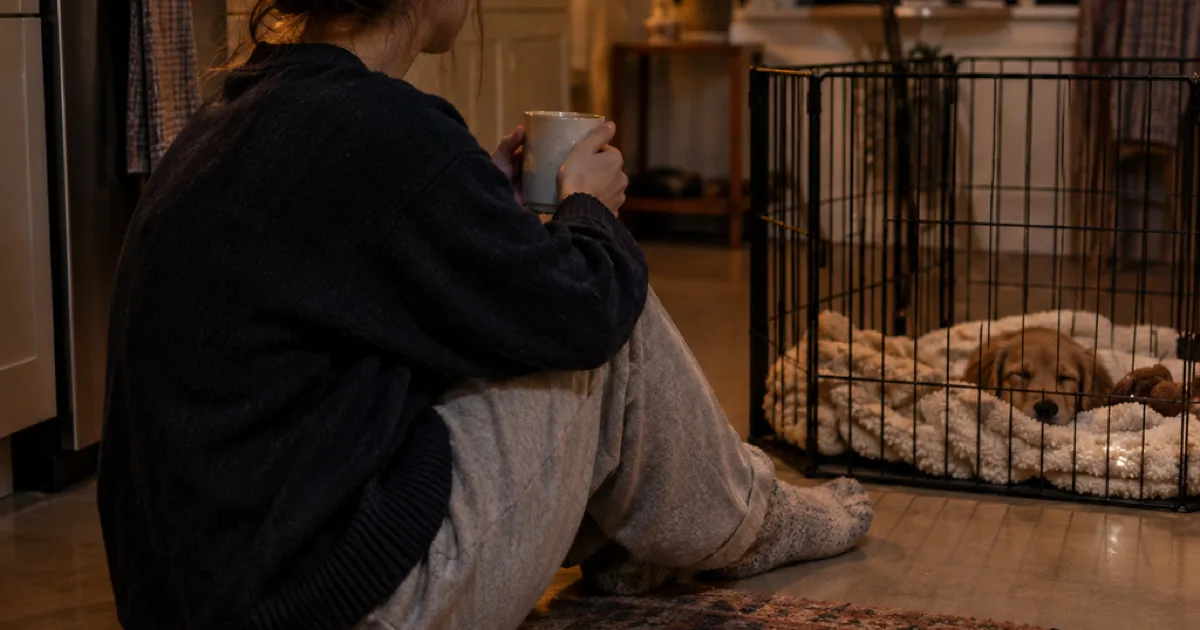
Puppy SOS: biting, crying, blues · 9 min
Puppy Blues: Why the First Weeks Feel Awful and What Helps
The puppy blues are common and usually pass. Why the first weeks with a puppy feel so heavy, how long it lasts, and the small changes that help this week.
Potty, crate and sleep · 10 min
How Long Does It Take to Potty Train a Puppy?
Potty training takes steady support, not a weekend deadline. Learn which milestones matter, why timelines vary and how to spot the next useful change.
Potty, crate and sleep · 14 min
How to House Train a Dog: Puppy or Adult, Step by Step
How to house train a dog of any age: one outdoor spot, a schedule, a reward the second they finish, and supervision in between. What changes for puppies, adult rescues and dogs who start having accidents again.